Friday, October 7, 2022

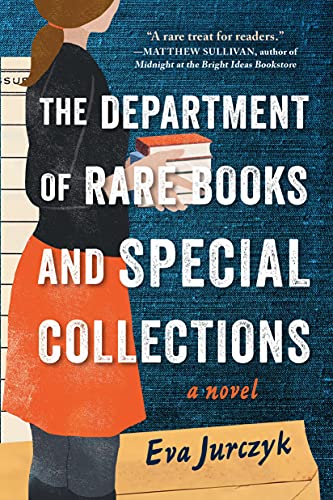
Review: The Department of Rare Books and Special Collections by Eva Jurczyk

A library, a missing rare book, a novel set in academia, this mystery by Eva Jurczyk has all the elements of an intriguing read for book lovers.

Liesel Weiss is a quiet, self-effacing librarian in the Department of Rare Books and Special Collections at a large university. They have some impressive pieces in their collection thanks to the deep pockets of certain donors and the book opens with Liesel trying to figure out how to get into her boss's locked safe to show the donors the latest acquisition. As the Assistant Director, albeit supposed to be on sabbatical, Liesel should have the combination. She doesn't, and her boss is comatose after a stroke. But when she does finally get the safe open, Liesel will uncover even bigger problems: the rare, and not yet insured, Plantin Bible is missing. When she tells the university's President, he forbids her from involving the police, worried as he is about the donors pulling their support over the loss. Instead, she must keep the missing Bible secret and investigate with the help of her staff, but really essentially on her own. Then a young female librarian stops coming to work, suggesting that she is the one who stole the valuable Bible and other missing pieces, the loss of which were discovered in the course of Liesel's search for the Plantin. Will solving the theft be as easy as this?

The pacing here is quite slow, detailing the ins and outs of academic politics, the importance of the goodwill of donors, the personalities, oftentimes in conflict, of the librarians, and the glacial speed and tangled threads of life in academia. Liesel is rather a door mouse of a character, allowing her colleagues, over whom she is now in charge, to run roughshod over her, to insult and insinuate things about her, and to generally be insubordinate in the extreme. She is non-confrontational and quietly deliberate and most readers will spend a lot of time wanting to yell at her to get a backbone and get on with it. The secondary characters are not particularly appealing either and their secrets, as they come out, do not make them any more sympathetic. The mystery itself is not hard to solve and the flatness of the characters combined to make this a less compelling read than I'd have hoped.

*For anyone sensitive to it, note that there is a trigger warning for depression and suicide.

Thursday, October 6, 2022

Review: Where the Wild Ladies Are by Aoko Matsuda

Traditional Japanese folktales reimagined as interconnected, contemporary feminist ghost stories, this collection was odd and strangely flat reading. For readers unfamiliar with the Japanese myths and legends these stories are based on, there is an "Inspiration for the Stories" section in the back of the book which helps the reader understand what Matsuda is trying to undermine in her retellings but still doesn't give someone who doesn't know the originals enough of the cultural background and understanding to make this an entirely successful collection. There is a very strong Japanese sensibility here and the stories are all fantastical, populated by the supernatural in some way. The main characters subvert traditional Japanese gender roles, if not in life, then after death as ghosts or other creatures. Each of the stories is strange and complete from a ghostly lover recovered from her watery grave to an aunt against hair removal to a gift shop owner living in the shadow of her namesake shrine to a foxlike young woman and more. Fans of Japanese literature and those who have a working knowledge of the folktales these stories take their inspiration from are probably the best audience for this collection.

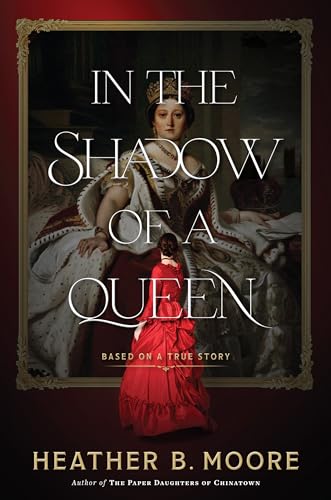
Review: In the Shadow of a Queen by Heather B. Moore

Queen Victoria and Prince Albert's love story is quite well known among those who have a fascination with historic British royalty. Victoria's long mourning after the early death of the love of her life, the father of her nine children, is looked at as the pinnacle of devotion and love. But that's in the abstract. On a more personal level, Albert's death changed not only the happy life of his wife and sovereign, but also those of his children, especially the children still living at home. Heather B. Moore's historical novel about Princess Louise, the fourth daughter and sixth child of Victoria and Albert, takes readers from a year prior to Albert's death to the years afterwards as the princess and her siblings grow up and take their places in royal families across Europe and in the Queen's service.

Princess Louise, called Loosy by her family, was a free-spirited, artistic young girl. She is close to several older siblings, including the Prince of Wales, her older brother Albert, and to her younger siblings. She is doted on, admired for her beauty and her artistic talents. Her life is one of great privilege but also great constraints as a royal child. At 12, when the novel opens, she is young enough to be just on the cusp of understanding what is swirling around her in her family's private life and also on the larger stage of world politics, not that a well-bred princess concerns herself with the latter. When she is 13 and her father dies, much about the happy family changes. Victoria plunges into mourning that she will maintain for the rest of her life, retreating from public life for a prolonged time. Without her beloved Albert to advise her, she presses her oldest unmarried daughter into the role of her secretary, a role that eventually becomes Loosy's as her older sisters marry and leave the palace. This gives the unconventional young woman an even greater interest in politics and the causes of her time. Although forbidden by her mother to act on her feelings, Loosy is a suffragette at heart and longs to break other boundaries as well, not least in her art (sculpting is not for women, and definitely not for gently bred young women) and in her marriage (she has no interest in marrying any of the available royals presented to her).

Moore captures well the dichotomy of a woman who is not just a daughter, but a daughter of the queen, owing her mother filial duty and also the duty of a subject. Princess Louise fully knew her responsibilities but also knew how to get many concessions from her mother in order to live out her dreams, even if they were occasionally modified a bit. She was a fascinating historical figure. The story is well researched and the chapter epigraphs from actual royal letters and diaries help give a flavor of the real people behind Moore's fictionalization. Spanning just over a decade of Loosy's life, from the year before losing her father to the early days of her marriage, the novel is an intriguing look at the forces that shaped this most unconventional of Queen Victoria's daughters. The imagined family scenes feel true to the people we know historically and the contrast of life in the royal household prior to Albert's death and after is beautifully rendered. Louise's interest in politics and suffrage, although not encouraged by the Queen, is easy to understand, surrounded as she was by the daily knowledge of the realm and the wider world, despite the very sheltered way that the royal children were raised socially. That Loosy became such a force, advocate, and founding support for so many artistic and educational organizations speaks to the strength of her personality as does her drive to improve her natural artistic talent and make beautiful sculptures that survive today. Some of this very impressiveness is subsumed during the lengthy search for a husband and while the search itself is important, and groundbreaking in the fact that she was being allowed to marry outside of her class but also to choose her own husband (within reason), it did detract from the otherwise intriguing young woman. Over all, the book was a tantalizing glimpse into the life of a woman, a princess, who broke the mold in so many ways and is so rarely remembered today.

For more information about Heather B. Moore and the book, check our her author site, like her fan page on Facebook, follow her on Twitter, Instagram or Pinterest, look at the book's Goodreads page, or look at the reviews for others' thoughts and opinions on the book.

Thanks to Laurel Ann from Austenprose and publisher Shadow Mountain Publishing for sending me a copy of the book to review.

Wednesday, October 5, 2022

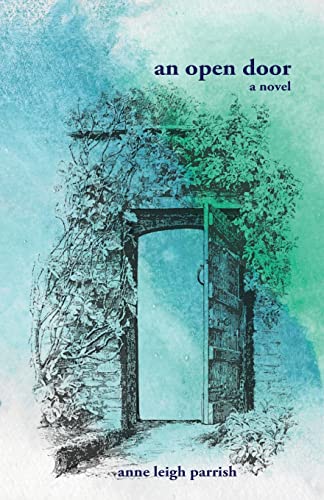
Review: an open door by Anne Leigh Parrish

We're all familiar with the image of Rosie the Riveter, the strong and capable woman who stepped in when American men went off to fight in WWII. But what happened to all the Rosies out there once the war was over and the men came back, went back to school, and rejoined the work force? Very few people address women's lost freedoms of the late 1940s and 1950s. In Anne Leigh Parrish's newest novel, an open door (lower case intentional), her main character is directly affected by this unfortunate and unfair regression and by the expectation that women settle back into the world they inhabited before the war.

Edith works as a secretary at the UN in New York and lives with her estranged husband's unconventional aunt. She has left Walter and endures his frequent letters imploring her to return to Cambridge, where he is in law school, and to take back up the mantle of a proper (and appropriate) wife. Her life in New York is more fulfilling than her life in Cambridge but she is still unsatisfied. After an alcohol-fueled one night stand with the son of a friend of Aunt Margaret's, Edith abruptly decides to return home to Walter, going back to a stultifying existence of cocktail parties, intellectual stagnation, and ignoring her husband's infidelities.

Edith had to abandon her own plans to pursue a doctorate in order to conform to Walter's and society's idea of the perfect post-war wife. She grew up with the message that girls and women were lesser, her father being borderline abusive to his wife and daughter. Despite the examples all around her, she cannot quite force herself to completely conform to the expectations of the times. The novel is character driven and both funny and sad. It's sad for the way in which women were so trapped and forced to endure a life and marriage that wasn't in any way fulfilling. "They married. The first time they had sex they fell off the bed, which Edith found hilarious, and Walter found mortifying. The sex was terrible, and Edith told herself it would get better with practice. It didn't." (p. 31) But there is humor in there too.

Pieces of Edith's past and her long relationship with Walter are woven into the present of the narrative, showing the reader just who Edith is, why she reacts the way she does, and how she'll find her way to happiness and selfhood in a time and society that didn't present any easy alternatives to a stifling life for women. Edith is thoughtful and intelligent and while she will acquiesce for a time, she won't stay a second class citizen forever. The door to a new life may be a small and seemingly insignificant but it is open and she'll find a way to walk through it. There is a quiet tone to the story and there is no big climactic scene driving the plot but the novel is beautifully written and Edith is a complex, flawed, interesting character. I'll always search out everything Anne Leigh Parrish writes.

For more information about Anne Leigh Parrish and the book, check our her author site, like her on Facebook, follow her on Twitter, look at the book's Goodreads page, follow the rest of the blog tour, look at the reviews for others' thoughts and opinions on the book, and purchase here.

Thanks to Lisa from TLC Book Tours and publisher Unsolicited Press for sending me a copy of this book to review.

Tuesday, October 4, 2022

Waiting on Wednesday

This meme was hosted by Breaking the Spine and is meant to highlight some great pre-publication books we all can't wait to get our grubby little mitts on. I'm choosing to continue the tradition even though she has stopped.

The Color of Ice by Barbara Lynn Probst

The book is being released by She Writes Press on October 18, 2022.

The book's jacket copy says: Set among the glaciers and thermal lagoons of Iceland, and framed by the magical art of glassblowing, The Color of Ice is the breathtaking story of a woman's awakening to passion, beauty, and the redemptive power of unconditional love.

The stunning new novel by the author of award-winning novels Queen of the Owls and The Sound Between the Notes . . .

Cathryn McAllister, a freelance photographer, travels to Iceland for a photo shoot with an enigmatic artist who wants to capture the country's iconic blue icebergs in glass. Her plan is to head out, when the job is done, on a carefully curated "best of Iceland" solo vacation. Widowed young, Cathryn has raised two children while achieving professional success. If the price of that efficiency has been the dimming of her fire--well, she hasn't let herself think about it. Until now.

Bit by bit, Cathryn abandons her itinerary to remain with Mack, the glassblower, who awakens a hunger for all the things she's told herself she doesn't need anymore. Passion. Vulnerability. Risk. Cathryn finds herself torn between the life--and self--she's come to know and the new world Mack offers. Commitments await her back in America. But if she walks away, she'll lose this chance to feel deeply again. Just when her path seems clear, she's faced with a shocking discovery--and a devastating choice that shows her what love really is.

Sunday, October 2, 2022

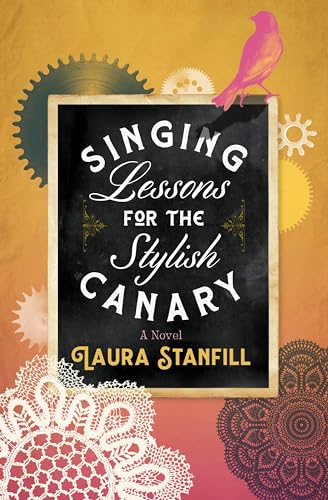
Review: Singing Lessons for the Stylish Canary by Laura Stanfill

The Blanchard family in Mireville, France has long been master craftsmen in the making of serinettes, hand-crafted barrel organs used to train canaries to sing particular pieces. This gives them quite a high status among their fellow villagers and indeed among the other music makers as well. Georges Blanchard is born a colicky baby whose noisiness disturbs his father as he tries to hear each musical note. When Georges finally stops crying and is taken to the village to show the others, the perpetual gloom that has shrouded the village breaks and in a miracle, the sun comes out. Henceforth he is known as the Sun-Bringer. Problematically, the sun does not go away, which can be interpreted several ways. This is the family into which Henri Blanchard is born, son of the Sun-Bringer, quiet and sensitive boy who doesn't fit in with the other village boys, son destined to inherit his father's workshop but who wishes to learn the art of bobbin lace making like the women in the town, a family in which he has much to live up to.

This is a gentle story with elements of the fantastical and it reads like a fairy tale of sorts. Henri wants acceptance, from his father and from the others in town. He only know pieces of what make him an outsider (showing his emotions; his father's, and therefore his, status in the village; spending time with girls) but when a large secret is revealed and then an unbelievable talent is uncovered, he comes to a more complete understanding. The novel has a unique premise even while it addresses familiar issues like friendship, parenting, acceptance, and a search for selfhood. Henri is a tender and appealing character and his discovery that serinettes, while beautiful and skillful music boxes, repress canary's natural chirps and trills is very much a metaphor for his own young life. The village women seemingly have no power and yet their small rebellions show this to be untrue and ultimately culminate in something major. Stanfill's writing is beautiful, giving the novel an elegant and timeless feel. There are some fairly big plot lines that simply disappear here and the end of the story might be hard for some readers but I thought it gives the novel a hopeful, continuation sort of feel. This is an unusual, intriguing story with many layers and one that readers looking for something different should give a chance.

Thanks to the publisher for sending me a copy of the book for review.

Saturday, October 1, 2022

Review: The Keeper by Kelcey Ervick

I was a competitive swimmer for 15 years, from the age of 7 all the way through college. I swam in summer leagues, on school teams, and on competitive year-round teams. Swimming was a huge part of my life. Some of my best friends were my fellow swimmers. Even my husband was a fellow swimmer. As a girl born in the 70s, I never really questioned the fact that I was able to join a team. Title IX was always an unquestioned part of my life. In her graphic memoir, former soccer player Kelcey Ervick, who is exactly my age, did consider the fact that she was a part of the first generation of girls who lived their whole sporting careers with the protections of Title IX. She weaves the history of women’s soccer (football), the fight for recognition of women’s sports, and her own impressive journey on the soccer pitch together to form an informative and interesting graphic memoir.

Opening with Ervick watching the video made by a teammate’s dad in 1987 when her travel team went to the US Girls’ Nationals Tournament, the video becomes a jumping off point for her musings about the way that girl's sports were perceived at the time (and to be fair, oftentimes today as well—just look at the disparities between the US Women’s National Soccer Team and the US Men’s National Soccer Team). She talks about her own personal experience as a keeper, the toll it took on her body, the friends she made and lost, the exhilaration of playing (and winning), the burnout, her eventual comeback in the sport she loves, and what made her a writer. The entire memoir is hand lettered and the artwork is mostly simple line drawing comics with an occasional collage thrown in. It’s a very fast read, full of interesting and important information about women in soccer, and by extrapolation, women in sports. Give it to your soccer playing daughters (but not until you’ve read it for yourself).

Thanks to the publisher for sending me a copy of this to review.

Popular Posts