Showing posts with label ARC. Show all posts

Wednesday, October 2, 2024

Review: I Cheerfully Refuse by Leif Enger

Although dystopian novels arent usually something I seek out, author Leif Enger writes so beautifully that I was eager to see how he handled such a topic. His newest novel, I Cheerfully Refuse, is not just a dystopian novel but an odyssey for our time.

In a world ruled by the wealthiest, subject to devastating weather events, and populated by small outposts of people living hard scrabble lives, Rainy (short for Ranier), a musician and odd jobber, and his beloved wife Lark, a bookseller, live mostly contented lives. They are good, resourceful people, liked by their community, and still capable of occasional dreams. When Lark brings home a refugee named Kellan who is being pursued by dark forces, Rainy looks the other way, especially since Kellan gives Lark a copy of I Cheerfully Refuse, the sole and rare novel she has yet to read by an author named Molly Thorn, who has played a large part in Rainy and Lark's life. But Kellan's presence and then absence brings Rainy into the crosshairs of those in charge of this terrible, not too future world, forcing him to flee on a small sailboat named Flower, into the uncertain, warming waters of Lake Superior searching for Lark.

As Rainy sails around, he encounters the remnants of civilization with people who are desperate, evil, rebellious, con artists, beaten down, and occasionally good and kind. He also rescues a young girl named Sol along his way and the two of them form an awkward sort of partnership as time goes on. They are battered by catastrophic weather events, faced with direct evidence of the great inequality of their society, and presented with true evil on their long and meandering odyssey.

Enger does a masterful job protraying the menace of a society that is crumbling, one that is governed by the amoral and the uncaring, that sees its people as dispensable and disposable. His characters are complete and worthy guides to his story. The setting of the novel, on the shores and waters of Lake Superior, is absolutely integral to the novel. And Enger has found an effective and disturbing way to highlight the impact of climate change on the world of the novel (and our own if we don't change course quickly!): Lake Superior, which famously does not give up her dead, is in fact, giving them up in this novel as the drowned of past decades and centuries bob to the surface in a regular, macabre display. It's not a comfortable story but it's not as bleak as it can sometimes seem either. Enger's writing is beautiful, easing the reader through the story, towards an earned and yet unknowable end. The novel is both grim and hopeful, centering oppression and the destruction of our planet and our society, but also celebrating love and chosen family. The novel can be a tad confusing at times but then the possible end of times would be, wouldn't it?

Monday, September 30, 2024

Review: This Great Hemisphere by Mateo Askaripour

Dystopian fantasy/sci fi is not my general reading preference but Mateo Askaripour's novel This Great Hemisphere sounded interesting. At least it did until I discovered that it felt like nothing so much as a mix of The Hunger Games and our own current racist world.

Opening in 2028 with a young black woman who faces terrible racism before she gives birth to the world's first invisible baby, the novel then moves 500 years into the future where society is bifurcated between the Dominant Population (DPs) and the second class Invisibles. Institutionally, the entire Northwestern Hemisphere (ostensibly including the former US) discriminates against the Invisibles, shunting them off to live away from the DPs, employing them in low level and menial tasks, providing them with addictive and life and energy restricting fast foods, rounding them up for tracking annually, etc.

Sweetmint, a young Invisible woman who goes by Candace in the greater DP world, is determined to rise beyond expectations and use her incredible intellect not only to help herself, but help the people she loves and lives with. She has, against all odds, earned an internship with the hemisphere's great inventor, giving her a glimpse into a world she's only dreamed of. But when the Chief Executive of the Northwestern Hemisphere is assassinated and the murder is pinned on Sweetmint's older brother Shanu, who has been missing and presumed dead for the past three years, she sets out on a quest to find him before the police and politicians do, jeopardizing everything she's earned so far. At the very least, she must find Shanu before one politician in particular, bloodthirsty and ruthless, does. Her search ultimately makes her question the truth as she knows it and question the people she thought she knew.

The world building here is rather uneven. There are pieces that are incredibly detailed, like the rumoyas (scents) that the Invisibles use to recognize each other, the elaborate ways instituted so that DPs can "see" Invisibles, and the mandated annual registration. There are other pieces that are vague or incomplete, like the reader is missing steps in a formula. On the whole though, the world of the novel is not appreciably different than our own. The parallels are obvious and unsubtle. Sweetmint's discovery of a resistance movement is a bit haphazard and comes out of nowhere, and the ending to the novel is incredibly rushed. The novel feels like it's trying to be a future novel but instead it comes across, in most ways, as one firmly grounded in our own present. There are aspects that could have been interesting if they had been more developed but over all, it was disappointing, derivative, and obvious. Hunger Games fans looking for a read-a-like might enjoy this but I didn't.

Thank you to the publisher for a copy of this book for review.

Monday, October 2, 2023

Review: The Family Fortuna by Lindsay Eagar

I've never really been a fan of circuses, real or imagined. I definitely don't search them out in my reading but so many people love books about them that I keep trying them despite knowing that they are likely to be a miss for me. Unfortunately, that is the case here. I found Lindsay Eagar's The Family Fortuna slightly off-kilter, slightly disturbing, and honestly, slightly boring.

The Family Fortuna is a traveling circus that travels the West. Arturo Fortuna is the patriarch of the family and ringmaster but youngest daughter, Avita, is the headliner and star of the entire spectacle. She is a monstrous, feathered and beaked girl whose snarling, chicken slaughtering show terrifies and thrills and rakes in money. She delights in being able to inspire fear, horror, and nightmares until she sees a young man who does not gasp at her theatrics. He is an artist and he might just see her inner person, beyond the freak of circus hype, so she helps him get a commission to paint new posters for the show. She is convinced he will expose the truth of her humanity. What he shows her is other people's perception of her, which pushes her to find a way to become the person she wants to be, all while there are crises, large and small, financial and personal, brewing in the circus as a whole.

This YA novel is incredibly character driven, to the point that it is almost plotless. Avita and her search for freedom and an authentic sense of self are the main focus. There are occasional shifts to other characters, emotionally abusive, narcissistic father Arturo; long-suffering, superstitious and religious Mama; older sister Luna, who is the silvery, stunning goddess who rules over the kootchy girl tent; and older brother Ren, who is a little person (non-performing) and the circus' frugal accountant. The chapters from the other characters are so few in number that they seem like interruptions to the story and don't truly serve to fully flesh those characters out. There is an antique feel to the whole story, and a feeling that the reader shouldn't look beyond the illusions or too closely at the peeling paint in the shadows here. The writing is filled with florid descriptions, similes, and metaphors in the way that a circus barker or ringmaster might exaggerate in their patter but it comes off as slightly ridiculous and strange on the page. Those who enjoy circus-set stories might like this overly long novel far better than I did; I just wasn't drawn into the grotesquerie.

Monday, August 14, 2023

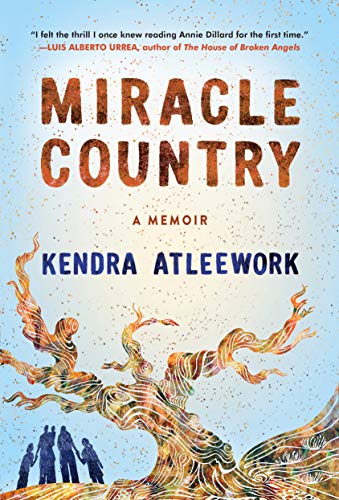
Review: Miracle Country by Kendra Atleework

I love memoirs of place. It fascinates me to see what pulls people, connecting them to a land that shaped them, the land they forever carry within. I have my own place like that, a place my old Geology professor called "la querencia," roughly translated as "place of my heart." So I will forever be attracted to books that try to explore these landscapes, combining memoir, nature writing, and history. Kendra Atleework's Miracle Country promised to be a book that would be exactly that, instead I struggled mightily through it, never connecting, never interested enough to keep going but for my compulsion to finish all books I start.

Atleework grew up in the forbidding landscape of Owens Valley, in the rain shadow of the Sierra Nevada Mountains. It is an arid, unforgiving place prone to drought and wild fires, especially given the effects of climate change. But there is a beauty in the land as well and it holds the history of both her happy family and the devastating loss of her mother when Atleework was just 16. She writes the personal story of her family and the story of the Native people who preceded her family in the area; she addresses California land and water rights, the devastation that people are wreaking, and the environmental history of the area as well. Even when she moved far from Swall Meadows, she carried the place deep within her, eventually realizing that she has to return to the place that formed her and confront both its past and future as well as her own.

The writing here is very stream of consciousness and meanders far and wide. This is problematic since there is no strong through narrative keeping the writing focused, or at least reining it in from the many digressions. The lack of focus also allows the reader (or at least this reader) to mentally wander off as well. There are strange, impenetrable metaphors that feel forced: "In a dangerous world, the sustained desire of our mother's life was a bag of marbles she could hand to lost boys, to her son and daughters--to impart to us some design that might teach us care and yet let joy master fear. Those marbles were, all along, a token meant to tell us we could always come home." (p. 120) The different pieces of the narrative, the personal, the historical, and the environmental are uncomfortably mashed together rather than flowing organically, resulting in an occasionally jarring reading experience. That the whole thing is also non-linear adds to the discombobulation and disconnectedness of the reader. I know there must have been a kernel of what attracted me to the book in the first place somewhere in there but I ultimately wasn't interested enough to turn over enough desert stones to find it. There do seem to be quite a few people who rave about the book so perhaps it's a me problem rather than a book problem.

Thank you to LibraryThing Early Reviewers for a copy of this book to review.

Monday, July 17, 2023

Review: This Isn't Going to End Well by Daniel Wallace

People are a mystery. We can only know the pieces of them that they are willing to show or share. No matter how much they appear to be an open book, there is some hidden part, smaller or larger, that they hold secret. Mostly we don't give much thought to this very private piece of the people in our lives. Their public self is enough. But when you lose someone by suicide, someone you thought you knew, someone who was instrumental in forming your own adult self, someone you loved dearly, you might start to look harder to try and find that missing piece, the unshared and unsharable aspect of your loved one's persona. This was definitely true for Daniel Wallace, as he chronicles in his non-fiction look at his late brother-in-law, William Nealy, This Isn't Going to End Well.

When Wallace was twelve, he first met his future brother-in-law. There was an immediate case of hero worship for this fearless, adventurous, talented, and charismatic man. William represented everything cool in Wallace's world and the fact that he took time to get to know this awkward kid and to occasionally include him or teach him was an absolute gift. Wallace wanted to be like William when he grew up, never knowing the demons that William fought underneath that legendary exterior until it was far too late.

William was a deeply complex person suffering from deep trauma and suicidal ideation. He was increasingly obsessed with his best friend's unsolved murder. On the surface, he was a master at just about everything he turned his hand to, he was loving and tender, especially with Holly, Wallace's sister, who suffered from crippling arthritis and a multitude of other health problems, he was (and still is) a famed cartoonist, a storied and respected river runner, and a much beloved brother-in-law. But all of that could not keep him from taking his own life, an act that left Wallace confused, angry, and devastated, and ultimately searching for the truth of the man he thought he'd known.

The book is almost a series of vignettes from Wallace's own life, his memories of William, Holly, and his attempts to work through his own confused feelings about William's death. It is both Wallace's book and William's book and even occasionally Holly's book. It is musing and reflective when Wallace is focused on himself. Oddly enough, it is less sympathetic when it turns to William though. Wallace uses excerpts from William's private journals, which were supposed to be destroyed, to give the reader a look into William's mind. This private, made very public without consent, in fact, expressly against consent, makes for some very uncomfortable reading. Clearly Wallace is still angry about William's death and while he doesn't sugar coat this ugly emotion and all it inspired him to do, he hasn't seemed to work past it far enough to feel deep sorrow and understanding for the man who suffered so much emotionally in private. In a way, the anger feels like a betrayal of all that William gave to him over the years.

This is less a memoir/biography than a reflection on how hard it is, indeed, to realize that someone you adored was merely human like the rest of us and the sadness of discovering that the inner person isn't like the outer person, or at least the outer person isn't the whole of the person you thought you knew. William was a major influence on Daniel's life but one has to wonder after reading this, what William himself would have thought of his brother-in-law's book, whether he would have thought it a fair exposure or not. Laying bare what it did, in the manner that it did, was deeply uncomfortable to me as a reader.

Monday, December 12, 2022

Review: Under a Veiled Moon by Karen Odden

The (misquoted) maxim "Those who don't know history are destined to repeat it" takes on new meaning in Karen Odden's Victorian set mystery, Under a Veiled Moon, the second in the Inspector Corravan Mystery series. Although the ethnic group is different (the Irish as versus the groups who are the targeted today), people and media still scapegoat "others" and consider them lesser than. These bigoted beliefs led to resentment and violence in the past, as shown in the novel, and similar bigoted beliefs lead to resentment and violence today. Perhaps one day we will learn.

Michael (Mickey) Corravan is the Acting Superintendent of the Wapping River Police. As the novel opens, he has found a unidentified body but quickly this one, potentially murdered man becomes a side note to a much bigger investigation. There's a collision on the Thames between a daily, wooden, pleasure boat and a heavy iron-clad collier that causes massive loss of life and Corravan must determine whether it was an accident or if it was intentionally caused by the Irish Republican Brotherhood as the newspapers attest. The possibility that the IRB is behind the collision causes a massive swell of anti-Irish sentiment at a time when the Irish were already considered vermin. And Michael Corravan is Irish. His superiors and colleagues want a speedy conclusion to the case and question whether he can investigate impartially given his own heritage and close ties to the community. At the same time, Corravan is worried about the youngest son of the family who took him in after his mother left. Colin Doyle has join the Cobbwallers, another Irish gang, and Corravan wants nothing more than to get Colin out of the gang and keep him safe for Ma Doyle.

The prevailing sentiment about the Irish and the debate about Irish Home Rule weaves through the entire story. Newspapers fan the flames of bigotry, falsifying evidence and printing half-truths, allowing extremists and other bitter and angry people an outlet and mouthpiece for their beliefs. Through it all, Corravan keeps his head, tamps down his own reaction, and doggedly goes about uncovering the actual truth of the collision, finding connections to his loved ones that will fill him with regret and sadness forever. Corravan's backstory before and then with the Doyle family weaves through the investigation but there is obviously more to be unveiled in future books. The plot is quite intricate and Odden does a fantastic job keeping it moving along and tying it all together. The politics of the time, the vitriol toward the Irish, and the quiet machinations of Parliament are front and center and at the root of everything here so readers should be prepared for politics to carry as much weight as the mystery itself. The whole thing is detailed, well researched, and well written. The larger story of Michael Corravan is intriguing and the secondary characters in his work and personal life are appealing. This is a good read for historical mystery readers, with a spot on sense of time and place and a sometimes troubling parallel to life, beliefs, and media today.

For more information about Karen Odden and the book, visit her author page, follow her on Facebook, Twitter, or Pinterest, look at the book's Goodreads page, or look at the reviews for others' thoughts and opinions on the book.

Thanks to Laurel Ann from Austenprose and the author for sending me a copy of the book to review.

Friday, December 9, 2022

Review: Death on a Winter Stroll by Francine Mathews

I am newish to the mystery genre so I had never read a Francine Mathews novel before. Diving into this 7th in the Merry Folger series was delightful and easy and now I'll have to go back and start at the beginning!

Merry Folger is the chief of police on Nantucket. With Covid lockdowns in the past, Christmas time on the island is busier than ever. The President and his family have just left and Merry is anticipating a quieter stretch despite the fact that a bunch of high profile Hollywood actors are filming a new series on the island, the Secretary of State and her family are visiting for the weekend, and the annual Christmas Stroll is about to happen. Unfortunately for Merry, right after the Stroll, the first body is discovered. And then there's a second victim killed in the same manner. But what could possibly connect a quiet recluse living in a supposedly abandoned home with one of the Hollywood people?

Mathews has drawn a varied cast of characters, some sympathetic and others a lot less so. Ansel, the Secretary of State's stepson, is a recovering drug addict who is trying to move forward with his life. Winter, the beautiful and troubled daughter of a famous Hollywood actor, is fighting to keep from relapsing into anorexia. They meet on the island and instantly identify with each other and their respective struggles. Both Ance and Winter's overprotective fathers love, worry, and want the best for their children although they react to their children in quite different ways, hardly daring to trust them and their fragile recoveries. Then these two young people trying so hard to find their respective ways in the world find themselves smack in the middle of the murder investigations.

Merry and Detective Seitz know that the two murders have to be connected but they are having trouble figuring out how. The first victim had few enemies while the second had no shortage of people who could have wanted him dead. The investigation is patient as Mathews slowly draws the reader to a surprising but perfect conclusion. Her depiction of Nantucket is gorgeously rendered and the Christmas Stroll is a charming tradition. The scenes of nature photography are well done technically and also quite visual so the reader can see in their mind's eye the winter birds that come to the island. The mystery is intriguing but so are the relationships between the major players. The characters are flawed and realistic and the way that the separate worlds of Hollywood and Washington come together, via Ance and Winter, works well. All in all, a fun and seasonally appropriate book that kept me guessing and left me happy to have read it.

For more information about Francine Mathews and the book, visit her author page, follow her on Facebook, Twitter, Instagram, or Pinterest, look at the book's Goodreads page, or look at the reviews for others' thoughts and opinions on the book.

Thanks to Laurel Ann from Austenprose and publisher Soho Crime for sending me a copy of the book to review.

Wednesday, December 7, 2022

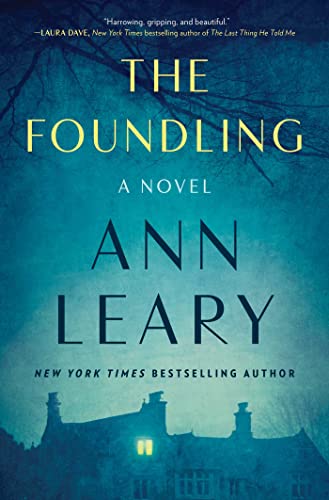
Review: The Foundling by Ann Leary

Women have long had little control over their own bodies and lives. This is both true historically and even up to today, despite what we have already overcome. Ann Leary's disturbing and horrifying, but ultimately captivating, Prohibition-era historical fiction, The Foundling, based on her own grandmother's experiences, shows how little autonomy women had historically through the horrors of eugenics.

Although Mary Engel's father is alive, she was raised in an orphanage until the age of 12 when her father reclaimed her and dropped her off, unwanted and unwelcome, at her aunt's house. It's 1927 and Mary is attending stenography school when she meets Dr. Agnes Vogel, a respected psychiatrist, one of the few women in her profession, and a hero of Mary's. Dr. Vogel invites Mary to become her secretary at the remote Nettleton State Village for Feebleminded Women of Childbearing Age. Initially Mary believes that the women held at the asylum are of limited mental capacity and that their incarceration at Nettleton is a kindness to them. Then she recognizes a woman who was raised in the same orphanage Mary was, a woman who is most emphatically not "mentally incompetent." As she looks further into Lillian's situation, she unwittingly uncovers the truth about the troubling institute and the doctor at its head. Will she turn a blind eye or will she stand up for the voiceless women, trapped in a mental institution with no hope of release and suffering terrible abuse and cruelty?

The history and practice of eugenics is a shameful one in our history. It is a moral failure of gigantic proportions that required complicity and compliance from too many people. In Mary, Leary has created an initially naïve character who must look to herself and find her moral center before she can acknowledge the great wrong going on around her. She gains strength as the novel goes on and learns to see the complex layers of those around her and to acknowledge the ways in which society has failed, or chosen to punish, women who do not conform to the accepted norms, especially the young women incarcerated in the asylum because their husbands or fathers didn't approve of their behavior. The story itself is dramatic and action packed and Leary manages to weave a recognition of the grievous wrongs of not only eugenics but also racism and anti-Semitism into Mary's moral awakening. Readers will want to race to the end to see what happens to each of the characters in this twisting and surprising novel.

This book is one of the Women's National Book Association's 2022 Great Group Reads.

Monday, October 31, 2022

Review: Godmersham Park by Gill Hornby

Anne Sharp was a real person. She was young Fanny Austen's governess. And she did develop a lifetime friendship with Fanny's aunt, Jane Austen. Those are the facts we know. We do not know what brought her to working as a governess and what her early life was like but luckily we have Gill Hornby, who has imagined a rich and interesting backstory for Anne and fleshed out her life at Godmersham Park, the inherited home of Edward Austen (eventually known as Edward Austen Knight). Godmersham Park is not a story of Jane Austen. It is a story of Anne Sharp, who became her friend but who lived the kind of life that so many women without male protectors or kind relatives might face in that time.

Anne Sharp is 31 years old. Her mother has died and her adoring father has inexplicably abandoned her. Gently raised and alone in the world save her old nurse, she has few options for her future life. She can accept the marriage proposal from the leering and odious lawyer who tells her of her straightened circumstances or she can take one of the only other avenues available to an educated woman in the early 1800s in England: she can become a governess. Although being a governess is a rather tenuous position, neither upstairs nor downstairs and employed completely at the discretion of the master or mistress of the house, it is still a respectable position. Anne takes up her first post at Godmersham Park, the Kent estate of Edward Austen, as the governess to 12 year old Fanny Austen, the oldest child and daughter of the house.

As Anne settles into her role as governess she must learn her place adjacent to the family. She suffers the animus of many of the other servants but she genuinely likes her charge and finds life at Godmersham Park mostly comfortable and untaxing. She is lonely though. She doesn't entirely approve of Henry Austen, Mr. Edward's good humored and playful brother who visits often. He is much beloved by the family and while Anne sometimes enjoys sparring with him, she is also always cognizant of her place and incredibly frustrated when he teasingly crosses lines that could cost her. When the newly widowed Mrs. Austen, Cassandra Austen, and Jane Austen come to Kent, Anne's intellect can shine and she revels in their comfortable and welcoming company. But that shining may be one more piece in her eventual downfall.

Hornby has created an intriguing and certainly possible backstory for Anne Sharp. The narrative goes back and forth between the present of Anne's life in the Austen household and her past as she tries to understand why she has been forsaken by her father. The reason is quite obvious to the reader though, even if not to Anne. There are glimpses of Anne's skill as a teacher and her great understanding of the pitfalls of being a woman in her time, especially one who has no wish to marry. She is both an advocate for women's right to self-determination and freedom and very cognizant of reality. The book is historically accurate and Hornby has woven fact and fiction together seamlessly, using Fanny's childhood diaries as a major source for her characterizations. This is not a Jane story but it is smart and compelling (and sometimes horrific) and gives an intriguing glimpse into the well to do life of Edward Austen, his family, and into the life of an intelligent and perceptive governess during her two years with such a family.

For more information about Gill Hornby and the book, follow her on Twitter orInstagram, look at the book's Goodreads page, or look at the reviews for others' thoughts and opinions on the book.

Thanks to Laurel Ann from Austenprose and publisher Pegasus Books for sending me a copy of the book to review.

Monday, October 17, 2022

Review: The Belle of Belgrave Square by Mimi Matthews

Of all the Disney Princesses, most book lovers probably identify most with Belle from Beauty and the Beast. A romance with a reader as a main character? Yes, please! Mimi Matthews must feel the same way since her newest Victorian romance, The Belle of Belgrave Square, very definitely owes quite a bit to Beauty and the Beast (as well as The Story of Bluebeard and several other stories she mentions in her author's note at the end of the novel).

Julia Wychwood is a beautiful young woman who suffers from crippling social anxiety. She is the wealthy heiress to invalid parents who are clearly hypochondriacs, continually summoning the doctor for their many imagined debilitating conditions. Her anxiety means that she doesn't want to be out in society (she takes books with her when she must attend balls and gatherings in case she needs to escape to somewhere quiet) but as an eligible young woman she can only feign illness to avoid these obligations so often. And doing so has earned her a reputation as fragile and sickly. Captain Jasper Blunt is known as the Hero of the Crimea. He is a big, imposing man and has a large scar on his face. His brutality during the war is whispered about in the drawing rooms of London. He owns a crumbling home in Yorkshire which needs a large influx of money to repair and maintain. Goldfinch Hall is also where his three illegitimate children live, a fact that scandalizes society. He is pursuing Julia for her fortune. She knows it, and he is very honest about it. Initially though, he terrifies her. It is only through his continued chivalry towards her and his genuine care for her well being that she comes to see him as a way to escape the odious suitor her parents have chosen for her and the London social scene that makes her so unhappy.

Julia is a romantic and dreamy young woman. She loves novels and the exciting stories they tell (if you haven't read Lady Audley's Secret by Mary Elizabeth Braddon that Julia is reading, you're missing out on some fantastic gothic sensationalism). It is through their shared love of novels that she and Captain Blunt first start to know each other. They are very honest about their feelings for each other and take the time to try to get to know each other before intimacy, which is refreshing. The major stumbling blocks to their growing relationship are the secrets the Captain is keeping from Julia, including a locked tower room, and Julia's father's selfish opposition to their marriage. Julia sees to the kind heart of her emotionally wounded husband and he sees the strength in his shy and anxious wife, proving that people can change and grow despite gossip and reputation, especially if they are surrounded by love.

This is the second book in the Belles of London series but it easily stands alone. It is a closed door romance, focused far more on the characters, who they are and how they relate to each other, than on the physical side of their love. There is a major plot twist that is evident from the beginning of the novel but Matthews intentionally gives the reader easy clues to this, which is only one of the surprises Julia uncovers. These characters who are not valued by many others for who they truly are come alive in this swoony romance. I suspect that while Julia might say there weren't enough adventures in it, she'd wholeheartedly approve of the romance aspect if she were reading her own story.

For more information about Mimi Matthews and the book, check our her author site, like her page on Facebook, follow her on Twitter, Instagram or Pinterest, look at the book's Goodreads page, or look at the reviews for others' thoughts and opinions on the book.

Thanks to Laurel Ann from Austenprose and publisher Berkley Romance for sending me a copy of the book to review.

Review: Dark Country by Monique Snyman

Horror generally makes me run screaming in the other direction. I am a coward with my own active imagination. And I value my nightmare-free sleep a lot. So I rarely ever read anything that could interrupt that sleep with panic. Not that this means I always succeed in avoiding scary books but I sure do try. So why did I willingly pick this up, knowing that it is classed as horror with paranormal elements? It's hard to explain but I had it on good authority that there was more here than just a story about a serial killer. And there was but perhaps not enough for a reader like me, who is generally put off by the gory and the gruesome.

Esmé Snyder is an occult investigator in her family's business who is sometimes called to consult on cases with the South African Police Service. The story opens with her being called to the scene of a particularly ghastly crime. The body of a mutilated twenty-something black woman has been discovered in a field and the murder is being considered as a possible ritual murder. Quite quickly, several more ghastly ritualistic murders are discovered but nothing seems to tie them together besides the horrific mutilations, the attention seeking aspects of the crime scenes, and the way that there is something paranormal at work, draining the life force from and deadening the entire crime scene. Esmé will have to track and try to stop this soulless killer even as he might be tracking her.

The novel is narrated by Esmé but also offers third person chapters that give the reader the serial killer's point of view. This allows the reader to see his motivations in a way that Esmé cannot. There are also news articles and internet comments about the cases showing the public's response to both the horrors of these murders and the police handling of them. Mixed in with the murders and Esmé's investigation is some information about her family and past and even more about her on-again, off-again involvement with a co-worker, which evolves into a love triangle. Both of these plot threads are very secondary to the ritualistic, ancestor magic driven sacrifices that litter the story. Esmé is a strong character but she makes questionable decision after questionable decision, often resulting in her needing rescue herself. She is smart enough not to do these things, and yet... She holds herself at an emotional remove and doesn't accept help easily despite being surrounded by people who can, should, and want to help. The inclusion of South African myths and religion makes the story more intriguing, especially for readers not familiar with either. It is clearly a story about power and evil and what drives people to such lengths. The final pages of the novel definitely imply that the end is not the end and that there will be more books to come. While this may not have been the book for me, it would be a good book for people who enjoy horror and serial killers, those who are fascinated by religious zealotry growing on a scaffolding of insanity, and those who appreciate a little of the paranormal and the unexplainable in their reading.

Thanks to the publisher for sending me a copy of this book for review.

Thursday, October 6, 2022

Review: In the Shadow of a Queen by Heather B. Moore

Queen Victoria and Prince Albert's love story is quite well known among those who have a fascination with historic British royalty. Victoria's long mourning after the early death of the love of her life, the father of her nine children, is looked at as the pinnacle of devotion and love. But that's in the abstract. On a more personal level, Albert's death changed not only the happy life of his wife and sovereign, but also those of his children, especially the children still living at home. Heather B. Moore's historical novel about Princess Louise, the fourth daughter and sixth child of Victoria and Albert, takes readers from a year prior to Albert's death to the years afterwards as the princess and her siblings grow up and take their places in royal families across Europe and in the Queen's service.

Princess Louise, called Loosy by her family, was a free-spirited, artistic young girl. She is close to several older siblings, including the Prince of Wales, her older brother Albert, and to her younger siblings. She is doted on, admired for her beauty and her artistic talents. Her life is one of great privilege but also great constraints as a royal child. At 12, when the novel opens, she is young enough to be just on the cusp of understanding what is swirling around her in her family's private life and also on the larger stage of world politics, not that a well-bred princess concerns herself with the latter. When she is 13 and her father dies, much about the happy family changes. Victoria plunges into mourning that she will maintain for the rest of her life, retreating from public life for a prolonged time. Without her beloved Albert to advise her, she presses her oldest unmarried daughter into the role of her secretary, a role that eventually becomes Loosy's as her older sisters marry and leave the palace. This gives the unconventional young woman an even greater interest in politics and the causes of her time. Although forbidden by her mother to act on her feelings, Loosy is a suffragette at heart and longs to break other boundaries as well, not least in her art (sculpting is not for women, and definitely not for gently bred young women) and in her marriage (she has no interest in marrying any of the available royals presented to her).

Moore captures well the dichotomy of a woman who is not just a daughter, but a daughter of the queen, owing her mother filial duty and also the duty of a subject. Princess Louise fully knew her responsibilities but also knew how to get many concessions from her mother in order to live out her dreams, even if they were occasionally modified a bit. She was a fascinating historical figure. The story is well researched and the chapter epigraphs from actual royal letters and diaries help give a flavor of the real people behind Moore's fictionalization. Spanning just over a decade of Loosy's life, from the year before losing her father to the early days of her marriage, the novel is an intriguing look at the forces that shaped this most unconventional of Queen Victoria's daughters. The imagined family scenes feel true to the people we know historically and the contrast of life in the royal household prior to Albert's death and after is beautifully rendered. Louise's interest in politics and suffrage, although not encouraged by the Queen, is easy to understand, surrounded as she was by the daily knowledge of the realm and the wider world, despite the very sheltered way that the royal children were raised socially. That Loosy became such a force, advocate, and founding support for so many artistic and educational organizations speaks to the strength of her personality as does her drive to improve her natural artistic talent and make beautiful sculptures that survive today. Some of this very impressiveness is subsumed during the lengthy search for a husband and while the search itself is important, and groundbreaking in the fact that she was being allowed to marry outside of her class but also to choose her own husband (within reason), it did detract from the otherwise intriguing young woman. Over all, the book was a tantalizing glimpse into the life of a woman, a princess, who broke the mold in so many ways and is so rarely remembered today.

For more information about Heather B. Moore and the book, check our her author site, like her fan page on Facebook, follow her on Twitter, Instagram or Pinterest, look at the book's Goodreads page, or look at the reviews for others' thoughts and opinions on the book.

Thanks to Laurel Ann from Austenprose and publisher Shadow Mountain Publishing for sending me a copy of the book to review.

Wednesday, October 5, 2022

Review: an open door by Anne Leigh Parrish

We're all familiar with the image of Rosie the Riveter, the strong and capable woman who stepped in when American men went off to fight in WWII. But what happened to all the Rosies out there once the war was over and the men came back, went back to school, and rejoined the work force? Very few people address women's lost freedoms of the late 1940s and 1950s. In Anne Leigh Parrish's newest novel, an open door (lower case intentional), her main character is directly affected by this unfortunate and unfair regression and by the expectation that women settle back into the world they inhabited before the war.

Edith works as a secretary at the UN in New York and lives with her estranged husband's unconventional aunt. She has left Walter and endures his frequent letters imploring her to return to Cambridge, where he is in law school, and to take back up the mantle of a proper (and appropriate) wife. Her life in New York is more fulfilling than her life in Cambridge but she is still unsatisfied. After an alcohol-fueled one night stand with the son of a friend of Aunt Margaret's, Edith abruptly decides to return home to Walter, going back to a stultifying existence of cocktail parties, intellectual stagnation, and ignoring her husband's infidelities.

Edith had to abandon her own plans to pursue a doctorate in order to conform to Walter's and society's idea of the perfect post-war wife. She grew up with the message that girls and women were lesser, her father being borderline abusive to his wife and daughter. Despite the examples all around her, she cannot quite force herself to completely conform to the expectations of the times. The novel is character driven and both funny and sad. It's sad for the way in which women were so trapped and forced to endure a life and marriage that wasn't in any way fulfilling. "They married. The first time they had sex they fell off the bed, which Edith found hilarious, and Walter found mortifying. The sex was terrible, and Edith told herself it would get better with practice. It didn't." (p. 31) But there is humor in there too.

Pieces of Edith's past and her long relationship with Walter are woven into the present of the narrative, showing the reader just who Edith is, why she reacts the way she does, and how she'll find her way to happiness and selfhood in a time and society that didn't present any easy alternatives to a stifling life for women. Edith is thoughtful and intelligent and while she will acquiesce for a time, she won't stay a second class citizen forever. The door to a new life may be a small and seemingly insignificant but it is open and she'll find a way to walk through it. There is a quiet tone to the story and there is no big climactic scene driving the plot but the novel is beautifully written and Edith is a complex, flawed, interesting character. I'll always search out everything Anne Leigh Parrish writes.

For more information about Anne Leigh Parrish and the book, check our her author site, like her on Facebook, follow her on Twitter, look at the book's Goodreads page, follow the rest of the blog tour, look at the reviews for others' thoughts and opinions on the book, and purchase here.

Thanks to Lisa from TLC Book Tours and publisher Unsolicited Press for sending me a copy of this book to review.

Sunday, October 2, 2022

Review: Singing Lessons for the Stylish Canary by Laura Stanfill

The Blanchard family in Mireville, France has long been master craftsmen in the making of serinettes, hand-crafted barrel organs used to train canaries to sing particular pieces. This gives them quite a high status among their fellow villagers and indeed among the other music makers as well. Georges Blanchard is born a colicky baby whose noisiness disturbs his father as he tries to hear each musical note. When Georges finally stops crying and is taken to the village to show the others, the perpetual gloom that has shrouded the village breaks and in a miracle, the sun comes out. Henceforth he is known as the Sun-Bringer. Problematically, the sun does not go away, which can be interpreted several ways. This is the family into which Henri Blanchard is born, son of the Sun-Bringer, quiet and sensitive boy who doesn't fit in with the other village boys, son destined to inherit his father's workshop but who wishes to learn the art of bobbin lace making like the women in the town, a family in which he has much to live up to.

This is a gentle story with elements of the fantastical and it reads like a fairy tale of sorts. Henri wants acceptance, from his father and from the others in town. He only know pieces of what make him an outsider (showing his emotions; his father's, and therefore his, status in the village; spending time with girls) but when a large secret is revealed and then an unbelievable talent is uncovered, he comes to a more complete understanding. The novel has a unique premise even while it addresses familiar issues like friendship, parenting, acceptance, and a search for selfhood. Henri is a tender and appealing character and his discovery that serinettes, while beautiful and skillful music boxes, repress canary's natural chirps and trills is very much a metaphor for his own young life. The village women seemingly have no power and yet their small rebellions show this to be untrue and ultimately culminate in something major. Stanfill's writing is beautiful, giving the novel an elegant and timeless feel. There are some fairly big plot lines that simply disappear here and the end of the story might be hard for some readers but I thought it gives the novel a hopeful, continuation sort of feel. This is an unusual, intriguing story with many layers and one that readers looking for something different should give a chance.

Thanks to the publisher for sending me a copy of the book for review.

Saturday, October 1, 2022

Review: The Keeper by Kelcey Ervick

I was a competitive swimmer for 15 years, from the age of 7 all the way through college. I swam in summer leagues, on school teams, and on competitive year-round teams. Swimming was a huge part of my life. Some of my best friends were my fellow swimmers. Even my husband was a fellow swimmer. As a girl born in the 70s, I never really questioned the fact that I was able to join a team. Title IX was always an unquestioned part of my life. In her graphic memoir, former soccer player Kelcey Ervick, who is exactly my age, did consider the fact that she was a part of the first generation of girls who lived their whole sporting careers with the protections of Title IX. She weaves the history of women’s soccer (football), the fight for recognition of women’s sports, and her own impressive journey on the soccer pitch together to form an informative and interesting graphic memoir.

Opening with Ervick watching the video made by a teammate’s dad in 1987 when her travel team went to the US Girls’ Nationals Tournament, the video becomes a jumping off point for her musings about the way that girl's sports were perceived at the time (and to be fair, oftentimes today as well—just look at the disparities between the US Women’s National Soccer Team and the US Men’s National Soccer Team). She talks about her own personal experience as a keeper, the toll it took on her body, the friends she made and lost, the exhilaration of playing (and winning), the burnout, her eventual comeback in the sport she loves, and what made her a writer. The entire memoir is hand lettered and the artwork is mostly simple line drawing comics with an occasional collage thrown in. It’s a very fast read, full of interesting and important information about women in soccer, and by extrapolation, women in sports. Give it to your soccer playing daughters (but not until you’ve read it for yourself).

Thanks to the publisher for sending me a copy of this to review.

Friday, September 30, 2022

Review: The Double Life of Katharine Clark by Katharine Gregorio

Communism. Dissidents. Repression. Secret Police. How do we know about these things today? We know about them because of the reporters and journalists who risked their own access and livelihoods to inform the West what was going on in the countries behind the Iron Curtain, to the people and the institutions not represented by a free press. Most of these journalists were men. But not all of them. Katharine Clark was one of the few women who lived this life too. She not only reported on Yugoslavia, but she was instrumental in getting the writings of former Vice President and outspoken dissident Milovan Djilas to the West. This is the story of her drive for the truth, her friendship with Milovan and his wife Steffie, and what she risked in smuggling Djilas’ work, including The New Class, out of the communist country right under Tito’s nose. It is a history forgotten until now.

Katharine Gregorio is Clark’s great-niece and namesake and she has done an impressive amount of research into her great-aunt’s life and work overseas. Spanning the decade during which Clark and her husband, a fellow reporter for another news outlet, covered the unrest in Eastern Europe and that part of the world’s relationship with communism and the Soviet Union, this is less a biography of Clark than the tale of how she came to play such a pivotal role in Djilas’ access to the West. While Gregorio does weave some of Clark’s personal life into the book, the overall focus is on the single-minded drive to get a story, the obstacles Clark overcame as the only female accredited journalist in the area, and the pulse pounding, spy novel worthy ways in which she got information out of the country while trying to protect Djilas and his family from their own government.

Although this is non-fiction, Gregorio has chosen to share Clark’s interior thoughts and feelings. And while these might be reasonable extrapolations from diaries and letters, the reader so frequently knows Clark’s musings that they come across as invented. Once Gregorio gets to Clark’s work with Djilas and the means she used to make sure that his work would be published and publicized (to help keep him safe), the narrative slows down under many, many details, ostensibly because this was what her great-aunt chose to record so meticulously, in contrast to the time before she became friendly with Djilas. The tension was certainly higher once she started working with the former Communist official on his papers but the unequally detailed recounting made the tale lopsided. The fact that there were only a few brief paragraphs about the last twenty years of Clark’s life was a bit of a disappointment; focused as the story was only on her pivotal role in Djilas’s public denunciation of Communism rather than her life as a whole. Katharine Clark was an impressive woman with nerves of steel and it’s wonderful that her role in all of this is finally being told but I got bogged down in some of the minutia and often felt at a remove from the story itself. Fans of Cold War history, readers who want a close look at the importance of a free press, and those who enjoy stories about trailblazing women will likely enjoy this narrative non-fiction, despite my noted reservations.

Thanks to the publisher for sending me a copy of this book for review.

Tuesday, September 27, 2022

Review: Funeral Train by Laurie Loewenstein

Several years ago, Loewenstein's first Dust Bowl Mystery was selected for the Great Group Reads List by the Women's National Book Association. At the time, I wasn't really reading mysteries, even literary mysteries, but since I'm the Chair of the committee that chooses the list and my committee had overwhelmingly voted for it, I had to read it. I'm so glad I did. And now I've gotten to revisit the small, struggling Oklahoma town of Vermillion, its sheriff, his wife, and so many of the other characters from the first novel in this second book of the series, Funeral Train.

Sheriff Temple Jennings is on the way to the train depot to pick up his wife, Etha, who has been away visiting a friend when there is a terrible noise and it becomes clear that the train has derailed. Etha is seriously injured and ends up in the hospital in the bed next to an elderly black woman she recognizes from a brief interaction before the derailment. The woman was only spared an immediate death because she was outside the dangerously rickety colored car at the time of the derailment. Temple wants to focus on Etha and her injury but when the cause of the derailment is most certainly sabotage, he must investigate. The following day a reclusive bookkeeper who lived by the railroad tracks is found murdered and now Temple has a derailment and a murder, potentially connected, on his hands. Temple, his deputy, a young man from the CCC (Civilian Conservation Corps), and the detective from the railroad will have to work together, with an assist from Etha, to solve the crimes.

Although this is the second book in a planned trilogy, it easily stands alone. Loewenstein has done a masterful job evoking the hardscrabble town, limping its way through the Depression and the crop smothering Dust Bowl years. She weaves sad and tragic realities of life at the time through the plot without dwelling heavily on them: the suicides, bootlegging, the bankruptcies and subsequent poverty, alcoholism, hopelessness, and moral lapses. She does a wonderful job of bringing small details, like Gwendolyn the wayward cow, from the beginning of the story back in the end. Temple and Etha are lovely characters, devoted to each other and kind to others around them. The mystery is perhaps not the hardest to figure out but the story is more about the people and the community than it is about the mystery. The derailment is based on an actual train derailment in 1929 and the conditions of the colored car and subsequent horrific deaths were taken from that real event. Given that basis, the racial aspect of the story did not play as big a role as might be expected although it definitely feels as if that dangling plot thread will come back again in the final book of the trilogy. I enjoyed checking back in with the residents of Vermillion and appreciated the engaging story so I'll look forward to book three whenever it arrives.

Thanks to LibraryThing Early Reviewers for sending me a copy of this to review.

Monday, September 19, 2022

Review: After Everyone Else by Leslie Hooton

What would you do to protect your family? Would you take a murder rap if you were afraid that either your beloved husband or child had done it in your stead? That's the central question at the heart of Leslie Hooton's newest novel, After Everyone Else.

Bailey Edgeworth, a respected, award-winning, Atlanta-based restaurant designer, has just been accused of the murder of her ex-husband in New York City. Her DNA has been found all over his apartment and she is clearly visible on his apartment building's security camera. She has an explanation for all of this and insists that she didn't do it. But she's not being entirely honest with her lawyer and he knows it. The question is, why? If she didn't do it, why isn't she being transparent? Who is she protecting? Her husband Griffin, who was also in New York that night? Their daughter young adult daughter Charlie, who lives in New York and is a recovering alcoholic who had a lapse that night?

Although the novel starts out with Bailey's arrest for murder, this is not really a mystery; it is a family story. With first person narration by Bailey, alternating between "Now" and "Then," the novel moves from the present of the arrest and fact finding with Bailey out on bail to her past, marrying Griffin, starting their family, and achieving major professional success. The past portions of the story are longer and more detailed than the present portions, showing the strength of her love for Griffin and his for her. It also highlights her feelings of inadequacy as a working mother and the difficulties, both large and small, she and Charlie had as Charlie grew up. Bailey's certainty that Griffin wouldn't let her take the fall for him if he had committed the murder quickly removes him as someone who needs her protection but as strong as their love is for each other, she still can't ask him why he was in New York that night. This inability is a major plot point but seems a bit inexplicable given their obvious level of trust.

Hooton has portrayed a strong and good marriage, although it has not been without its challenges, and her portrayal of a mother and daughter at odds is well drawn too. The murder charge plot line, while necessary to the story overall, is the thinnest part of the story. The dialogue, which makes up a large portion of the novel, is a bit stilted with its overwhelming lack of contractions. The level of detail about Bailey's designs helps the reader see her vision and the descriptions of food and drink from both her husband and brother will have the reader heading to their own (probably disappointing) refrigerator in search of a gourmet snack. This is a sequel but it does stand alone (not having read the previous book myself, I can say that with confidence). If you too would protect your family without question and want to lose yourself in a story about love and motherhood and guilt and familial bonds, this might be the book for you.

For more information about Leslie Hooton and the book, check our her author site, follow her on Instagram, look at the book's Goodreads page, or look at the reviews for others' thoughts and opinions on the book.

Thanks to Caitlin from Wunderkind PR for sending me a copy of the book to review.

Tuesday, August 2, 2022

Review: The Last Leonardo by Ben Lewis

The ins and outs of the art world are fascinating. How does the value of a painting get determined? How can we be certain that pieces are in fact the product of the famous artist the museum plaque claims they are? What kind of labyrinthine journey has a particular painting gone on before being acquired either privately or by a museum? It turns out the art world is rife with disagreements about provenance, claims unable to truly be substantiated, and missing histories but none of this hampers the high prices sometimes paid for these disputed works. Author Ben Lewis tracks the journey of Leonardo da Vinci's Salvator Mundi, perhaps the original painting copied by his students and painted by the master himself, or perhaps not da Vinci's work entirely, or perhaps not at all da Vinci's, in his book The Last Leonardo.

You'd never have guessed, when da Vinci's Salvator Mundi came up for auction and subsequently sold for the unheard of price of $450 million dollars, that it was the subject of much debate, allegations of fraud, and still simmering questions of provenance. Long the subject of conjecture and considered missing, the painting ostensibly reappeared in 2005, when, if it is in fact the Leonardo it is purported to be, it embarked on just the latest of a long line of travels through the art world. Lewis tracks the restoration of the painting, many of the major players involved in authenticating it as a da Vinci work, it's eventual exhibition despite the rules surrounding which paintings can be exhibited, and the questions still swirling around this impossibly valuable artwork. The story is involved, often convoluted, and unresolved.

But that very difficulty in tracing the painting's past indisputably back to da Vinci, the financial dealings and their tax implications, and the explanation of da Vinci's artistic signature and whether those attributes are present in the Salvator Mundi or not, make the narrative thick and expansive. This is an art history tale about the possible provenance of one painting but also about the art world as a whole, both now and throughout history. It is about the sky-high prices art can command, the exclusivity and problems with private art collectors. It is also about the intersection of art and politics, art and wealth, art and perception/truth. Lewis meticulously and exhaustively researched his story but that sometimes results in too much minutia and a narrative that tries to follow too many threads. Some of it was truly fascinating while other parts really bogged down. The idea of a lost Leonardo da Vinci painting, albeit in poor condition, being discovered in a gallery in Louisiana for less than $2,000 is an intriguing one. It makes us all believe that we too might find something immeasurably valuable in our attics once day if we just look hard enough. The idea ends up being a bit more intriguing than the true story though, even with all of the twists and turns, at least for me.

Wednesday, July 6, 2022

Review: Count the Ways by Joyce Maynard

Joyce Maynard's books can be wildly different from each other. What always endures in her stories though, is an amazing depth of characterization, an intricate look at the lives of the people she's created, and a sympathy for their choices. This same sensibility is on display in her novel Count the Ways, even if the reader doesn't always feel as connected and in concert with the characters as their creator clearly does.

Eleanor and Cam fall in love and create a family in the late 1970s in rural New Hampshire. Eleanor, who was raised by emotionally distant parents, has always wanted a close and loving family. She writes and illustrates a series of quite successful children's books when she is still in college, enabling her to buy the rustic New Hampshire farmhouse she falls in love with. Shortly thereafter she falls in love with Cam, who she meets at a craft fair where he is selling his lovingly handcrafted wooden bowls. Together they create the exact life Eleanor has always wanted, or do they? Several years and three children later, their lives are not nearly as idyllic as they once were. Cam doesn't earn any money, spending his days either playing with the kids or with his head in the clouds, certain that everything will work out. Eleanor, on the other hand, resents what she sees as his carefree and irresponsible attitude towards life, a life she funds entirely, with ever dwindling royalties and contract work she doesn't love. When a tragedy happens on Cam's watch, the already present cracks in their marriage widen even further until everything falls apart.

Opening with the family launching small wooden boats filled with cork people in the brook by their house, the symbolism of the people, some of whom reappear downstream, some of whom disappear, some of whom get waylaid in the long grasses along the brook, and some of whom bob to the surface long after their expected arrival in the calm shallows, is very clearly a metaphor for the story set to unfold in the pages ahead. Eleanor returns to the farm for the wedding of her oldest child, reflecting back on her life, coming to the farm and then leaving it, creating a family and then letting it go. Eleanor remembers when life was postcard perfect, with slow narration already feeling bittersweet, thanks to occasional reminders that it's all going to end. And end it does.

The story spans decades of this family's life, the ways that they hurt each other, but also the ways that they love each other. Eleanor comes across as a bit of a doormat or perhaps a martyr, allowing Cam to not only appear to be the good, fun-time dad he's always been but to keep the farm house that she purchased, to keep the children with him, and to hide his part in the disintegration of their marriage, causing their children to become estranged from her. Her inability to forgive him for the accident that happened on his watch seems to require her to sacrifice everything that was once hers, never mind that she has made every other sacrifice in their marriage leading up to this event. Beyond infuriating. Cam comes across as a perpetual Peter Pan and it is hardly surprising that Eleanor comes to find his attitude aggravating and to resent his laissez faire approach to life. The only surprise is that it takes so long and such a devastating accident for it to happen. There is a lot of unnecessary repetition of imagery here, especially of the cork people, abandoning all subtlety and failing to trust the reader's intelligence. It is extremely slow and feels a bit unbalanced between the before and after of the accident. It's very much a reflective character study, an examination of family, of forgiveness between partners and between parents and children. It is a story of sacrifice and letting go, of the challenge and imperfection of love, and of the ways that the life we might want may not, in the end, be the life we get, or even the life we do in fact want. Perhaps if I hadn't been irritated with the characters most of the time, I wouldn't have felt as if this dragged but as it was, I found it weary, the predictability of Eleanor and Cam, the breakdown of their marriage, and the adult children's exasperating reactions to their mother. There were some surprises along the way and I did appreciate those but overall, this wasn't as much for me as I'd hoped it would be.

Thanks to LibraryThing Early Reviewers for sending me a copy of this book to review.

Popular Posts