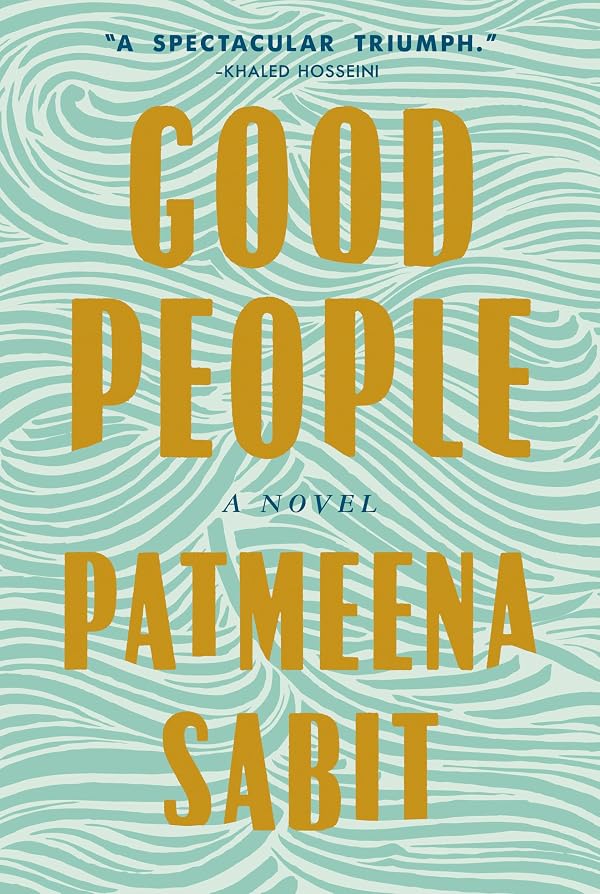
The Sharaf family immigrated to Northern Virginia from Afghanistan. Father Rahmat worked incredibly hard and became very successful financially. Father, mother, and four children (two older and two younger) tried to abide by the expectations of their Afghan Muslim community while striving for the American Dream. Oldest daughter Zorah, in particular, appeared to be the embodiment of what they could achieve in this country, until something went wrong.
The novel is told in a sort of Greek chorus of narrators, short interviews with people who knew (or didn't) members of the Sharaf family. Community members, family friends, school friends, a lawyer, law enforcement, the media, neighbors who didn't really interact with the Sharafs, and more form the core of the story and shape the reader's perceptions of who the family was and what they would be capable of. Notably, the voices the reader doesn't hear from are the Sharafs themselves. Everything in the book is speculation or opinion, based sometimes more and sometimes less on facts. Certain of the interviewees are supportive of the family and then later in the telling, their telling changes tenor. Everyone speaking about the family comes to the situation with their own perspective, their own axes to grind, their own jealousies, their own misunderstandings, their own moral stances, and their own prejudices. And still, with all the tellings but without the Sharafs, the complete truth of what happened remains undiscoverable.
Sabit has written a completely engrossing novel, one that forces us as readers to look at our own previously unexamined prejudices, to consider how we make decisions, what are our preconceived assumptions and whether they are open to change, and how much indisputable information do we require, especially in this climate of viral social media and rampant misinformation, before we pass judgment. This is a novel about the power of public perception, both within the community (are the Sharafs "good Muslims") and in the greater American society. Were the Sharafs too American? Were they not American enough? And who gets to decide? The slow doling out of information and the rising tension of what happened and how the larger public responds to it is presented incredibly skillfully as readers confront the role that racism and identity play in the coverage they are reading, especially as this is the only information from which they as readers can determine the truth. The chapters are short and the pages turn quickly as the reader races to try and discover first the terrible thing that has happened and then the truth of that occurrence. Too much reading about the book will spoil the effect of the sparingly doled out information so I implore you not to research this book very much. Just read it blind. Gulp it down. And then try to reconcile your opinion of the truth with *all* of the facts presented. I'm here if you want to talk about it once you turn the last page.


No comments:
Post a Comment
I have had to disable the anonymous comment option to cut down on the spam and I apologize to those of you for whom this makes commenting a chore. I hope you'll still opt to leave me your thoughts. I love to hear what you think, especially so I know I'm not just whistling into the wind here at my computer.