Sunday, September 6, 2026

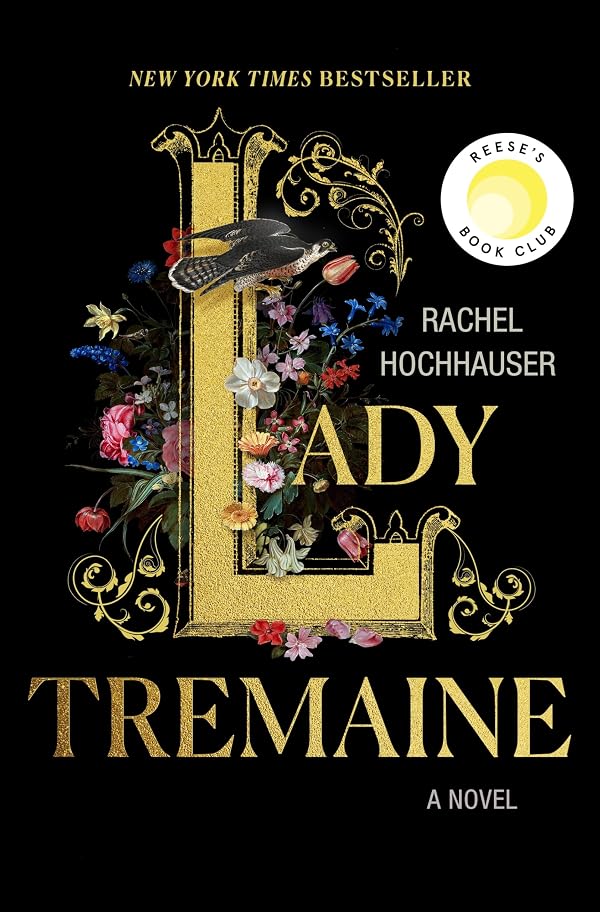
Review: Lady Tremaine by Rachel Hochhauser

We all know the Cinderella fairy tale, the Disney version if not the Grimm’s version. So, we all know that Cinderella's stepmother is a monster, her stepsisters are spoiled and hateful, and that she is only rescued from her life of servitude by her Prince Charming. But that story is wholly from Cinderella's perspective. What if her stepmother had a chance to tell her side of things, reaching all the way back to her own childhood and to the series of life decisions that brought her to marry Cinderella's father. What if she wasn't a monster? Rachel Hochhauser's enchanting novel, Lady Tremaine, takes this very premise and not only makes it come to life, it also takes the Prince Charming and "happily ever after" ending and turns it on its head in surprising and satisfying ways.

Lady Ethelreda Verity Isolde Tremaine Bramley is out hawking on royal lands to try and find game so that she, her two daughters, and her stepdaughter Elin will have a meager portion of meat in their stew. Surprised at this illegal endeavor by a stranger, she hies back to the once gracious home, now crumbling, where she and her daughters try to maintain appearances. Advantageous marriages are the only things that offer them any hope of rising out of the poverty into which they've sunk since Ethel's second husband died. Once at home, she discovers a royal messenger delivering an invitation to a ball designed to find the Prince a wife. The invitation is only for her stepdaughter Elin though, not Ethel's own daughters, a circumstance that she must remedy. The only way to get her daughters included will force her to come face to face with her past and ultimately to confront what her stepdaughter means to her.

These are not the familiar characters from the fairy tale. Ethel is not perfect, nor does she attempt to whitewash her mistakes, her occasional pettiness, or her pride. She does, however, offer explanations for her decisions, understanding that sometimes women don't have a good choice in front of them, they just have to choose survival, whatever that looks like. Elin, the Cinderella character, is sheltered and adored by her father and even after his death, she has no desire to see that stepmother Ethel's requests reflect their straitened circumstances and the reality of an all-female household without male protectors. She spends her days spouting platitudes she's read in a book from her late mother's collection and generally wafting about without contributing to the family. She is naive and innocent but also infuriating and willfully blind. And she has never allowed Ethel to forge much of a relationship with her, keeping her at arm's length. Ethel's daughters, Rosamund and Mathilde, understand the reality of their lives and pitch in as they can with the skills that gently bred young ladies possess. They are normal girls though, sometimes resentful of Elin's ability to rise above or ignore requests and angry that she is allowed to get away with such behavior. When Elin captures the attention of the handsome Prince at the ball, it seems as if the Bramley family's lives will change significantly for the better, even if not through the daughter that Ethel would have chosen, but just as the women's characters are different from the fairy tale, so too is the Prince's. So the story is far from over.

This is a completely engrossing tale centered less on "happily ever after" than on the demands that society makes of women, the social strictures that handcuff them, and the ways that they must make their own lives and rescue themselves. Hochhauser's writing shines in this reimagining. Ethelreda is recast from one-dimensional villain to a fully realized, flawed but fierce and human character. The twists and turns of the plot elevate this far above a simple morality tale. Ethel's primal mother-love for her daughters drives her actions at every turn. Her desire to protect them, to ensure their futures, to grant them the happiness that was so fleeting in her own life is absolutely uncompromising. This may have started out as a Cinderella retelling, but it ended up a tale of resilience, determination, and family with a surprising villain. Lady Tremaine is dark, twisty, and compelling in the best possible way.

Thursday, September 3, 2026

Review: Prom and Prejudice by Elizabeth Eulberg

While my now adult daughter was culling her bookshelves at my house, she put this one in the giveaway pile. Now, there was no way I could part with a Pride and Prejudice retelling without first reading it myself. I do love Pride and Prejudice like every other white girl English major in history and while this was cute enough, it didn't have the bite of the original to elevate it beyond simply rehashing the story.

Lizzie Bennet is a junior at the very exclusive Longbourn Academy, a boarding and finishing school for girls in Connecticut. She is a gifted pianist and it is this talent that won her a scholarship to Longbourn. The other students are awful, ultra-rich, entitled little snots, with the exception of her genuinely sweet and kind roommate Jane Netherfield and the other scholarship student, Charlotte Lucas. Lizzie endures brutal bullying (for instance, someone throws a milkshake on her simply because she is "poor" and she has her non-designer label winter coat stolen at a party, among other incidents) but she endures because this school is the place for her to be to further her musical education and eventually pursue a musical career. When the book opens, Lizzie is headed back to school for second semester, the semester where all of the girls are eagerly anticipating the spring prom, the biggest, most important social event on the Longbourn calendar. Jane is excited because Charles Bingley is back at Pemberley Academy, the boy's school, after a semester in London. With him is his standoffish friend Will Darcy. From there, if you know the original, you know the story.

Eulberg has stayed incredibly faithful to Austen and in this case a few deviations might have added a bit to the story. The character development relies entirely on the reader knowing the original novel, the dialogue can feel stilted and unrealistic for teenagers in the 2000s, and occasionally it has to try quite hard to bend a modern day story starring teenagers to the plot of the original (hence the idea that a few deviations might have been to its benefit). It's kind of cute and fluffy but, in the end, rather flat, lacking all of the nuance that makes Austen sing.

Tuesday, September 1, 2026

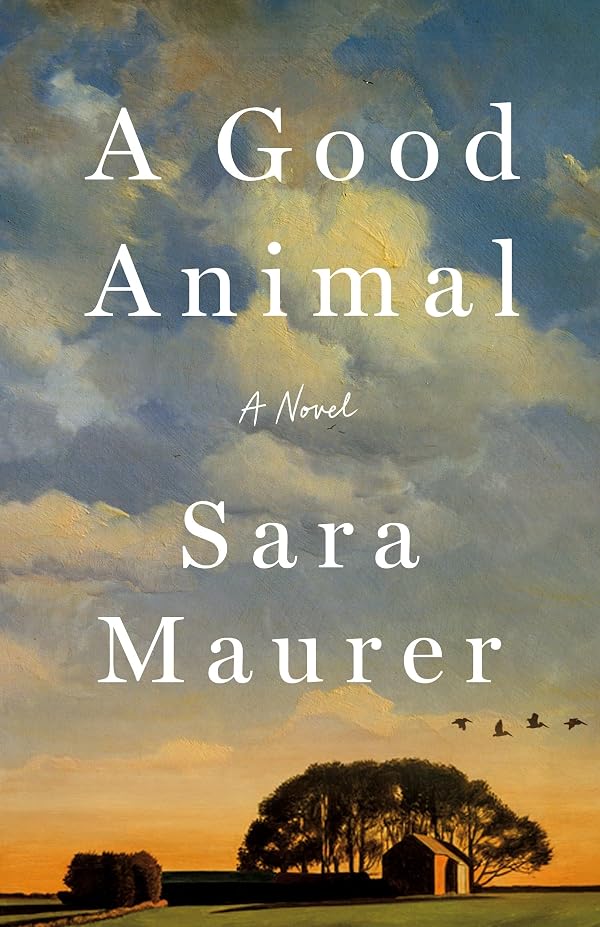
Review: A Good Animal by Sara Maurer

Sault Ste. Marie, in the Upper Peninsula of Michigan, is probably best known for the Locks, which allow freighters to move from Lake Huron to Lake Superior and vice versa. And while much of its economy does revolve around shipping and the lakes (and the tourism the latter brings in), it is also surrounded by vast tracts of farmland, so a good portion of its population works the land rather than plying the waves. I have spent every summer of my entire life not too far from the Soo so finding a book set in a place I know so well was a nice surprise and I happily chose it for my summer book club. While we are all more attuned to life on the water than farm life, we all appreciated this debut novel and the way that it captured the heart and soul of the people of the area.

Everett is seventeen and heading into his senior year of high school. He wants to follow his father into sheep farming. It is just who he is, without question. Despite the toughness of the life, he is eager to earn enough money to start his own herd and make his own decisions about the sheep. His pay from summer haying and his winnings from the county fair should enable him to finally do so. His dreams are sent a bit sideways though, first when his sister discovers that her pet show sheep is destined to be slaughtered for meat unless Everett buys it for her, and second when a new girl, Mary, moves into town with her Coast Guard father. Mary has no intention of putting any roots down in Sault Ste. Marie and Everett can't imagine himself living anywhere else. Being teenagers, their being at odds about what life looks like after graduation will become a problem for future them as they live completely in the present.

Maurer has created a book that captures the UP and the people living in it beautifully. Yoopers really are their own unique people and this novel displays them sympathetically and honestly. It's a well wrought coming of age novel, a heartbreaking tale of first love. Hard life lessons, mistakes, and a very tough ending that comes slightly too quickly, although not unexpectedly, are realistic. There is no doubt that Everett, who narrates the novel, is firmly of the soil where he was born. He is sweet and empathetic but quiet and reserved, unused to sharing his feelings out loud. That he can't imagine Mary wanting something different from what he wants and that they don't discuss most of the decisions they do make, marks him very definitely as a teenage boy, still learning about life while trying to make very adult decisions. He sees his own parents' loving marriage and imagines he will have something similar with Mary, without truly understanding everything his parents had to overcome and do to make the contented life they have. Mary, who is only seen through Everett's eyes and so is more inscrutable, is biding her time until she can leave her apathetic father and this small Midwest town although she cannot help but be drawn to Everett, who loves with his whole heart, even as everything about his farming life bothers her. The farm life itself, with all of its brutal realities (there are some gruesome scenes of death), is carefully drawn in its totality. The writing is descriptive and vivid. There is a sadness and a hearkening back to the past that weaves through now adult Everett's recounting of 1995-96, the telling of a year that shaped him forever. If an abundance of farming details don't bother you as a reader, this deliberate and heartbreaking tale of growing up and becoming an adult, with all the joys and diappointments attendant on that growth, is worth the read.

Popular Posts