Thursday, August 27, 2026

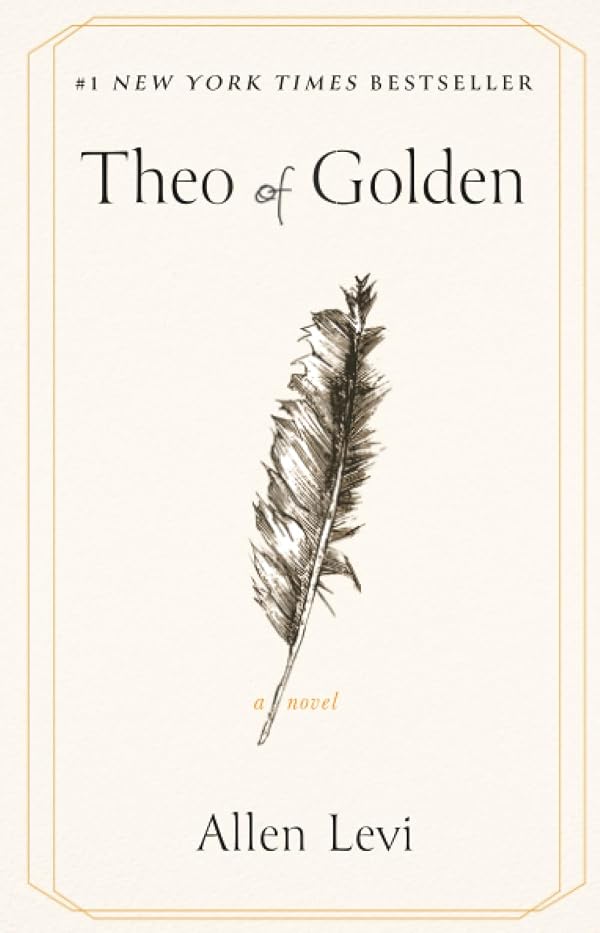
Review: Theo of Golden by Allen Levi

This book has been on the best seller list (or lists) for about a thousand years now. I had no intention of reading it, even when people I knew started gushing about it. It just didn't really appeal to me. And then my book club chose it so I was obligated to read it. I really wish they hadn't because my instinct about how I'd feel about it was spot on. I hated it. I'm so baffled by what others see in it and am sorry I spent precious reading hours on this "emperor has no clothes" book.

An elderly man named Theo arrives in a smallish southern city called Golden. He offers no reason for coming to this place, doesn't give his last name or any information on who he is, but he settles into the town quietly, staking out a favorite park bench and frequenting the local coffeehouse. When he sees a series of pencil portraits of local people for sale on the walls of the coffeehouse, he decides that he will buy them and gift them to the people who are the subjects of each one. As he gives the portraits to the people, he learns about them and their lives, he eventually connects with the artist, and he ingratiates himself in the daily life of the town folks, like the bookseller and the man from whom he rents his apartment (and who is the only person with whom Theo shares his identity and his reason for being in Golden).

The premise sounds heartwarming enough but the execution moves beyond heartwarming and straight to saccharine treacle. Every person this genial old man gives a portrait to instantly offers him their innermost thoughts and feelings, telling him personal and private information about their lives without reservation. The only person who doesn't happily accept the gift is a woman whose abusive boyfriend intercepts the letter and the portrait. The instant acceptance and lack of skepticism about this man, and the immediate opening up of the recipients strains credulity more than a little. The characters Theo meets are all simple, uncomplicated, and flat, caricatures rather than complex human beings. His secret is telegraphed long before the end of the book, making the revelation anticlimactic. The tales of the portrait people went on far too long, making this reader incredibly tired of the boring inhabitants of Golden. The writing was overly descriptive, to the point of being florid, and repetitious. OK, we've got it, there are ninety-two portraits. You don't have to keep repeating this fact. (But there actually aren't only ninety-two as Asher, the artist, replaces the portraits with others as they sell to Theo.) There is a lot of heavy-handed Christian theology in here as well, despite no mention of this in the blurb, which seems dishonest in the marketing of the book (and the author had a large hand in the choice of marketing so this can be laid at his feet rather than the publisher's). The Theo character is alternately presented as a Jesus figure and as a saintly disciple, neither of which felt comfortable even in an obvious parable such as is presented here. There is only the slightest hint of a plot with the bulk of the book being long philosophical, Christian-coded conversations between Theo and the people to whom he's giving the portraits. In the end, the only thing I liked about this book was that other people (including my entire book club) liked it and felt that it offered them hope for the future (I don't see it, but this is what they told me). As for the book itself, it was poorly written, one dimensional, and far, far, far too long. I cannot recommend it.

Wednesday, August 19, 2026

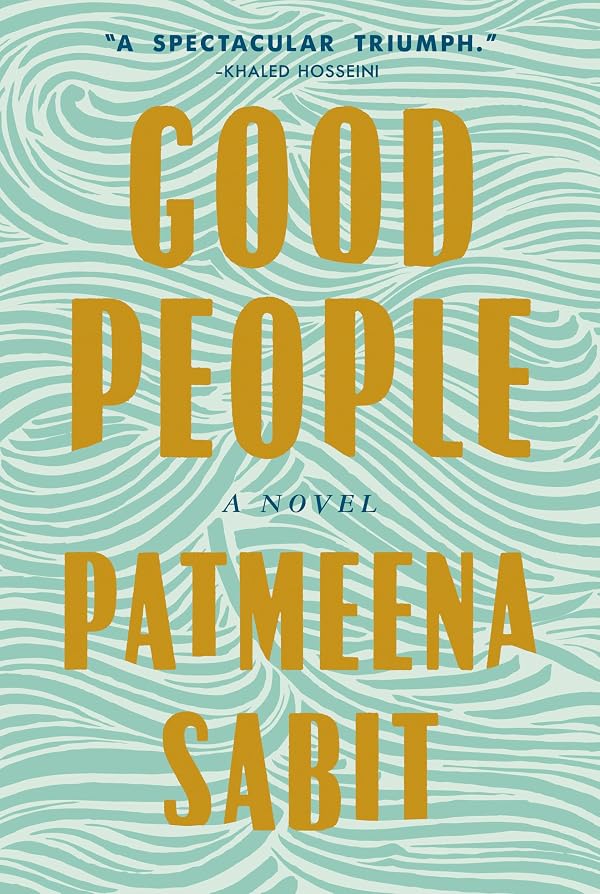
Review: Good People by Patmeena Sabit

This is one of those books that's hard to talk about. Yes, the subject matter is tough. Yes, it asks the reader to do some thoughtful work. But mostly it's hard because so much of what you could say would give too much away. It is a great book to discuss with others who have read it, to compare impressions on, to examine deeply in community; and it is absolutely worth doing this with. Sabit has written a masterful novel that I want to talk to everyone about.

The Sharaf family immigrated to Northern Virginia from Afghanistan. Father Rahmat worked incredibly hard and became very successful financially. Father, mother, and four children (two older and two younger) tried to abide by the expectations of their Afghan Muslim community while striving for the American Dream. Oldest daughter Zorah, in particular, appeared to be the embodiment of what they could achieve in this country, until something went wrong.

The novel is told in a sort of Greek chorus of narrators, short interviews with people who knew (or didn't) members of the Sharaf family. Community members, family friends, school friends, a lawyer, law enforcement, the media, neighbors who didn't really interact with the Sharafs, and more form the core of the story and shape the reader's perceptions of who the family was and what they would be capable of. Notably, the voices the reader doesn't hear from are the Sharafs themselves. Everything in the book is speculation or opinion, based sometimes more and sometimes less on facts. Certain of the interviewees are supportive of the family and then later in the telling, their telling changes tenor. Everyone speaking about the family comes to the situation with their own perspective, their own axes to grind, their own jealousies, their own misunderstandings, their own moral stances, and their own prejudices. And still, with all the tellings but without the Sharafs, the complete truth of what happened remains undiscoverable.

Sabit has written a completely engrossing novel, one that forces us as readers to look at our own previously unexamined prejudices, to consider how we make decisions, what are our preconceived assumptions and whether they are open to change, and how much indisputable information do we require, especially in this climate of viral social media and rampant misinformation, before we pass judgment. This is a novel about the power of public perception, both within the community (are the Sharafs "good Muslims") and in the greater American society. Were the Sharafs too American? Were they not American enough? And who gets to decide? The slow doling out of information and the rising tension of what happened and how the larger public responds to it is presented incredibly skillfully as readers confront the role that racism and identity play in the coverage they are reading, especially as this is the only information from which they as readers can determine the truth. The chapters are short and the pages turn quickly as the reader races to try and discover first the terrible thing that has happened and then the truth of that occurrence. Too much reading about the book will spoil the effect of the sparingly doled out information so I implore you not to research this book very much. Just read it blind. Gulp it down. And then try to reconcile your opinion of the truth with *all* of the facts presented. I'm here if you want to talk about it once you turn the last page.

Tuesday, August 18, 2026

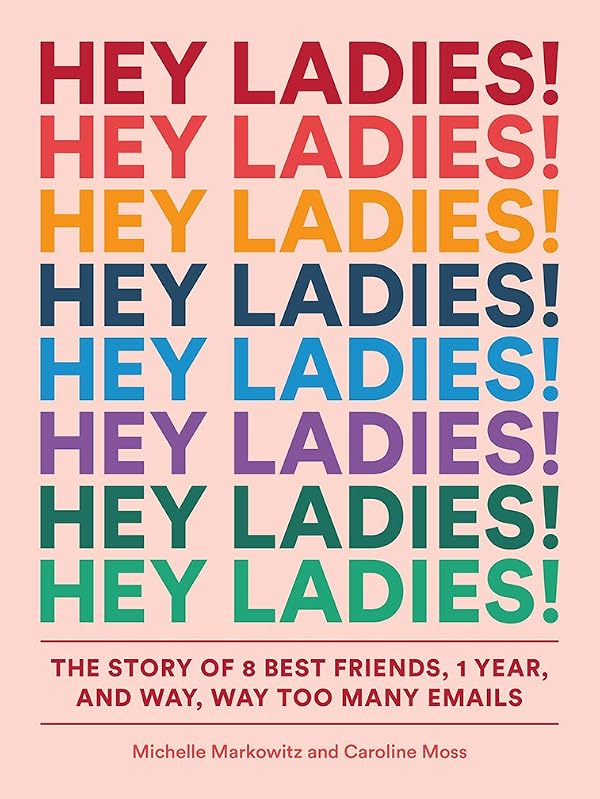
Review: Hey Ladies! by Michelle Markowitz and Caroline Moss

I love epistolary novels and I will have been mother of the bride and mother of the groom both in just over 2 years so this tale of a bride, her seven bridesmaids, and the year leading up to the wedding should have been exactly the kind of fluff and puff that I would devour right now. Instead, I hated it and forced myself to finish it. I am obviously not the age demographic (although neither are my daughter and soon to be daughter-in-law, Gen Zs that they are) but more importantly, I hope I'm not as snotty, self-centered, thoughtless, and, frankly, stupid as the characters in this book. And I certainly hope that there truly aren't women out there who are like these women, the worst one-dimensional caricatures of Millenials and bridezillas that I've come across.

Spanning a year of emails amongst a group of female friends, this novel in pieces is meant to show a humorous year of friendship, relationships, work, and general life. The emails start off with a New Years' Day message from Ali to her tribe offering up her resolutions for the year, squealing (you can practically hear it on the page) about her new boyfriend, and asking one of the group "if I go into [my new boyfriend's] bathroom and take photos of what's in his medicine cabinet, can you text your doctor friends really quick and tell me what his presciptions mean/what medical issues our potential children might have?" Clearly, I should not have persevered past this very first page. It is obviously exaggerated for comic effect, which might have been okay had it been done sparingly, but it wasn't. This made the novel unbelievable and annoying rather than funny. The women come off as dumb as stumps. Does one of them, who, incidentally, has a pretty impressive work title, actually believe that there's no wi-fi in Europe and therefore she won't be hearing from her boyfriend for the duration of his work trip? ::shudder:: In addition to coming across as airheads, these women are immature and awful. They are passive aggressive and competitive with each other. It boggles the mind why any one of them wants to be around any other one of them for any reason, never mind calling them the closest of friends, traveling together, spending obscene amounts of money on each other, and being in each others' weddings.

I would be horrified if my daughter or future daughter-in-law (or any of their friends, if I'm being honest) had any similarities with this entitled and ugly crew of women. It's hard to believe, but I did read every page of this, initially hoping it would smooth out and improve, and then in order to make sure my reaction was not outsized compared to the entirety of the story. It was not. This was not the read I hoped for. It was not cute. It was not funny. It makes complete sense that it has its origins on Twitter (and now I'm 100% skeptical of the quality of The Toast as well). Having finished this, I'm not entirely sure what to do with the physical book because I hate to to drop someone else's IQ with it or, at the very least, to doom them to such a terminally unfunny, ghastly read by putting it back out into the universe.

Popular Posts