Showing posts with label What's in a Name 3 Challenge. Show all posts

Friday, December 3, 2010

Review: The Laments by George Hagen

Sometimes a book languishes unread on my bookshelves for what seems like millenia. There's no predicting when I will possibly pick it up and read it; just knowing that it is there waiting is a sort of balm to my soul. In the case of The Laments by George Hagen, the book had been tucked away for years when I inadvertantly bought a second copy of it at a used bookstore this summer. Yes, I do that sometimes. On the plus side, I consider it confirmation that the book definitely appeals to me (twice). And I've made it a practice to consider it a nudge from the universe to actually get on it and read the book already.

The Lament family is peripatetic in the extreme, traveling around the world, settling briefly, before heading off again in search of a place that fits them better than the one that they are in. Opening with the birth of their first son, a fat and happy little boy, there is no doubt that the family's luck is all going to be bad or impossible from the moment a mentally disturbed woman whose own infant is sickly and melancholy kidnaps the cheery and chubby Lament baby instead of accepting her own. The only recourse, of course, is to adopt her son and pretend that he is their biological child. Will, the secretly adopted Lament, spends the next many years trying to fit in with his boisterous and rambunctious family. His struggle to fit in is a mirror in miniature of his family's quest to fit in as they move from Rhodesia to Bahrain, England, and America. Father Howard is a creative and frustrated engineer with a strange affinity for valves while mother Julia is an artistic and somewhat apathetic sort. The twins, who have a deep and unexplainable twin connection, are hellions and apt to create chaos and leave upheaval in their wakes no matter where the family lives.

The Laments start out the book full of hopes and aspirations, unrealistic though they may be, and they end it rather more downtrodden and definitely downwardly mobile than they started it. On the whole, the book is a tragedy but there is such wonderful dry humor and forthright writing in it that it is nothing but a pleasure to read. I truly did laugh out loud in more than one instance and if the terrible happenings quotient is higher than I'd usually find realistic, it is entertaining all the way. The characters are quirky and eccentric but they inspire great sympathy in the reader as they go through their lives. Exaggeration is rife and the explicit social commentary is hard to miss but even though I suspect Hagen of condemning my life, I still thoroughly enjoyed his novel.

Thursday, October 14, 2010

Review: Safe From the Sea by Peter Geye

Sometimes a book unexpectedly crosses your path and it turns out to be so incredibly fantastic you can't help suggesting it to everyone that you know. This is such a book for me. You like cookbooks? Read this one! You like mysteries? Read this one! You hate to read? Don't care; read this one! And before we go any further, I should say that this is neither a cookbook nor a mystery. There is no food in it, at least not that I recall. And there is no mystery either. You know from the beginning the outcome of the maritime disaster. But the prose and the atmospheric setting and the characters and just everything are so amazingly wrought that I can't stop raving.

Noah has been estranged from his father for five years when he gets a taciturn call asking him to come and help his father ready the cabin for the winter, no apology, no bridging of the estrangement, no further information. Somehow he knows that he cannot and should not say no despite the fact that Noah and his wife are trying and not succeeding at having a baby which is casting a shadow over their marriage, a shadow that this seperation might not be able to overcome. And yet Olaf's summons must be heeded.

Olaf is dying and while he wants Noah to care for him in his last weeks, he is also looking to atone, not only for being one of only three survivors from the epic shipwreck of the ore freighter Ragnarok, but also for the shipwreck of his life and family. As Noah helps his father shore up the cabin against the heavy, cold northern Minnestoa winter, he also learns the story of the wreck of the Ragnarok, not as the newspapers reported it but from the perspective of his father. And he comes to understand who his father is, the man that he was capable of being, and the reason for the gulf between that idealized, perhaps longed-for father and the actual father of his childhood. Their relationship is gruff and silent and loaded with portents and recrimination and the weeks of shoring up the cabin don't change that. But the depth of emotion and the conflict of father and son is riveting throughout the surreal narration.

Geye's writing in this first novel is superb and even sublime. The inferno raging below the frozen, flexing decks invokes the imagery of Hell and the forsaken, an apt allegory for Olaf's life. It is an exquisite and terrifying picture of the wreck which continues wreaking devastation throughout both Olaf and Noah's lives many years after the actual sinking of the ship. The clipped dialogue and the portrayal of the area is spot on, easily evoking the true to life culture and reverence surrounding shipwrecks found throughout the Great Lakes region. Everything about the novel was captivating to me, from the father-son dynamics to the running of the freighters. And the theme of events, certainly catastrophic events but also simple ones, that forever change lives and relationships is monumental and artfully handled. I can't say it enough: read this book and revel in its beauty.

Thanks to the publisher for sending me a copy of this book for review.

Tuesday, April 6, 2010

Review: Magnolia Wednesdays by Wendy Wax

Vivi is an investigative reporter at a major news network. She's worked hard to eradicate her southern origins, doing everything she can short of completely cutting off her family, in order to be the hard hitting New Yorker that her job requires. When she is shot in the rear during a sting gone wrong and the footage ends up on YouTube she is sure that her life has hit an all-time low. Then she discovers that her boss has been out trolling for another investigative reporter, one younger and blonder than she is. Instead of staying to train her replacement, Vivi flies off the handle and quits her job. Things get more complicated when it turns out that it is her hormones that made her so unreasonable; she's pregnant, unmarried, now jobless, and her famous reporter boyfriend is on location in a war zone.

Unable to find another job in broadcast journalism, Vivi swallows her pride and takes something she feels well beneath her: writing a column incognito about life in suburbia. And since she has no direct experience of life in the suburbs, she tucks her tail and heads home to Atlanta to move in with her widowed sister, niece, and nephew, looking at herself as a stranger in the strange land of their lives, despite her previous lack of interest in her very proper, very southern family. Vivi is so busy trying to hide from the realities of her life she doesn't stop to see what her sister Melanie's life is really like, the daily troubles of life with two fatherless teenagers, the financial worries that are part and parcel of owning a business, especially one like a ballroom dance business, and the loneliness of a single parent who is stretched so thin that she barely has time to breathe much less show an interest in the opposite sex.

Vivi is oblivious to anything not directly impacting her own life, writing her dispatches from the suburbs from a deeply flawed perspective which outrages the suburbanites around her, and hiding her real reason for being home from her sister. And it is only when she starts to feel discomfort in sending up Melanie's life so cavalierly, when she starts to confront her own deeply held prejudices, when she starts to worry about the morality of withholding his impending parenthood from her concerned and caring boyfriend, and when she starts to see the complexities of life all around her that she starts to grow as a character.

Wax has created a wonderfully selfish character who finally grows up, understanding that not only is she not the center of the universe, but that each universe out there is valuable and doesn't deserve mockery. Vivi learns to re-evaluate success and to see that there are many ways to achieve. Like her namesake in Gone With the Wind, Melanie is a sweet, considerate woman who allows Vivi to take advantage of her while hoping that her kindness will eventually help her sister to become a better person. The pace of the plot is perfect with revelations coming at nicely measured intervals so that the reader is never bored. Vivi's eventual exposure was a tad unbelievable, quick, and surprisingly thorough given the scope of all her poking about. But that is a minor complaint about a book that was overall quite enjoyable. Of course, now I'm going to have to go and take the activity magnets off the back of my car so we're not so readily classifiable as Vivi says suburban moms are!

Thanks to Joy at Joan Schulhafer Publishing & Media Consulting for sending me a review copy of the book.

Saturday, February 13, 2010

Review: The Naked Duke by Sally MacKenzie


Yes, romances are fairly predictable. Yes, they follow strict conventions. Yes, they almost inevitably have a happy ending (we romance readers demand it, you know). But that is no excuse to use the most tired plot twists in what would otherwise perhaps be a decent story. In other words, I am sick to death of the bad guy kidnapping the heroine. I mean, if this sort of thing went on in the Regency as often as romance writers use it to add conflict into their novels, well, it's a miracle any young miss stayed out of the nefarious clutches of the baddies for more than an hour at a time. Please, authors, I am begging you, no more kidnappings! Constant abductions are making a mockery of the genre. Okay, with that off my chest, on to the actual book (which sadly, does indeed use the kidnapping ploy).

Sarah Hamilton has come to England upon the death of her father, intending to go to her uncle, the Earl of Westbrooke, whom she has never met. She ends up at an inn near the Westbrooke family home, without any belongings and being refused a room at the inn when she is taken under the wing of a drunken nobleman who shows her to "her" room. Exhausted from her journey, she climbs into bed, only waking in the morning to find herself in bed with the Duke of Alvord and being gawped at by quite a few people. Upon finding out who she is (and discovering that the drunken nobleman who ensconsed her in the Duke's room is her cousin, the current Earl of Westbrooke), James, the Duke offers to marry her. But Sarah is an American through and through and has republican ideas and a distinct distrust of titles and the aristocracy. She does, however, agree to be the James' houseguest and accompany his sister through her season. Meanwhile James has determined to marry her and sets himself up to court her, until his evil and nasty cousin threatens Sarah, much as he'd been threatening and actually attempting to murder James for years. So between Sarah's reluctance to marry into the hypocrisy and entitlement of the ton and James' desire to save her from his terrible cousin Richard, questions arise about whether or not the two of them will overcome the obstacles and end up together.

While parts of the storyline are fine, there are enough cliched and heavy-handed bits to detract from the overall. Cousin Richard is so angry and bitter about not being the Duke that he is completely stereotypical and not one ounce of goodness can be found in him. He enjoys sex with women only through rape and murder (and the scene that gives the reader this insight into his soul is very graphic) and has a longtime male lover through whom we are supposed, I think, to understand that he was once a decent human being whose anger has warped his soul to madness. And yet this isn't believable given his actions. Our hero, James, is nice but certainly not one to inspire heartfelt sighs. He is a virgin, certainly unlikely for a romance hero, but even this is a bit off given that he has never, until meeting Sarah, been interested in sex. He's thirty for pete's sake. And he's been completely *asexual* all that time, just waiting for the right woman to awaken his desires? Just a little far-fetched. Sarah is ridiculously wed to her notion that the aristocracy is all terrible contrary to what she witnesses and without reference to the fact that she is indeed one of the aristocracy herself as a result of being the Earl of Westbrooke's cousin. But despite her supposedly being an intelligent character, this never occurs to her at all.

Yes, there are significant problems in this romance but MacKenzie does take a darker tone than is usual in the genre and perhaps her desire to combine the darker with the lighter, more usual fare, helped to create some of these problems. As this is a debut novel, I'd be curious to see if these dichotomies and flaws are melded more seamlessly and smoothed over better in the later books in the series. I do already own the rest of the series and so will eventually read it otherwise I'd probably say that this is one I'd be more inclined to borrow from the library than anything else.

Tuesday, January 26, 2010

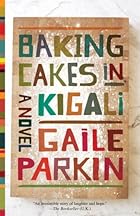
Review: Baking Cakes in Kigali by Gaile Parkin


I suspect that I am not alone when I admit that the sum total of my knowledge of Rwanda is of the genocide and the animosity between the Hutus and the Tutsis. So I wondered how a Rwandan-set book could possibly be described as hopeful and healing. But obviously I have no conception of the ways in which Rwanda is overcoming the horror and learning the art of reconciliation. And after all, 1994 is more than 15 years in the past.

Angel Tungaraza is a Tanzanian woman who bakes elaborate and beautiful cakes out of her home. She lives in Kigali in an international apartment comlpex with her husband, who is teaching temporarily at the university. Together they are raising their five orphaned grandchildren and looking for the positive in each day given to them. The chapters often feel like small vignettes as Angel's customers tell her their tales when they come to order the cakes for which she is rightly famous. And indeed, many of the tales are adapted from tales that Parkin herself heard when she worked in Rwanda.

The tales are everyday and extraordinary. The gentle, unthreatening manner of the telling doesn't sugar-coat the atrocities that the Rwandan people lived through but it also makes clear that people continue to live and make their way as best they can despite the horror in their pasts. Obviously the genocide makes its appearance in the stories told to Angel but so does the problem of AIDS and its plague-like proportions. And in fact, Angel knows that AIDS would have eventually claimed her son if robbers hadn't killed him first. But through all the heartache and the history, Angel is a happy soul, a celebratory person, and her wisdom and contentment, her very peaceful happiness is contagious.

Angel starts every cake ordering appointment with tea and conversation, often counseling her customers and helping them improve their lives. She manages to extract justice for the downtrodden and supply the wedding of a friend's dreams. She teaches others and inspires young girls. She gives relationships a little shove in the right direction. And she generally understands and appreciates the value of the people around her. In short, she's just a little bit magical in a very down to earth, pragmatic way.

The importance of education and pulling heads out of the sand to address the problem of AIDS is a huge theme throughout the book as is the idea of reconciliation and making things right. Angel was a delightful character and as the center of the book, made for a charming reading experience. The cake customers become an integral part of Angel's life and Parkin intertwines their stories well. The underlying issues that come up in the book are perhaps much deeper than one would expect but they give the story a depth and a seriousness that, interestingly, is not at odds at all with the light, uplifting tone of the narration. This is a beautifully done book and I would certainly read more about Angel given half a chance. A novel about Rwanda that is hopeful and healing? Absolutely.

Tuesday, January 5, 2010

What's In a Name 3 Challenge


Another quirky challenge, I enjoy trying to find titles that fit the criteria for the What's In a Name 3 Challenge. This year the challenge is being hosted by Beth of Beth Fish Reads and she's chosen some really appealing guidelines for eligible books. Here are her categories and my choices to fit each one:

1. a book with a food in the title: Baking Cakes in Kigali by Gaile Parkin
2. a book with a body of water in the title: Death of a River Guide by Richard Flanagan
3. a book with a title (queen, president) in the title: The Puzzle King by Betsy Carter
4. a book with a plant in the title: The Crying Tree by Naseem Rakha
5. a book with a place name in the title: The Little Giant of Aberdeen County by Tiffany Baker
6. a book with a music term in the title: Harmony by Joanna Goodman

Popular Posts