Showing posts with label Around the World in 80 Books. Show all posts

Saturday, March 23, 2013

Review: Gonzalez and Daughter Trucking Co. by Maria Amparo Escandon

Libertad, an American citizen, is incarcerated in a Mexican women’s prison for a crime that she is unable to articulate to the other inmates. What she can and does do, is to start a Library Club within the prison where she ostensibly reads to the inmates. But she’s not reading the battered books she holds in her hands. She is telling the life story of a girl, who has lived her whole life on the road with her former professor turned Mexican fugitive trucker father, complete with embellishments, obfuscations, and straight narrative. The stories of Libertad and Gonzalez’s daughter intertwine, wrapping around each other as past and present mix. The fabricated (or is it?) story of Mudflap Girl (the handle Gonzalez’s daughter adopts) moves by fits and starts to meet up with the story of Libertad in prison telling the story. The story moves in installments, leaving the listeners in the prison and the reader outside the book wondering what happens next, a cliff-hanger technique Libertad claims to have learned from watching soap operas. Meanwhile, Libertad’s daily life in prison is also explored. Life in a Mexican women’s prison comes across as quite different from any other country. There are different classes of prisoners and different levels of privilege, the lines of which Libertad easily crosses as a storyteller.

The cover copy on this novel mentions magical realism but I didn’t find that at all here. What I did find was a delightful meta-story with a subtly done theme of women’s friendship woven through it that completely engaged me as a reader.  The story of Mudflap Girl is a coming of age tale while the narrative thread with Libertad in the women's prison is about storytelling and the freedom to own ourselves within a greater social framework.  The young girl who grows up in the cab of her father's truck, the mascot of many but without real friends of her own becomes, through her time leading the Library Club at the prison, an adult with meaningful friendships and connected, caring familial relationships.  And in both stories, what Libertad relates is a tale of community, first of the trucking community and then of the diverse mishmash of women incarcerated in this Mexican prison.  Both stories weave together throughout the novel, intricately twined together, explaining and embellishing each others' plot line.  While the idea of female empowerment shines through Libertad's storytelling, both in Mudflap Girl's story and in the stories of the different women in the prison, men don't come off very well, causing an unsettling imbalance.  But the created community of the prison, a family both by circumstance and choice, is an appealing refuge to an otherwise rootless woman and makes for an enchanting read.  Definitely unusual, this was a quick read that keeps the reader turning the pages to find out the fate of Mudflap Girl, Libertad's crime, and the way that each and every character's story unfolds.  Ultimately a redemptive story, it will leave the reader with a warm feeling and an appreciation for the Sheherazades among us who lighten our sorrows with their skilled storytelling.

Saturday, August 21, 2010

Review: Water Wings by Kristen den Hartog

There is something about seeing the word water in the title that draws me to a book. It's an appeal I have tried to explain but haven't quite nailed down. Add to the title words, a cover picture of water of any sort and a plot that has a river running through it and I'm a complete and total gonner. This book promised all of the above even if it ultimately went far afield from its promises.

Returning home for their mother's wedding to shoe store owner Reg, both Hannah and Vivian and their cousin Wren look back on their shared past, starting to understand as adults those things that they couldn't understand as children. Their beautiful mother Darlene is, in so many ways, the same dependent woman she had been in their childhood, both before and after their charismatic father Mick died in a freak boating accident. The narration does much to illuminate Hannah, Vivian, and Wren's characters, even if it isn't enough. Hannah has always been the dreamy sister, the one with synesthesia, the one highly attuned to the tremors and fault lines running through her parents' marriage. Vivian is the practical one, the casually unkind one who picks at her sister, the one who makes sure that everything runs as it should no matter what the circumstances. And Wren is the outsider, not only because she is not a sister, just a cousin, but also because she was born with webbed hands and is therefore used to the small cruelties of life shown so clearly in the community in which they live.

This book is rife with the secrets each character holds close to her heart, secrets overheard, witnessed, and suspected. It is a masterful portrait of a dysfunctional family after it has lost its charismatic center (Mick) and must rely on superficial beauty (Darlene). It is painful and haunting and the reader will wish for more for the emotionally injured young girls. The narrative moves slowly through the past, exposing memories and unearthing long forgotten truths. The present day portions are not quite as compelling as the past portions, perhaps because the girls, even once they learn what has drawn their mother to Reg, still don't fully understand Darlene's motivation or who she has become. There's also something quintessentially Canadian about the narrative here, something that goes beyond setting and manifests itself in a feeling.

I have to admit that I didn't love this meditative novel but I do recognize that it was complexly constructed and well-written. The disconnectedness pulled at me and slowed me down. I never quite felt we understood the characters, despite having sections narrated from their own experience. In looking at the reviews at amazon I am clearly alone in this slight disappointment though. Are you someone who has read it and disagree with me? I'd love to hear why.

Thursday, July 8, 2010

Review: Persepolis by Marjane Satrapi

I am quite probably the last person on the planet to have read this book. And despite all the rave reviews (are there any detractors at all?), I was planning to hold out even longer (forever?) until I decided to use this graphic novel as my book to challenge my preconceptions about a genre for the Take Another Chance Challenge. Because you see, I am not a fan of the graphic novel. Somehow, the whole comic panel thing detracts from the story for me. But I thought this universally praised graphic novel might be the one that made me understand what all the hoopla is about over these books. Sadly, that was not to be.

Telling of Satrapi's childhood in Iran, this is a simple but direct tale about the overthrow of the Shah and the beginning of the Islamic Revolution. Satrapi grew up learning that no one was safe, not family, not friends, no one. They could and did just disappear. And yet both her family and she as a young girl stayed politicized, quietly (and sometimes, in the manner of children, not so quietly) questioning the official line. The graphics are blocky and starkly black and white, reflecting the simplicity of a child's memories and also the growing horror of life under the regime.

While this sounds promising, I was unable to get myself past the prejudice I was trying to challenge. I simply don't love graphic novels. Having to stop and examine the art broke the flow of the narrative for me. I would have prefered more detail in words than the simplistic comic panels offered. While I do recognize that condensing a powerful tale into a book as minimal as this takes skill, I'm much happier with my wordier, less illustrated texts. I do have the second book sitting here and because I am this way, I am certain I will be reading it as well but unless something finally clicks for me, that will likely be my last graphic novel.

Wednesday, June 16, 2010

Review: Petals From the Sky by Mingmei Yip

Meng Ning is finally going to see if her vocation is to become a Buddhist nun like her mentor, the lovely nun who saved her life so many years ago. Finally all but finished with her doctorate, Meng Ning signs up for a retreat to test her desire to enter the Empty Gate, forsaking love and marriage. But a fire breaks out in the convent and she is fortuitously rescued by a handsome American doctor, igniting in her a seed of doubt about her own path. More than a traditional love story, this is the tale of a woman discovering herself and her own desires.

As Meng Ning and Michael come to know each other better, their characters change fairly significantly and in ways that make them seem to be completely removed from who they were at the beginning of the book. Although Meng Ning's decision whether to marry Michael or to turn her back on family and the material world is a serious one, her constant waffling makes for tough reading. And the plot is completely anachronistic when she travels to New York and meets Michael's "friends." Certainly, Yip has done a reasonable job portraying a woman who has been hovering without making a decision for more than 10 years but there was just something a little off-putting here. The descriptions of the Buddhist life, its necessary intersections with the outside, material world, and the culture clash that is inevitable in a cross-cultural relationship are all interesting but they just can't quite carry the novel.

Thanks to LibraryThing Early Reviewers for sending me a copy of the book to review.

Tuesday, June 15, 2010

Review: A Mountain of Crumbs by Elena Gorokhova

Elena Gorokhova grew up in a Leningrad strangled by Communism. Her mother was a doctor and her dashing father died of tuberculosis when she was young. Her family owned a summer home farm but they were not high up cadre members and so they faced shortages and discrimination like so many others. Gorokhova herself was fascinated by the English language and attended a special school in order to become fluent, working first as a student tour guide and then in other prestigious jobs, ultimately marrying a foreigner and being allowed to emigrate to Texas with her husband.

Gorokhova's childhood was certainly materially different than a childhood here in the States at the same time and her spirit of endurance and perseverance shine through the book. At the same time, she is writing a paean to her mother and the strength of character that she obviously inherited from Galina. The narrative is sometimes episodic in nature as she skims over large swaths of time, occasionally only touching the surface of her feelings at the time or her impression of the feelings of the adults around her. As she is clearly writing this from the vantage point of many years on, it would certainly be acceptable for her to speculate on the adults' experience of Communism more than she does. Her schooling and experience with censorship, toeing the official doctrinal line is illuminating and makes the reader wonder how many others went along with obvious untruths and injustices out of expediency. Although there is an air of want and lack and bleakness, it is also obvious that Gorokhova was raised with much love, whatever the hardships of being raised under Communism. Her rebellion and desire to escape made her unique. Her English speaking ability threw her in the path of an opportunity to make good her escape. And so we have this interesting and very different memoir.

The episodic feel I mentioned above sometimes caused a choppiness to the book and the history of Gorokhova's family felt almost like a rote recitation devoid of emotion. But an interest in Soviet life will overcome the flatness and the pacing issues for the Russophile reader. As an affirmation that Communism, at least as embodied by the former Soviet Union, was hypocritical and ultimately unworkable, this stands out. As a coming of age in a place incredibly foreign to those of us in the west, this will resonate both with familiarity and strangeness. Over all, it was a decent read and I'd be curious to read more from people who grew up under the restrictive regime that so characterized Soviet Communism.

My thanks to the publisher for providing me with a review copy of this book.

Tuesday, June 8, 2010

Review: Little Bee by Chris Cleave

The marketing for this book is deliberately evasive on the topic of the plot of this book. The suggestion is that telling too much beyond the fact that something horrific happens on a beach in Nigeria will "spoil" everything for the reader. This kind of self-created hype ratchets up expectations for the book. And my track record with high expectations and the frenzy surrounding the books they are trumpeting as the next best thing to sliced bread is not a good one. I do much better with low key surprises that make me want to shout from the rooftops about a book's understatedness. Obviously that was never going to happen here given the paucity of information about the book itself coupled with the overwhelming number of vague laudatory comments concerning it. And I have to say that I think the secrecy surrounding it does the book a disservice which has no bearing on the actual contents but which affects the reader's experience of the book.

Opening with Little Bee in an immigrant detention center, one in which she's been for several years, this is the story of her experience in Britain after escaping the oil-greed fueled atrocities in her home country of Nigeria. Told with flashbacks to the events that led her to try and seek asylum this is a personalized account but also a sobering look at a massive political problem, one that offers few solutions. Little Bee, whose real name she hides, ever fearful, wants to find Sarah and Andrew, the British couple she met on a Nigerian beach one surreal day and amazingly, she does find Sarah, knocking on the door the very day of Andrew's funeral. In short order, it becomes clear that all of the characters in this novel have been profoundly changed by the senseless and apathetic violence they each witnessed that day by the ocean. Little Bee continues to run, examining every place she lands for ways to kill herself should she need to escape "the men." Andrew was haunted by his inability to sacrifice and ultimately unable to live with his failure. Sarah is numbed and reeling, reaching out for human connection but cannot feel its warm healing. Even Charlie, Sarah and Andrew's young son, as been affected by his parents' unconsidered vacation, donning the persona of Batman in order to save the world as he knows it, not understanding the futility of heroism.

The characters here are clearly delineated. Little Bee is preternaturally wise for her young age, which is perhaps to be expected given her life experiences. Some of the sections she narrates are a little overly self-conscious and over-wrought. Sarah is not as sympathetic a character, her motivations and actions less understandable than Little Bee's. I found Charlie to be a tad annoying and intrusive although certainly the safety of his world (leaving aside his father's death) is meant to contrast with the all-consuming fear rampant in Little Bee's Nigeria. Sarah's lover, Lawrence, while meant to be a voice of caution, seems to have a vested interest in Sarah's continued frozen existence and as such was not a terribly appealing character.

I know other people have raved about this book but I think that the novel itself is overwhelmed by the idea behind the book. It didn't help that I tend not to enjoy having the author or narrator address me, the reader, directly from the text, and that does indeed happen here. That said, the topics of immigration and asylum, our casual Western disregard for or outright denial of the atrocities occuring elsewhere are important and should be held to the light. Would I have raved about this book like so many others had my expectations not been stratospheric? I guess we'll never know. As it is, I liked it well enough but that liking comes with a thin film of disappointment. Most people will find this a revealing and amazing read and book clubs will find much to discuss if they, unlike my book club, are willing to go out on a limb and choose a book in which the entire plotline has remained cloaked and secretive.

In the interest of full disclosure, I bought my own copy of this book and several weeks later, the publisher sent me a copy as well.

Wednesday, May 26, 2010

Review: Billie's Kiss by Elizabeth Knox

I first stumbled upon Elizabeth Knox through her first novel The Vintner's Luck. I'm not sure what about it captured my imagination--okay, I'll admit to being shallow and tell you that sharing her last name was the first impetus for picking her book up at the bookstore--but something about that cover copy and the picture (plus her name) grabbed me and I ended up taking the book home with me. I absolutely wallowed in it. It was exquisite and I knew I would obsessively buy her books as I saw them come out. So when I found this one, I immediately snapped it up and promptly stowed it on a shelf to be forgotten in the mists of time. Seriously, I've owned it unread since 2002. But it seemed like the right time to blow the dust from the top edge and actually read it. I was hoping for another transcendent reading experience. Sadly I was disappointed. That is not to say that it isn't a good book, after all, how many times in one life can an author be transcendent, right? But I wanted to be blown away here and there was something holding me back from that sort of over the top reaction.

Billie is a young woman traveling with her very pregnant sister and brother-in-law to his new place of employment as a cataloguer for Lord Hallowhulme on a remote Scottish island. The trip has been long and rather arduous given pregnant Edith's desperate sea-sickness. Just minutes from landing, Billie and her brother-in-law kiss and Billie jumps from the ship. A heartbeat later, the ship explodes and many of the people on board are drowned, including Billie's sister Edith. Murdo Hesketh, a distant kinsman of Lord Hallowhulme's, undertakes an investigation into the explosion, initially convinced that Billie has had a hand in sabotage. While the mystery of the exploding boat weaves desultorily through the novel, the book as a whole is more a character study of Billie and Murdo, examining their past lives, ferreting out the secrets that have formed them into the remote, solitary beings they are in the pages of the novel.

With a narrative akin to swimming through layers of viscous liquid, this is a slow moving and awkwardly paced novel. Knox has pegged the desolation and spare beauty of the setting very well. The spareness is echoed in the characters' interactions with each other and the personal connections between them, main characters and supporting characters, needed more to make them real. A few of the drowned characters, those closest to Billie and Murdo, are given backstories but for the most part, even with backstory, they remain almost as enigmatic as the main characters do. After a languid investigation, the truth about the explosion comes out. Unfortunately it comes out quickly and cursorily, which leaves it at odds with the pace of the rest of the book. It also rather comes out of left field, disconcertingly enough. Despite these problems, Knox is clearly an impressive writer, having a lovely way with words. She submerges her reader deeply into the narrative and has recreated beautifully the turn of the twentieth century, drawing characters who exist comfortably within their time period. This may not have struck me the way that The Vintner's Luck did, but I will still look for Knox's other works (maybe even on my own shelves again?).

Tuesday, May 11, 2010

Review: Venetia Kelly's Traveling Show by Frank Delaney

Perhaps my Irish blood has been too diluted or maybe it has been recalled entirely but I don't seem to enjoy Irish storytelling with all of its attendant divagations as much as I probably should given my heritage. Odd this, given my own propensity for rambling far afield of the topic. But the wandering digressions present in this book, as in so many Irish tales, made for a slow and meandering read for me. Couple this with much information about the political situation in Ireland in the 1930's and, well, I put the book down as often as I picked it up. Of course, the narrator tells us early on that both digressions and frank discussions of politics are deeply woven into the heft of the Irish character. Obviously my own sketchy connection to Ireland, traced back to a single great grandparent, is too small to count anymore since these two things are as scantily represented in my reading as possible. Occasionally I even forget to wear green on St. Patrick's Day for heaven's sake.

Ben MacCarthy is only 18 when his father takes him to see a traveling show. His father is enamoured of the show's headliner, Venetia Kelly, a young woman magnetic, charming, beautiful, and far too young for him but who welcomes the older MacCarthy into the crew of the show that evening, leaving young Ben to go home alone and break the devastating news to his mother. Ben's mother asks the impossible of her only son: to go and bring his father home. And so begins Ben's adventure through the world of vaudeville, dirty politics, and a doomed, incendiary love affair. While Ben grapples with his father's obsession for Venetia, a political charlatan and proponent of Fascism is stealing the family farm from right under Ben's mother's nose. Flipping between the situation with Venetia and that of the farm, Delaney weaves the personal and the political together tightly.

The narrative is being told by Ben many years after the events of the story and includes research about the people involved which he didn't know when he was freshly 18. The form works although it does allow for increased digressions and less of a sense of urgency than would have been likely had his character been telling the story in the thick of the events. There is an large cast of characters as well and the narrative jumps around to follow different people as their impact on the story waxes and wanes. So while it is told in a basically linear fashion, there are all sorts of tendrils creeping away from the central plot line. Ben's character addresses the reader throughout the narrative, making the reader feel as if he or she was sitting listening to a master storyteller beside the fire. And while the scope of the novel is sweeping, Delaney's narrative choice makes if feel smaller and more personal than it might.

As I mentioned above, I personally had some difficulty with the meandering of the tale but many other reviewers found the digressions added immeasurably to their experience. In pulling in so many greater issues, in terms of the politics and the national character of the Irish, I found myself at a remove from the characters which made it hard for me to feel sympathy for them in their situations, even when the most naive and trusting among them were being manipulated. Although the ventriloquist's dummy named Blarney was important symbolically, his inclusion outside the parameters of the show itself was a bit disturbing. Over all, I have to say I was a little disappointed in the book, perhaps less for what I read than for the loss of my expectations. And maybe I should go back and check my Fran's nationality again because I don't seem to have inherited the Irish adoration of theater, politics, and divagation along with my freckles.

Thanks to LibraryThing Early Reviewers for my copy of this book to review.

Tuesday, March 23, 2010

Review: Not Quite Paradise by Adele Barker

Adele Barker is an American who went to Sri Lanka on a Fulbright to teach university for a year immediately following the terror of Sept. 11. She traveled back there again after the devastating Boxing Day tsunami of 2004. This book, part memoir, part travelogue, part political history tries to marry the two experiences and to illuminate Sri Lanka for the westerner.

In the first portion of the book, Barker arrives in Sri Lanka with her fifteen year old son and faces some of the culture shock inevitable to anyone moving from a familiar culture to an unfamiliar one. Instead of staying in the city, she and Noah move further into the country, to the town close to her university. This takes them farther from the ex-pat community and enables them to meet and become involved in the daily lives of the Sri Lankans around them. It also forces Barker to learn Sinhalese quicker in an effort to communicate. Her observations about the people and the customs around her are interesting and often lead her to wander into the history of Sri Lanka (once Ceylon). In addition to this history, she finds herself interested, saddened, and horrified by the ongoing violence between factions of Sinhalese and Tamils, continuing to wage a civil war that rends family, land, and a sense of oneness. The end of her subsidized year approaching, she sends her son home and soon thereafter follows him. This happens very abruptly in the book, cutting short any continued tales of daily life in Kandy, which was a shame as the rhythm of life in other places is so very fascinating.

The second part of the book opens with the news of the tsunami and Barker's unfolding knowledge of the devastation. She worries for the friends she's made, frantically calling and e-mailing to find out their fates. And eventually she makes her way back to this island that has so captured her, this time without her son. She meanders around the island, needing to see the impact on the people of the "day the sea came to the land" for herself. She hears and recounts tales of new misses, amazing luck, and stumbles on the sorrow of hearing that someone she knew daily had disappeared forever. She examines the good and the inefficiencies of the aid proffered this tiny island nation and laments the misunderstandings about the survivors' needs and continued displacements of the people. She doesn't probe too hard at the psychological remains, knowing that this is not her story. And she does, on this sojourn, go to the war torn portions in the north of the island to see the perspectives from there not only from the tsunami but also from decades of unrelenting war.

The book is a fairly complete short history of the island with political information evenly interspersed. Where it tends to fall short is on the memoir side. While Barker mentions her friendship with many local people, she doesn't really bring those people alive for the reader. And she is remarkably reticent about her own and her son's personal lives while there aside from the initial adjustment to a very foreign culture. Despite this lack, I did enjoy the book and certainly feel more educated about the state of an island nation about which I previously knew very little. Sri Lanka has always felt a little exotic to me and while it probably still would were I ever to visit, its current events are definitely more familiar to me after having read this book. The two portions of the book hang together awkwardly since the two sojourns were made for such disparate reasons but read more as two separate journeys connected only by country and author, they are fine. People looking for a true memoir or ones who want more of the personal should be warned that that is not a strength of this book before reading it. But it is a fascinating glimpse into another culture nevertheless.

Thanks to LibraryThing Early Reviewers from sending me a review copy of this book.

Sunday, March 7, 2010

Review: The Consequences of Love by Sulaiman Addonia

Naser's mother sent him away from war torn Eritrea with his younger brother when he was a young boy himself. They ended up in Jeddah, Saudi Arabia with their religious uncle. But this turned out to be an unhappy circumstance for Naser as his uncle sent him to pay their kafeel (Saudi sponsor) the money they owed him for their continued sponsorship. But the uncle didn't give Naser any money, ensuring that he would be forced to use his body as payment. And so goes Naser's further introduction to the ironies and horrors of Saudi society. Eventually cast out from his uncle's home and abandoned when his uncle and brother move to Riyadh, he makes friends with other lost boys with whom he sniffs glue, drinks perfume, and speculates on the hidden women walking past in black burqas. His existence is a dull one, washing cars, one of the menial jobs which foreigners are allowed to hold in Saudi, and wandering with his friends until one day, as he lounges under the tree in front of the house in which his uncle used to live, a veiled woman drops a note at his feet. Suddenly his drab black and white world takes on some color, specifically the pink of this woman's shoes under her stifling, black burqa. As Naser falls in love with his note writing Fiore, the two of them risk more and more to know each other under the nose of the strict and oppressive Muslim rule patrolling the streets.

While the love story between Naser and Fiore is the center of the plot, the book really has more to say about Saudi society and its hypocrasies than about love. Love is forbidden and all marriages are arranged but sodomizing young boys, even unwilling ones, is socially, if not religiously, acceptable. This men's world devoid of all women is one big boy's club with all the nastiness that this implies. Certain books, alcohol, and other things are forbidden by the imams but if a man is of great enough consequence, he can smuggle in whatever he wants and can do whatever he wants without fear of reprisal. But a man of no consequence, especially a foreigner being offered asylum, must guard his every action for fear that he will be summarily executed, even for a crime he did not commit. The scent of fear is palpable throughout this book; fear of the religious police as well as fear of the powerful elite. Betrayal can not only hurt, it can kill and trust is an emotion in which not many can afford to indulge.

Addonia has portrayed a deeply flawed and horrific society in modern day Saudi Arabia, turning a blind eye to the misdeeds of powerful men, heavily punishing women and weak transgressors. And yet in the midst of this gut-churning depiction, he has created a love based on the written word, on intellect, and only secondarily on physical attributes. Naser is every immigrant, unaccepted and lonely, desperate for caring. Fiore is a bit more enigmatic as a character. Risking all as she has done because she feels she hasn't yet lived her own life makes her singular in a society that oppresses the rights of women to their own lives and I'm not entirely convinced that Addonia has drawn her as strong enough to be that character. Then again, as we only see her through her notes and through Naser's eyes, perhaps therein lies the fault of perception.

The beginning of the novel is quite jerky and hard to follow. It took a concerted effort to sink into the story, to follow the flashbacks Naser tells through his diary entries. But eventually Addonia hits his stride and the story pounds along with rising tension and risk pulling the reader through the pages. The ending is both no more than expected and somehow still a surprise. Scenes throughout the book are very visceral and sensory, either visual or even, amazingly enough, tactile. Occasionally Naser was annoying and certainly when he was a bit of a wastrel before meeting Fiore, I struggled to connect with him, but his life and opening himself up to love transformed his character. It allowed the hints of soul and morality the reader glimpses when he refuses to go to the mosque anymore to listen to the blind imam spout hatred against any but the chosen few radicals to come into full flower. Addonia has crafted a heart pounding novel of oppression and love and anyone interested in other cultures will certainly find themselves immersed in a way of life so foreign to those of us in the west as to be unfathomable. I know I won't be so quick anymore to accept the media portrayal that Saudi Arabia is quite westernized and therefore full of many of the freedoms we know here. An eye opening novel and one that I will be ruminating over for some time to come.

Sunday, February 21, 2010

Review: The Bread of Angels by Stephanie Saldana

Stephanie Saldana went to Damascus on a Fulbright scholarship to study the Jesus of the Qu'ran. She wanted to learn Arabic and read the Qu'ran in the original. She had lived in the Middle East before but Syria was new to her. The course of this memoir takes place over her Fulbright year, a year in which it wasn't easy to be an American in Syria as we were deeply into the war in Iran, a year in which she found herself trying to escape her broken heart and the seemingly cursed history that plagued her mother's family, a year in which she searched for God in the quiet of a monastery in the desert and the winding streets of the Christian area of Damascus, in a women's mosque, and in her own heart.

This memoir is very introspective and thoughtful. Saldana examines closely her life before moving to Damascus. She tries to look at her past failures in love objectively and to understand what she craves in her life. Retreating to a monastery for a month of silence and soul searching, she wrestles with whether or not she should commit to God and become a nun. After the month is over, she must re-immerse herself in not only Damascus city life but life at home in the US and ultimately make the decision whether or not to finish her Fulbright year as well as if she has truly been called to become a nun. But everything about her priorities changes when she returns to the monastery and falls in love with a novice monk. While she studies the Qu'ran with a respected teacher, learning the different but similar versions of scripture found within, she must also wait and see what path her own life will take, practicing a calmness, a resoluteness, and a patience that help her to come to terms with so much else in her life.

Well written and affecting, this is an openly honest and challenging story. Saldana has taken a long journey to know herself, to learn about a different culture, and to recognize and appreciate real love. She has drawn a vibrant and fascinating Damascus and has captured the multiple inhabitants, from the older man who adopts her as a granddaughter to the Iranian refugees humanly and with affection. The spiritual journey portion of the book was, to me, the weakest part of the book but I suspect that conveying the mystical in words for others is not an easy task. However, because this was a major portion of her narrative, it needed to draw me in more than it did. I found myself more interested when her journey involved other people, the Sheikha, the Abbot at the monastery, Frederick. And her reflections on her life prior to arriving in Damascus, her family's personal history, her vivid painting of Damascus itself and the people therein, and the love story all carried me along. This would make for a good book club book for those bookclubs which don't shy away from spirituality and will interest anyone with a fascination for the Middle East.

Thanks to the publisher for sending me a review copy of this book.

Tuesday, January 26, 2010

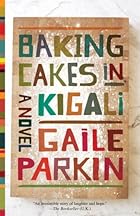
Review: Baking Cakes in Kigali by Gaile Parkin


I suspect that I am not alone when I admit that the sum total of my knowledge of Rwanda is of the genocide and the animosity between the Hutus and the Tutsis. So I wondered how a Rwandan-set book could possibly be described as hopeful and healing. But obviously I have no conception of the ways in which Rwanda is overcoming the horror and learning the art of reconciliation. And after all, 1994 is more than 15 years in the past.

Angel Tungaraza is a Tanzanian woman who bakes elaborate and beautiful cakes out of her home. She lives in Kigali in an international apartment comlpex with her husband, who is teaching temporarily at the university. Together they are raising their five orphaned grandchildren and looking for the positive in each day given to them. The chapters often feel like small vignettes as Angel's customers tell her their tales when they come to order the cakes for which she is rightly famous. And indeed, many of the tales are adapted from tales that Parkin herself heard when she worked in Rwanda.

The tales are everyday and extraordinary. The gentle, unthreatening manner of the telling doesn't sugar-coat the atrocities that the Rwandan people lived through but it also makes clear that people continue to live and make their way as best they can despite the horror in their pasts. Obviously the genocide makes its appearance in the stories told to Angel but so does the problem of AIDS and its plague-like proportions. And in fact, Angel knows that AIDS would have eventually claimed her son if robbers hadn't killed him first. But through all the heartache and the history, Angel is a happy soul, a celebratory person, and her wisdom and contentment, her very peaceful happiness is contagious.

Angel starts every cake ordering appointment with tea and conversation, often counseling her customers and helping them improve their lives. She manages to extract justice for the downtrodden and supply the wedding of a friend's dreams. She teaches others and inspires young girls. She gives relationships a little shove in the right direction. And she generally understands and appreciates the value of the people around her. In short, she's just a little bit magical in a very down to earth, pragmatic way.

The importance of education and pulling heads out of the sand to address the problem of AIDS is a huge theme throughout the book as is the idea of reconciliation and making things right. Angel was a delightful character and as the center of the book, made for a charming reading experience. The cake customers become an integral part of Angel's life and Parkin intertwines their stories well. The underlying issues that come up in the book are perhaps much deeper than one would expect but they give the story a depth and a seriousness that, interestingly, is not at odds at all with the light, uplifting tone of the narration. This is a beautifully done book and I would certainly read more about Angel given half a chance. A novel about Rwanda that is hopeful and healing? Absolutely.

Thursday, December 24, 2009

Review: Swift As Desire by Laura Esquivel


A tribute to her telegraph operator father, Esquivel's novel about Jubilo, gifted with the ability to hear more than just the words that people say, and his wife and daughter, this doesn't compare to her famous Like Water for Chocolate. Jubilo lies blind, incapacitated by severe Parkinson's Disease and dying. His daughter Lluvia, in whose home he is, brings his friends in to try and entertain her father and in so doing, uncovers the reason why her two very passionate parents haven't been speaking to each other since before her birth. Jubilo and Lucha led a turbulent life with each other, complicated by the fact that Jubilo's second sense about people failed him at crucial times with his wife. The story of Jubilo's life, especially after meeting Lucha, is alternated with his present and his daughter's careful caretaking. Uncovering the mystery that drove her parents apart and helping them to repair their hearts before Jubilo dies is part of what drives Lluvia as she bustles around her father's bedside.

Unfortunately the writing here is choppy and lackluster and it takes a real effort for the reader to continue along with the storyline. The mystery itself isn't alluded to until quite a ways into the story and still isn't compelling enough to make the pages turn quickly. Lucha as a character is a rotten, whiny, spoiled brat and there's little to no explanation as to why she would be so appealing to Jubilo and to other men around her. Jubilo as a character is gifted with his almost magical powers (more a heightened sensitivity) and yet Esquivel doesn't choose to show him using this intuition much at all and refers to it most only when it fails him, which makes his character feel more allegorical than real. There are plot lines that seem as if they should be major themes but they peter out for lack of life. All in all, this was a disappointment.

Thursday, October 29, 2009

Review: Dragon House by John Shors


Iris's father is dying when she promises him that she will continue his work in Vietnam, building and opening a school and home for Vietnamese street children. Noah is the son of old family friends and as a Gulf War vet he is struggling with many demons, including the loss of a limb and alcohol. When his mother begs Iris to let Noah accompany her to Vietnam, Iris is skeptical but knowing that demons nipped at her Vietnam vet father's heels his whole life, she is unable to say no. And so these two very different Americans, searching for very different answers in their lives head off to Vietnam to try and make the much anticipated Center a reality.

Once there, the story changes the focus from solely on Iris and Noah, spreading out to include some of the children who will be served by such a center, the young, drug-addicted thug who controls their lives, a grandmother and her terminally ill granddaughter, the police officer who battles his own disability and his deep distrust and anger towards Americans even while he hopes that Iris and Noah are legitimate in their desire to help the scores of homeless orphans living on the streets, and the Center's lovely, upbeat employee who rescues both Iris and Noah in different ways. As the lives of these disparate people weave together, the tapestry of the story gains great depth and meaning.
Shors has painted a very realistic, heartbreaking picture of the lives of homeless Vietnamese children. He captures well the conflict involved with Americans trying to help ameliorate the suffering given our past history in the country, never making things too easy for Iris and Noah to be believable. And he treats the culture with respect and love, despite or perhaps because of its imperfections. While the story was in many instances predictable, it was an enjoyable read and shines a light on a plight few of us realize exists. For those who enjoy novels set in foreign countries, those who like to read novels where the main characters grow and change substantially, and those who support the notion that just one small act can make the world a better place, this will be a good and worthwhile read.

Make sure to check out the book's website for more information on the homeless children Shors is hoping to help support through Blue Dragon Children's Foundation. Each person donating $100 to this worthy organization will receive an autographed copy of Dragon House. Details are at the book's website.

Thanks to author John Shors for providing me with a review copy of this book.

Friday, July 3, 2009

Review: The Zookeeper's Wife by Diane Ackerman


Chosen by my bookclub, this non-fiction book was not exactly what I was expecting. The story of Jan and Antonina Zabinski, this story significantly changed my perceptions of what happened during World War II in Poland. Jan and Antonina Zabinski were animal lovers, deeply attached to the Warsaw Zoo and its animals. As the zookeeper's wife Antonina raised orphaned animals in the family's home alongside their young son while Jan was rightfully proud of the zoo he was shepherding so carefully. But they were living in times destined to be rent apart by a devastating war, calling upon them to make a moral stand and then to turn that moral stand into action.

Jan fought against the Nazis during the Blitzkreig while Antonina held the homefront and feared for her son, Rysz, and for the animals left in her care. And of course, once the Nazis won, the fears increased. The animals not killed outright in the bombings suffered two fates: either be shipped to Berlin to the zoo there or be shot during a Nazi Christmas hunting party. And while the zoo ceased to be a zoo by any definition, the Zabinskis were allowed to continue living there through its other incarnations, giving them the means to smuggle more than 300 Jews out of the Warsaw ghetto, saving them from certain death in the camps. Jan worked throughout the war, helping the Polish Underground, smuggling human beings, and helping with low levels of sabotage. Antonina was more confined in the role she could play, especially during a difficult pregnancy, but without her calm head and quick thinking as the matriarch to a zoo-full of hidden people, all could have been lost.

The Zabinski's story is one that shows the heroism of the common people. It proves that more people than we sometimes suspect avoided the moral depravity that war brings in its wake. And it is a compelling and wonderful story of truly good people. So why was the book itself just the slightest bit dull? Ackerman makes many digressions from her main story, telling of the history that brought Poland to this pass, stories of acquaintances of the Zabinskis who really have almost nothing to do with the purported story here, and other bits that caused the story to drag instead of leap along. She detailed long lists of people or insects or animals that served no purpose in the narrative and she occasionally waxed overly lyrical about pieces of the natural world (a tendency I put down to her love of gardening and natural history as evidenced by her other book topics).

The book was strongest when she concentrated on the terrors that the Zabinskis faced, small and large, and when she allowed Antonina's journal to speak for her. There was little beyond superficial information about what sort of man Jan was, leaving the impression that he was a silent, rather cold person while she rounded out Antonina well, thanks to descriptions from those who had known her and to her own writings. But her attention to Antonina faltered at times and it was at those times that it became easy to put the book down and pursue other stories. This is a story that should have been riveting. It deserves to be told. But it plodded more than it ever should have.

Friday, May 22, 2009

Review: Independent People by Haldor Laxness


If you were being quizzed, how many of you, even those of you who are well read, could come up with an Icelandic author off the top of your head? I know I certainly couldn't have before being introduced to not only an Icelandic author but to THE Icelandic author, 1955 Nobel Prize winning author Laxness. This bleak, desolate novel of a poor sheep farmer ekeing out an existence for himself and his unhappy family can be a tough read. After all, it doesn't sound terribly appealing, does it? But it is far more than the plotline would suggest.

Opening the story with the recounting of a old myth, the reader first Bjartur of Summerhouses hiking to his newly purchased croft, which is reputed to be haunted by the characters of the myth. We see the measure of the man when he refuses to toss a stone on the cairn built to appease the mythic figures he disdains. And we know his hard-headed determination will not yield to anything, not to softness, kindness, foolishness, or truth. He has worked for 18 years to be able to put down a downpayment on a poor farm with only a small sod home/barn on it and a few animals but he feels richer than the richest man around. To this remote holding he brings first a wife, who gives birth to another man's child alone during a blizzard, bleeding to death in the process. Surprisingly Bjartur opts to raise the baby as his own, finds another wife (one who seemingly had little to no choice but to marry him) and fathers more children, only two of whom live past infanthood.

This is really Bjartur's story as most of the other characters are one dimensional, with the exception of eldest daughter Asta Sollilja. Life is hard and nature cruel but Bjartur continues to eke out an existence. There are great descriptive swathes spent on worms killing sheep and butchering animals and the like but somehow, they only add to the narrative. Like a homegrown sort of Odyssey, all experienced within a day or two's walk, the experiences and adventures of the bombastic Bjartur are all oriented towards a striving for home (and in Bjartur's case, of independence). Almost all reviewers have called this an epic book, and it does indeed feel epic. Echoes of poor farming settlers everywhere abound but there also seems to be something indescribable that is purely Icelandic here as well. It feels as if this must have been written under the lowering sky of sunless winters. And yet, I think it brilliant in a depressing, downtrodden sort of way. Probably not for all readers, as there is little (no?) joy to be found in the characters here. But for those who want to persevere, they will be rewarded with nuggets of truth.

Sunday, February 8, 2009

Sunday Salon: Review: The Red Queen by Margaret Drabble

I like Margaret Drabble's work. I know next to nothing about Korean history. And I have a ridiculous fascination with royalty. So Drabble's The Red Queen easily caught my interest with only the barest minimum of jacket copy. Taking a fairly unknown, at least in the West, account written by a Crown Princess in eighteenth century Korea and weaving it into a novel, Drabble has written a completely engrossing story in three sections. The first section, narrated by the Crown Princess' ghost, tells the outline of her life. She married the Crown Prince as a child, long before his later mental illness became not only evident but increasingly dangerous and uncontrollable. She tells of her everyday life, sequestered in the palace, surrounded by political enemies and a few friends. Her account of a priviledged woman's life would be interesting enough without her marriage to the Crown Prince but the manueverings that his illness caused the court and his father the King to emply were also terribly interesting. The second section of the book, once the Western reader is conversant in the Crown Princess' life, focuses on Barbara Halliwell, an English academic travelling to South Korea for a conference, and the chosen "emissary" for the Crown Princess' story. Babs reads the princess' diary on her way to the conference and her interest is so piqued that she spends much of her down time (and a bit of the conference time as well) exploring the places connected to the princess. She is accompanied by a Korean doctor she meets and the pre-eminent speaker from her conference, with whom she embarks on a brief affair. The third section shows Babs after the conference is over and all the momentous events of it are long concluded and it details how the Crown Princess' story will be passed along into the future because it is a story that deserves to be told. There is a neat convention that strikes me as particularly Drabble-esque in this last part of the book but you'll have to read it yourself to see what it is. As always in Drabble's novels, the writing is precise and tight and very well done. The links between the three sections are strong and pull the reader along happily. I am thoroughly glad I took the time to read this one last month and recommend it to others who like depth and thoughtful reading in their lives.

Popular Posts