Thursday, March 28, 2019

Review: Rock, Paper, Scissors by Cathia Leonard Friou

Many years ago one of my neighbors was in the middle of a divorce. We often walked and talked about it as she was going through it. One of the decidedly lighter moments was when she told me that she had dipped her toe in online dating only to have her ex show up as her very first match. She didn't know whether to laugh or cry. I mean, they had once been married so surely they had a lot in common that had led them to the altar in the first place and the dating site's algorithm had picked up on that, but on the other hand, they were divorcing so all their commonalities didn't make them a good couple and no algorithm could know that. Cathia Leonard Friou details a similar situation in her short, thoughtful memoir about her divorce, Rock Paper Scissors: Scenes from a Charmed Divorce.

In this collection of brief vignettes about her marriage and subsequent divorce from her high school sweetheart Stuart, Friou examines the moments that made each of them who they were within their marriage and the unspectacular moments within that marriage that led them to divorce. The book is reflective and soul-searching, a non-linear look at the emotional journey she went through as she carefully and intentionally separated her life from her husband, the father of her children. Friou and her ex grew apart, unable to be for each other who the other spouse needed them to be. In the grand scheme of divorces, it was amiable and civilized but that doesn't take away from the grief and second guessing that still attended the process. She doesn't glorify divorce and acknowledges that hers has been pretty charmed as far as divorces go. Friou is honest in her sharing and the book feels like a solid way for her to move on, to close that chapter of her life with thankfulness, to release any remnants of pain leftover from the process, even though the divorce was settled long ago. The writing is simple and heartfelt and she recognizes and accepts that Stuart will forever be a part of her and her life even as she builds a new life for herself. A positive and affecting small memoir, this is an interesting read not only for those who are divorced or are contemplating it but also for those firmly in a relationship who will appreciate it for its insight into human interaction.

Wednesday, March 27, 2019

Waiting on Wednesday

This meme was hosted by Breaking the Spine and is meant to highlight some great pre-publication books we all can't wait to get our grubby little mitts on. I'm choosing to continue the tradition even though she has stopped.

I'm Fine and Neither Are You by Camille Pagan.

The book is being released by Lake Union on April 1, 2019.

The book's jacket copy says: Honesty is the best policy…except maybe when it comes to marriage in this brilliant novel about the high price of perfection from bestselling author Camille Pagán.

Wife. Mother. Breadwinner. Penelope Ruiz-Kar is doing it all—and barely keeping it together. Meanwhile, her best friend, Jenny Sweet, appears to be sailing through life. As close as the two women are, Jenny’s passionate marriage, pristine house, and ultra-polite child stand in stark contrast to Penelope’s underemployed husband, Sanjay, their unruly brood, and the daily grind she calls a career.

Then a shocking tragedy reveals that Jenny’s life is far from perfect. Reeling, Penelope vows to stop keeping the peace and finally deal with the issues in her relationship. So she and Sanjay agree to a radical proposal: both will write a list of changes they want each other to make—then commit to complete and total honesty.

What seems like a smart idea quickly spirals out of control, revealing new rifts and even deeper secrets. As Penelope stares down the possible implosion of her marriage, she must ask herself: When it comes to love, is honesty really the best policy?

Tuesday, March 26, 2019

Review: An Elderly Lady Is Up to No Good by Helene Tursten

I kept seeing this little (and I mean physically little) book all over the place and the cover completely intrigued me. The skulls put me off some since I am the world's most cowardly reader but I couldn't resist the cross-stitch and the elderly woman of the title. The back of the book makes it sound like this is a collection of capers that would be charming and entertaining, if a little dark. And in a way, it was. Helene Tursten's An Elderly Lady Is Up to No Good, translated into English from the Swedish, is not a mystery. It is not a light caper story. It is the tale of an 88 year old woman who knocks off people who need killing (or at least from her perspective they need killing). Neighbors, the fiance of her former love, a celebrity, and an antiques dealer who intends to cheat her all find themselves on the wrong side of this conscienceless octogenarian serial killer.

Written as 5 linked short stories, with 4 focused on Maud and the last centered on a detective who cannot find enough proof but knows that Maud killed the victim, the collection starts out with a lot of promise, full of engaging details and dark humor. Unfortunately it starts to feel a bit repetitive, especially the final story, which rehashes the previous story from the detective's perspective (a detective who is apparently the main character in a very popular series by Tursten). Maud's character is fascinating because the reader doesn't feel disgust for her even as she calculates how to murder the people who are annoying her beyond all endurance. She's not nasty, she's pragmatic and clever and uses her age and perceived feebleness to her advantage. The book is a very fast read and mostly entertaining, especially for those who are inclined to be tickled by people getting what they deserve (in some cases) or looking for a deadly version of the ultimate "Get Off My Lawn!"

Monday, March 25, 2019

Review: The Baghdad Clock by Shahad al Rawi

The Middle East has been consistently in the news for decades now. Refugees continue to flee the war torn countries of the region. We've learned how to pronounce the names of the countries but what do we really know of the people who live in there? Shahad al Rawi's novel, The Baghdad Clock, takes readers into one Baghdad neighborhood from 1991 at the beginning of the first Gulf War through two young girls' growing up and becoming woman all the way to the present day.

The unnamed narrator meets her friend Nadia one evening when they are in the neighborhood air raid shelter with their mothers. The two of them become inseparable and continue to go to school, play, and explore even in the shadow of the war raining down on their country. They grow, they fall in love with boys, and they watch as long time neighbors slowly emigrate to find safety and security away from the Iraq of bombs and economic sanctions. The novel is a look at everyday life in Baghdad, a chronicle of a neighborhood slowly losing its sense of community, and an account of two friends coming of age and trying to preserve the memories of the people and events of their youth.

There is no real unifying plot other than the changing of the neighborhood and the narrator's musings on it and the people she knows. Aspects of magical realism are threaded through the narrative with the narrator being able to share Nadia's dreams, with the neighborhood portrayed as a ship, and in the person of an old soothsayer who appears in the neighborhood in various guises throughout the novel to predict the future and to warn the inhabitants. The tales of the individual neighbors makes them fully rounded, real characters and it clearly diminishes the neighborhood as each of them eventually climbs into the cars that whisk them away to another life. This particular neighborhood in Baghdad is very obviously meant to mirror the disintegration of Iraqi society as a whole as the wars go on and different sorts of people, never described and never joining the fabric of the existing place, move into the abandoned homes. The daily tragedy of war is very evident, especially in the short history of the neighborhood the girls write, even if they aren't chronicling deaths but rather defections and disappearances. The story was slow, perhaps because it was fairly directionless, and the use of the Book of the Future, set in the present (or near enough) and then moving into future predictions at the end was at odds with the tone of the previous 3/4 of the novel. The writing was sometimes a bit confusing, whether as a result of this being a translation or simply transferred from the original it's hard to say. It does offer a perspective on daily life in Iraq that those of us in the West rarely see and as such will be of interest to those curious about this part of the world.

Thanks to LibraryThing Early Reviewers and the publisher for sending me a copy of the book to review.

It's Monday! What Are You Reading?

This meme is hosted by Kathryn at Reading Date.

Books I completed this past week are:

White Elephant by Julie Langsdorf
At Briarwood School for Girls by Michael Knight
Rock, Paper, Scissors by Cathia Leonard Friou
When Death Takes Something From You Give It Back: Carl's Book by Naja Marie Aidt

Bookmarks are still living in the middle of:

America's First Daughter by Stephanie Dray and Laura Kamoie
Metis Beach by Claudine Bourbonnais
Smoke by Dan Vyleta
Coco Chanel by Lisa Chaney
The Resurrection of Joan Ashby by Cherise Wolas
The Bottom of the Sky by Rodrigo Fresan
A Breath of Snow and Ashes by Diana Gabaldon
The Confessions of Young Nero by Margaret George
The Optimistic Decade by Heather Abel

Reviews posted this week:

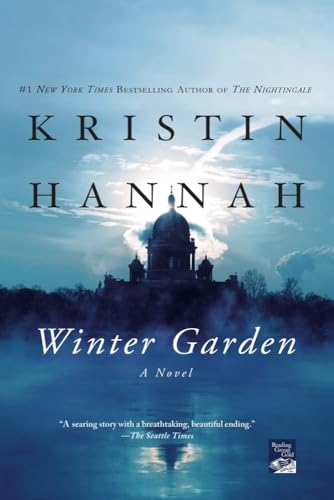
Winter Garden by Kristin Hannah

Books still needing to have reviews written (as opposed to the ones that are simply awaiting posting):

An Elderly Lady Is Up To No Good by Helene Tursten
The Girl Who Smiled Beads by Clemantine Wamariya
Red, White and Royal Blue by Casey McQuiston
Rules of Surrender by Christina Dodd
The Magnetic Girl by Jessica Handle
Oh, Tama! by Mieko Kanai
The Red Address Book by Sofia Lundberg
The Baghdad Clock by Shahad Al Rawi
The Immortalists by Chloe Benjamin
Exposure by Jean-Philippe Blondel
Here I Am! by Pauline Holdstock
All You Can Ever Know by Nicole Chung
Miss Blaine's Prefect and the Golden Samovar by Olga Wojtas
Ways to Hide in Winter by Sarah St. Vincent
The Book of Delights by Ross Gay
The Archive of Alternate Endings by Lindsey Drager
Granny’s Got a Gun by Harper Lin
White Elephant by Julie Langsdorf
At Briarwood School for Girls by Michael Knight
Rock, Paper, Scissors by Cathia Leonard Friou

Monday Mailbox

An interesting and eclectic trio landed on my doorstep and my tbr piles. This past week's mailbox arrivals:
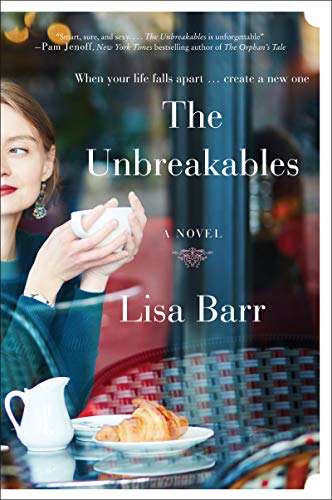
The Unbreakables by Lisa Barr came from LibraryThing Early Reviewers and Harper.

About a woman who flees to France after discovering that her husband is a serial cheater and who learns to indulge her own desires, this looks fascinating and at least a little bit steamy too. Yay!

Most Anything You Please by Trudy Morgan-Cole came from me for myself.

Sagas make me happy so I am looking forward to reading this one about three generations of women in Newfoundland who run a small grocery and confectionary store.

Drive-Thru Dreams by Adam Chandler came from Flatiron Books.

Non-fiction that looks at fast food as quintessentially American, this looks like a fun ride.

If you want to see the marvelous goodies in other people's mailboxes, make sure to visit Mailbox Monday and have fun seeing how we are all doing our part to keep the USPS and delivery services viable.

Sunday, March 24, 2019

Review: Winter Garden by Kristin Hannah

I have long been fascinated with Russia. I took two years of Russian in high school and took whatever Russian history classes I could find both in high school and college. I've read many of the major Russian writers for classes and as well as on my own. So while I wasn't thrilled when Kristin Hannah's Winter Garden was chosen for book club, I at least figured that the subject matter would interest me, even if the writing didn't engage me. Unfortunately, I was wrong. Since I already knew of the horrors of the Siege of Leningrad, there was nothing new to keep me from focusing on the rest and it turns out that wasn't a good thing.

Meredith is a tightly wound, rule following, control freak who works hard to be the mother her own mother never was but who rejects her husband's overtures time after time. Nina is an award winning war zone photographer who is known for keeping an emotional distance from her subjects, allowing her to capture the truth of their lives impartially, but her inability to open herself up is causing her problems with her sexy occasional boyfriend. Both Meredith and Nina learned their emotional frigidity at the knee of their mother, a Russian woman who never mothered them, showing them only disapproval and detachment. Luckily they had a loving and giving father who held the family together, even as he enabled their mother's emotional distance. When he suffers a massive heart attack and then slowly fades away, he makes the girls promise that they will stand by their mother and listen as she tells them the end to the incomplete fairy tale she used to tell them in childhood, the one that will explain so much they've never understood, that will explain the trauma that shaped all of their lives and especially their mother's. As Anya tells the tale, it slowly becomes clear to the girls that she is telling them the story of her own life before them, a story devastated by the Siege of Leningrad.

The narrative can be split pretty cleanly into two halves here: before the telling of the tale and during/after. The latter is certainly more interesting in terms of plot since Meredith and Nina are not characters with whom the reader will find it easy to empathize. They have clearly been badly damaged by their mother's remoteness but they seem, in many ways in their own lives, to be emulating her rather than the father they both claim to have adored. They come across as incredibly selfish. The second part does pick up although the conceit of the fairy tale isn't altogether successful as it ceases to be a fairy tale quite soon into the telling, in addition to the fact that it doesn't actually have all of the elements of traditional fairy tales. There's no magic, no triumph of good over evil, and no moral message or universal truth to it although it does, eventually have a happy ending. Anya, Meredith and Nina's mother, is a character who is hard to know, even as she tells the girls about her life in the Soviet Union.  These daughters are ridiculously slow at figuring out the fairy tale is Anya's true life and it begs the question why they were never interested in their mother's origins. That Anya only sees things in black and white and cannot see color, even though there's no physical reason to explain that, is meant to show that the color leached out of her world long before Meredith and Nina were born and to give her a pass on her treatment of her daughters. She shut down emotionally to survive the terrible things that she endured but she never did choose to truly live again, to the detriment of her family. The ending to the story was too coincidental, completely unbelievable and far too easy given the decades of hurt that preceded it.

The writing here was repetitive and pedestrian and the internal musings of the characters were overly long and uninteresting in their repetition. Each time a character comes back onto the page, they are described physically, as if the reader isn't able to keep the (frankly unnecessary) picture of that particular character in mind without help. I am very definitely in the minority in my opinion of this one (in fact, many people adore it) so if you like dysfunctional family stories where secrets eventually come out after a long and drawn out lead up, where a terrible historical event that isn't apparently taught in schools (except mine) is a major plot point, where a lack of family connection is suddenly resolved, and there is boundless hope that it's never to late to forgive and to heal, you might like this one a whole lot more than I did.

Popular Posts