Sunday, February 3, 2019

Review: The Radium Girls by Kate Moore

There are a lot of things we take for granted today, never questioning how we got to where we are now, especially if we know history shows us a picture of the way things were that is completely different. Some of the advancements are clear and taught in schools, like the fight for civil rights or the fight for women's rights. But what about changes in the workplace?  How did we end up with OSHA?  Do we focus on what inspired those laws and guidelines? If we're lucky, we're taught about the outlawing of child labor and catastrophic disasters like the Triangle Shirtwaist Fire in NY in 1911. But what about longer lasting, more systemic tragedies like that documented in Kate Moore's The Radium Girls? Stories like that have long been buried despite the major role they played in changing laws and protecting the safety of vulnerable workers.

This narrative history tells the story of the girls as young as eleven and young women who in the early years of the twentieth century, worked at the glamorous and reasonably well-paying job of dial painting. The women were hired on to work on the luminous dials that the government wanted for war time troops and that civilians wanted on their watch faces.  Glow in the dark was all the rage and in high demand.  The job was a sought after one, with the women themselves glowing in the dark from the radium that shimmered all around them. They were very precise painters, instructed to "lip, dip, paint," to moisten the fine hairs of the paintbrush in their mouths before dipping them into the radium infused paint and then carefully painting the dial. Although the radium was all around them, no one was worried what inhaling or ingesting it, as when they lipped their paintbrushes, might mean for the young women down the road, at least not until they started getting sick with inexplicable illnesses, cancers, and bone and tissue deterioration. Even then the companies involved refused to admit that there was anything wrong, willfully ignoring mounting evidence of radium poisoning, treating the women as disposable, and shirking their responsibility to the slowly and painfully dying women. Only a lawsuit would begin to make any of it right and change workplace health and safety responsibilities for future generations.

Moore focuses on the human cost and corporate greed that underpins this dark story. She tells the personal stories of many of the women who were afflicted, those who died, and those who fought the companies even under terminal diagnoses. The girls were from working class families, many of whom depended on the paychecks these young women brought home. They were happy, social, and so very young. Initially the girls were delighted by the "shine" of the job, enjoying the cache of their positions and the very real glow in the dark effect of being around radium all day. But then strange symptoms started to plague the dial painters and Moore describes their illnesses in horrific detail. She also detailed the emotional cost to the families and to the young women, even years after they had ceased working in the factory. Certainly no reader can remain unmoved by what these women suffered and yet because Moore chooses to tell the tales of so many, it does lessen the impact a bit. There are simply too many girls for the reader to keep straight. While this shows the breadth of the problem, it also makes for too much repetition in the book. Also, there are points where the book veered from good narrative writing to invented inner thoughts, the sort of (unacknowledged) speculation better served by a fictionalization than a straight history. After the early repetition ceases for the most part, the narrative gets bogged down and slows to a crawl with the lawsuit and court appearances feeling like a dry recitation of facts. After the personal engagement of the first two thirds of the book, this is a huge tonal disconnect. The story is an important one of workers' rights and it puts a face on these forgotten women, ravaged by radium poisoning, maligned and abandoned by the companies who hired them, but there were problems with the writing and it wasn't nearly as engaging as I would have hoped although I remain glad that we read it for book club as we did have a good and in depth discussion about the subject.

Wednesday, January 30, 2019

Review: Golden Child by Claire Adam

If you're a parent of more than one child, you have probably told at least one of your children that you don't have a favorite. But what if you did? What if one of your children has a potential that you don't see in another one? What if that child could get out of a bad or poor or dead-end situation, could excel? How much would you do for that child? What kind of sacrifice would you make? Could you, would you, make a Sophie's choice, sacrifice Beloved, be Abraham in the face of something larger than just your own wants and needs? Claire Adam has written just such a story in her novel Golden Child.

Clyde and Joy have twin thirteen year old sons named Peter and Paul. One night Paul, who has always been the less obedient, less present of the twins, doesn't come home. Angry and worried, his father stays up all night thinking on the trouble, large and small, this child has caused, planning how he wants to react when Paul finally does reappear. Except Paul doesn't reappear. The narrative then flips back in time to the birth of the boys. Peter's delivery is uncomplicated and easy while Paul was deprived of oxygen and the best guesses of the medical professionals witnessing his birth is that something is wrong with the baby. And so he grows up hearing that he is "slightly retarded," always knowing that Peter is incredibly smart, that Peter is something special, and is only held back because twins should stay together. Paul, meanwhile, struggles with school and with his image of himself, both in the shadow of his brother, who is always kind and caring with him, but also under the cloud of others' low expectations of his intelligence. Everything must be done to make sure that Peter reaches his potential; Paul's struggles are incidental. Their parents love both the boys but they cannot hide their loftier dreams for Peter as the boys grow. Then the narrative shifts once again to the days immediately following Paul's disappearance, showing not only what happened that night and those afterward, but also Clyde and Joy's decisions in the wake of this horrible situation.

The story is devastating on many levels, from the setting of crime ridden Trinidad to the familial jealousy and betrayal that drives the action. Adam has drawn a corrupt and scary Trinidad, a place rife with gossip, dangerous in what is said publicly, but also a place where people come together to try and offer help. She has captured the underhanded anger over inherited money and the strife it causes within a family if it is not seen to be shared evenly. The knowledge of the way society and politics work in this small island nation is eye opening, leaving no doubt that the book must end the way it does. As for the aptly named Peter and Paul, like their Biblical namesakes, they are each martyred in their own ways. The book is heavy and hard but it is exquisitely done. The framing structure of the novel makes the rising tension slacken at times, going from the worry of a missing child out all night to the day of their birth, but this is also an effective way of showing the reader the backstory on Clyde's perception of both of his sons. The third person narrative switches amongst Clyde, Paul, and Father Kavanagh, giving only a limited view of the family as a whole but this also effectively, narrowly focuses the story on a father facing an impossible choice, the gentle but unfavored child, and an outsider who tries but does not (can not?) understand. Most of the secondary characters are drawn very faintly, used primarily to show the deep and dangerous corruption in Trinidad except Father Kavanagh who seems mostly to be in the story to try and make Clyde see Paul differently and to be told exactly why Clyde's perception will never change. A novel of complex and tangled family dynamics, this is a heartbreaking story that will stay with the reader long after the last page has been turned.

For more information about Elise Hooper and the book, follow her on Twitter. Check out the book's Goodreads page, follow the rest of the blog tour, or look at the reviews for others' thoughts and opinions on the book.

Thanks to Lisa from TLC Book Tours and SJP for Hogarth for sending me a copy of the book for review.

Waiting on Wednesday

This meme was hosted by Breaking the Spine and is meant to highlight some great pre-publication books we all can't wait to get our grubby little mitts on. I'm choosing to continue the tradition even though she has stopped.

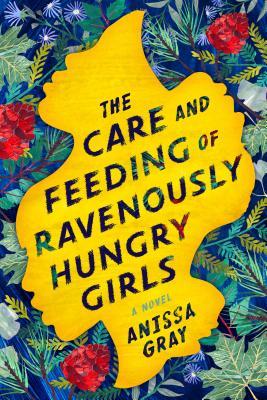
The Care and Feeding of Ravenously Hungry Girls by Anissa Gray.

The book is being released by Berkley on February 19, 2019.

The book's jacket copy says: The Butler family has had their share of trials—as sisters Althea, Viola, and Lillian can attest—but nothing prepared them for the literal trial that will upend their lives.

Althea, the eldest sister and substitute matriarch, is a force to be reckoned with and her younger sisters have alternately appreciated and chafed at her strong will. They are as stunned as the rest of the small community when she and her husband Proctor are arrested, and in a heartbeat the family goes from one of the most respected in town to utter disgrace. The worst part is, not even her sisters are sure exactly what happened.

As Althea awaits her fate, Lillian and Viola must come together in the house they grew up in to care for their sister’s teenage daughters. What unfolds is a stunning portrait of the heart and core of an American family in a story that is as page-turning as it is important.

Monday, January 28, 2019

It's Monday! What Are You Reading?

This meme is hosted by Kathryn at Reading Date.

Books I completed this past week are:

An Elderly Lady Is Up To No Good by Helene Tursten
The Girl Who Smiled Beads by Clemantine Wamariya
Learning to See by Elise Hooper
Red, White and Royal Blue by Casey McQuiston

Bookmarks are still living in the middle of:

America's First Daughter by Stephanie Dray and Laura Kamoie
Metis Beach by Claudine Bourbonnais
Smoke by Dan Vyleta
Coco Chanel by Lisa Chaney
The Resurrection of Joan Ashby by Cherise Wolas
The Bottom of the Sky by Rodrigo Fresan
A Breath of Snow and Ashes by Diana Gabaldon

Reviews posted this week:

The Tea Girl of Hummingbird Lane by Lisa See
Books For Living by Will Schwalbe
Learning to See by Elise Hooper
The Child Finder by Rene Denfeld
The Tattooist of Auschwitz by Heather Morris
Sad Animal Facts by Brooke Barker

Books still needing to have reviews written (as opposed to the ones that are simply awaiting posting):

The Forgotten Guide to Happiness by Sophie Jenkins
Surviving Paradise by Peter Rudiak-Gould
Winter Garden by Kristin Hannah
An Elderly Lady Is Up To No Good by Helene Tursten
The Girl Who Smiled Beads by Clemantine Wamariya
Red, White and Royal Blue by Casey McQuiston

Sunday, January 27, 2019

Review: Sad Animal Facts by Brooke Barker

Sometimes I blurt out random facts to astonished people. (We'll pretend their astonishment is at the sheer amount of bizarre but fascinating knowledge I have rather than at my complete social awkwardness.) I don't know why I retain these random facts but they cheerfully take up something like 90% of my available brain space. I am rather addicted to them and to the books that contain them so when I saw this appealing little book at the cash wrap at the bookstore, it was a foregone conclusion that I'd pick it up and take it home with me.

This is very much a gift book. Each page has a brightly colored, basic, hand drawn cartoons of an animal sharing something unknown about its species. Sometimes the fact is sad (if we anthropomorphize) but sometimes its just a fascinating little tidbit about one of the critters with whom we share this planet. Each of the facts is scientifically proven, which will leaving you wondering why science tested certain things in the first place (why did we need to know herrings communicate through farting, that turtles breathe through their butts, that squirrels can't burp, or that dwarf lemurs line their homes with feces?), and the alphabetical index in the back of the book offers more information on each fact. Lest you think there are only gross 12 year old boy type facts in the book (although don't pretend you didn't enjoy reading them just now and aren't going to use them at your next company party because you definitely are), there are also facts about sleeping habits, eating habits, species empathy, and more as well. The illustrations are cute, the facts Barker has chosen to illustrate are interesting (and only a few of them are common knowledge), and the book is a delightful little book to dip in and out of. As a side note, it is also very appealingly constructed, with smooth glossy pages and a heavy feel in your hands. Highly recommended if you too need new gems for your small talk repertoire.

Saturday, January 26, 2019

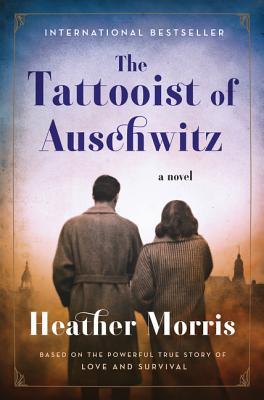
Review: The Tattooist of Auschwitz by Heather Morris

There are war stories. There are Resistance stories. There are soldier or spy or leader or civilian bystander stories. There are refugee stories.  There are family stories.  There are concentration camp stories.  There are tragedies and apologies.  Just when you think there can't possibly be another unique story to be told about WWII and the atrocities of the Holocaust, a tale unlike the others comes along and proves you wrong. Heather Morris' The Tattoooist of Auschwitz is one such story. Yes, it is a concentration camp story but it is also a love story, a survival story, a life story, made even more interesting by being based on a true story.  Would you tattoo your fellow Jews?  What is the cost of doing so?  Can any good come from being a Tatowierer?

Lale Sokolov was sent to Auschwitz in 1942. He was an educated Slovakian Jew who spoke several languages. Catching the eye of the camp Tatowierer (German for tattooist), a fellow Jewish prisoner, Lale learns to tattoo other incoming prisoners, leaving his work forever on the skin of his own people. His position affords him certain privileges, which he uses to try and alleviate some of the horrific suffering in the camp. Then one day a beautiful young woman is sent to him to have her fading tattoo re-inked. Lale falls hard for Gita and is determined that the two of them will survive the atrocity of the camp and make a life together. In his position as the camp tattooist, Lale has access to many different parts of the camp, allowing him access to the possessions of the murdered which he uses to buy extra food and medications for his fellow sufferers, and to German higher-ups, which gave him the opportunity to get Gita a less strenuous job, one which ultimately probably helped keep her alive. The two and a half years in the camp are full of harrowing occurrences, with both Lale and Gita coming to the edge of death at different times. But through it all, Lale remained completely devoted to Gita and to staying alive for her.

This was first written as a screenplay and it shows in its dialogue heavy writing and stage direction like actions. For a tale of love and hope in the midst of horror, it is somehow oddly emotionally flat despite its subject matter. It feels very simplified, only skimming the surface and telling the big picture without looking directly into the heart of it all. The character development is lacking too, almost as if, despite selling this as a novel rather than a biography, Morris wasn't willing to stray too far from Sokolov's reminiscences and fill in the blanks where he chose not to go. This makes it hard for the reader to really connect with Lale and Gita fully, viewing their story from a remove that unfortunately dulls the immediacy of their experiences. The history of the Holocaust is incredibly important and one we should never forget but it should be told in a way that grabs a reader, forcing them to face the reality of the genocide and the strong emotions this brings. This novel just doesn't do that.  Instead it is like Gita's tattoo in the beginning, indelible yes, but fading so that its impact is blurred. I am not entirely alone in my opinion but certainly the majority opinion seems to be the exact opposite so if you are a WWII aficionado, maybe you'll like it better than I did.

It is interesting to note that both Lale and Gita's only son and some serious historians of the Holocaust have taken issue with the purported "facts" of this book. Author Heather Morris' contention is that it is a novel only based on Lale and Gita's story and not a history.

Thanks to the publisher for sending me a copy of this book to review.

Friday, January 25, 2019

Review: The Child Finder by Rene Denfeld

The past number of years, the news has been filled with accounts of girls or young women kidnapped months or years before and suddenly found alive, having been kept hidden and held hostage by their kidnappers. This is the best possible outcome for kidnapped children although the lifelong emotional toll on the recovered children has to be enormous. But every parent of a taken child must be desperate for such an outcome. Rene Denfeld's novel The Child Finder introduces a character whose specialty is finding missing children, alive or dead, and this first book in a planned series starts off in a quietly spectacular manner.

Naomi is special. Called "the child finder" by her clients, she specializes in finding kidnapped and missing children, never giving up and combing over scant information from every direction possible to help her figure out where the children must be. She agrees to take on the case of little Madison Culver, missing for three years, who disappeared at the age of five when in Skookum National Forest picking a Christmas tree with her family. She seemingly disappeared into thin air and no further trace of her has ever been found but her parents have refused to give up hope even as their own marriage cracks under the strain of not knowing her fate. As Naomi methodically tracks the missing girl, her own story as a missing child, one who escaped but was never reclaimed or identified, haunts her dreams. Her own trauma informs her search for Madison and her concurrent search for the missing baby of a developmentally delayed young woman who has been charged with the baby's murder.

Naomi's own past, which is revealed to the reader in small pieces, informs how she goes about her work, antagonizing some people, pushing others, and only rarely opening up to anyone. She is clearly deeply affected by her own story, allowing her to connect with and have a surprising compassion for broken people even while she is uncomfortable around most folks. Interspersed with flashes of Naomi's past and her search, is a fairy tale of sorts. Calling herself the snow girl, a child tells herself the few small things she remembers of her life before being taken and what she knows and learns of the man with whom she lives. This latter piece of narration is absolutely gut wrenching for the reader but it is not horrifically graphic. Denfeld manages to create full and complex characters even in those only in the story for a brief amount of time, rounding them out as real and understandable in their motivations. Although this is billed as a thriller, because the narrative tension is steady and consistent it really isn't one. The story feels quiet, like it's muffled in the deep snow that quickly covered all traces of Madison's whereabouts when she disappeared. And although it deals with kidnapping and abuse, it somehow feels gentle and compassionate. At the end of the book, only one question remains, Naomi says that "it's never too late to be found" but will she be able to find herself over the course of the series?

Thanks to the publisher for supplying me with a copy of this book.

Popular Posts