Thursday, March 2, 2017

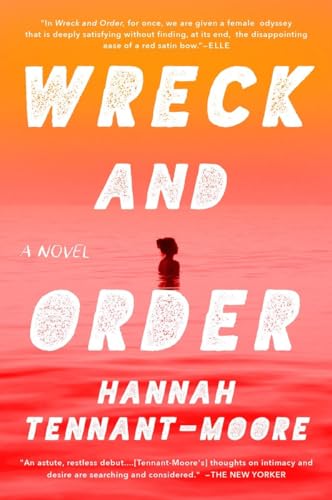
Review: Wreck and Order by Hannah Tennant-Moore

Do you ever run across something that makes you feel old? Hannah Tennant-Moore's novel Wreck and Order was one of those things. I was intrigued by the premise before reading it but I spent much of the novel wanting to shake some sense and motivation into the self-destructive, annoying, and thoroughly unlikable main character. Obviously this does not bode well for my eventual overall impression.

Elsie is a thirty-something young woman who drops out of college and thereafter coasts on the money her father gives her. She is intermittently translating an obscure French novel, which is somehow supposed to reinforce her own (misguided) idea that she is intelligent and special. But her navel gazing narration of an unmoored life lived as a series of destructive sexual encounters or, when not actively engaged in those encounters, fantasizing about them, makes the reader question any implication of intelligence previously granted. Elsie connects with a lying, cheating, boozy boyfriend who becomes an obsession in her life, the man she returns to again and again. At one point when she has broken free of Jared, she is too bored by her colorless (a synonym for violence-free to Elsie) sex life with the normal man she's met so she sabotages their life together. At another point she travels to Sri Lanka and stays with Suriya, a young woman she intends to help achieve her dream of teaching English. And yet even in this trip, which just highlights over and over again her self-centered preoccupation, ennui, and unpleasantness, Elsie can't maintain an interest in this poor girl and her family, ending up treating Suriya as an embarrassing and disposable project she can just abandon rather than as a human being she should care about.

Perhaps Elsie's character as written would be forgivable if the book had been more interesting all around. Instead, she is a caricature of a vapid, spoiled millennial and who wants to read about that? Self-destructive characters can be worth reading about if they serve a greater purpose. Elsie does not. Character and plot are both aimless. The erstwhile philosophical pieces were tiresome, overblown, and filled with circular ramblings that didn't actually mean anything if you took the time to parse them out. I think the book is meant to come off as profound but sadly, it only came off as profoundly boring. Then again, maybe it will appeal to readers a generation younger than me who can more readily connect with the Elsies of the world. But if this is their reality, I have to say I pity them.

Thanks to the publisher and LibraryThing Early Reviewers for sending me a copy of this book to review.

Wednesday, March 1, 2017

Waiting on Wednesday

This meme is hosted by Breaking the Spine and is meant to highlight some great pre-publication books we all can't wait to get our grubby little mitts on.

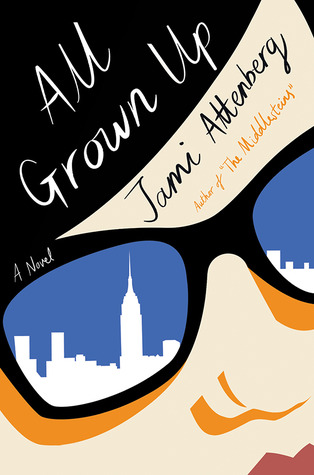
All Grown Up by Jami Attenburg. The book is being released by Houghton Mifflin Harcourt on March 7, 2017.

Amazon says this about the book: From the New York Times best-selling author of The Middlesteins comes a wickedly funny novel about a thirty-nine-year-old single, childfree woman who defies convention as she seeks connection.

Who is Andrea Bern? When her therapist asks the question, Andrea knows the right things to say: she’s a designer, a friend, a daughter, a sister. But it’s what she leaves unsaid—she’s alone, a drinker, a former artist, a shrieker in bed, captain of the sinking ship that is her flesh—that feels the most true. Everyone around her seems to have an entirely different idea of what it means to be an adult: her best friend, Indigo, is getting married; her brother—who miraculously seems unscathed by their shared tumultuous childhood—and sister-in-law are having a hoped-for baby; and her friend Matthew continues to wholly devote himself to making dark paintings at the cost of being flat broke.

But when Andrea’s niece finally arrives, born with a heartbreaking ailment, the Bern family is forced to reexamine what really matters. Will this drive them together or tear them apart? Told in gut-wrenchingly honest, mordantly comic vignettes, All Grown Up is a breathtaking display of Jami Attenberg’s power as a storyteller, a whip-smart examination of one woman’s life, lived entirely on her own terms.

Tuesday, February 28, 2017

Review: Breaking and Holding by Judy Fogarty

In tennis terms, you break someone when you win their service game since being the server is a distinct advantage. Holding is when you win your own service game. In order to win a tennis match, you must both break the other person and hold your own serve. Sometimes this is done by pure skill and other times, it requires not only skill but concentration, determination, and psychological strength. Judy Fogarty's novel, Breaking and Holding features characters who are trying very hard to both hold serve and break those who would dominate the game, marriage, life, the future.

Patricia Curren is a beautiful woman who looks good on the arm of her wealthy, advertising agency owner husband, Jack. He has never valued her for the things that matter to her, like her love of literature. He insists she wear colored contacts to cover her one visible flaw: one blue eye and one grey eye. Twenty years older than she is, he is domineering and controlling and she defers to him in all things, feeling appreciation that he rescued her from a sad and guilty childhood. As the story opens, Jack's indispensable assistant, Lynn, the best and only friend Patricia has, is looking back to the summer that changed the status quo, that challenged the Curren marriage, and allowed a whole new world to open up to the meek, weak Patricia.

When Patricia finds a black button in her bed, she knows that Jack has been cheating on her. She wants to leave Jack but she doesn't have the courage. What she does have the courage to do is to remain on Kiawah in their summer home when Jack goes back to New York. Deciding to learn tennis, Patricia meets Terry, a college kid on the cusp of turning pro if he can just find a sponsor. The two of them quickly descend into a steamy affair. When Jack sends Lynn down to Kiawah to run an ad campaign and to check on Patricia, she discovers Tricia (she's now going by a nickname) and Terry consumed by each other. But Lynn can hardly say anything since it was her black button in the Patricia's bed. The summer has to play out the way it does, rife with betrayal, devastating secrets, heartbreaking revelations about the past, and steeped in obsession.

Told mainly from Lynn and Patricia/Tricia's points of view, this novel showcases the struggle of two women to break free of expectations and to forge lives of their own creation. Tricia and Terry spend the majority of the novel completely wrapped up in each other. Their love is meant to be incandescent but it comes off as immature and self-absorbed. Both characters suffered unhappy childhoods, Tricia in the death of her parents when she was small, and Terry because of a cold and driven mother who saw him only as a tennis prodigy and not as a son to love just for himself. Perhaps because of this loss of or lack of love during their formative years and their eventual revelations to each other about their pasts and the wounds they carry, their relationship feels more like an high school obsession than an adult relationship that can be sustained long term. Their lives are no less dysfunctional when they are together than when they aren't.

In the end, Tricia does find a strength she didn't have in the beginning but the reader never sees her develop or uncover that strength, the author just tells you that's the case through Lynn's distant narration. As for Terry's tennis career and the tennis scene of the 70s, there really is very little included for the novel taking place during the height of tournament season when aspiring pros are at a tournament every weekend. Secondary characters were, for the most part, pretty one dimensional. Roommate and doubles partner Baze is a good guy. Terry's mom, Jack, and potential sponsor Nona have no redeeming characteristics at all.  I know I'm in trouble when even small things bother me like Terry nicknaming Patricia despite her request that he not call her Tricia followed by her decision that no, in fact she likes the nickname.  Instead of it signaling her as a different, stronger person, it seemed to me to reinforce the malleability of her as a person, acquiescing yet again despite her initial wishes, a pattern that held through most of the story.  I really wanted to like this tale of infidelity, tennis, and breaking free but I just couldn't get beyond childish character whom I never cared about or particularly liked or sympathized with. It appears that I am definitely in the minority on this though so if the story line interests you, you should definitely try it and let me know in the comments what you thought of it.

For more information about Judy Fogarty and the book, check out her author website, like her on Facebook or follow her on Twitter. Also, check out the book's Good Reads page, follow the rest of the blog tour, or look at the amazon reviews for others' thoughts and opinions on the book.

Thanks to Lisa from TLC Book Tours and the author for sending me a copy of this book to review.
Monday, February 27, 2017

Review: Madam by Cari Lynn and Kellie Martin

When you hear New Orleans, what comes to mind? Mardi Gras and Bourbon Street, right? Even today, we tend to think of New Orleans as a city that's more than a little naughty, a boozy, raucous red light district of a city. Of course, there was once an actual red light district there and although it didn't last long, it has left a permanent stamp on this city of masquerades and reinvention. Cari Lynn and Kellie Martin have chosen to write a novel, based on a true story, about the creation of Storyville, that storied red light district and one madam who started with nothing and rose to the pinnacle of her profession in Madam: A Novel of New Orleans.

In the late 1890s, New Orleans was rife with crime and vice. One city alderman, Alderman Sidney Story, wanted to restrict the city's prostitutes to one district, keeping them out of sight of the other good citizens of the city. His goal would eventually lead to the creation of The District, nicknamed Storyville after the crusading alderman and much to his chagrin. But the pious Story didn't know much of the women, the pimps, and the criminals who made up the population he wanted to hide away from view. In fact, he seemed unable to acknowledge the extent to which the "good" people of the city, including the politicians and the justices who were supposed to serve New Orleans, were in bed, literally and figuratively, with the unsavory side. Mary Deubler, one of the women Story would never have occasion to know, was one of the alley whores whose livelihood depended on the lax enforcement of the laws against prostitution. Born to a mother who was also a prostitute and who died when Mary was still quite young, Mary is pimped out herself at only 12 years old. Prostitution is Mary, her brother, and her brother's young, pregnant wife's main means of support. She is intelligent (she can read) and wily enough to try and better her situation when a chance comes her way but the poverty and conditions in which she plies her trade are inescapable until she comes to the attention of the kingpin of the New Orleans underworld, a man who will assist her in her transformation into Josie Arlington, exclusive madam.

The main narrative is framed by apologetic letters from her niece to a now deceased Josie/Mary. Both of the letters are dated from the same time period and they essentially say the same thing, giving the novel a strange repetitive circularity. After the introduction of the first letter, the novel jumps in time to 1907, when Mary, as Josie, was clearly in her prime and wildly successful. She's drawn as melancholy and lonely as she avoids a celebration of her birthday for reasons that never do become clear in the novel. This brief glimpse of her as a successful madam is short-lived though and the bulk of the story takes place a good ten years prior, when Mary is no more than an unremarkable alley whore trying to make enough money to feed her family. Mary's an interesting character, alternately jaded and naive, and she will be raised through the agency of someone else rather than by her own strength. Unfortunately, why she above any others would have been singled out remains a question throughout the novel.

The legal and political machinations behind the creation of Storyville are interesting to read and Mary's hard early life is fleshed out quite convincingly but there is nothing beyond her meteoric rise besides that small glimpse at the beginning of the novel. Lynn and Martin sprinkle historic characters throughout the novel as they allude to the birth of jazz, the uneasiness of race relations in the district, and the disenfranchised who people Mary's world. There is a surprising lack of place here, especially given how unique New Orleans has always been, descriptions of the underworld are often times glamorized, and the whole thing feels sanitized somehow, even if the main character is a prostitute. Hints of voodoo weave through an otherwise fairly straightforward story, presaging some of the eventual action. The writing is sometimes clunky and awkward, especially at the beginning, the missing chunks of time in the narrative are frustrating, and none of the characters besides Mary/Josie are fully realized. Despite the problems with the novel, this manages to be a quick and colorful read. Lynn and Martin do do a good job showing that the political wranglings affected those without a voice and without any other means of support and that the women of Storyville were just trying to make a living the best and only way they could. People who enjoy tales of New Orleans, those who like rags to riches stories, and those who have a bit of a prurient interest in the underside of history might find this worthwhile in spite of its flaws.

It's Monday! What Are You Reading?

This meme is hosted by Kathryn at Reading Date.

Books I completed this past two weeks are:

The Invention of Wings by Sue Monk Kidd
The Woman Next Door by Yewande Omotoso
Madam by Cari Lynn and Kellie Martin
The Chilbury Ladies' Choir by Jennifer Ryan
Breaking Up Is Hard to Do But You Could've Done Better by Hilary Fitzgerald Campbell
To Love the Coming End by Leanne Dunic
Breaking and Holding by Judy Fogarty

Bookmarks are still living in the middle of:

A Well-Made Bed by Abby Frucht and Laurie Alberts
The Children's Crusade by Ann Packer
The Lake House by Kate Morton
Shelter by Jung Yun
The Center of the World by Jacqueline Sheehan
A Manual For Cleaning Women by Lucia Berlin
The Last Time She Saw Him by Jane Haseldine
The Beauty of the End by Debbie Howells
Country of Red Azaleas by Domnica Radulescu
A Hard and Heavy Thing by Matthew J. Hefti
Paint Your Wife by Lloyd Jones
The Company They Kept edited by Robert B. Silvers and Barbara Epstein
All the News I Need by Joan Frank
The Peculiar Life of a Lonely Postman by Denis Theriault

Reviews posted this week:

The Odds of You and Me by Cecelia Galante
The Veins of the Ocean by Patricia Engel
The Chilbury Ladies' Choir by Jennifer Ryan

Books still needing to have reviews written (as opposed to the ones that are simply awaiting posting):

Wreck and Order by Hannah Tennant-Moore
My Italian Bulldozer by Alexander McCall Smith
Exposure by Helen Dunmore
Eliza Waite by Ashley E. Sweeney
Nine Island by Jane Alison
Roughneck Grace by Michael Perry
I Hid My Voice by Parinoush Saniee
The Other Woman by Therese Bohman
The Florence Diary by Diana Athill
Seven Minutes in Heaven by Eloisa James
The Mortifications by Derek Palacio
The Young Widower's Handbook by Tom McAllister
The Invention of Wings by Sue Monk Kidd
The Woman Next Door by Yewande Omotoso
Madam by Cari Lynn and Kellie Martin
Breaking Up Is Hard to Do But You Could've Done Better by Hilary Fitzgerald Campbell
To Love the Coming End by Leanne Dunic
Breaking and Holding by Judy Fogarty

Monday Mailbox

Just one but I've had my eye on it for a while now. This past week's mailbox arrival:

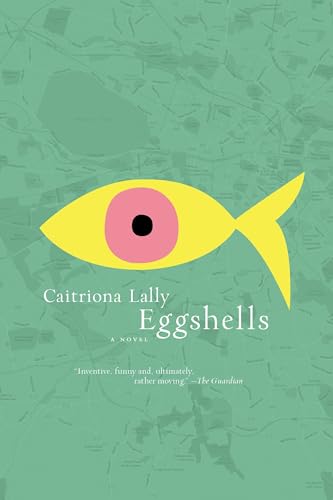
Eggshells by Caitriona Lally came from Melville House and TLC Book Tours for a blog tour.

An Irish book about a young woman looking for a friend named Penelope in a world that thinks she's troubled and strange, this looks amazing.

If you want to see the marvelous goodies in other people's mailboxes, make sure to visit Mailbox Monday and have fun seeing how we are all doing our part to keep the USPS and delivery services viable.

Thursday, February 23, 2017

Review: The Chilbury Ladies' Choir by Jennifer Ryan

It seems odd to say that a book set during WWII, one that addresses death, bombings, child refugees, and so forth is lovely but Jennifer Ryan's The Chilbury Ladies' Choir is just that. Lovely. It doesn't shirk the sorrows and the tragedies that happen in wartime but it does so in a way that celebrates indomitable spirit and the way that life continues despite the raging war.

Chilbury is a small English village not far from the coast. Almost all of the men have left the village to fight, leaving behind a village of women and children. When the local vicar disbands the church choir effective immediately after the funeral of the Winthrop's only heir due to the absence of male voices, the women of the village push back. Prim, the new music tutor, transforms the choir into a ladies' choir and the women of the village come together, outside of the usual gossip, rivalries, and other concerns large and small, through the music they sing. They draw together as a caring community, being comforted in their uncertain everyday lives and when faced with the terrors that war inflicts on them, through the beautiful harmonies and the powerful feelings that they stir.

The village and the people in it are not without their intrigues, scheming, and drama and the novel captures these charmingly through letters and diaries. There is an ensemble cast of characters, just as the women form an ensemble choir, who tell the majority of the story. Kitty Winthrop is thirteen going on fourteen, and she chronicles life as a girl on the cusp of young womanhood. She is observant and notices more than many but she is also blinded by a naive lack of understanding in the ways of the human heart, confiding in her diary what her family life is like, her adoration of one of the village sons, and the goings on of those around her. Venetia Winthrop, Kitty's older sister and a flirtatious young woman fully cognizant of her own power, writes letters to an old friend who has moved to London to work for the war effort. At least to start, Venetia is selfish and concerned with bending circumstances to her will, including making the enigmatic artist who has moved into their midst and claims to be exempt from the war by virtue of flat feet fall in love with her. Mrs. Tilling is the local nurse and a timid widow whose only son is leaving for the war, leaving her alone so that she must learn to fend for herself. Her journal entries are those of a frightened mother who must find a way to banish the fear and uncertainty, recognize her own inherent strength, and step up in whatever way the war will require. Edwina Paltry is the village midwife whose methods bring her into opposition with Mrs. Tilling's medical training. Edwina is a fairly unscrupulous opportunist and her letters to her sister detailing her schemes and filled with disdain for those around her are entertaining. These four women's writings tell the bulk of the story although an occasional piece from another character sneaks into the narrative as well.

The novel has a quiet dignity to it. It shows the women (and remaining men) as they face the war with determination even as their smaller, but no less personally important, domestic dramas continue to pull at them. The large cast of characters is people with characters who are all vibrant and alive, some good, some bad, and some still growing. The various plot threads and the four main narrators are all evenly balanced so that the reader is happy no matter which letter, or diary she is reading at any given time. And the novel has everything: love and death, heartbreak and friendship, community, service, and rivalries. Taking place over a mere 6 months in 1940, the story is a touching encapsulation of the daily life, the sacrifices, and the character, courage, and mettle of the country in a time of great strife and danger and fear. Readers who enjoy cozy stories or epistolary novels, those who are attracted to tales of the home front during WWII, and those who want to read touching stories, full of heart, will thrill to this delightful novel.

For more information about Jennifer Ryan and the book, check out her author website or like her on Facebook. Also, check out the book's Good Reads page, follow the rest of the blog tour, or look at the amazon reviews for others' thoughts and opinions on the book.

Thanks to Trish from TLC Book Tours and Crown for sending me a copy of this book to review.

Popular Posts