Tuesday, June 9, 2015

Review: Worthy by Catherine Ryan Hyde


What are each of us worthy of? We are worthy of life and happiness, love and connection. But saying that and truly knowing that deep down in our bones can be difficult. The characters in Catherine Ryan Hyde's newest novel are really grappling with the many facets of worth and what they feel they themselves are worthy of.

Virginia is a waitress at a diner set a bit off from town. She and Aaron, a diner regular who is a widower with a four year old son, have tiptoed around starting a relationship for a while but that hasn't stopped Virginia from fantasizing about a life with this kind man and his sweet child. When Aaron finally asks her on a date and they share their first kiss, it seems as if they are on the road to just what Virginia wants. But a terrible tragedy later that night robs them of that future. Fast forward nineteen years. Virginia has never forgotten Aaron and little Buddy but she is now engaged to Lloyd. She and her friend Fern are now the owners of the diner they've worked at for so many years. Fern doesn't understand why Virginia is going to marry Lloyd, who is a not very nice person and a lazy lay-about, and she convinces Virginia to really think about her intentions.

Jody is a young man in his early twenties living with his grandfather in a remote cabin in the woods. He's socially awkward and incapable of reading others. His grandfather suffers from dementia so Jody is all on his own taking care of him. When he sees a man in a red pick-up truck dump a dog out in the woods and then drive away during the coldest part of winter, he is horrified and takes the dog in as his own, renaming him Worthy. When he sees pictures of Worthy posted around town as a lost dog, he doesn't respond, figuring the owner doesn't deserve the dog. But Worthy is actually Virginia's dog, T-Rex, who was abandoned by Lloyd in a malicious act that clarifies his character for Virginia when she discovers it and Virginia is missing the dog something fierce. When they each discover the truth about the dog they love, Virginia and Jody forge a tentative connection. Worthy has led the two of them, both needing a friend, to each other.

Virginia is a dreamy, pie in the sky kind of character. She's so desperate to be loved that she is willing to settle for someone like Lloyd, who could abandon her beloved dog to die. She has never let go of her image of the perfect life she could have led with Aaron and Buddy, still mourning and idealizing the past nearly two decades on. Jody is uncomfortable with others, emotionally isolated, and clearly damaged by his upbringing. He is skittish and doesn't understand basic human interaction and his plan to live alone and without a job after his grandfather dies and the small pension check they get every month is completely unrealistic.  Jody is an odd duck. Both of these characters were a little bit frustrating, living so outside reality and the feel good resolution to whose dog T-Rex/Worthy will be comes across as just a bit too much. The grand coincidence of the novel was never a surprise but I actually found myself hoping that Hyde wouldn't take the easy way out instead letting Fern's insightful statement to Virginia stand. Although it ultimately didn't work for me, many people will probably enjoy this idealized, if unrealistic, novel about moving on after tragedy and loss and the healing power of connection and love.

For more information on Catherine Ryan Hyde and the book, visit her webpage, like her on Facebook, or follow her on Google Plus, Twitter, or Pinterest. Check out the book's GoodReads page. For others' opinions on the book, check it out on Amazon.

Thanks to the publisher and BookSparks PR for sending me a copy of the book for review.

Monday, June 8, 2015

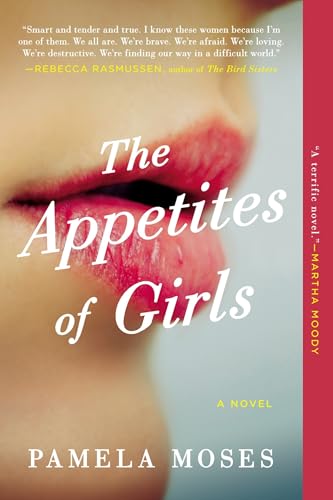
Review: The Appetites of Girls by Pamela Moses

Women have such a complicated relationship with food and body image. We are bombarded from a young age with pictures of societal ideals that are unobtainable for many, if not most, women. Men see these ideals and look for a reflection of the same in the women to whom they are attracted. So it's no wonder that food has become a battleground. But it's not just about fat versus thin, curvy versus lithe. Tied into this, for many women, food and eating is a power struggle, one of the few ways in which they can control how the world views them. They can overeat and become invisible, trying to fill a gaping emotional hole, or they can pick daintily at their food, sometimes eschewing it altogether in an effort to exert control over the one thing in their lives that no one else can touch. What we eat and how we eat can be so emotionally freighted, as is the case in Pamela Moses' debut novel The Appetites of Girls.

Ruth, Setsu, Francesca, and Opal come together as college suit mates their freshman year. At first blush, they look as different as it's possible to be but underneath the veneer of varying life experiences and family relationships, they face many of the same issues and insecurities. Ruth grew up in New York, the children of immigrants striving for perfection. Her mother dominated her life, pushing food on her, choosing her path in life, and deriving her own self worth from Ruth's successes and failures. The constant overbearing competitiveness was hard on Ruth and only in stuffing herself full of food can she find some escape from the failures she feels so deeply. Francesca also grew up in New York but she grew up in wealth and comfort, expected to conform to her socialite mother's expectations of beauty and hospitality. Overeating is a way for her to buck these expectations and to mask the hurt she feels on the rare occasions she finds disappointment reflecting at her. Opal grew up with a single mother who followed men around the world, trading on her sexuality. She was, in many ways, more a pet to her mother than a child and her mother indulged her, thinking it adorable that her daughter wanted to grow up so quickly, not seeing the danger for a young girl looking for love and acknowledgement wherever she could find it. When this results in something horrific, Opal finds her only source of power in the stringent food and exercise rules she follows, bending her body to her own desires, not the desires of the men around her. Setsu, adopted as a young girl, is musically gifted but when her parents adopt an older brother who is also a talented musician, his petulant need to be the star and his enormous appetite force Setsu into the background where she hovers in near invisibility, wanting desperately only to please. She starts eating like a bird so that there is more for her brother to consume and, in his shadow, quits her violin despite real promise, and her parents allow and encourage her almost complete effacement. When these four damaged young women come together in college, their habits are already deeply ingrained. Even as they forge the connections to each other that will last long past college, they not only cannot break out of their destructive patterns, but they don't even share the very deepest of their hurts with each other. They do change over this seminal four years and try to forge new identities but without acknowledging the underlying issues that continue to haunt them: inability to accept and love themselves, to allow themselves to trust other people, and to take control of their lives and live them free of the expectations of others.  But without looking into their own souls and confronting their pain, they will not be able to change and grow into healthy and happy adults.

Ruth narrates her sections in the first person while the other three women's sections are third person. In addition to the rotating narration, the novel is divided into three separate sections, a pivotal moment in the shaping of the appetites of each of them in adolescence, their college years together, and then their life after college. Each of the women has very different relationships with her family and with men which results in different attitudes and reactions to food and hunger. Two of them are filling a hunger and two are denying it but each is suffering emotionally because of her actions. Moses has written a psychologically astute novel about what drives women to eat or to withhold food from themselves. She examines the subtle effect of conforming to men's ideals, how those ideals have become so ingrained in our culture as to be universal across the sexes, and the notion of sexuality in the relation to all of this. The issue is handled subtly but it is still very clear in the context of each woman's struggle and it can make the reader uncomfortably, gut-churningly self-aware. The novel is incredibly thought provoking and there's a despair and a darkness to the narration that adds to the difficulty of the subject matter.  But the ending is too easily resolved and it would have been more satisfying to see each of the characters claim their new resolutions once they have their revelations about the damage they have long been doing to themselves but instead we jump into the future by several years and are just told how they've changed. This minimizes the power of the narrative a bit but the overall feel and message of book is a good one, and the challenges and hurts the women all face are still prevalent today.

Thanks to the publisher for sending me a copy of this book to review.

It's Monday! What Are You Reading?

This meme is hosted by Sheila at Book Journey.

Books I completed this past week are:

The Appetites of Girls by Pamela Moses

Bookmarks are still living in the middle of:

The Wolf Border by Sarah Hall

Reviews posted this week:

The Promise by Ann Weisgarber
The Jesus Cow by Michael Perry
Eight Hundred Grapes by Laura Dave

Books still needing to have reviews written (as opposed to the ones that are simply awaiting posting):

The Surfacing by Cormac James
The Secret Wisdom of the Earth by Christopher Scotton
A Small Indiscretion by Jan Ellison
The Year of the Flood by Margaret Atwood
George's Grand Tour by Caroline Vermalle
Washing the Dead by Michelle Brafman
Sweet Salt Air by Barbara Delinsky
Worthy by Catherine Ryan Hyde
The Appetites of Girls by Pamela Moses

Monday Mailbox

As if finally getting my decade-long awaited trip to London and book shopping across the pond wasn't enough, I came home to a veritable cornucopia of lovely goodies waiting for me to open them as well. This past week's mailbox arrivals:

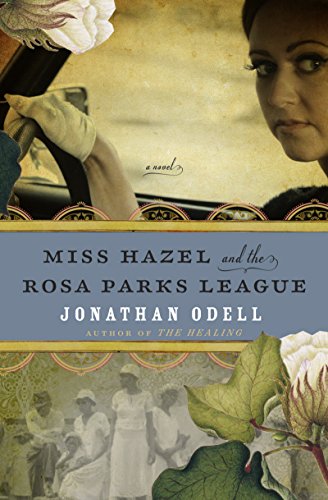
Miss Hazel and the Rosa Parks League by Jonathan Odell came from Maiden Lane Press.

Two women, one black, one white, who have each lost a son and who loathe each other, are forced to spend time together in the Jim Crow South in this fascinating sounding novel.

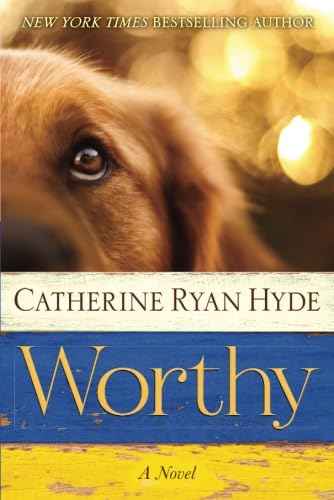
Worthy by Catherine Ryan Hyde came from Lake Union and BookSparks for a blog tour.

Let's be honest. I am a complete sucker for a book with a dog on the cover. This one about a woman and a young man connected by a long ago tragedy through a lost dog looks really heartwarming.

If you'd like to see the marvelous goodies in other people's mailboxes, make sure to visit Mailbox Monday and have fun seeing how we are all doing our part to keep the USPS and delivery services viable.

Sunday, June 7, 2015

Sunday Salon: Summer Reading List

My mom sent me an article that claims that Type A personalities like lists. A lot. I definitely used to be Type A. I might even still be although I think I've mellowed some over the years, maybe not all the way to Type B but perhaps to Type A-. But that list thing? I still love lists. I should have stock in sticky notes. And since summer has rolled around, it's time for me to put together my annual summer reading list. This is, as always, just the list of books that I hope to get through this summer, not things that I think anyone else has to read although if you want to read with me, I'd love that too. In my head, summer runs from Memorial Day to Labor Day so that's what my summer reading list assumes too (and it gives me a little leeway on time too). So, in no particular order, here's the list as of right now, including some I've already read since Memorial Day because I also love to cross things off of my list too (and yes, I am well aware that I cannot possibly read all the books on the list between 5/25 and 9/7 but I can sure give it the old college try):

Worthy by Catherine Ryan Hyde
Sweet Salt Air by Barbara Delinsky
Washing the Dead by Michelle Brafman
George's Grand Tour by Caroline Vermalle
The Year of the Flood by Margaret Atwood
Eight Hundred Grapes by Laura Dave
In a Dark Wood by Joseph Luzzi
Our Endless Numbered Days by Claire Fuller
Love Maps by Eliza Factor
The Door by Magda Szabo
Ferris Beach by Jill McCorkle
The Appetites of Girls by Pamela Moses
The Wolf Border by Sarah Hall
Whisper Beach by Shelley Noble
Summer Secrets by Jane Green
It's You by Jane Porter
Etta and Otto and Russell and James by Emma Hooper
Newport by Jill Morrow
All the Light We Cannot See by Anthony Doerr
Maybe in Another Life by Taylor Jenkins Reid
Baker's Blues by Judith Hendricks
When the Moon Is Low by Nadia Hashimi
The Road Home by Kathleen Shoop
Crooked Heart by Lissa Evans
This Must Be the Place by Kate Racculia
The Invisibles by Cecelia Galante
Stepdog by Nicole Galland
The Reinvention of Albert Paugh by Jean Davies Okimoto
Anchored by Bridgette Quinn
The Race For Paris by Meg Waite Clayton
Satisfaction by Andee Reilly
White Dresses by Mary Pflum Peterson
A Window Opens by Liz Egan
Making Nice by Matt Sumell
Miss Hazel and the Rosa Parks League by Jonathan Odell
Without You, There Is No Us by Suki Kim
Spinster by Kate Bolick
Secrets of a Charmed Life by Susan Meissner
Lost Canyon by Nina Revoyr
Best Boy by Eli Gottlieb
The Seven Stages of Anger and Other Stories by Wendy J. Fox
All My Puny Sorrows by Miriam Toews
Orhan's Inheritance by Aline Ohanesian
Famous Baby by Karen Rizzo
The Nurses by Alexandra Robbins
Beneath the Bonfire by Nickolas Butler
A God in Ruins by Kate Atkinson
Bitter Greens by Kate Forsyth
Letters to the Lost by Iona Grey
Circling the Sun by Paula McLain
Fishbowl by Bradley Somer
Miss Dreamsville and the Lost Heiress of Collier County by Amy Hill Hearth
Bread Alone by Judith Hendricks
Little Woman in Blue by Jeannine Atkins

Thursday, June 4, 2015

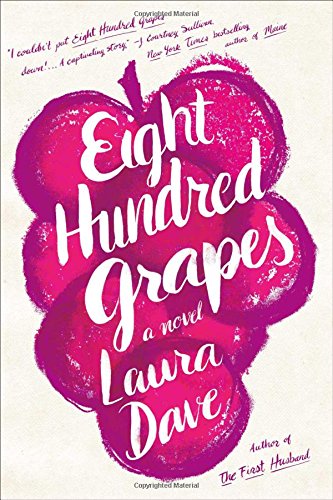
Review: Eight Hundred Grapes by Laura Dave


I buy wine based on the label. If it's clever, punny, or beautiful, I am more inclined to put it in my grocery basket. Probably not a particularly good method for buying wine, but since I don't drink it myself, it's a method that works for me (and my closest wine drinking friends know to bring their own if they want a guarantee of any sort). So perhaps it seems odd that I would be at all interested in a novel with a winery so central to the story but I have to say that I would definitely buy wine from The Last Straw Winery in Laura Dave's new novel, Eight Hundred Grapes.

When Georgia is having a final fitting for her wedding dress one week before her wedding, she spots her fiancĂ© Ben walking down the street with a beautiful woman and an even more beautiful child walking between them. She cannot process the truth of this accidental revelation and flees, still in her dress, to her childhood home many hours north of her LA home. Reeling from the secret Ben has kept from her, she goes back to the place that grounds her, The Last Chance Winery in Sonoma County, the vineyard that her parents started decades before but she finds that it is not the refuge she once thought, walking into the complicated and tangled secrets that her parents and her brothers had thought to keep from her until after the wedding. Her twin brothers are more than strained, they're estranged for some reason, and when she arrives home unannounced, she discovers a naked man, not her father, coming out of her mother's bedroom. Add to all of this the news that her father has sold their small artisanal winery to a large corporation, and Georgia is really thrown for a loop.

As Georgia muddles through, putting her own indecision about the wedding on the back burner, she tries very hard to fix her parents' marriage, her brothers' relationship, and to stop the sale of the winery in its tracks. She can focus on fixing everything but her own life. But eventually her own life needs to be examined too and she has to decide not only how she feels about Ben but also where she stands on trust, honesty, forgiveness, and being the most important person in someone else's life. As she faces all of these issues in her own relationship, everyone around her is facing variations of the same thing in their own lives. Told over the course of one week's time, the novel is both sweet and nuanced as Georgia learns more about her home and heart. The technicalities of winemaking are interesting, even for a non-oenophile. Georgia as a character is sometimes frustrating, with her desire to stick her head in the sand but her hurting is genuine feeling and the whole of the story feels authentic. The ending is predictable from very early on but it is still the right ending for the story. Dave has written a yummy novel about relationships: family relationships that are broken but hopefully not irretrievably and the importance of recognizing and honoring the special, beloved people in our lives. It's a very fast read, one that reminds us to value the people we love each and every day.

For more information on Laura Dave and the book, visit her webpage, like her on Facebook or follow her on Twitter. Check out the book's GoodReads page. For others' opinions on the book, check it out on Amazon.

Thanks to the publisher and BookSparks PR for sending me a copy of the book for review.
Wednesday, June 3, 2015

Review: The Jesus Cow by Michael Perry

I discovered Michael Perry quite a few years ago now when his wonderful memoir Population 485 came out and captivated me with its quiet paean to life in small town rural Wisconsin. Since then I've read just about everything he's written, enjoying my return trips into Perry's life, community, and acquaintances. With The Jesus Cow, Perry makes his first foray into fiction and he brings the same simple, intelligent, and homespun narration to this novel that he has employed to such good use in his non-fiction.  His characters could just as easily be his neighbors as his fictional creations and that is half the charm of this book.

Harley Jackson is a quiet man. He works at a factory and continues to run beef cattle on the small portion of the family farm still left to him. When his dairy cow, Tina Turner, gives birth to a calf on Christmas Eve, he is startled and dismayed to see a clear picture of Jesus on the calf's side. Some people would consider this a miracle and trumpet it to all and sundry. Harley, on the other hand, is completely dismayed and tries to decide how to camouflage the inconvenient marking, from confining the calf to the barn to rubbing shoe polish over Jesus' face to try and make it less visible at least and invisible at best. It doesn't even occur to him to try and capitalize on the image, even though his best friend Billy suggests that cashing in would solve many of Harley's financial troubles, one of which is that local real estate developer, Klute Sorenson, has it out for him, wanting to get his hands on remaining 15 acres of Harley's farm and already owning the rest of the original is using the town's generally unenforced statutes to try and force Harley out. Preferring to avoid confrontation, Harley can and does put his head in the sand about the likely outcome of Klute's bullying and about the cow's miraculous mark until he has no choice but to face both situations. When Harley falls head over heels for a woman new to town, inviting her into his life, and then the calf escapes the barn and is spotted by the devout mail carrier, who promptly uploads a photo of the Jesus on its hide to the internet, life as Harley and the rest of the small town knows it explodes wide open.

On the surface, Perry has written an entertaining and folksy tale about the three ring circus media storm that results when Hollywood and rural Wisconsin collide but on a deeper level, he has penned an examination of the challenges facing small farming communities--development versus conservation, poverty, lack of funding for vital services, outsiders versus locals, and what success looks like among other issues. Harley is a lovely character, plain spoken and honest, not given to anything showy or unconsidered. The large cast of unusual secondary characters around him, best friend Billy who lives in a trailer on Harley's land, local junk yard owner Maggie, disgraced former academic and stubborn environmentalist Carolyn, developer and avid listener to cliched self-help business books Klute, his welder-artist girlfriend Mindy, and slick Hollywood agent Sloan are all fantastic and well developed and all are vital to the story in their own ways. As in his memoirs, Perry draws an appealing picture of place and the connections that people feel to it. His questions about faith, which weave through the whole of the story, are respectful and balanced as he shows both the sensational and vocal faith of many of the pilgrims clamoring to see the calf as well as the quiet, modest, and unpretentious faith of people in the community. And his very Midwestern sense of dry humor shines through in both small moments and the over the top ridiculous ones as well. The novel is well-paced, off-beat, and happily engrossing and those who have enjoyed his memoirs will appreciate the straightforward and entertaining way in which he has tackled his first work of fiction as well.

For more information about Michael Perry and the book, check out his website, like his Facebook page, or follow him on Twitter or Instagram. Takes a look at the book's Goodreads page, follow the rest of the blog tour, or look at the amazon reviews for others' thoughts and opinions on the book.

Thanks to Trish from TLC Book Tours and the publisher for sending me a copy of the book for review.

Popular Posts