Friday, February 6, 2015

Review: Admission by Jean Hanff Korelitz

Many of us have been on one side of the college admissions process, the prospective student's side. But far fewer people have witnessed the process from the other side, the admissions counselor's side. When we were applying ourselves, we just knew there was some sort of insider information that if only we knew it, we'd be accepted to the school of our dreams. Those of us with children going through the process now still want that elusive, top secret information. And yet we are told over and over, then and now, that there's no magic guarantee. While Jean Hanff Korelitz's novel, Admission, reiterates this, it does feel a little bit like a peek behind closed doors into the life and decisions of an admission officer.

Portia Nathan is an admission officer at Princeton. She lives with her long time boyfriend, Mark, an English professor, and she's just been given the plum New England recruiting territory for the University. As the application season starts, Portia visits schools, including a new experimental school in New Hampshire where she finds a group of students, and one in particular, who challenge and interest her more than any others through the years. John, the head teacher at the school causes her pangs too; he's a former classmate from Dartmouth who remembers her but whom she does not remember. Really what she's most frightened about is how his appearance reminds her of her college boyfriend and the past she thought she'd buried from all conscious thought. When she returns home and immerses herself back in her regular life with Mark and the mountains of applications to which she must give thoughtful consideration, suddenly everything in her life seems to start slowly imploding, forcing her to face the past and her decisions.

The novel is balanced between the story of admitting students, and how that process works, and the admission she must make to herself, about the lingering effect of the past on all the decisions she has made ever since. Portia is given ample opportunities to explain the way that an admissions committee works and thinks, during her school visits, at a dinner party with a hostile colleague of Mark's, and in describing her own actions behind closed doors. She feels some intellectual inferiority because of the lack of a degree aimed specifically at her job and qualifications. She describes the unavoidable, and unfortunately common, occurrence of rejecting well-qualified prospective students. She gets personally involved in certain kids' applications, fighting for their admittance in committee. And she makes the overwhelming stress of reading through so many heartfelt applications in such a short amount of time as well as ignoring or denying the very cracks in her own personal life because she is so consumed by applications very understandable and immediate to the reader.

Each chapter starts with an application excerpt as an epigraph. These are clever and sound very much as if they could have been culled from actual applications. Shifting between the here and now of her present and her past, Portia is just treading water, feeling completely unmoored, for most of the story. Her counterculture childhood and unusual mother formed her in ways that were perhaps expected: her rebellion had no choice but to turn towards the conventional and away from the unconventionality of her mother. The big revelation from her past is rather predictable and the huge coincidence that stems from it is a little tough to buy. But I had already gotten aggravated by a plot point that was beyond incorrect so I might have been a tad judgmental by then.

What chapped my hide so much, you ask? Portia ends up with a monogrammed shirt from a boy who accidentally hit her in the head with a lacrosse ball. She wants to find him but she can't because she didn't know that the larger middle letter in a monogram is actually the last initial. Well, yes. This would be true if the boy was a girl. The larger middle letter makes this a woman's monogram. Given that the boy is the offspring of a Boston Brahmin family, he would certainly not have had a girl's monogram on his oxford cloth shirt (and his family would certainly have known the difference). And men's monograms are done in name order with all letters the same size. This might seem petty but since it is given a full paragraph in the book as she searches for this boy based on the wrong last initial and it is the major reason for Portia not finding this knight in shining armor sooner than she does, it becomes too pivotal to be so badly incorrect. Little things matter, especially when they really aren't that little in the grand scheme of things. Despite my pique, I did appreciate Portia's growth and change as a character. The story was generally well paced although sometimes Portia's defense of her job went on a bit long.  But as a mother going through the college application process two years in a row, I definitely appreciated her silent exhortation "Don't...make some terrible connection between who you are as a human being and whether or not you get in." (p. 219) Sound advice we could all stand to remember in so many areas of our lives.

Thanks to the publisher for sending me a copy of this book to review.

Wednesday, February 4, 2015

Review: Girl Runner by Carrie Snyder

I took up running in 2007 despite the fact that I was never a runner growing up. I spent 15 years as a competitive swimmer so my couple of years of high school track were really more a function of the fact that the team needed distance runners and I had the endurance than from any speed or aptitude on my part. I sure didn't have any sprint ability, that's for sure. Even now, in my middle age, when most people probably look at going shorter distances, I am trying to ramp myself back up to go longer. It's just what I do best, to Energizer Bunny along. Women were not always thought capable of running anything but short races though. Most people have probably seen the footage of Katherine Switzer, the first woman to run in the Boston Marathon, being pulled at and blocked by race officials who wanted to pull her off the course. Before Switzer, there was a long line of women runners who had to fight the same prejudice, that women were not capable of distance running, despite evidence to the contrary. In Carrie Snyder's novel, Girl Runner, main character Aganetha Smart runs the 800m for Canada in the 1928 Olympics, winning gold, the first woman to do so and at a distance that wouldn't be competed by women again until 1960. But her life over all was not as golden as her medal.

Aggie is 104 when the novel opens, living in a nursing home and all alone in the world, having been predeceased by her entire family. Two young strangers come to the home to take her on an outing, claiming that they are making a film about running and that they know her. They tell her that she is the inspiration for the young woman, a talented marathoner, and that they want to include Aganetha in their documentary. In doing this, they drive her back out to the farm on which she grew up. This, and all of the questions they ask her, trigger memories of her childhood, family, and her training. She had a rough life, this pioneer runner of races. Born on a rural Ontario farm, she was the youngest child of her father's second wife. Often cared for by her oldest half-sister, she learned about loss and the tragic lore of the Smart family at Fannie's side. Always a quick girl, she could outrun all the boys in town but she could not outrun the legacy of war, disease, and accident that continued to relentlessly decimate her family. Leaving home at only sixteen and moving to Toronto with one of her sisters, she was chosen to run track as a factory girl for P. T. Pallister's Rosebud Confectionary, a move that will culminate in her winning an Olympic gold medal and will change the shape her life forever.

Most chapters of the novel start in the present with Aggie in her wheelchair being taken out of the nursing home on an undisclosed outing with Kaley and Max. But there is a moment in each piece of the here and now where Aggie is pulled back into her past. And so the story moves ahead, narrated by an Aggie who is still completely compos mentis no matter how frail her body has become, from a brief time in the present to a longer sojourn in the past. She tells of her childhood, of her friendship with a fellow runner, her long forgotten romance, and the decisions that have led her to be all alone at the end of her life. She senses that the young people so determined to talk to her, to take her back into memory, are not being entirely aboveboard in their desire for her. Even in her narration, Aggie maintains an emotional reserve, a protection against the long ago hurts and betrayals. It is up to the reader to penetrate this shell and to see beneath it to the woman inside.

Aganetha's story is an engrossing one. The hurdles she overcame to win gold and the hurdles she stumbled over in life are interesting and well presented. The history of sports, feminism, and the world all swirl through her personal story, seamlessly integrated. Snyder clearly knows what drives runners, more than just the glory of winning and she has created a fascinating and complex character in Aggie, both clearly repressed and still somehow a modern thinker. The revelation of what Kaley and Max actually want and why is not entirely unexpected by the time the reader gets to it but that no longer really matters. Snyder's weaving of brief obituaries through the narrative helps to increase the continual sense of loss that pervades all of Aggie's life. This is a readable and compelling look at the avenues open to women in the early twentieth century, not just in sports but in terms of their bodies, their careers, and their rights. Runners will especially enjoy it but it has a broader appeal than just to those of us who wobble and trot (or speed and flash) our way around neighborhoods, tracks, and wooded paths.

For more information about Carrie Snyder and the book, take a look at her website, find her on Facebook, follow her at Twitter, or check out the book's Goodreads page. Follow the rest of the blog tour or look at the amazon reviews for others' thoughts and opinions on the book.

Thanks to Trish from TLC Book Tours and the publisher for sending me a copy of the book for review.

Waiting on Wednesday

This meme is hosted by Breaking the Spine and is meant to highlight some great pre-publication books we all can't wait to get our grubby little mitts on.

The Love Song of Miss Queenie Hennessy by Rachel Joyce. The book is being released by Random House on February 24, 2015.

Amazon says this about the book: From the bestselling author of The Unlikely Pilgrimage of Harold Fry and Perfect comes an exquisite love story about Queenie Hennessy, the remarkable friend who inspired Harold Fry’s incredible journey.

When Queenie Hennessy discovers that Harold Fry is walking the length of England to save her, and all she has to do is wait, she is shocked. Her note had explained she was dying. How can she wait?

A new volunteer at the hospice suggests that Queenie should write again; only this time she must tell Harold everything. In confessing to secrets she has hidden for twenty years, she will find atonement for the past. As the volunteer points out, 'Even though you've done your travelling, you're starting a new journey too.'

Queenie thought her first letter would be the end of the story. She was wrong. It was the beginning.

Tuesday, February 3, 2015

Review: The Tell-tale Heart by Jill Dawson

When my daughter got her license a few months ago, they asked her if she wanted to be an organ donor. She didn't know how to answer the question but when she turned to me to ask what I thought, I told her that yes, she should register as one. As much as I hope there's never any need for that information to be on record, it is important stuff. In fact, a friend of mine had to make the heart-wrenching and unimaginable decision to donate her teenaged son's organs not too long before I stood in the DMV with my daughter. That we all have the chance to give a stranger a life saving gift is amazing, especially in the midst of terrible tragedy. And I have to imagine that the hope that some spark of your loved one lives on in the actual flesh, blood, and muscle of their donation gives families some shred of peace in their loss. There are countless stories out there about people who are organ recipients who feel a connection with their donor, some who go on to have relationships with their donor's family, and some who say that their tastes, interests, and temperament changed after the transplant. I imagine that no matter what, the recipient must always feel curiousity about the donor whose gift allowed them life. Certainly this is the case in Jill Dawson's newest novel, The Tell-Tale Heart.

Patrick is a university professor, fifty years old, a philandering womanizer, whose heart failure was so advanced he was given an outside chance of making it another 6 months. But a sixteen year old boy on a motorcycle had an accident and because of the donor card in his wallet, Patrick has a much longer future ahead of him. The question is what his future looks like. When Patrick wakes up in hospital after the transplant, his ex-wife is at his bedside and he has no grasp of the enormity of what has just occurred. He certainly knows it intellectually but he doesn't know it deep in his newly transplanted heart.

Drew Beamish is a troubled and rebellious teenager. His family is poor but proud and he's got great potential even if he'll have to overcome a lack of advantages in order to use it.  But like his ancestor before him, he is close to beaten before he ever even gets started and in many ways, he lives down to that expectation. He is fairly aggressively pursuing a relationship with his teacher at school and after his father's early and unexpected death from a heart attack after a farm accident, he pushes at the boundaries pre-drawn for him all the harder. And it is this raging against his fate that lands him squarely on the motorcycle that speeds his death.

The novel's first person narration alternates mainly between Patrick, post-operation, and Drew, pre-accident, with a short chapter focused on Drew's ancestor, his role in the uprisings in the Fens, and his own enduring love two hundred years prior. For Drew, there is a real hopelessness about the future; ironically his death gives Patrick the opportunity to even have a future, filled with hope or no. And with this second chance, Patrick experiences subtle personality changes, reevaluating his past relationships and family ties, and must face head on the question of what obligation he has to Drew and Drew's memory simply because he was the recipient of Drew's heart. The landscape of the novel is bleak and blighted, the flat, former swampland filled in as agricultural land. The tone of the novel is atmospheric, spare, and oddly unemotional. The strength of the story lies in the writing. It's a very literary novel that examines what part of us resides in our heart, what spark of our person remains there as long as it beats, even in the chest of another human being. As Patrick feels the constant beating of Drew's heart in his chest, he must take stock of a life squandered and a life cut short and decide where the steady beats of the future will take him. Dawson has raised some intriguing questions and laid them inside the lives of two rather unexceptional characters, who become exceptional over the course of the narrative, connected by the most basic, physical sign of life, a fully functioning heart.

Thanks to the publisher for sending me a copy of this book for review.

Monday, February 2, 2015

It's Monday! What Are You Reading?

A sick kid, several days of migraines for me, the 20+page monster of a newsletter for which I am the reluctant editor, and a Super Bowl party with friends. No wonder I didn't read so very much this week! This meme is hosted by Sheila at Book Journey.

Books I completed this past week are:

Admission by Jean Hanff Korelitz
My Kitchen Wars by Betty Fussell
Mr. Blandings Builds His Dream House by Eric Hodgins

Bookmarks are still living in the middle of:

The Last Good Paradise by Tatjana Soli
Men With Balls by Drew Magary

Reviews posted this week:

The World of Rae English by Lucy Rosenthal
The Death of Fidel Perez by Elizabeth Huergo
The Future for Curious People by Gregory Sherl

Books still needing to have reviews written (as opposed to the ones that are simply awaiting posting):

The Tell-Tale Heart by Jill Dawson
Admission by Jean Hanff Korelitz
My Kitchen Wars by Betty Fussell
Mr. Blandings Builds His Dream House by Eric Hodgins

Monday Mailbox

Just one book came this week but it looks like a goodie. This past week's mailbox arrival:
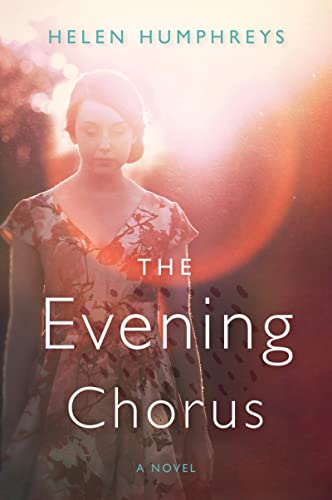
The Evening Chorus by Helen Humphreys came from Mariner.

Three people whose lives are forever changed by WWII and the peace that follows it, this looks amazing.

If you'd like to see the marvelous goodies in other people's mailboxes, make sure to visit Mailbox Monday and have fun seeing how we are all doing our part to keep the USPS and delivery services viable.

Sunday, February 1, 2015

Sunday Salon: The Superbowl Edition

If you live in the US, you know that today is the Superbowl. Even those of us who don't follow football at all know it. Heck, the grocery stores have been packed this week and their enormous displays of chips and dips are pretty decimated by now. The tower of cases at the mouth of the beer aisle have slowly dwindled away to normal height. Stores are even running buy one get one free specials on avocados (conveniently placed next to packets of powdered guacamole mix spices for the chronically lazy).

This year's big game (is that supposed to be capitalized or trademarked or something because I just can't bring myself to do it) is not just a football game though, it's haunted by the specter of Deflategate. Side note, do we have to attach "gate" to the end of everything that might possibly be a scandal? Thanks a stinkin' lot, Watergate! Anyway, if you've been living under a rock, this is a cheating scandal. Under-inflated balls and all that jazz. I don't honestly know if this will turn out to be a big thing or not (nor do I care) but let me go on record saying that cheating is wrong. Always. Aside from the moral implications, I am hoping that we continue to get some wonderful jokes out of it. Because how can you not love adolescent boy humor, which is the only kind of humor you can possibly attach to football and deflated balls, right?

In the spirit of the game and the scandal, I pulled a book off the shelf that I've had for a very long time: Drew Magary's Men With Balls. How could I not? Purportedly a handbook for professional athletes and how they should comport themselves once they sign their multi-million dollar contracts, it is clearly not a serious book but it seemed too perfectly topical to pass up. And that got me wondering about other books that I could be reading that would fit too. So here's a sampling culled strictly from my own shelves:

Books on football (not soccer, although I was a bit surprised how many of those popped up when I searched my books for the word football since that indicates I have more European books/authors on sports than I would have thought--oh and fair notice that football really only plays a background role in most of my books because, well, I'm not really a fan):

Number 6 Fumbles by Rachel Solar-Tuttle (New Adult fiction)
Confessions of a Hero-Worshipper by Stephen J. Dubner (memoir)
A Fan's Notes by Frederick Exley (fiction)
Hot Item by Carly Phillips (romance)
Nobody's Baby But Mine by Susan Elizabeth Phillips (romance)
Rammer Jammer Yellow Hammer by Warren St. John (travel narrative)
The One and Only by Emily Giffin (chick lit)

Books about advertising in some way, shape, or form--most likely with a main character who works in the industry (because let's be honest, the commercials are way better than the game--except not last year; last year they stunk):

The Cheese Monkeys by Chip Kidd (fiction)
Mr. Blandings Builds His Dream Home by Eric Hodgins (fiction)
The Ladies' Man by Elinor Lipman (fiction)
The Journal of Mortifying Moments by Robyn Harding (fiction)
The Prize Winner of Defiance, Ohio by Terry Ryan (memoir)
e by Matt Beaumont (fiction)
Dry by Augusten Burroughs (memoir)
Up the Agency by Peter Mayle (humor?)
Confessions of a Sociopathic Social Climber by Adele Lang (chick lit)
The Puzzle King by Betsy Carter (fiction)
Woman on the Verge of a Nervous Breakthrough by Ruth Pennebaker (fiction)

And finally the book that proves I am a complete smart ass (because if you can take something and run with it, I totally will) but truly this might be the perfect novel to read for this year's game given that it's about football and well, just look at the title!:

Balls by Nanci Kincaid (fiction)

Aside from learning the important things about being a professional athlete, my reading has taken me all over this week. I started my week in the English Fenland with a professor who received the heart of a sixteen year old accident victim. Then I traveled to Princeton with an Admissions officer whose carefully constructed life is breaking down just as the application cycle starts getting crazy. I stayed in the general vicinity of Princeton with a woman who marked places and times in her life by food and kitchen implements. Then I went to Bald Mountain, New York as an ad man and his wife discovered the stress of building a house from scratch. Now, in addition to the professional athlete's handbook, I am heading off to a remote island resort with a bunch of misfits. Where have your reading travels taken you this week?

Popular Posts