Tuesday, August 5, 2014

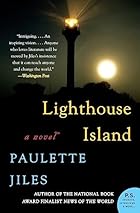
Review: Lighthouse Island by Paulette Jiles

Have you ever read a book where the writing is beautifully done but there's just something missing and so you end up not appreciating the book as much as the writing says you should? Lighthouse Island by Paulette Jiles is a book like that for me. I am admittedly not a huge dystopian fiction reader but I have read a few in the past that have pleasantly surprised me so that I don't automatically discount this particular setting anymore and I very much wanted Lighthouse Island to be one of these unexpected surprises. Instead, I really had to work to keep turning the pages.

Nadia is an orphan abandoned in the street by her parents as a very young child. Being an orphan in the dystopian future is not easy at all, especially one who spends an unidentified amount of time blind and unable to watch the television shows that obsess the rest of the populace before having her sight restored, although her eyes remain a weakness for her always. The terribly overpopulated world she lives in is suffering from a severe drought, water is rationed, megacities sprawl across the dirty, dusty landscape of the former US, and the government is restrictive, cruel, and unbalanced in its treatment of its highest and lowest citizens. Nadia is of minimal importance in this random, oppressive world and she keeps slipping closer and closer to being in danger of being eliminated entirely with each of her infractions, small and large.

When she has an ill-advised affair with her oversupervisor's husband, she knows that she is no longer safe and rather than be taken and potentially executed for the gruesome new televised executions, she runs, striking out for Lighthouse Island, the vacation spot she's long fantasized about and the place where she imagines her parents waiting for her. So starts her long journey through the unending city and to her fateful meeting with cartographer and demolitions expert, the wheelchair bound James Ortolov. James is much higher up in the hierarchy than she is and yet when he stumbles across her on the rooftop of the Ritz-Carlton, they spend the evening talking, they fall in love, and he works to aid her on her way to Lighthouse Island.

Nadia is a smart, resourceful, and inventive character but she is also lying and manipulative in the face of desperation to survive. She mostly shows a curious lack of empathy for others trapped under the same governmental strictures to which she is a hostage and yet her callousness is rewarded time and time again.  But her very emotionlessness makes it hard to believe in her love for James. The love story itself is necessary to the plot, otherwise he has no real reason to aid her in such potentially dangerous ways, but it is underdeveloped.

Jiles builds this future world of Nadia and James masterfully but then continues to repeat the descriptions ad infinitum as Nadia plods through one sector after another trying to make it to the Northwest. Having intentionally stripped the world of place names and dates, in fact, having stripped Nadia herself of her original name both through governmental decree and then over and over again as she tries to travel undiscovered through the city, there were an awful lot of instances where characters used the supposedly forgotten and verboten ancient names to orient themselves. The world itself is a strange and frightening one, close enough to a possible future for us to cause a reader a lot of discomfort. And yet there are some strange incongruous things about this future world. For instance, people no longer know how to create many things we take for granted.  All the manufacturing of things like computers was shipped overseas and then those foreign societies which retained the knowledge of how to create collapsed, and yet the whole of the future world and its corrupt government is reliant on computer technology.  Not entirely compatible ideas here.  The tone of most of the book is one of bleakness and despair and yet it ends on a completely incongruous, hopeful note. It is a book that exults the power of literature through the broadcasts of novels on the radio and through Nadia's prodigious memory of poetry and it holds these things as important and life changing. Combine this with Jiles' beautiful facility with language and it should have been a wonderful quest novel. Instead it was dense, oftentimes repetitive, and ultimately underdeveloped.  Regular readers of dystopian fiction might feel differently about it than I did however.

For more information about Paulette Jiles and the book, check out her website or check out the GoodReads page for the book. Follow the rest of the blog tour or look at the amazon reviews for others' thoughts and opinions on the book.

Thanks to Lisa from TLC Book Tours and the publisher for sending me a copy of the book for review.

Monday, August 4, 2014

It's Monday! What Are You Reading?

Now that I'm home, I am trying to re-enter my normal life slowly. I have a bunch of books to review from vacation but I've managed to pick up a computer virus somehow (hotel wifi maybe?) so that has to be dealt with before I do much of anything else. On the plus side, a virus can't keep me from reading more. ;-) This meme is hosted by Sheila at Book Journey.

Books I completed this past week are:

Bellman and Black by Diane Setterfield
The Orphans of Race Point by Patry Francis
Gravel on the Side of the Road by Kris Radish
Chasing Perfect by Susan Mallery

Bookmarks are still living in the middle of:

The Geometry of Love by Jessica Levine
Gemini by Carol Cassella
Ruby by Cynthia Bond
Marching to Zion by Mary Glickman
Lighthouse Island by Paulette Jiles

Reviews posted this week:

Gravel by the Side of the Road by Kris Radish
The From-Aways by C.J. Hauser

Books still needing to have reviews written (as opposed to the ones that are simply awaiting posting):

Mimi Malloy, At Last by Julia MacDonnell
The Innocent Sleep by Karen Perry
Strings Attached by Joanne Lipman and Melanie Kupchynsky
Palmerino by Melissa Pritchard
If Not For This by Pete Fromm
The Lady From Tel Aviv by Raba'i al-Madhoun
Angels Make Their Hope Here by Breena Clarke
Ishmael's Oranges by Claire Hajaj
Neverhome by Laird Hunt
Burial Rights by Hannah Kent
Euphoria by Lily King
The Blessings by Elise Juska
The Traitor's Wife by Allison Pataki
Everything I Never Told You by Celeste Ng
Painted Horses by Malcolm Brooks
All Fall Down by Jennifer Weiner
Juliet's Nurse by Lois Leveen
We Are Called to Rise by Laura McBride
Bellman and Black by Diane Setterfield
The Orphans of Race Point by Patry Francis
Chasing Perfect by Susan Mallery

Monday Mailbox

I've been gone for almost a month so the books piled up in my absence. I love having book packages to open when I get home. It somehow makes the unpacking a little less tedious. This past month's mailbox arrivals:

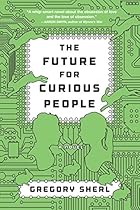
The Future for Curious People by Gregory Sherl came from Algonquin Paperbacks.

If you knew your romantic future, would that change your relationships? I am very much looking forward to this inventive tale about two people who meet while checking out their futures with other people.

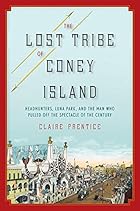
The Lost Tribe of Coney Island by Claire Prentice came from New Harvest.

Sometimes history is stranger than fiction as this book about a tribe from the Philippines who were a big hit in a Coney Island freak show will likely show.

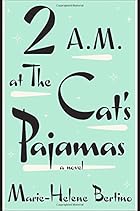
2 A. M. at the Cat's Pajamas by Marie-Helene Bertino came from Crown.

A novel about jazz, love, and hope, this one sounds fantastic.

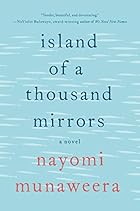
Island of a Thousand Mirrors by Nayomi Munaweera came from St. Martin's Press.

About two women irrevocably changed by the Sri Lankan civil war and how they come to be connected, this should be an important read.

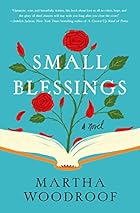
Small Blessings by Martha Woodruff came from St. Martin's Press.

I do so love books set in academia and this one promises to be a great romp.

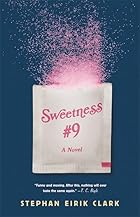
Sweetness #9 by Stephan Eirik Clark came from Little, Brown.

Satire about the food industry and artificial sweeteners? What could be tastier?

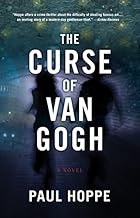
The Curse of Van Gogh by Paul Hoppe came from Spark Press.

For some reason, I am attracted to books about art heists and this fictional account is no different.

Lighthouse Island by Paulette Jiles came from William Morrow.

About a young girl striking out for Lighthouse Island at some point in the dystopian future, I am curious to read this one because I think I'd head for the water too.

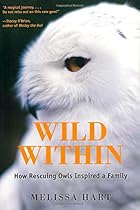
Wild Within by Melissa Hart came from Lyons Press.

A book about love and rescuing owls, this appeals to my animal softie side.

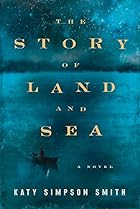
The Story of Land and Sea by Katy Simpson Smith came from Harper.

The cover initially drew me to this one (water, doncha know) but the story sounds enticing too.

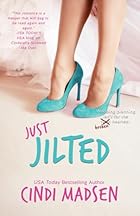
Ready to Wed by Cindi Madsen came from me.

With a wedding planner jilted at the altar herself, this one looks like good, frothy fun.

If you'd like to see the marvelous goodies in other people's mailboxes, make sure to visit Mailbox Monday and have fun seeing how we are all doing our part to keep the USPS and delivery services viable.

Sunday, August 3, 2014

Sunday Salon: What Month Is It? Celebrating Books.

Did you know that August is either Read a Romance Month or Romance Awareness Month? I didn't either. And I don't know how official it all is but I like romances so I thought I'd play along. I picked up a romance the other day and read it in one sitting (and standing--while at the stove cooking dinner, if you want to get technical). And a friend is hosting an Outlander viewing party this month too, because what is more romantic than Jamie Frasier?  I'm sure I'll sprinkle other romances in with my scheduled reading this month too because I do like to follow the rules (plus, romances are so wonderfully escapist in the midst of all sorts of back to school craziness).

But as I was thinking about the month being devoted to them, I wondered if there were other book related months or days that I might not know about. So I did a little digging. Of course everyone knows about Banned Books Week in September (and by everyone, I mean everyone who loves books). And if I haven't gone on enough here about October as National Reading Group Month, well, you just haven't been paying attention. World Book Night in April has gotten a lot of press but it has sadly been cancelled for the coming year. Any observant soul who has visited a library in April knows that one of the month's weeks is devoted to National Library Week.

But there were other days devoted to books and reading that I was delighted to discover for the first time. August 9 is Booklovers Day. That sounds like a day that's my birthday, Christmas, and Sunday all wrapped up in one. (Because surely it means that all booklovers should go out and acquire new books that day, am I right?) And it's coming up soon so that makes it even better. Since it falls in Read a Romance Month, maybe it means we should all go out and get some new romances or something. And I hereby grant you permission to declare any book a romance for the purposes of the day, sort of like how my husband tries to get me to see his comic book movies by saying, "But it's a romance." (For the record, just because Spiderman and Mary Jane get it on so that the teenage boys in the audience can all drool over a sex scene in between bad guy chases and things blowing up, does not make the movie a romance.  Just sayin'.) The month of April is completely bookish with not only the library getting in on the action but also being called Drop Everything and Read Month (I can do that. In fact, I do do that. All year. Is that bad?) and National Edible Books Month. Bet you didn't know that last one existed, did you? I'm thinking they mean cake. Because books and cake. And because paper isn't really all that tasty on its own. April also sports National Bookmobile Day. Who wouldn't want to celebrate bookmobiles? I'm thinking of declaring the minivan a bookmobile. I'll bet it qualifies! And finally, there's Children's Book Week in May.

This list leaves out lots of types of books and I think we should rally round and create even more book related holidays, don't you? Because every day should be a book celebration. What sort of book and reading related days, weeks, or months do you think we should celebrate?

My reading this past week has taken me all over the place. I watched a tormented man build a funerary business in London. I went to Massachusetts where a terrible tragedy shaped two children's lives before a second tragedy, and then a third changed them forever. I was privy to the deeply felt emotions of a journalist and author. I traveled to Fool's Gold, California where a woman finds herself wary of but still falling for the local and famous cycling star. I am still in the midst of a dystopian future where a young girl is missing her parents, in New York where a woman is having to decide on whether she wants her settled boyfriend or the artist who inspires her, in a hospital where an ICU doctor is having to make critical medical decisions for a comatose Jane Doe, and in the South where a broken woman is watched and tended to by a man who has cared for her forever. Where did your reading take you this week?

Saturday, August 2, 2014

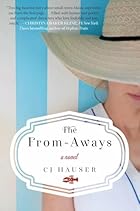
Review: The From-Aways by C. J. Hauser

I try to put a lot of thought into the books I choose for my summer book club to read and discuss. After all, the group is made up of smart and thoughtful women so when I find a book that not only seems interesting but potentially addresses an issue that is close to our own experiences as summer people in a small waterfront town, I am eager to add it to our list. C. J. Hauser's novel The From-Aways, although set in coastal Maine instead of the Great Lakes Midwest, seemed to fit the bill almost perfectly. The book turned out to be as much, if not more so, an examination of relationships and the truths and negotiations within those relationships as it is a conflict between locals and wealthy summer folk buying up beachfront property and changing the tenor of the town though, a bit different than I had wanted or expected.

Leah is an outsider new to the small lobster fishing town of Menamon. She met and married her husband Henry in New York City but she was mesmerized by his romantic tales of growing up in the tightly knit community of Menamon. So as soon as it was feasible, she convinced him to move back to the idyllic town of his childhood. Only that idyll might never have been real. Quinn is the other newcomer to town, there looking for her father, a quasi-famous folk singer who abandoned her and her mother when she was just an infant. She's really only there to find Carter because it was her mother's dying wish that she do so. Leah and Quinn meet each other in the offices of the town's only newspaper where Leah is hoping to resume her journalist's career and Quinn is working as the only reporter. The two of them become friends and partners, especially when the townspeople wake to the implications of all the new development going on around them.

Leah desperately wants to be accepted by the locals, even if it means lining up on opposite sides of the development issue from her new husband. Quinn is less interested in belonging to the town, especially if it means embracing something that her father is heading, but her roommate and girlfriend Rosie has strong opinions and Quinn wants to support her. As Leah and Quinn start researching the background, they come up with some information that, if exposed, will certainly help the locals' protest and perhaps keep the privately owned park and carousel available to everyone but it could cost Leah her marriage as surely as it will cost Henry's job.

The grassroots protest backgrounds Leah and Henry's relationship. Henry is one of the town's own but he doesn't have the idealized and romanticized view of the past that Leah has built up in her mind. He asks her to consider whether change can really be inherently bad as she seems to have decided and cautions her that change of one sort or another is guaranteed to happen no matter what. But bigger than their divide over the development of the town, is their inability to understand each other. They don't communicate and so they can't compromise or be open and truthful enough about what is driving each of them to have a mature dialogue.

The characters in this novel are all desperately young and shockingly immature. They are very self-focused, even in their relationships, and unable to make measured decisions. Instead, there's a lot of secrecy and thoughtlessness that made it hard to like the characters much. When Leah doesn't call her husband to tell him she's not coming home that night, she seems surprised that he would be upset and worried about her the next morning; she apologizes and promptly does the same thing again.  Henry himself is barely fleshed out as a character so his continued forgiveness of Leah is not understandable at all.  The conceit of Leah and Quinn as Woodward and Bernstein seemed almost like a game, children playing at being adults, rather than a legitimate comparison as they go haphazardly investigating the back room deals that led to the growing mega mansion dominating the shoreline. And while Quinn and Rosie's relationship is new and fragile and important to the storyline over all, the detailed sex scene between them really added nothing to the plot and could have been left out.

The chapters alternate between Leah and Quinn's points of view and while their voices start out as very different, they start to take on a few too many similarities. Hauser has done a good job capturing small town Maine, the challenges to remain vital, and the population of the old timers who live there. The frustrations and dilemmas of a place that is going to have to blend tourism and its fishing past in order to survive are interesting for sure but ultimately the characters here didn't hold their own in the story.

Thanks to LibraryThing Early Reviewers and the publisher for sending me a copy of this book to review.

Friday, August 1, 2014

Review: Gravel on the Side of the Road by Kris Radish


Kris Radish is the author of many novels and is also a journalist who has reported on some of the scariest, saddest, and most gruesome events ever, covering war, terminal illness, and murders. This collection of short essays is culled mainly but not exclusively from her experiences as a journalist rather than a writer of fiction but these are not newspaper articles by any stretch of the imagination. Instead, they are often full of the very things that can't make it into a purely journalistic piece: personal emotions. And the pieces' topics range from the very personal death of the cousin who was like her sister, to small local interest things like the roughneck bar run by a man named Wong, to larger, more complicated pieces about war and the young men leaving to fight.

Each brief essay is a small window into Radish's personal beliefs, concerns, and hopes. The pieces are not chronological and they are not grouped by their personal or public focus either. They come from different times in her life and she acknowledges in the introduction that she was an entirely different person when she wrote some of them. The tone of the work as a whole is casual, as if the reader is a friend sitting on the couch chatting with Radish. Some of the writing is fairly philosophical and some of it can be overly descriptive. She does make constant reference to the size of her breasts (small) and to her status as a tough broad in many of the essays, the latter of which is better shown through her actions and the former of which is rarely illustrative. For a reader reading all of the essays in one sitting, this repetition stands out but for a more leisurely reader, it probably wouldn't register. Radish has had a front row seat at some pretty seminal events and it is interesting to read the very subjective feelings behind what had to have been objective reporting at the time.

For more information about Kris Radish and the book, check out her website, her Facebook page, or connect with her on GoodReads. Take a look at the amazon reviews for others' thoughts and opinions on the book.

Thanks to Janay from Book Sparks PR and the publisher for sending me a copy of the book for review.

Wednesday, July 30, 2014

Waiting on Wednesday

This meme is hosted by Breaking the Spine and is meant to highlight some great pre-publication books we all can't wait to get our grubby little mitts on.

Small Blessings by Martha Woodroof. The book is being released by St. Martin's Press on August 12, 2014.

Amazon says this about the book: Tom Putnam, an English professor at a Virginia women’s college, has resigned himself to a quiet and half-fulfilled life. For more than ten years, his wife Marjory has been a shut-in, a fragile and frigid woman whose neuroses have left her fully dependent on Tom and his formidable mother-in-law, Agnes Tattle. Tom considers his unhappy condition self-inflicted, since Marjory’s condition was exacerbated by her discovery of Tom’s brief and misguided affair with a visiting poetess. But when Tom and Marjory meet Rose Callahan, the campus bookstore’s charming new hire, and Marjory invites Rose to dinner, her first social interaction in a decade, Tom wonders if it’s a sign that change is on the horizon. And when Tom returns home that evening to a letter from the poetess telling him that he’d fathered her son, Henry, and that Henry, now ten, will arrive by train in a few days, it’s clear change is coming whether Tom’s ready or not.

For readers of Helen Simonson and Anna Quindlen, Small Blessings is funny, heart-warming and poignant, with a charmingly imperfect cast of cinema-ready characters. Readers will fall in love with the novel’s wonderfully optimistic heart that reminds us that sometimes, when it feels like life is veering irrevocably off track, the track changes in ways we never could have imagined.

Popular Posts