Monday, June 16, 2014

It's Monday! What Are You Reading?

This meme is hosted by Sheila at Book Journey.

Books I completed this past week are:

The Revealed by Jessica Hickam
Ishmael's Oranges by Claire Hajaj
Neverhome by Laird Hunt
The Walk In Closet by Abdi Nazemian
The Boy Who Harnessed the Wind by William Kamkwamba

Bookmarks are still living in the middle of:

The Witch of Belladonna Bay by Suzanne Palmieri

Reviews posted this week:

The Revealed by Jessica Hickam
Faking It by Cora Carmack
The Gallery of Vanished Husbands by Natasha Solomons

Books still needing to have reviews written (as opposed to the ones that are simply awaiting posting):

Where Somebody Waits by Margaret Kaufman
Dinner With the Smileys by Sarah Smiley
Mimi Malloy, At Last by Julia MacDonnell
The Innocent Sleep by Karen Perry
Strings Attached by Joanne Lipman and Melanie Kupchynsky
Palmerino by Melissa Pritchard
If Not For This by Pete Fromm
The Lady From Tel Aviv by Raba'i al-Madhoun
Angels Make Their Hope Here by Breena Clarke
The Glass Kitchen by Linda Francis Lee
Ishmael's Oranges by Claire Hajaj
Neverhome by Laird Hunt
The Walk In Closet by Abdi Nazemian
The Boy Who Harnessed the Wind by William Kamkwamba
Sunday, June 15, 2014

Review: The Gallery of Vanished Husbands by Natasha Solomons

How much of who you are is dictated by you and how much by your status within your community? We create tidy boxes in which to tuck people but we can just as easily be tucked into a box ourselves, and not necessarily one of our own choosing. In Natasha Solomons' novel, The Gallery of Vanished Husbands, main character Juliet Montague is boxed in by her community's strict rules and their perception of her but breaks free to create her own life and future.

When the novel opens in 1958 in London, Juliet is an "aguna," a woman who is neither a wife nor a widow but someone living in the limbo of in between. Her Hungarian-born husband George abandoned her and their young children, Frieda and Leonard, six years prior. And by law in her Jewish orthodox community, a wife cannot divorce a husband only a husband can divorce a wife.  So she must spend her life waiting, still married to a man who disappeared without a word, taking the one possession she valued most, a portrait of Juliet when she was nine, and condemning her to a life as the focus of gossip and pity in the community. She has been treading water for a long time, following the rules, and going through the motions but on the dawn of Juliet's thirtieth birthday, her life is about to take a different turning. Juliet has finally managed to save enough money to buy a much needed refrigerator. Instead, on her way to make her purchase, she is completely captured by a painting set up on the street. She decides to buy it with her fridge money but the artist no longer wants to sell it to her, instead offering to paint her portrait for the same amount of money. Juliet, tired of being invisible, acquiesces.

Just choosing to be seen, really and truly seen, changes the entire trajectory of her life. This is her first step into the art world, into owning a successful gallery, in choosing to forge her own destiny, and in stepping away from the society that marginalized her, causing her to drift away from her faith and its practices. As Juliet, who has not only an appreciation for and attraction to art but an instinctive understanding of it, works hard following her dream, culminating in her opening of Wednesday's Gallery, she is the object of many artists, including her own son, having her portrait painted myriad times throughout her life. Each artist defines her in his own medium but the paintings are only each a piece of her, a fleeting moment out of her life, just as her abandonment by the mysterious George turns out to be just a moment as well.

The chapters are titled using the title of a different portrait of Julia and the year it was painted. The year corresponds to the time in Juliet's life covered by the chapter. Since the chapters jump years, the story has a slightly episodic feel to it although it manages to hang together well. The gaps in time also serve to highlight the large and small ways in which Juliet changes throughout the years, not only physically but emotionally, moving away from orthodox Judaism into the much looser and more accepting London art world, away from her solitary existence and into a mutually pleasing relationship, away from subsistence and into the power of self-determination. The narrative is slow paced and descriptive and Solomons has done a good job depicting the Jewish community of the time, their rules, and the reason Juliet rebelled against both rules and community. Once upon a time, Juliet Montague might have married her Romeo/George but it is only through losing him that she has the choice and the power to define herself and build the life she wants to have. A thoroughly interesting look at a culture, art, and identity.

Thanks to LibraryThing Early Reviewers and the publisher for a copy of this book to review.

Friday, June 13, 2014

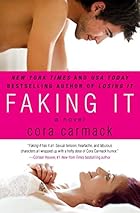
Review: Faking It by Cora Carmack

You know how sometimes you have no idea what drew you to a particular book? That was definitely the case for me with Cora Carmack's Faking It. I mean, I like a good romance as much as the next person, but a dyed, tattooed, and pierced heroine? Not generally my thing. Maybe it was the suggestion of steamy sex on the cover that inspired me to bring this one home. Or maybe it was the idea of two opposites masquerading as a couple.  Or maybe I was just trying to find something different.  And this was different, for sure.

Mackenzie Miller, known as Max, thrives on being edgy. She's tattooed and pierced, working as a bartender and dancer and trying to make it as a singer. Her current boyfriend, Mace, is quite possibly 180 degrees from the sort of guy that her very conservative parents would have chosen for her, heavily tattooed, not terribly intelligent, with large gauges in his ears. When those same buttoned-up parents spring a surprise visit on Max, she has to think fast to keep them from meeting him at the coffee shop where they are sitting.  She ditches Mace when her eyes light on Cade. She propositions him because she knows he is the epitome of everything her parents want her to choose. Cade, still hurting from the women he loved finding someone else, agrees. The fact that Cade completely charms Max's parents and lobbies Max for a real date turns the limited time acting  job as Max's boyfriend into something more. And as they get to know each other, they find that not only are they explosively attracted to each other but they appreciate each other for the real, uncovered, unhidden, deep down person that they each are.

Cade and Max are very much a good guy and bad girl couple. Cade is tired of being quite so good, looking to cut loose a little bit with Max.  Max discovers that having a knight in shining armor, a guy who treats you well, respects you, and encourages you to live in the skin you're in doesn't have to be a bad thing. Max clearly has a lot of baggage with her parents, always feeling inferior and conscious that she is not the golden child. The novel is told in alternating first person perspectives so that the reader has the chance to see into both Max and Cade's heads. Unfortunately, inside Max's head is an immature, insecure, childishly annoying character. She's just not likable enough for Cade, who is drawn as lovely, perfect, and thoughtful. The end resolution with Max's family is too pat and easy, making a lie of her years of hiding who she was from them and solving the requisite estrangement between Cade and Max far too quickly.  Over all, the pacing and narrative tension are off and the writing is unspectacular. There are frequent grammatical errors (and not just during the dialogue) and the too plentiful similes and metaphors were over written and often ridiculous. Perhaps I'd have been better served to take note of the things that didn't appeal to me right in the cover copy and leave this one for a reader who wasn't already on the fence who might have been able to overlook these issues.

Wednesday, June 11, 2014

Review: The Revealed by Jessica Hickam


YA dystopian fiction is very popular right now. It seems to be the most common sort of YA fiction filling shelves. And it is filling them at a breakneck rate. Personally,  I have read a handful of dystopian novels in the past and even a couple that were intended for a YA audience but it generally isn't a theme to which I regularly gravitate.  Jessica Hickam's new novel, The Revealed, centered around the idea of an organization that takes 18 year olds and disappears with them in a future not that far off, was intriguing enough for me to pick up though.

Lily Atwood is eighteen and her father is running for President in this new world. There has been a devastating war and according to Lily, society has regressed to the nineteen twenties. Because her father is so high profile, Lily, like other wealthy eighteens, is being kept carefully protected in her home to keep her safe from the mysterious and frightening organization called The Revealed. But Lily knows all the protections that are in place are futile if The Revealed want to take her. And it would appear they do since periodically Lily finds notes taped to her windows taunting her with their plans to steal her away. Lily is terrified but other than staying close to Jeremy, her father's chief of security, there's not much she can do besides try to tamp down her constant fear and panic.

But Lily's a typical teenager and despite knowing that her seclusion in the family's mansion is for her safety, she chafes at the bonds, occasionally slipping out and trying to live a normal life. She is helped in this by her best and only friend, Rory, who works in the kitchen at the mansion, and Kai Westerfield, the son of the other Presidential candidate, a seemingly golden boy who Lily remembers as one of the thoughtless, entitled, popular boys from high school but also from way back when she was small, before the war, and the Atwood and Westerfield families were close. Just as she cannot resist escaping from her gilded cage every now and again, Lily is unable to stay away from Kai, despite the fact that she is wary of him and knows his father is not to be trusted and quite possibly evil.

Since she's certain that nothing can protect her from The Revealed, after all, they have strange abilities that make traditional protection methods completely impotent, Lily is reckless, grabbing at life while she can, always remembering that the periodic notes promise her a fate that terrifies her. She is falling for Kai, getting ever closer to him, and wanting to trust him despite his father. She feels neglected by her own father, who is so consumed by his presidential bid that he doesn't take the time to see what is going on in her life, and she has always felt merely tolerated by her mother, a woman more concerned with appearances than with her daughter's very real concerns and needs.  Her self-confidence is almost nil. She is either desperately lonely or frightened most of the time so it's no surprise that she is so deeply attached to Kai and Rory very quickly. But do they have her best interests in mind?

Lily's character was a fairly surprisingly immature one. Not only is she eighteen, but she lived through a devastating war, and yet she is still very self-centered and naïve, like a significantly younger teen. For all that she claims to understand the very real danger to her and the fear it inspires in her, she sneaks out (and far too easily for the veritable fortress in which she's supposed to be living, I might add) and puts herself in situations that completely thumb her nose at the danger and fear, very contradictory attitudes within the same character. Her loyalty to her father is apparently based on nostalgia but there's not quite enough depth to her remembering to inspire this considering how dismissive he is to her throughout the novel. And there's too little of her friendship and interactions with Rory to make that a rich vein in the story.  Her feelings for Kai are sweet and genuine and are as charged as any first love is.

The plot twists (and there are two) are well done and at least one of them is unexpected but definitely works to turn the story. The tension leading up to the appearance of The Revealed is a bit drawn out but clearly Hickam needed that time to build her world and given that this is only the first in an expected trilogy, it will ultimately be just a small portion of the entire story. Even with all of that world building though, there are still many instances where the reader is told what has happened in this new world but never really gets to see it. Because of this, the world doesn't really feel different from our own. Lily notes the scarcity of books and cars, the presence of genetically modified Jack-in-the-Beanstalk type crops to feed the much reduced population, the colorlessness of the factory workers, and the complete nuclear devastation of the interior of the former United States but all of these are just that, underdeveloped mere mentions. The ending wraps up a major plot issue but still feels a unfinished since it's clear that there's far more to the story, a common weakness with planned trilogies.  Over all, the concept of how best to rebuild the world to benefit everyone, even if it was only touched on briefly, was interesting. The theme of struggling out from under the expectations of parents and leading a life of your own choosing is much more completely examined and Hickam does a good job handling this rite of passage. Fans of dystopian fiction will probably quite enjoy this one. I was left with a few too many questions to be completely satisfied.

For more information about Jessica Hickam and the book, check out her website, her Facebook page, follow her on Twitter, or connect with her on GoodReads. Take a look at the amazon reviews for others' thoughts and opinions on the book.

Thanks to Janay from Book Sparks PR and the publisher for sending me a copy of the book for review.

Waiting on Wednesday

This meme is hosted by Breaking the Spine and is meant to highlight some great pre-publication books we all can't wait to get our grubby little mitts on.

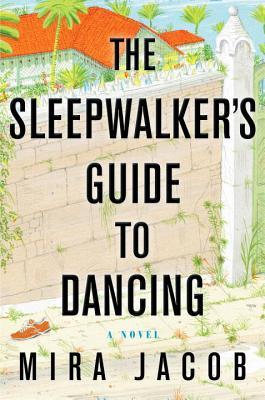
The Sleepwalker's Guide to Dancing by Mira Jacob. The book is being released by Random House on July 1, 2014.

Amazon says this about the book: For fans of J. Courtney Sullivan, Meg Wolitzer, Mona Simpson, and Jhumpa Lahiri comes a winning, irreverent debut novel about a family wrestling with its future and its past.

With depth, heart, and agility, debut novelist Mira Jacob takes us on a deftly plotted journey that ranges from 1970s India to suburban 1980s New Mexico to Seattle during the dot.com boom. The Sleepwalker’s Guide to Dancing is an epic, irreverent testimony to the bonds of love, the pull of hope, and the power of making peace with life’s uncertainties.

Celebrated brain surgeon Thomas Eapen has been sitting on his porch, talking to dead relatives. At least that is the story his wife, Kamala, prone to exaggeration, tells their daughter, Amina, a photographer living in Seattle.

Reluctantly Amina returns home and finds a situation that is far more complicated than her mother let on, with roots in a trip the family, including Amina’s rebellious brother Akhil, took to India twenty years earlier. Confronted by Thomas’s unwillingness to explain himself, strange looks from the hospital staff, and a series of puzzling items buried in her mother’s garden, Amina soon realizes that the only way she can help her father is by coming to terms with her family’s painful past. In doing so, she must reckon with the ghosts that haunt all of the Eapens.

Monday, June 9, 2014

It's Monday! What Are You Reading?

I spent half of my week at home and then the rest of the week in Detroit for the Women's National Book Association National Board Meeting. Ironically enough, for a long weekend devoted to books and women in the book world, I got almost no reading in once I arrived. My lack of reading aside (and this is entirely a personal problem), it's a great organization and you all should look into it if you are a bookish person in any way shape or form. We have authors, editors, agents, librarians, publicists, teachers, and readers among others, so we certainly have room for any of you reading this! This meme is hosted by Sheila at Book Journey.

Books I completed this past week are:

The Impossible Lives of Greta Wells by Andrew Sean Greer
The Rosie Project by Graeme Simsion
The Tricking of Freya by Christina Sunley

Bookmarks are still living in the middle of:

The Boy Who Harnessed the Wind by William Kamkwamba
The Revealed by Jessica Hickam

Reviews posted this week:

Paperboy by Tony Macaulay
The Year She Left Us by Kathryn Ma
The Impossible Lives of Greta Wells by Andrew Sean Greer
The Rosie Project by Graeme Simsion
The Suicide Shop by Jean Teule
The Tricking of Freya by Christina Sunley
The Movement of Stars by Amy Brill

Books still needing to have reviews written (as opposed to the ones that are simply awaiting posting):

Where Somebody Waits by Margaret Kaufman
Dinner With the Smileys by Sarah Smiley
Mimi Malloy, At Last by Julia MacDonnell
The Innocent Sleep by Karen Perry
Strings Attached by Joanne Lipman and Melanie Kupchynsky
Palmerino by Melissa Pritchard
If Not For This by Pete Fromm
The Lady From Tel Aviv by Raba'i al-Madhoun
Angels Make Their Hope Here by Breena Clarke
The Glass Kitchen by Linda Francis Lee

Monday Mailbox

I've been off on an entirely different sort of journey myself this past weekend (by plane) but I love that another kind of journey landed in my mailbox. This week's mailbox arrival:

Going Somewhere by Brian Benson came from Plume.

A guy lacking direction meets a woman who convinces him to bicycle from Wisconsin to somewhere in the West in this memoir. I may not get on a bike often (ever) but the story of their journey and their relationship as they face the realities of the road sounds completely fascinating to me.

If you'd like to see the marvelous goodies in other people's mailboxes, make sure to visit Mailbox Monday and have fun seeing how we are all doing our part to keep the USPS and delivery services viable.

Popular Posts