Thursday, December 13, 2012

Review: Heading Out to Wonderful by Robert Goolrick

Russian playwright Anton Chekhov famously said that if you place a loaded gun on the mantle in the first act, the gun had better go off or there was no purpose in the gun being there in the first place.  (I acknowledge that this is a gross paraphrasing but the truth behind the statement is intact.)  Robert Goolrick has obviously internalized this maxim and uses it to impressive effect in his latest novel, Heading Out to Wonderful.

Charlie Beale is a stranger to the small, peaceful Virginia town of Brownsburg when he arrives with his truck, his set of butcher knives, and a suitcase full of cash.  He starts by camping out by the river and deciding if this closed and somewhat xenophobic place is where he wants to put down roots now that he's back from fighting in WWII.  And strangely enough, he does want to stay in this place that is initially less than welcoming, asking local butcher Will Haislett to hire him on, buying up land and eventually a house, and befriending Will and his wife Alma's five year old son Sam along the way to winning over the rest of the town.

Charlie, nicknamed Beebo by Sam, seems to have no past, at least no past he's willing to share, but he is a decent man and finds himself being folded into the life of the town, accepted and liked by everyone.  And everything seems wonderful until he spies the beautiful, teenaged Sylvan Glass with whom he is instantly captivated.  Unfortunately, Sylvan is married to the town's wealthiest and meanest man, Boaty Glass, who essentially bought his child bride, bringing her from her poor, hardscrabble existence in a mountain holler to be his trophy in a town not quite willing to accept her.  Charlie, as another outsider, falls hard for Sylvan and although at times she seems almost diffident about him, they are fated and their inevitable ending was written the first time Charlie clapped eyes on her.

Goolrick has created a masterfully atmospheric novel here.  Even before any conflict occurs and everything is seemingly perfect in this fictional world, there is an undercurrent of menace and foreboding, a dark intensity to the tale that makes the reader alert to the cracks in the facade of innocence and idyll.  Narrated sixty years on from the main events of the tale by Sam, who was present for more of the story than anyone else in the book besides his beloved Beebo, this is a novel of desperate love, betrayal, mystery, and obsession.  Charlie remains a cipher throughout the novel but even so he charms the reader as much as he charms the inhabitants of Brownsburg.  Sylvan is distant and lonely and trapped by her past.  Her method of coping, through fashion and the movies, is pitiable.  The important secondary characters are intriguing, especially in the ways they face the main plot development.  And what an unexpected development it is!  Goolrick leads the reader, ratcheting up the tension slowly but steadily, as things between Charlie and Sylvan get more and more complicated, even as they are always bound and governed by outside forces, until the final shocking denouement, a plot twist that threatens to unravel much of the town.  Richly detailed and completely engrossing, there is no doubt from the beginning that the book cannot contain a happily ever after.  That gun casually placed on the mantle must go off.  And Goolrick's aim here is nothing but true.

Thanks to the publisher for sending me a copy of the book for review.

Wednesday, December 12, 2012

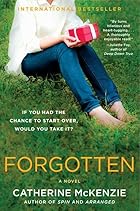
Review: Forgotten by Catherine McKenzie

Have you ever wondered what would happen if everyone thought you were dead and went on without you?  Obviously your job would disappear but what about your boyfriend and close friends?  Would they move on quickly or slowly, grieving your supposed death and unable to move forward without you?  And if they'd all adjusted, what would happen if you came back, not gone forever after all?  Could you claim your old life again?  What changes would you make?  Or would you just desparately wish for things to go back to the way they were before your disappearance?  This is the premise in Catherine McKenzie's newest novel Forgotten.

Emma Tupper is a workaholic attorney who is very good at her job.  She is smart, dedicated, and driven.  She's perfectly content to subsume her entire life in work as she eyes the brass ring: being named as partner at her law firm.  Even her boyfriend is a part of her work life, a fellow lawyer, he understands and encourages her drive and all the sacrifices she makes to get ahead.  But when her mother dies and leaves Emma a trip to visit Africa, a journey her mother always longed to make but never did, Emma does the inexplicable and takes time off for this trip that meant everything to her mother even though it certainly means that her partnership will be put off for at least another year.  The trip will change everything for Emma.  She gets terribly sick and is left at a mission in a village to recuperate.  Just as she's getting back on her feet, a massive earthquake hits the city she's supposed to be in and she is listed among the missing.  It is months later before she can get out of the village and find a flight home.  Six months missing and incommunicado in Africa, Emma was presumed dead by everyone except her best friend.  But Emma doesn't know this as she arrives home.  All she knows is that her car is missing from the airport lot, her key won't work in her apartment lock, her ATM card doesn't work, her bank account is frozen, and her boyfriend and best friend are not answering their phones to provide an explanation.  Eventually she gets into her apartment building only to discover that a man named Dominic is moving into her apartment.  Nothing has stayed the same while she was gone, even more than she knows.

As Emma resumes her old life the best she can and works through the myriad of feelings she faces with the upheaval of her once carefully ordered life, she has to examine everything that she's based her life on the past couple of years and to decide what of her old life she wants to continue on with in her new life.  She has to do a lot of soul searching about her job, her love life, and her priorities.  And even as she's sorting through all of that, she must also be realistic about what she wants from Dominic who has been kind enough to allow her to live in her old and his new apartment while she figures things out.  He has some tough things of his own that he is working through and so his tolerance for and prolonged understanding of her situation is a huge kindness.

This is a cute novel with a very different premise.  It takes Emma some time to really sort out her feelings about all the pieces of her life but she is very honest about them, examining them closely and then accepting or rejecting them knowing full well all of their pluses and minues.  Her life has been thrown into chaos and so as a character she is often a bit befuddled but the reader can be sympathetic because she's been thrown such a curveball it would be hard for her to be the competant and take-charge woman she was in her previous life.  Change is certainly inevitable for everyone but most people don't get such a huge dose of it all at once.  Dominic as a character is lovely but even he has limits, making him more realistic than he might have been if he'd allowed Emma to move in and then just gone with the flow.  McKenzie has written in some nice touches, such as Emma appearing on the local morning show as the woman who came back from the dead, the relentlessness the press shows in trying to reunite her with her old life, and the draw of publicity for her law firm.  What Emma ultimately chooses to do with her newly assembled life has some surprises to it although readers will definitely not be disappointed with her final decisions.  A sweet book about growth and change and being comfortable and happy and right in your life, readers looking for chick lit with heart and intelligence will find this right up their alley.

Thanks to the publisher for sending me a copy of the book for review.
Waiting on Wednesday

This meme is hosted by Breaking the Spine and is meant to highlight some great pre-publication books we all can't wait to get our grubby little mitts on.

Saturday Night Widows by Becky Aikman. The book is being released by Crown on Jan. 22, 2013.

Amazon says this about the book:  In her forties – a widow, too young, too modern to accept the role – Becky Aikman struggled to make sense of her place in an altered world. In this transcendent and infectiously wise memoir, she explores surprising new discoveries about how people experience grief and transcend loss and, following her own remarriage, forms a group with five other young widows to test these unconventional ideas. Together, these friends summon the humor, resilience, and striving spirit essential for anyone overcoming adversity.

Meet the Saturday Night Widows: ringleader Becky, an unsentimental journalist who lost her husband to cancer; Tara, a polished mother of two, whose husband died in the throes of alcoholism after she filed for divorce; Denise, a widow of just five months, now struggling to get by; Marcia, a hard-driving corporate lawyer; Dawn, an alluring self-made entrepreneur whose husband was killed in a sporting accident, leaving two small children behind; and Lesley, a housewife who returned home one day to find that her husband had committed suicide.

The women meet once a month, and over the course of a year, they strike out on ever more far-flung adventures, learning to live past the worst thing they thought could happen. They share emotional peaks and valleys – dating, parenting, moving, finding meaningful work, and reinventing themselves – while turning traditional thinking about loss and recovery upside down. Through it all runs the story of Aikman's own journey through grief and her love affair with a man who tempts her to marry again. In a transporting story of what friends can achieve when they hold each other up, Saturday Night Widows is a rare book that will make you laugh, think, and remind yourself that despite the utter unpredictability and occasional tragedy of life, it is also precious, fragile, and often more joyous than we recognize.

Tuesday, December 11, 2012

Review: Turning Pages by Tristi Pinkston

Pride and Prejudice is my favorite book ever.  And I am a complete and total sucker for sequels, re-writings, and modernizations of it too.  So although I don't generally read YA literature, I couldn't resist the chance to read Tristi Pinkston's Turning Pages, which updates and uses Pride and Prejudice as a loose framework, setting it in a library.  Pride and Prejudice set amongst books?  Be still my beating heart.

Addie Preston has been working her way through community college with the ultimate goal of becoming a librarian but after the unexpected death of her father in a car accident, she is mainly focused on her part time job at the local library and trying to hold her family together.  An assistant librarian position is shortly opening up and Addie has been all but promised the promotion.  So she's shocked when the arrogant and superior Blake Hansen is brought on board into that position instead of her.  He doesn't even have a library science degree at all; he's got a business degree.  Addie dislikes him even before she finds out he's been given what she's come to think of as her job.  When his presence is explained by the need to raise funds to replace the old library with a new, state of the art building, Addie is almost completely destroyed, vowing that she'll save the venerable old building despite its limitations as a library.

Addie's life has taken quite a few hits and she faces more losses as she fosters and feeds the continuing tension between Blake and herself.  Her step-mother is still paralysed with grief over the accident that took Addie's father leaving Addie to try and hold the family together.  Meanwhile, Addie continues to harbour an unrequited crush on her best friend's older brother, a guy who looks at Addie as nothing more than a sweet kid on whom he can always rely, even if that reliance gives her the wrong idea and ultimately ends up hurting her.  The plans to replace the library just add to her unhappiness as the old building holds countless memories of her father for her.  Add to that the news that there's no choice but to also sell her childhood home and to move into something smaller and more affordable and the fact that Addie cannot give an inch with Blake, allowing her to see that he is in fact a good guy, is not surprising.

This is not a simple retelling of Pride and Prejudice as the plot and character situations veer quite far afield from the original plot.  Addie is much more adrift than Lizzie Bennet ever was although she is quite as quick to jump to conclusions as her predecessor.  Blake is engaged to a rather nice woman who is just a tad too perfect and although Addie suggests at one point that she is Caroline Bingley, there really isn't much of a similarity at all.  And the tension between Addie and Blake is almost entirely one sided with the bulk of the animosity coming from Addie.  There are definite sparks between the characters throughout the story but the ending is wrapped up too abruptly even if there was never a doubt about the outcome.  Addie often seems younger than her years, perhaps because of her goofy quirks, like forever locking her keys in the car, but Blake comes off as younger than he is as well so they are well-suited.  Overall, this is a cute, sweet, very clean YA tale and I definitely plan to pass mine along to my young teen because I think she'll like it a lot.

Thanks to the author for sending me a copy of the book for review.

Monday, December 10, 2012

Review: Just Kids by Patti Smith

I looked at the synopsis for this one when it won the National Book Award and found I just wasn't all that interested in it.  I didn't recognize Patti Smith's name at all and the only thing I knew about Robert Mapplethorpe was a vague recollection of the major bruhaha over his homoerotic photographs way back when I was in high school.  Not exactly the sort of "oh wow, I'd love to read about these people and their friendship" that might have driven me to get the book.  And then my bookclub decided to read it, so despite my continuing disinterest, I was going to read it too.  Unfortunately it didn't exceed my expectations although inexplicably most of my bookclub liked it a lot better than I did.

Starting with her own childhood and teen years, Smith contrasted her own family and upbringing before moving to New York City with Mapplethorpe's similar family background.  Quickly shedding the constrained and pre-determined life she'd face if she stayed in the suburbs, Smith moved to New York City, stumbling into the arty bohemian culture that would prove to be her lifeblood and which would lead her to Mapplethorpe, her best friend and long time love.  They sort of fall into a relationship as lovers and enthusiastic supporters of each others' varied artistic endeavors; sharing cheap apartments, studios and, for a time, the storied Chelsea Hotel; starving together when they can't afford food; nursing each other through illness; and encouraging each other to break into the music and art circles that could make a difference to their future successes.  As Smith and Mapplethorpe try to find themselves and the artistic mediums in which they want to showcase their messages, they wend their way through the riotous world of the late 60's and early 70's in New York.  From desperate young lovers to dearest platonic friends and eventually through Robert's terrible, early death from AIDS, Smith has written a tepid love-letter to a man forever in her heart.

Although her relationship with Mapplethorpe must have been very complex and multi-faceted, Smith has not managed to convey a real sense of depth to what should be the main focus of the book.  She herself comes off as naive and boring while Mapplethorpe comes off as a social climbing, egomaniacal user.  But her lack of insight into herself and Mapplethorpe is only one of the problems with the book.  Set in a vibrant and unique time and place, Smith doesn't manage to evoke that time and place very well at all.  She focuses on heavy descriptions of the apartments they lived in and the clothes they wore but manages to miss conveying the overarching sensibility of the time, presenting little actual substance about the people and artists inhabiting this world and even less about herself and Mapplethorpe.  Great writing, as opposed to the self-conscious and forced attempt at poetic writing found here, would have been able to bring me into the scene despite my own safe, suburban life and yet this was so pedestrian that I never felt as if I was there.

Despite the great love Smith harboured for Mapplethorpe, there was a detachment that belied the depth of feeling she tells us over and over was the centerpiece of their relationship.  The middle portion of the book was a list of the famous and not so famous people that she and Mapplethorpe encountered as they practiced their art and searched for a way into the inner circle of folks like Warhol.  This name dropping was not only dull but ineffective, making the reader care not at all for the brief scenes invoked only to mention the names (many of which this reader didn't recognize nor have any interest in looking up).  And really, there were very little scenes of any substance at all with more of the book feeling like blurry snapshots where any and all action happened just outside the frame of the picture.  As one of the few sober people on the scene, Smith's memories, aside from the apartments, studios, and clothing are less vivid and interesting than one might hope causing the reader to wonder what experiences she is glossing over.  The narration is pretentious and filled with studied offhand references to French poets Baudelaire, Rimbaud and Genet but little to no information on her own career and eventual success or Mapplethorpe's either.  Apparently the struggle was all.  But it wasn't.  Frankly for me, the struggle to read and finish it was all.  Deeply disappointing, that this very uninspired, uninteresting memoir won the National Book Award and continues to garner highly laudatory responses is completely baffling to me.

It's Monday! What Are You Reading?

A better week reading and reviewing although I find I am really behind the 8-ball on the Christmas front.  May have to make myself some lists and hold myself to them in order to get everything accomplished that I need to get accomplished!  This meme is hosted by Sheila at Book Journey.

Books I completed this past week are:

The Book of Neil by Frank Turner Hollon
The Pleasures of Winter by Evie Hunter
How to Tame a Willful Wife by Christy English
Never Hug a Nun by Kevin Killeen

Bookmarks are still living in the middle of:

My Bookstore edited by Ronald Rich
A Different Kind of Normal by Cathy Lamb
The Crying Tree by Naseem Rakha

Reviews posted this week:

Married Love by Tessa Hadley
Losing My Sister by Judy Goldman
The Pleasures of Winter by Evie Hunter
Jana Bibi's Excellent Fortunes by Betsy Woodman

Books still needing to have reviews written (as opposed to the ones that are simply awaiting posting):

Forgotten by Catherine McKenzie
Heading Out to Wonderful by Robert Goolrick
The Little Bookstore of Big Stone Gap by Wendy Welch
Moranthology by Caitlin Moran
The Blue Notebook by James Levine
Let the Great World Spin by Colm McCann
Sad Desk Salad by Jessica Grose
You Tell Your Dog First by Alison Pace
Charlotte Street by Danny Wallace
Seducing Ingrid Bergman by Chris Greenhalgh
Buddy by Brian McGrory
His Mistress by Christmas by Victoria Alexander
The Lighthouse Road by Peter Geye
Happily Ever Madder by Stephanie McAfee
Rules of Civility by Amor Towles
I Married You For Love by Lily Tuck
The Book of Neil by Frank Turner Hollon
How to Tame a Willful Wife by Christy English
Never Hug a Nun by Kevin Killeen

Sunday, December 9, 2012

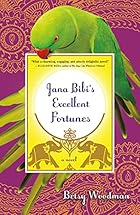
Review: Jana Bibi's Excellent Fortunes by Betsy Woodman

Are there certain books that just appeal to you from the moment you read the jacket copy, charm you throughout the reading of them, and leave you with a happy glow when you've closed the covers on them?  They aren't pulse pounding or edge of your seat reading, they are gentle, comfortable, and lovely and make you hope that the author is writing more just like them.  Books like this are few and far between for me but they are always so appreciated when I do happen across one of them.  Betsy Woodman's Jana Bibi's Excellent Fortunes is one of those books (and is in fact the first in a planned series).  Just looking at the book gives me a contented feeling.

Janet Laird, a widowed Scottish woman, who has spent much of her life in India and feels most at home there rather than in her native Scotland, inherits her grandfather's home in the small northern Himalayan hill town of Hamara Nagar (translated as "Our Town") and determines that she will go and live there now that she is no longer needed as a music teacher to a nawab's children and despite her rather uptight son's admonitions that she come home to Scotland to live as she's in her late fifties and, in his opinion, too old to live alone.  But Jana Bibi, as she is called in India, has a bit more steel in her spine than her son suspects and she chooses her own course without regret, a course that takes her to the Jolly Grant House, new friends, and happiness.

When Jana, her maid Mary, and her garralous parrot Mr. Ganguly first arrive in Hamara Nagar they discover that the Jolly Grant House will require quite a bit of work to be made habitable, starting with evicting the monkeys who currently live throughout the home.  As Jana works on her house, she makes the acquaintance of her neighbors and other various townspeople who end up taking her into their hearts and lives.  She meets the local tailors, the owner of the local Treasure Emporium, a bagpipe playing Gurkha security guard, a young mute boy and his mother, the rigid and less than pleasant police chief, the editor of the local paper, some of the girls from the private school in town, and an American ex-pat who might or might not be CIA.  With this colorful cast of characters, Jana goes about righting her house and starting a life in this appealing town.  When she has settled in some, she discovers that the government has plans to flood their small town to create a dam.  In a bid to prevent this, Jana sets up shop as a fortune teller so that the town has a bit more appeal for tourists, a measure the government is sure to use when finalizing a location for the dam.  Helped by her chatty and entertaining parrot, Jana's shop is a hit and she becomes a vital part of the town's life.

Aside from the threat of being flooded, the novel focuses more on the everyday domestic dramas of life in a small town and the assorted people who live and love there.  The characters are eccentric, quirky, and delightful.  They are developed in such a way as to be respectful to their customs, wishes, and dreams and each of them is very definitely an individual.  Jana herself is sweet and as she slowly discloses her past, her quiet insistence on living her life as she chooses now becomes clearer and more understandable to the reader.  The setting is well-written and beautifully captures the spirit and feel of India.  The connection and welcome of the place is very realistic and just about everything about this lovely book made me want to visit India again.  If you are looking for a feel good novel with a touch of the exotic blended with a universal kindness and acceptance, this is the book for you.

Thanks to the publisher for sending me a copy of the book for review.

Popular Posts