Wednesday, June 7, 2017

Waiting on Wednesday

This meme is hosted by Breaking the Spine and is meant to highlight some great pre-publication books we all can't wait to get our grubby little mitts on.

Away With Words by Joe Berkowitz. The book is being released by Harper Perennial on June 13, 2017.

Amazon says this about the book: Fast Company reporter Joe Berkowitz investigates the bizarre and hilarious world of pun competitions from the Punderdome 3000 in Brooklyn to the World competition in Austin.

When Joe Berkowitz witnessed his first Punderdome competition, it felt wrong in the best way. Something impossible seemed to be happening. The kinds of jokes we learn to repress through social conditioning were not only being aired out in public—they were being applauded. As it turned out, this monthly show was part of a subculture that’s been around in one form or another since at least the late ‘70s. Its pinnacle is the O. Henry Pun Off World Championship, an annual tournament in Austin, Texas. As someone who is terminally self-conscious, Joe was both awed and jealous of these people who confidently killed with the most maligned form of humor.

In this immersive ride into the subversive world of pun competitions, we meet punsters weird and wonderful and Berkowitz is our tour guide. Puns may show up in life in subtle ways sometimes, but once you start thinking in puns you discover they’re everywhere. Berkowitz’s search to discover who makes them the most, and why, leads him to the professional comedian competitors on @Midnight, a TV show with a pun competition built into it, the writing staff of Bob’s Burgers, the punniest show on TV, and even a humor research conference. With his new unlikely band of punster brothers, he finally heads to Austin to compete in the World Championship. Of course, in befriending these comic misfits he also ended up learning that when you embrace puns you become a more authentic version of yourself.


Monday, June 5, 2017

It's Monday! What Are You Reading?

This meme is hosted by Kathryn at Reading Date.

Books I completed this past week are:

Civilianized by Michael Anthony
The Redemption of Galen Pike by Carys Davies
The Beach at Painter's Cove by Shelley Noble

Bookmarks are still living in the middle of:

A Well-Made Bed by Abby Frucht and Laurie Alberts
The Children's Crusade by Ann Packer
The Lake House by Kate Morton
Shelter by Jung Yun
The Center of the World by Jacqueline Sheehan
A Manual For Cleaning Women by Lucia Berlin
The Beauty of the End by Debbie Howells
Country of Red Azaleas by Domnica Radulescu
A Hard and Heavy Thing by Matthew J. Hefti
Paint Your Wife by Lloyd Jones
The Company They Kept edited by Robert B. Silvers and Barbara Epstein
No One Can Pronounce My Name by Rakesh Satyal
Lily and the Octopus by Stephen Rowley
Thousand-Miler by Melanie Radzicki McManus
Dear Fang, With Love by Rufi Thorpe
All Our Wrong Todays by Elan Mastai
Close Enough to Touch by Colleen Oakley
America's First Daughter by Stephanie Dray and Laura Kamoie
Woman No. 17 by Edan Lepucki

Reviews posted this week:

Eliza Waite by Ashley E. Sweeney
The Gypsy Moth Summer by Julia Fierro
A Gentleman in Moscow by Amor Towles

Books still needing to have reviews written (as opposed to the ones that are simply awaiting posting):

Nine Island by Jane Alison
I Hid My Voice by Parinoush Saniee
The Other Woman by Therese Bohman
The Florence Diary by Diana Athill
Seven Minutes in Heaven by Eloisa James
The Mortifications by Derek Palacio
The Young Widower's Handbook by Tom McAllister
The Invention of Wings by Sue Monk Kidd
The Woman Next Door by Yewande Omotoso
Breaking Up Is Hard to Do But You Could've Done Better by Hilary Fitzgerald Campbell
To Love the Coming End by Leanne Dunic
Make Trouble by John Waters
The Peculiar Life of a Lonely Postman by Denis Theriault
A Loving, Faithful Animal by Josephine Rowe
City Mouse by Stacey Lender
Cutting Back by Leslie Buck
Siracusa by Delia Ephron
The Wife, the Maid, and the Mistress by Ariel Lawhon
A Narrow Bridge by J.J. Gersher
The Never-Open Desert Diner by James Anderson
The Heart of Henry Quantum by Pepper Harding
The Hearts of Men by Nickolas Butler
Dance of the Jakaranda by Peter Kimani
How to Survive a Summer by Nick White
Bramton Wick by Elizabeth Fair
The Finishing School by Joanna Goodman
Meet Me in the In-Between by Bella Pollen
All Grown Up by Jami Attenberg
The Island of Books by Dominique Fortier
Water From My Heart by Charles Martin
Lights On, Rats Out by Cree LeFavour
Salt Houses by Hala Alyan
The Last Time She Saw Him by Jane Haseldine
Him, Me, Muhammad Ali by Randa Jarrar
What Are the Blind Men Dreaming? by Noemi Jaffee
Girl in Snow by Danya Kukafka
The Lying Game by Ruth Ware
The Talker by Mary Sojourner
When the Sky Fell Apart by Caroline Lea
The Seven Husbands of Evelyn Hugo by Taylor Jenkins Reid
'Round Midnight by Laura McBride
The German Girl by Armando Lucas Correa
The Tea Girl of Hummingbird Lane by Lisa See
The Jane Austen Project by Kathleen A. Flynn
Last Things by Marissa Moss
All Our Wrong Todays by Elan Mastai
Civilianized by Michael Anthony
The Redemption of Galen Pike by Carys Davies
The Beach at Painter's Cove by Shelley Noble

Monday Mailbox

I needed a hard copy of a book that expired on my Nook (it was an advanced copy) so I went ahead and made myself happy by ordering several books in addition to it just because. ;-) This past week's mailbox arrivals:

Plaid and Plagarism by Molly MacRae came from me to me.

I am trying to overcome my general disinterest in mysteries so I searched out some that might help me appreciate them and this was one of the collection I stumbled on. I mean, if I don't fall for a mystery involving four bookshop owners in Scotland, I won't ever fall for them!

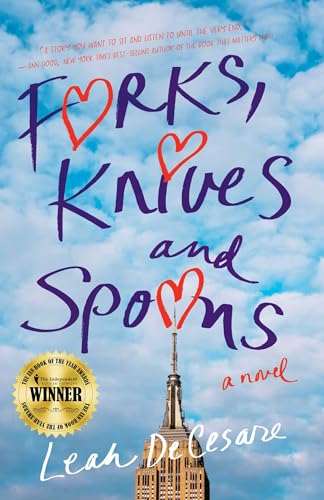
Forks, Knives and Spoons by Leah DeCesare came from me to me.

A New Adult novel where young women classify men as either forks, knives, or spoons, this looks like lighthearted fun.

Aunty Lee's Delights by Ovidia Yu came from me to me.

A mystery about a rich Singaporean restauranteur, this is another one I picked to interest me in mysteries.

The Shortest Way to Hades by Sarah Caudwell came from me to me.

And another of the mysteries designed to intrigue me, this one is about an inheritance but it's not the heiress who dies so this promises to have an interesting twist.

If you want to see the marvelous goodies in other people's mailboxes, make sure to visit Mailbox Monday and have fun seeing how we are all doing our part to keep the USPS and delivery services viable.

Thursday, June 1, 2017

Review: A Gentleman in Moscow by Amor Towles

If I told you a book was about a man sentenced to more than thirty years of house arrest in a hotel in Moscow, would you ever imagine that it could hold your attention for 462 pages?  I wasn't sure it would hold my attention that long either.  But this is exactly what Amor Towles has accomplished with his beautifully written, surprisingly engaging, and historically expansive novel, A Gentleman in Moscow.

Count Alexander Rostov is a gentleman, a bona fide aristocrat, and poet newly returned from exile when he is called into a Moscow court in 1922. Spared a death sentence, he is instead declared a "former person" and sentenced to house arrest in the grand Hotel Metropol just around the corner from the Kremlin, the hotel in which he's been living. Stepping a toe outside the hotel will violate his sentence and he will be summarily shot. So begins the Count's long incarceration inside the mostly unchanging world of this premier luxury hotel, a place that weathers all of the changes of the outside world by maintaining its status as the preferred place for those in power to congregate and for foreign diplomats and press to experience a Soviet life no longer truly available outside of its confines. And while many people would consider it a terrible thing to be confined to the hotel, the Count accepts his sentence with amazing equanimity. In fact, he goes on to build a full and surprisingly busy life. He meets and befriends a whole cast of people, from the high party official in the KGB to the young daughter of a guest to the hotel's seamstress and chef and everyone in between. The Count is proper, diplomatic, and respected and he is respectful of all those he comes in contact with, with one exception which provides a big piece of the narrative tension of the novel. From his vantage point in the hotel, he has a side view seat (rather than front row) to the political happenings going on outside its four walls. Ironically, he faces less hardship than almost anyone else in his orbit because of his situation. And he is lucky enough to find love and friendship and loyalty all in his genteel imprisonment although he also has to contend with the sadness of never being able to leave the hotel, that of the need, for good or ill, to wait for people to come to him and the idea that they could disappear out of his life without a trace (although this latter was no less true of the rest of the country as well).

The novel is very much character driven, but what a delightful character he is. Even in his diminished surroundings, he maintains an air of curiousity and interest in the goings on of others. He finds a way to safely thumb his nose at any perceived deprivations and to mock the excesses of the Bolsheviks, even as he mourns the impact on those for whom he cares deeply. The story is deceptive in that it is about more than one man, offering a distilled look at Russian and Soviet history from the Revolution to the 1950s. The pacing of the novel is slow but consistent and the reader is happy to luxuriate in the careful and sometimes clever turns of phrase of which Towles makes great use. The language is thoughtful and perfectly chosen. There are charming bits of fluff (exploring the hidden parts of the hotel is just one example) interspersed into the story to keep it light and touching. The over all feel is one of time forgotten, elegant and enchanting. Although not as expansive in place as most classic Russian novels, the book is a beautifully crafted homage of sorts with its large cast of characters, the proximity of the political and the personal, the abiding love for country, and the constant, immutable sense of honor in the main character. If you choose to sink into the Count's world, it will be time well spent.

Wednesday, May 31, 2017

Review: The Gypsy Moth Summer by Julia Fierro

Very often books provide us with an escape. But sometimes they show us a place not so much an escape but a waking nightmare, a place we don't want to go. Julia Fierro's The Gypsy Moth Summer, a novel about a wealthy community in turmoil, facing its secrets and prejudices, is narrated almost exclusively by outsiders or those on the fringes. And while the characters might, although not certainly, want to be a part of this group, the reader definitely does not.

In 1992, Avalon Island, off the coast of Long Island, is being overrun by rapacious gypsy moths. As they decimate the island's foliage and it's anyone's guess which trees and shrubs will survive the onslaught, they coat everything beneath them in black excrement. The inhabitants of the island are themselves coated in the nastiness of racism, classism, and willful ignorance and disregard of environmental safeties in the name of profit among other things. This ugliness comes to a head when Leslie Day Marshall, the daughter of one of the island's ruling families inherits The Castle, her family's estate, and moves back to Avalon with her black husband and two mixed race children. Leslie's husband Jules is a Harvard trained landscape designer but his skin marks him immediately as an outsider. He is wary of this place, cognizant of the daily casual racism he encounters, uncomfortable except when he's working in the garden. Their son Brooks is a teenager and daughter Eva is just a toddler when they move into this very white, very rich enclave. Maddie Pencott LaRosa is Brooks' age and she lives next door to him in the guest house on her grandparents' estate. Like Brooks, she is an outsider in the tony East side. Her mother grew up in East Avalon, a daughter of wealth and privilege, but Maddie's father is Italian from West Avalon, the side of the island where the working class lives, so Maddie is constantly straddling both sides of a sharp class divide and desperately wanting to fit in with the preppy teenagers at her high school. This summer she's finally made it into the coveted in-group. Her younger brother Dom is also an outsider, his crime hers but also complicated by the fact that the bullies have homed in on the fact that he's gay, something that Dom is only just figuring out himself and is certainly not acceptable in the military inspired society of East Avalon. Veronica, Maddie and Dom's indomitable grandmother, has come back to the island with their grandfather, the Colonel, hiding some major secrets but determined to fight for Grudder Aviation, the company that looms so large over the island. All of these characters come together this summer in what starts out seeming innocent enough but ends explosively.

Jules, Maddie, Dom, and Veronica are the focus of the bulk of the narration with occasional chapters about Leslie's multiple miscarriages and one notable chapter centered on the Colonel. Each of these outsiders builds up a damning story of a terrible place. It's a place where the main industry, Grudder Aviation, is potentially (almost certainly) poisoning the very water the inhabitants drink. Cancer and other biological disasters run rampant through the population who lives there. It's a place where bored, rich teenagers are left to their own devices, drinking, smoking, doing drugs, and exploring sex, while their parents stumble drunkenly from one big, gracious home to another, gossiping about one another, acting two-faced, and turning aaside from their own unconscious racism. It's a place where both casual and intentional cruelty is ignored and accepted. The only disruption to this long standing life is the appearance around the island of graffiti targeting the environmental crimes perpetrated by Grudder. "Grudder is cancer. Grudder kills." These startling pronouncements only cause a ripple in the lush, dreamlike life of the island. But just as the gypsy moths tearing through the island's greenery leaves the land naked to view, so too the events of the summer leave the society and the company open to scrutiny.

The writing is hypnotic and intense with descriptions of the moths, their excrement, and their devastation. Fierro has created a place that is so real feeling you can hear the moths crunching through the trees and see them writhing on every trunk. All of the characters here are hollowed out by desperation of one kind or another. They are well fleshed out and although they seem easy to read, each of them has more going on underneath the surface than expected. But this is a society based on appearance so what's underneath doesn't matter.  Until it does. But Fierro doesn't let the reader forget that even the superficial gloss of wealth isn't pretty; in fact, it's downright ugly. The novel was uncomfortable to read and Avalon Island itself sounds like a terrible place filled with horrible people but the novel shines a light on all of the awfulness, the hidden crimes and their unacknowledged impact through the shocking final reckoning in the end. There is an air of impending disaster throughout the novel, heightened by the inexorable progress of the gypsy moths from hatching through to spawning. The narration shifts are easy to follow but sometimes the jumps from one character to another weaken the narrative thread, making it a little too easy to set the novel down. And there isn't an "ism" or social ill that isn't included in the story, lessening the impact that a tighter focus might have had. The foreshadowing is pretty obvious but there are still a few surprises in the end. This is not a light summer read but those who want more heft in their beach bags might enjoy it for sure.

For more information about Julia Fierro and the book, check out her website, like her on Facebook, or follow her on Twitter. Check out the book's Goodreads page, follow the rest of the blog tour, or look at the amazon reviews for others' thoughts and opinions on the book.

Thanks to Lisa from TLC Book Tours and Harper Collins for sending me a copy of this book to review.

Waiting on Wednesday

This meme is hosted by Breaking the Spine and is meant to highlight some great pre-publication books we all can't wait to get our grubby little mitts on.

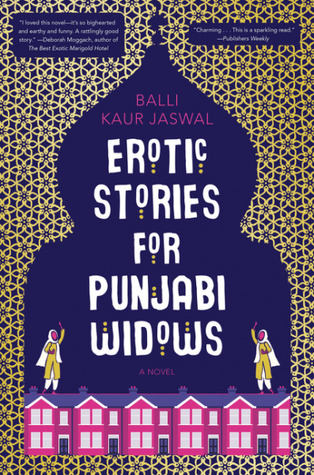
Erotic Stories for Punjabi Widows by Balli Kaur Jaswal. The book is being released by William Morrow on June 13, 2017.

Amazon says this about the book: A lively, sexy, and thought-provoking East-meets-West story about community, friendship, and women’s lives at all ages—a spicy and alluring mix of Together Tea and Calendar Girls.

Every woman has a secret life . . .

Nikki lives in cosmopolitan West London, where she tends bar at the local pub. The daughter of Indian immigrants, she’s spent most of her twenty-odd years distancing herself from the traditional Sikh community of her childhood, preferring a more independent (that is, Western) life. When her father’s death leaves the family financially strapped, Nikki, a law school dropout, impulsively takes a job teaching a "creative writing" course at the community center in the beating heart of London’s close-knit Punjabi community.

Because of a miscommunication, the proper Sikh widows who show up are expecting to learn basic English literacy, not the art of short-story writing. When one of the widows finds a book of sexy stories in English and shares it with the class, Nikki realizes that beneath their white dupattas, her students have a wealth of fantasies and memories. Eager to liberate these modest women, she teaches them how to express their untold stories, unleashing creativity of the most unexpected—and exciting—kind.

As more women are drawn to the class, Nikki warns her students to keep their work secret from the Brotherhood, a group of highly conservative young men who have appointed themselves the community’s "moral police." But when the widows’ gossip offers shocking insights into the death of a young wife—a modern woman like Nikki—and some of the class erotica is shared among friends, it sparks a scandal that threatens them all.

Monday, May 29, 2017

Review: Eliza Waite by Ashley E. Sweeney

Alaska intrigues me. It is one of the places on my bucket list. I'm intrigued by the rugged, naturalness of the state, it's remoteness and the idea of it as this country's last frontier. How much more rugged and unspoiled would it have been at the dawn of the twentieth century when prospectors were racing there for the promise of gold? Ashley Sweeney's novel, Eliza Waite, captures that air of rough and tumble and the possibility of reinvention in the frontier town of Skagway, Alaska.

Eliza Waite is a widow who lives alone on a remote island in the San Juan Islands of Washington. From a well-off Midwestern family, she was married off to a stranger who took her west to Cypress Island where he was a minister. When an epidemic decimated the population of the island, carrying off both Eliza's beloved young son and her husband, she stays in their home to be close to her boy's final resting place even though she is all alone and life is hard and dangerous. When Eliza injures herself, she manages to make it to the mainland where she is nursed back to health.  She thinks she might just be coming alive again out of the well of deep grief she's been existing in but when things go awry, she flees to Skagway, Alaska with the intention of opening a bakery in the booming gateway to the Klondike. In Skagway, Eliza has the chance to reinvent herself, to take charge of her own destiny. She opens herself up to the diverse people around her and works on building a life among these unusual but wonderful new friends.

Eliza is a strong and appealing character. The courage it takes to hop a ship with the flood of prospectors having no guarantee that the fifty dollars in her pocket will buy her a new life is astounding. She has endured hardship, tragedy, and deception and yet she never loses her determination to survive. Sweeney draws the evolution of Eliza's character very well and she's captured the gritty verisimilitude of a a gold rush town beautifully. Eliza's past, her unhappy childhood and less than ideal marriage, weaves through the narrative, helping the reader to understand better who she is. The second part of the book, once she reaches Alaska is far more compelling than the story of her sad and lonely existence on Cypress Island, perhaps because that is where her character feels true and empowered.  She's actually forging a life instead of treading water.  As she is a wonderful baker, there are recipes sprinkled throughout the book, directly in the text and they feel historically accurate. Although the beginning is too drawn out, the writing is good and the setting is intriguing so fans of historical fiction will certainly enjoy this unusual tale of a smart, capable, and undaunted woman.

Thanks to the publicist for sending me a copy of the book for review.

Popular Posts