Wednesday, June 8, 2016

Waiting on Wednesday

This meme is hosted by Breaking the Spine and is meant to highlight some great pre-publication books we all can't wait to get our grubby little mitts on.

Thomas Christopher Greene. The book is being released by Thomas Dunne Books on June 14, 2016.

Amazon says this about the book: Two former lovers reconnect in this beautiful and haunting tale of great lost love from the critically acclaimed author of The Headmaster's Wife

Deeply affecting and compulsively readable, The Headmaster's Wife was a breakout book for Thomas Christopher Greene. Now, Greene returns with a beautifully written, emotional new novel perfect for his growing audience.

Twenty-one years after they were driven apart by circumstances beyond their control, two former lovers have a chance encounter on a Manhattan street. What follows is a tense, suspenseful exploration of the many facets of enduring love. Told from altering points of view through time, If I Forget You tells the story of Henry Gold, a poet whose rise from poverty embodies the American dream, and Margot Fuller, the daughter of a prominent, wealthy family, and their unlikely, star-crossed love affair, complete with the secrets they carry when they find each other for the second time.

Written in lyrical prose, If I Forget You is at once a great love story, a novel of marriage, manners, and family, a meditation on the nature of art, a moving elegy to what it means to love and to lose, and how the choices we make can change our lives forever.

Tuesday, June 7, 2016

Review: The Girl From the Savoy by Hazel Gaynor

How many people chase their dreams? I mean really chase their dreams? We always tell our kids that if they don't shoot for the stars, there's no way they can reach them. Throwing yourself body and soul into the life you want to lead is the only way you'll ever achieve it. But sometimes chasing dreams means leaving things behind that you care about, turning away from one thing to pursue another, making choices that aren't easy but are right. For Dolly Lane, in Hazel Gaynor's touching new novel, The Girl From the Savoy, chasing dreams comes with a cost, one that she will always carry in her heart.

Dolly has always wanted to be a dancer and actress. But she also always expected to marry Teddy Cooper, the boy she's loved since she was 8 years old, and live out her life in the comfort of her small town. But when Teddy went off to war and came back suffering from severe shell shock, everything changed. The novel opens with Dolly rushing to start a new job as a maid at the Savoy hotel in London. She's dripping wet and splattered with mud on her drooping cotton stockings when she crashes into an attractive man just before she makes it to the hotel and although both are a little bit intrigued by each other, they go their own ways. But this is not the last time Dolly will cross paths with Peregrine Clements, a struggling composer who needs a muse to help him write music again. And through Perry, Dolly will also meet Loretta May, the darling of the West End and Perry's sister. With such friends, how could this little maid not realize her dream of making it on the stage?

Told in first person chapters from Dolly, Loretta, and Teddy's perspectives, the novel deals with both WWI and the years afterwards. Although the war is over in the present of the novel, all of the characters are still touched by it. Each of them paid a terrible price thanks to "the war to end all wars" and that terrible cost threads through even the most glamorous years of the war's aftermath. Dolly's humble origins and her ideally invisible service as a maid at the hotel give quite a contrast to the gay, partying, upper class life that the guests live. But Dolly doesn't intend to be a maid forever and she vows to lead the life she sees in the suites she cleans every day. The first half of the novel is rather drawn out, as Dolly tries so very hard to chase her dream and let go of her heartbreaking past, as the beautiful and celebrated Loretta triumphs professionally even as her private life crumbles beneath her own secret tragedies, and as Teddy struggles to swim back up from the horror that has him in its grip. The last third of the novel moves much faster with each of these three and Perry faced with the decisions that will drive the direction of their futures. The writing is very visual, making it easy to imagine both the alluring glitter of the theater world and the Bright Young Things, and the simple pleasures as well as the drudgeries of the working class. The stories of each of the characters, even those who appear to have it all, are poignant and layered and their sorrows are forever imprinted on them. This is a well-researched and tender historical novel that looks at the soul deep damage caused by war, personal cost, the pull of dreams, and what it takes to achieve them, especially amidst a world remade in the wake of a terrible war.

For more information about Hazel Gaynor, take a look at her web page, like her on Facebook, or follow her on Twitter. Check out the book's Good Reads page, follow the rest of the blog tour, or look at the amazon reviews for others' thoughts and opinions on the book.

Thanks to Trish from TLC Book Tours and the publisher for sending me a copy of this book to review.

Monday, June 6, 2016

Review: The Eagle Tree by Ned Hayes

Trees are beautiful. Trees are awe inspiring. Trees are necessary to the continued health of our planet and of the human race. Each part of the country and the world has different trees that tell us different things about our local environment. Sometimes the presence of a tree that shouldn't grow in one particular habitat is invasive and negative and other times it is a wonderful gift. In Ned Hayes' newest novel, The Eagle Tree, a huge Ponderosa Pine that grows in the wrong place is just such a gift to one tree-obsessed 14 year old boy with autism and to the community of Olympia, Washington in which he lives.

Tree-obsessed might be too weak a word to explain March Wong. He lives and breathes trees. He climbs at least three trees a day, despite the scratches and dangerous falls that are part and parcel of his climbing. He memorizes everything about the trees around him from their common and Latin names to their habitats, the bugs that plague them, and the animals and birds that inhabit their branches. He is a veritable encyclopedia of knowledge about trees. He's also autistic. He flutters his hands in front of his face to simulate sunlight winking through leaves, he flaps, he moans, he doesn't like to look people in the face, he needs routine, and he struggles to interact appropriately with others. His intense, narrow focus on trees has resulted in his parents separating (his mother can't and won't move him to treeless Arizona where his father lives) and has also caused the state to want to evaluate whether he is safe in his mother's care since he keeps being injured by his climbing or by his reaction to not being able to climb. Neither of these consequences seem to have much impact on March though, as long as he is still moving towards his ultimate goal, climbing the Eagle Tree, a magnificent tree he spotted in the distance when climbing a neighbor's tree.

The novel is told in the first person from March's perspective. And his perspective is not one we are used to reading. In fact, it is sometimes painful or hard to read when he shuts down, disengaging from whatever is going on around him and retreating into his extreme fascination with trees. Because we are in March's head, we are told each and every fact that he knows about trees. This feels like it could in fact be an authentic look from the inside but it also overwhelms the action going on around March sometimes, minimizing the information that the reader is given about the selling to developers of the forest in which the Eagle Tree stands, and the vitally important upcoming custodial hearing with the state. Although it feels as if March's incessant digressions and intricate details about trees and climate change are integral to making him a believable autistic character, the abundance of information can be tiring for the reader. Some of the time the reader can intuit what is going on even though March misses the significance, doesn't understand, or doesn't care about it, but not always. March is a tough character to know as his mind is so often completely consumed by trees but occasionally there are glimpses of the people around him, even if March doesn't have insight into how he affects them. The ending was quick and easy, hewing as it had to do, to the outcome of the the real tree in Olympia that inspired this story. The novel is very much an interesting intersection between atypical thought processes and environmental issues all embodied by one boy and Hayes definitely knows how to write. Those who wonder what it might be like to live inside the mind and body of someone with autism, those who want a personal story about the effect that global warming is having on the nature all around us, and those who find an interest in both of those subjects together will certainly appreciate the book.

For more information about Ned Hayes, take a look at his web page or connect with him on Twitter. Check out the book's Good Reads page, follow the rest of the blog tour, or look at the amazon reviews for others' thoughts and opinions on the book.

Thanks to Trish from TLC Book Tours and the publisher for sending me a copy of this book to review.

It's Monday! What Are You Reading?

This meme is hosted by Kathryn at Reading Date.

Books I completed this past week are:

A Girl From Yamhill by Beverly Cleary
If You Left by Ashley Norton
The Eagle Tree by Ned Hayes
The Heart You Carry Home by Jennifer Miller
And Again by Jessica Chiarella

Bookmarks are still living in the middle of:

A Little Life by Hanya Yanagihara
You Have Never Been Here by Mary Rickert
West With the Night by Beryl Markham
A Well-Made Bed by Abby Frucht and Laurie Alberts
Riverine by Angela Palm
The Other Woman by Therese Bohman
The Children's Crusade by Ann Packer
Luckiest Girl Alive by Jessica Knoll
The Japanese Lover by Isabel Allende
The One-in-a-Million boy by Monica Wood
The Lake House by Kate Morton
Exposure by Helen Dunmore
I Will Find You by Joanna Connors
The Veins of the Ocean by Patricia Engel
Eliza Waite by Ashley E. Sweeney
Shelter by Jung Yun
The Center of the World by Jacqueline Sheehan
The Edge of Lost by Kristina McMorris
A Manual For Cleaning Women by Lucia Berlin
The Last Time She Saw Him by Jane Haseldine
The Beauty of the End by Debbie Howells
The Winter War by Philip Teir
I Hid My Voice by Parinoush Saniee
Bertrand Court by Michelle Brafman
This Side of Providence by Sally M. Harper
Country of Red Azaleas by Domnica Radulescu
A Different Kind of Daughter by Maria Toorpakai
The Girl From the Savoy by Hazel Gaynor

Reviews posted this week:

The Chosen One by Carol Lynch Williams

Books still needing to have reviews written (as opposed to the ones that are simply awaiting posting):

The Ice Cream Queen of Orchard Street by Susan Jane Gilman
My Confection by Lisa Kotin
Put a Ring on It by Beth Kendrick
One Perfect Summer by Paige Toon
The Things We Keep by Sally Hepworth
The Sisters of Versailles by Sally Christie The Private Papers of Eastern Jewel by Maureen Lindley
Be Frank With Me by Julia Claiborne Johnson
American Housewife by Helen Ellis
The Two-Family House by Lynda Cohen Loigman
The Husband's Secret by Liane Moriarty
Margaret the First by Danielle Dutton
Closer All the Time by Jim Nichols
The Versions of Us by Laura Barnett
Over the Plain Houses by Julia Franks
The Nightingale by Kristin Hannah
Forsaken by Ross Howell Jr.
The Cosmopolitans by Sarah Schulman
The Spice Box Letters by Eve Makis
Britt-Marie Was Here by Fredrik Backman
A Very Special Year by Thomas Montasser
Specimen by Irina Kovalyova
One True Loves by Taylor Jenkins Reid
The Telling by Zoe Zolbrod
The Transmigration of Bodies by Yuri Herrera
The Boy Who Speaks in Numbers by Mike Masilamani
Everyone Brave Is Forgiven by Chris Cleave
Every Exquisite Thing by Matthew Quick
What Comes Next and How to Like It by Abigail Thomas
After the Dam by Amy Hassinger
Our Spoons Came From Woolworths by Barbara Comyns
Umami by Laia Jufresa
The Education of a Poker Player by James McManus
Girl in the Blue Coat by Monica Hesse
Mrs. Engels by Gavin McCrea
The Iceberg by Marion Coutts
Station Eleven by Emily St. John Mandel
Remarkable by Dinah Cox
Miss Jane by Brad Watson
The Inland Sea by Donald Ritchie
The Unseen World by Liz Moore
The Silver Spoon by Kansuke Naka
Blackass by A. Igoni Barrett
The Gilded Life of Matilda Duplaine by Alex Brunkhorst
The Honeymoon by Dinitia Smith
The Last Weynfeldt by Martin Suter
The Grand Hotel by Vicki Baum
Bottomland by Michelle Hoover
This Is Your Life, Harriet Chance by Jonathan Evison
The Lake by Perrine Leblanc
Orhan's Inheritance by Aline Ohanesian
A Girl From Yamhill by Beverly Cleary
If You Left by Ashley Norton
The Eagle Tree by Ned Hayes
The Heart You Carry Home by Jennifer Miller
And Again by Jessica Chiarella

Monday Mailbox

Just one but it definitely looks like a good'un. This past week's mailbox arrival:

The Royal Nanny by Karen Harper came from William Morrow and TLC Book Tours for a blog tour.

The British royal family is completely fascinating just in general but this novel based on a true story about the nanny who cared for Queen Elizabeth's father and his siblings, including his older brother Bertie and the younger brother who became known as the Lost Prince sounds totally captivating.

If you want to see the marvelous goodies in other people's mailboxes, make sure to visit Mailbox Monday and have fun seeing how we are all doing our part to keep the USPS and delivery services viable.

Thursday, June 2, 2016

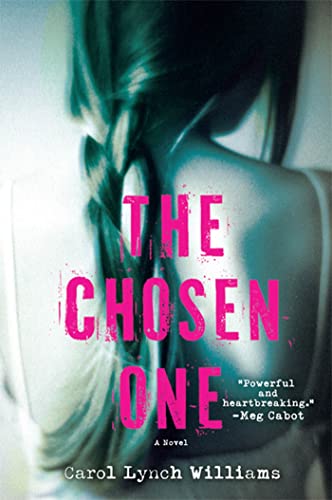
Review: The Chosen One by Carol Lynch Williams

We can track many of our beliefs and deeply held convictions to our parents and the communities around us. We are raised to uphold the values our families hold dear. And most of the time, this doesn't hurt anyone despite variations in belief. Occasionally people rebel against the deepest held convictions of their family and friends but such a rebellion is difficult and has consequences. When the rebellion is against a strict fundamentalist, polygamist cult and the rebel is a mere child, as in Carol Lynch Williams' novel, The Chosen One, the stakes are that much higher.

Kyra Carlson is thirteen. She's been raised by her father and three mothers, along with many siblings, in a closed off desert compound. Her family is a member of The Chosen, a group of people practicing polygamy and following the teachings of their leader, the Prophet. The Prophet is assisted by his close group of Apostles and the community's rules are strictly enforced by the God Squad. The Chosen Ones' interaction with the outside world is limited and infrequent in an effort to keep them free of the taint and temptation of Satan. While Kyra and the other children may be kept away from the outside world, Kyra's native intelligence and curiousity lead her to question the blindly faithful life that her family lives. In fact, Kyra has started visiting the local mobile library secretly after discovering it under a tree one day as the driver took a rest. Now the library stops once a week to allow Kyra to borrow a book. This isn't the only forbidden thing that Kyra does either, falling for a fellow member of The Chosen, Joshua, a boy close to her own age. But the Prophet sees a different life for her than the one she has hoped for, revealing the horrifying news that she is to be the seventh wife of her own uncle. If Kyra refuses, it will mean terrible things for her beloved family and even possible death for her.

In this YA novel, Williams indeed captures the horror of a group that offers up its young girls as sacrifices to old men, a group that tolerates zero disobedience and requires complete and total submission, a group that punishes independent thought or desire. Told from Kyra's perspective, the writing is unsophisticated and simple. Her desperation to escape and her revulsion towards marrying her uncle wars on every page with the pull of love for her family and the only life she's ever known. Although much of the book is slow moving, the climax of the novel is sinister and fast paced. Kyra's immediate family is portrayed as normal as a polygamist family can be, with loving parents and caring siblings but the greater community around them is unforgiving and rigid. Kyra doesn't recognize all of the undercurrents and tensions swirling around her although she does mention a few of them in passing, such as noting that her aunt seems to no longer like her now that she's been chosen as her uncle's next bride. She is, though, a young teenager, and as such may not be savvy enough to see the everyday unhappinesses around her that stem specifically from their unquestioning belief in the Prophet's connection to divinity and in the practice of polygamy.

The difficulty of the decision to leave or not leave played out fairly constantly and ultimately a bit too much to keep the narrative tension taut and the book felt as if it really just skimmed the surface of the whole situation. There are some graphic bits, beatings and murders and disappearances, that attest to the violence and danger of those in charge of the cult but for some reason they don't pack the emotional wallop the reader would expect. The ending was rather abrupt and, at least for me, not terribly satisfying. It's an interesting subject for sure and Lynch, in writing this for a YA audience, has brought it to a new readership but I'm not certain it captures all of the psychological drama and truth one would expect of it.

Wednesday, June 1, 2016

Waiting on Wednesday

This meme is hosted by Breaking the Spine and is meant to highlight some great pre-publication books we all can't wait to get our grubby little mitts on.

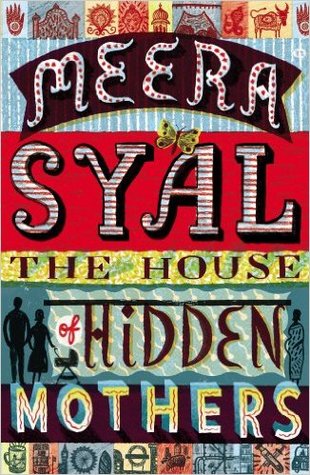
The House of Hidden Mothers by Meera Syal. The book is being released by Sarah Crichton Books on June 14, 2016.

Amazon says this about the book: Shyama, a forty-eight-year-old London divorcée, already has an unruly teenage daughter, but that doesn't stop her and her younger lover, Toby, from wanting a child together. Their relationship may look like a cliché, but despite the news from her doctor that she no longer has any viable eggs, Shyama's not ready to give up on their dream of having a baby. So they decide to find an Indian surrogate to carry their child, which is how they meet Mala, a young woman trapped in an oppressive marriage in a small Indian town from which she's desperate to escape. But as the pregnancy progresses, they discover that their simple arrangement may be far more complicated than it seems.

In The House of Hidden Mothers, Meera Syal, an acclaimed British actress and accomplished novelist, takes on the timely but underexplored issue of India's booming surrogacy industry. Western couples pay a young woman to have their child and then fly home with a baby, an easy narrative that ignores the complex emotions involved in carrying a child. Syal turns this phenomenon into a compelling, thoughtful novel already hailed in the UK as "rumbustious, confrontational and ultimately heartbreaking . . . Turn[s] the standard British-Asian displacement narrative on its head" (The Guardian). Compulsively readable and with a winning voice, The House of Hidden Mothers deftly explores subjects of age, class, and the divide between East and West.

Popular Posts