Friday, March 6, 2015

Review: Sacre Bleu by Christopher Moore

One of my college roommates was an art history major. What she studied always seemed so fascinating. And yet I never did take art history myself. I don't know whether it just didn't fit my schedule time-wise or if there was another reason, equally weak. But since then, I have often found myself reading about famous artists and their muses, their crazy (sometimes literally) and tortured lives, and the times that they lived in so Sacre Bleu was a no brainer for me to read. That I generally love Christopher Moore's works made it all that more certain that this book would come to live on my shelves. Somehow, though, despite the subject matter and the author wielding it, I didn't love this one.

Opening right after the news of Van Gogh's death, his friends Lucien Lessard and Henri Toulouse-Lautrec decide to investigate the somewhat suspicious suicide: shooting himself in the chest and then walking a mile to a doctor. They are caught by his fear of the color blue and a comment about the Colorman which will send them off on a romp through the world of Post-Impressionism, the production of ultramarine, and the roots of creative inspiration. Lucien is a baker and painter whose father introduced him into the art world and to the coterie of artists in Montmartre in the late 1800s. As Lucien and Toulouse-Lautrec try to uncover the identity of the Colorman and the secret behind his sacred blue color, Lucien, like so many artists before him, is captured by the muse in the form of a woman, Juliette. He is obsessed with her, painting an enormous blue nude and falling sick, almost to death of it. His experience, coupled with Toulouse-Lautrec's and their combined knowledge of other painters' experiences painting as well start to reveal the secret of the Colorman. To say more would be to reveal too much.

Like a typical Moore, there is much off-color bawdy humor and a zany, zigzagging plot. There is plenty of his signature absurdity and irreverence and the book is incredibly well-researched. Those with any art history knowledge will see much true history shining through the otherwise absurd story. Those who are not familiar with the big names of the Post-Impressionist movement might have a more difficult time untangling the fanciful from that based on reality. Moore plays with the idea of the creative muse, madness, and the idea of immortality through art. He takes the concept of an artist infusing his own love and pain into the very paint on the canvas and warps it in a very Moore-ish kind of way. And of course, as any reader expects of Moore's books, there are all sorts of penis jokes, a reanimated corpse, a slowing or stopping of time, and a fair bit of debauchery included here. But somehow, despite the hallmarks of his work being fully present, this novel was still surprisingly slow and plodding. The narrative jumped back and forth in time--sometimes quite far back--in not only Lucien's life but also the Colorman's and the elusive Bleu's. It wandered far and wide, touching on artists of every stripe. Perhaps the idea was too broad, examining the origins of a single color or perhaps the real lives of the artists were already too close to a Christopher Moore book, but this was missing the wonderful spark that has so infused his other novels.


Wednesday, March 4, 2015

Review: Heartbreak Hotel by Deborah Moggach

There's something charming about the idea of bed and breakfasts as opposed to hotels. Since most owners live in the B and B and take care of all aspects of their guests' stays, they have a personal and homely feel to them that you don't find in a larger hotel. And if you have a garrulous innkeeper, you have an automatic friend, someone who, like a bartender, is willing to listen to the stories and circumstances of your life and sometimes even offer advice. In Deborah Moggach's newest novel, Heartbreak Hotel, there is one such innkeeper in the shabby but still perfectly appealing Myrtle House.

Russell Buffery, called Buffy, is a retired actor living in London. He has three ex-wives, a couple of ex-mistresses, and children and stepchildren.  Amazingly, he maintains a cordial relationship of some sort with most of them. When an old friend dies and leaves him a bed and breakfast just over the border in Wales, he surprises everyone (including himself) by deciding to move to Knockton and take on the running of the place. It is a bit run down at the heels and despite not having enough money to do much more than patch, Buffy finds that he rather likes being the friendly, welcoming host. But he needs to fill his rooms on more than just the weekends. Then he has the bright idea to offer instructional weekends for those who have just gotten out of a relationship. The classes are intended to teach the newly single to do all of the things that their spouse or partner used to do for them, like gardening, car maintenance, cooking, basic home repair, and Buffy's own course: how to talk to women. The classes are a moderate success and they bring in a wide cast of characters, among them Harold, a blocked writer whose wife has left him for a woman; Monica, a driven businesswoman who finally realizes that her affair with her married lover meant very little to him and cost her almost a decade of her life; Amy, a movie makeup artist whose long term, rather lackluster, live-in lover surprised her by leaving one day; and Andy, the handsome postman whose marriage to a woman he never really knew well has fizzled out. Add in Buffy's children; Voda, who cooks and cleans for the hotel; and Nolan, still living with his mother and made redundant at his job until he's hired to run the car maintenance course, and you have a whole stew of lonelyhearts trying to learn livable skills, how to be in charge of everything in their own lives, and even how to love or find happiness in the world again.

The characters are pitiable but loveable and each one is grappling with a unique heartbreak situation. Their tenure at Myrtle House will change all of them. Buffy himself will be changed too as he looks back at the past failures in his interpersonal relationships and learns new ways of being with people from his guests. All of the disappointed in love are given extensive backstories, detailing the failed relationships that sent them to Buffy's to learn some heretofore unneeded life skill. While the in-depth information on each of the characters is, in fact, necessary to the story, the way that they are interspersed with Buffy's story, and oftentimes quite removed from their appearance at the bed and breakfast, can make it hard to remember which person at the hotel belongs to which backstory.  But the story is engaging and sweet and Moggach is great at getting the reader to appreciate the myriad of quirky characters. There are moments of biting humor that help keep this from becoming over the top and Moggach seems to have a sure sense of when to use a light hand and when to push reality a bit more. While the characters may not learn what they intended to learn when they signed up for their course at Myrtle House, they do learn important things about the power of reinvention and change in this inviting and ultimately heartwarming novel.

Thanks to the publisher for sending me a copy of this book for review.

Waiting on Wednesday

This meme is hosted by Breaking the Spine and is meant to highlight some great pre-publication books we all can't wait to get our grubby little mitts on.

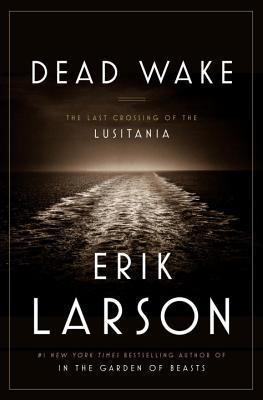
Dead Wake by Erik Larson. The book is being released by Crown on March 10, 2015.

Amazon says this about the book: On May 1, 1915, with WWI entering its tenth month, a luxury ocean liner as richly appointed as an English country house sailed out of New York, bound for Liverpool, carrying a record number of children and infants. The passengers were surprisingly at ease, even though Germany had declared the seas around Britain to be a war zone. For months, German U-boats had brought terror to the North Atlantic. But the Lusitania was one of the era’s great transatlantic “Greyhounds”—the fastest liner then in service—and her captain, William Thomas Turner, placed tremendous faith in the gentlemanly strictures of warfare that for a century had kept civilian ships safe from attack.

Germany, however, was determined to change the rules of the game, and Walther Schwieger, the captain of Unterseeboot-20, was happy to oblige. Meanwhile, an ultra-secret British intelligence unit tracked Schwieger’s U-boat, but told no one. As U-20 and the Lusitania made their way toward Liverpool, an array of forces both grand and achingly small—hubris, a chance fog, a closely guarded secret, and more—all converged to produce one of the great disasters of history.

It is a story that many of us think we know but don’t, and Erik Larson tells it thrillingly, switching between hunter and hunted while painting a larger portrait of America at the height of the Progressive Era. Full of glamour and suspense, Dead Wake brings to life a cast of evocative characters, from famed Boston bookseller Charles Lauriat to pioneering female architect Theodate Pope to President Woodrow Wilson, a man lost to grief, dreading the widening war but also captivated by the prospect of new love.

Gripping and important, Dead Wake captures the sheer drama and emotional power of a disaster whose intimate details and true meaning have long been obscured by history.

Monday, March 2, 2015

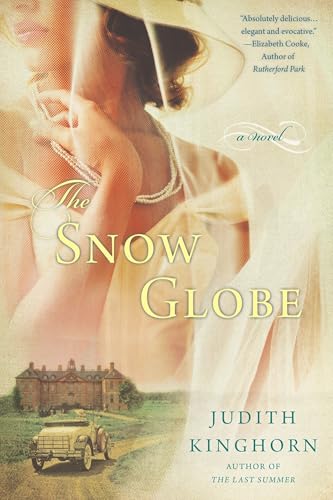
Review: The Snow Globe by Judith Kinghorn

Snow globes are pretty and peaceful. They capture an idealized miniature scene of perfection within their glass orbs. But they aren't reality, no matter how much the world looks like them, especially when snow is drifting down outside the windows.  Reality, unlike the inside of a snow globe, has imperfections, secrets, and disappointments. Judith Kinghorn's newest novel, The Snow Globe, shows just how unlike the quiet, encapsulated scene, life can be.

It is Christmas 1926, that exciting time between the World Wars, and Daisy Forbes is looking forward to celebrating with her family, especially the father she reveres. She is on the verge of adulthood and only hopes that she can find a man as worthy as her father when she comes to marry. But when she overhears a conversation about her father Howard's not so secret indiscretions, her faith in his integrity shatters. Not only does she have to process her father's fallibility, but she is horrified to find that her mother, Mabel, has invited her father's mistress and his mistress' son Valentine, in the guise of Margot Vincent's longstanding friendship with the family, to join the family at Eden Hall this Christmas time. As Daisy grapples with this newfound knowledge of her father, she is also faced with three very different men in her life: the steady and rather stodgy Ben, who works with her father; the dashing and fast Valentine, for whom she should feel only disdain given his mother's role in her father's life; and Stephen, the family chauffeur who is the companion of her childhood and still her best friend. Daisy, like the time in which she is growing up, is being bombarded with change. Her family and her life both move in ways she never could have predicted before Christmas.

Kinghorn has used many of her characters to reflect the way in which the world was speeding through change in the interlude between the wars. Women, like Daisy's older sister Iris, had secured far more freedoms than the generation before them. Social classes were more fluid and there was far more opportunity to better oneself for a person willing to work. But there were still those who hewed to the old traditions as well. Daisy is torn between the two options, trying both on for size as she comes of age and she is an endearing character even as she makes mistakes. In fact, it is her recognition and acceptance of imperfections in others that show how she's changed and matured over the span of the novel. This has a sweeping, elegant feel to it. It is realistically romantic, tapping into the concepts of both love and loyalty in a well researched and authentic historical setting.

Thanks to Kayleigh at Berkley/NAL for sending me a copy of this book to review.

It's Monday! What Are You Reading?

This meme is hosted by Sheila at Book Journey.

Books I completed this past week are:

The Sunlit Night by Rebecca Dinerstein
The Girls of Mischief Bay by Susan Mallery
Dog Crazy by Meg Donohue

Bookmarks are still living in the middle of:

Sacre Bleu by Christopher Moore
The Tusk That Did the Damage by Tania James

Reviews posted this week:

I Regret Everything by Seth Greenland
Peace Like a River by Leif Enger
The Sunlit Night by Rebecca Dinerstein
Burial Rites by Hannah Kent
Lady Mercy Danforthe Flirts With Scandal by Jayne Fresina

Books still needing to have reviews written (as opposed to the ones that are simply awaiting posting):

The Snow Globe by Judith Kinghorn
Heartbreak Hotel by Deborah Moggach
The Girls of Mischief Bay by Susan Mallery
Dog Crazy by Meg Donohue

Monday Mailbox

Just one but an interesting looking one for sure. This past week's mailbox arrival:
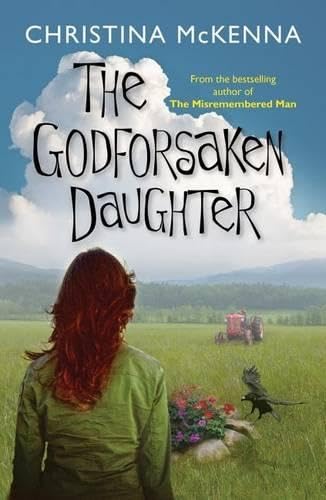
The Godforsaken Daughter by Christina McKenna came from Lake Union and TLC Book Tours for a blog tour.

This Irish set novel features a woman reeling from the loss of her father who finds, among her late grandmother's things, that helps her to find confidence and to connect with other people. I do love Irish settings and stories of oddballs coming into their own like this one appears to have.

If you'd like to see the marvelous goodies in other people's mailboxes, make sure to visit Mailbox Monday and have fun seeing how we are all doing our part to keep the USPS and delivery services viable.

Sunday, March 1, 2015

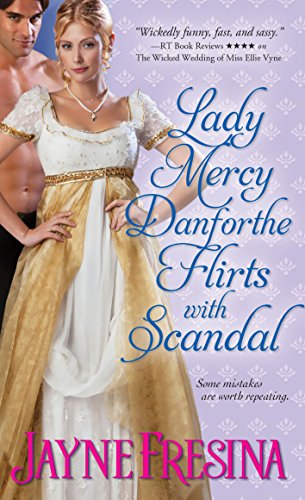
Review: Lady Mercy Danforthe Flirts with Scandal by Jayne Fresina

There are any number of busybody matchmakers in novels. The most famous is probably Jane Austen's Emma, a meddling girl with good intentions but very fallible instincts. Jayne Fresina's Mercy Danforthe has perhaps equally decent intentions and certainly fallible instincts but this Regency-set historical fiction is no where near as satisfying a read.

Five years prior to the start of the book, Lady Mercy Danforthe eloped with Rafe Hartley, the illegitimate son of a nobleman. The two youngsters were discovered before their marriage could be consummated and the marriage was quickly and quietly annulled. Since then Rafe has harbored an intense hatred of Mercy. When Molly, Mercy's best friend and lady's maid leaves Rafe at the altar and Mercy must be the one to break the news to him, he goes off the rails, leading Mercy to declare that she'll find him another wife. In the course of this plan, she must spend more time in his presence than she has done in the preceding five years and their long tamped down attraction to each other flares into life again, hot and intense.

Mercy as a character is meddling and bossy. She is a control freak and little does Rafe know it but she's been controlling him for years, disguising herself as a wealthy, elderly benefactor in order to direct his life. She can see the ways in which he is living his own life wrongly but cannot for the life of her see the bad choices she's made in hers, not least of which is getting engaged to a dull and colorless older man. She is imperious and childish. Rafe, on the other hand, is stubborn and proud with a temper that flares like a match. He is dominant and willfully contentious. He has a great hatred, one rather unearned, for the aristocracy despite the fact that his aristocratic father tries very hard to make up for the shortcomings in his son's life. Mercy and Rafe spend much of their time fighting each other and their renewed attraction. They use verbal barbs to drive each other batty. Insults and shouting are the currency of their conflict with each other. And while it could be argued that Rafe's anger is dangerously close to love, it comes across as a violent lust which Mercy, despite being generally cool and high-handed, reciprocates.

There is nothing gentle or pleasant, or even very convincing, about their love story. As characters, they are immature, spoiled, and unpleasant. They do deserve each other. The idea of class conflict being a primary reason for their original separation had potential but when there turned out to be very little to back up the deep simmering resentment on Rafe's part, it simply cheapened the concept. As I read romances for escape, sadly this one was not one I enjoyed all that much.

Popular Posts