Friday, September 5, 2014

Review: A Hundred Pieces of Me by Lucy Dillon

When my grandmother started moving into progressively smaller places, she had to decide what was most important for her to keep. She chose the things that mattered the most to her, that said something about who she was and the life she'd lived. As I look around my own house, I wonder what I'd let go first, what second, and what I would hold onto as forever meaningful to me, even if it looked insignificant to someone else.  This letting go and moving on with only that which is meaningful is the premise of Lucy Dillon's newest novel, A Hundred Pieces of Me.

Gina finished treatment for her breast cancer with her stalwart husband beside her. Then the two of them renovated a beautiful historic home and Gina started her own preservation business helping others to jump through all of the many and confusing hoops that the conservation folks require. Somewhere in there though, something in their marriage went sadly awry and Gina discovers that her heretofore steady husband Stuart has been having an affair. In divorcing, Stuart leaves almost all of their possessions with Gina, who is moving into a small, modern flat that is her clean slate. Taking a page out of a book her best friend Naomi gave her, Gina determines to weed things out of her life, keeping only the one hundred most important things, starting over unburdened.

Initially Gina is overwhelmed by all of her possessions and as she unpacks certain pieces conjure up memories for her. But she must purge and she even starts to take great joy in lightening herself up. The things she chooses to keep are varied and interesting in their very pedestrian nature. It is in the midst of letting go of so many of her things that she comes to acquire Buzz, an abandoned greyhound who is as fragile and in need of a new life as Gina herself is. While Gina is building that new life, she also takes on a large, time-consuming project, shepherding a dilapidated but once gracious listed home through renovations for a gorgeous and kind photographer and his high powered wife to use as a weekend getaway from London.

The novel's narrative moves back and forth in time, slowly revealing Gina's past and the tragedy in it for which she still blames herself and then unspooling her present and the ways in which she is growing and coming to embrace life and goodness. Chapters are headed with the description of an object from Gina's boxes.  Each thing she uncovers adds to her past story, that of a young Gina newly in love with first boyfriend Kit, of the Gina who wanted to know more about her father, of the Gina who lived with her difficult mother and her low-key but loving step-father, and of the Gina who married Stuart, before returning to the present and moving forward in the new life she's slowly building for herself.

The story is a charming one, thought-provoking, and full of emotion. As Gina lets go of the past, the reader too must think about how you determine what to hold onto and what to let go. The overarching theme of focusing on what is important in life, in possessions, people, and moments, is well-illustrated and threads throughout Gina's story. Gina learns, with help, to live in the moment rather than collecting it through things and to search out and find those moments that bring her joy. The characters are generally appealing, especially Gina, Nick, and Naomi, the major characters. Even Stuart is not a complete villain although Gina does come to forgive him rather easily. Some of the plot twists are a bit predictable and the ending is fairly unresolved. The conceit of Gina keeping only one hundred things is dropped fairly early on. And although Gina acknowledges that she has stopped keeping this up, it is still a shame that it wasn't carried through. The idea of a wall of Polaroid photos of the things that bring her joy, which replaces the one hundred things she's keeping, is a nice one but, on the whole, not quite as intriguing. Over all though, this is a lovely women's fiction novel, one that reminds us of the way life can change on a dime and that we are not defined by our things but by the way we live our lives and our memories and moments instead.

Thanks to the publisher for sending me a copy of this book to review.

Thursday, September 4, 2014

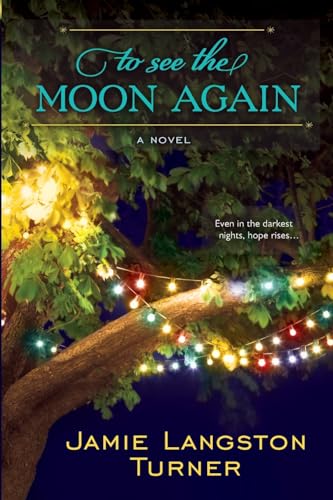
Review: To See the Moon Again by Jamie Langston Turner

We carry our past with us every day of our lives. It has made us who were are, shaping us for better and for worse. Sometimes we barely notice what we bring forward with us and other times it weighs us down and reminds us every moment of who we were and what we did, forcing us to continually confront the ever present past. But there is a reason for the idea of forgiving and forgetting the things that continue to haunt us as the characters in Jamie Langston Turner's latest novel, To See the Moon Again, need to learn.

Julia Rich is an English professor at a small southern college. Her unassuming husband passed away last year and she's facing a sabbatical year she's not sure she wants to take. Her sister Pamela is a bit of a pest, calling and checking in all the time, whittering on about things going on in her life, and giving Julia advice for which she has no use. Julia is not terribly social and she's a bit aloof at the best of times. Her world is generally orderly and planned. So when she gets a phone message from Carmen, her late brother Jeremiah's only child, the niece she's never met, telling her that Carmen is planning to visit her, Julia immediately tries to figure out a way to stop this unknown teenager from appearing on her doorstep. But Carmen has left no way to reach her so all Julia can do is hope against hope that she doesn't turn up in the end. Of course, Carmen does show though.

When Carmen finally arrives to meet her Aunt Julia, Julia finds her heart cracking open just a little bit to let this charming girl in despite her desire not to allow this. As she gets to know her brother's child, she regrets the distance and the wrong assumptions that kept her from knowing the girl sooner, and sparing Carmen some of the heartache and sorrow she's already faced in her nineteen years. The two women slowly open up about their lives but even as they do so, Julia has to fight the urge to retreat emotionally at every turn. Carmen, on the other hand, is mostly open and sunny, engaging everyone around her and caring about their lives. Julia reflects on her family growing up and specifically her relationship with her mother as she and Carmen delve into the past And she finally faces the tragedy of so long ago and starts to allow herself to be forgiven. It takes Carmen far longer to admit to the devastation she carries with her and when she finally does on a road trip she and Julia are taking, she struggles with forgiving herself even when Julia turns Carmen's advice to her around on her.

Julia and Carmen are a study in contrasts as characters. Carmen has a certain faith in God no matter what hardships she's faced while Julia is resolutely skeptical and very frustrated by Carmen's simple acceptance. Carmen alternates from sweet and naively innocent to infuriatingly submissive, both to Julia and to the reader. The story is a quiet one packed with emotion. It explores the concept of sin, forgiveness, love, motherhood, and God's grace. The plot is not paramount, the connection between the characters is, which is a good thing because both Julia and Carmen's secrets are easily sussed out and just as easily explored or uncovered. The ending is hopeful and accepting, which suits the tone of the novel over all. Even so, it leaves the characters without real closure because, as Carmen says, "life goes on." Turner's novel is a nice, open book that will appeal to Christian fiction readers.

Thanks to the publisher for sending me a copy of the book to review.

Wednesday, September 3, 2014

Waiting on Wednesday

This meme is hosted by Breaking the Spine and is meant to highlight some great pre-publication books we all can't wait to get our grubby little mitts on.

Smoke Gets in Your Eyes by Caitlin Doughty. The book is being released by W.W. Norton and Company on September 15, 2014.

Amazon says this about the book: A young mortician goes behind the scenes, unafraid of the gruesome (and fascinating) details of her curious profession.

Most people want to avoid thinking about death, but Caitlin Doughty—a twenty-something with a degree in medieval history and a flair for the macabre—took a job at a crematory, turning morbid curiosity into her life’s work. Thrown into a profession of gallows humor and vivid characters (both living and very dead), Caitlin learned to navigate the secretive culture of those who care for the deceased.

Smoke Gets in Your Eyes tells an unusual coming-of-age story full of bizarre encounters and unforgettable scenes. Caring for dead bodies of every color, shape, and affliction, Caitlin soon becomes an intrepid explorer in the world of the dead. She describes how she swept ashes from the machines (and sometimes onto her clothes) and reveals the strange history of cremation and undertaking, marveling at bizarre and wonderful funeral practices from different cultures.

Her eye-opening, candid, and often hilarious story is like going on a journey with your bravest friend to the cemetery at midnight. She demystifies death, leading us behind the black curtain of her unique profession. And she answers questions you didn’t know you had: Can you catch a disease from a corpse? How many dead bodies can you fit in a Dodge van? What exactly does a flaming skull look like?

Honest and heartfelt, self-deprecating and ironic, Caitlin's engaging style makes this otherwise taboo topic both approachable and engrossing. Now a licensed mortician with an alternative funeral practice, Caitlin argues that our fear of dying warps our culture and society, and she calls for better ways of dealing with death (and our dead).

Tuesday, September 2, 2014

Review: Accidents of Marriage by Randy Susan Meyers

I am a yeller. When I get mad, and I can really get mad, I tend to shout, rant, and rave. I recognize this about myself and have tried very hard over the years to release my anger more productively. I don't know if it's worked entirely but I certainly hope I have a better handle on my anger than Ben in Randy Susan Meyers' newest novel, Accidents of Marriage does on his.

Ben, a public defense lawyer, has an explosive temper and his family tiptoes around him, never knowing what is going to set him off. His wife Maddy, a social worker, takes prescription pills every day to take the edge off, to keep her own emotions under wraps for fear of triggering his, and to blunt the effect of his irrational eruptions. All three of the Illica children, Emma, Gracie, and Caleb, know that their father is extremely volatile and try not to provoke him either. Even when Ben isn't home, incidents like breaking a glass are weighed in light of his probable reaction. Theirs is not a terribly happy home. And it's about to get even worse.

On a day when both Ben and Maddy have work commitments and things are already fraught between them because of the kids' schedules, Maddy gets pulled over and her car is towed for an expired registration. She calls Ben to rescue her from a rough part of town, which he grudgingly does. Then, because he is late, rushing, and angry, he gets caught in a driving contest with another driver on the wet Boston roads, losing control of the car in the pouring rain and crashing. Maddy is thrown from the car and ends up in a coma with a traumatic brain injury. If the days of waiting to see if Maddy would come out of the coma were tough, life afterwards is even tougher. Fourteen year old Emma has to take charge of her younger siblings, shouldering more responsibility than a young teenager should have to do, and feeling the injustice of every moment of it. Ben has to adjust to the wife who needs so much more than he's ever given her before and to his own slowly dawning understanding of his own culpability in the whole situation. Maddy is frustrated with her own slow progress and furious with blame as she tries to understand the kind of life that she wants to lead going forward.

Ben, Maddy, and Emma all narrate sections of the novel, giving the reader insight into their personal understandings of the situation. Ben is likely to flare up at anything and he is definitely emotionally abusive but it is also made clear by the time we spend in his head that he does in fact love Maddy even if he doesn't acknowledge his own anger management issues. Maddy has so deadened herself in dealing with Ben's rages that she is teaching her children the wrong thing and when she finds out the truth about the accident that changed her life forever, she has some big decisions to make. Each of the three main characters is quite complex, neither entirely good nor entirely bad, allowing the reader to want this family to improve, for Ben's desire to change to be real, and for them to heal the gaping cracks. The pacing is generally slow and measured, much like Maddy's own recovery, sometimes slower and sometimes more accelerated.  The end of the novel seems a bit abrupt and unfinished, again much like Maddy's recovery. But the portions about Maddy's injury and how she is healing, what her particular traumatic brain injury means in terms of now and the future is rather fascinating, and that it gives her the chance to remember, see, and own her past reality without a chemical veil obscuring everything brings the story to its climax. This is a thought-provoking family drama about injuries, physical and emotional, and whether or not a wreck is worth salvaging even if that wreck is your marriage and family.

For more information about Randy Susan Meyers and the book, check out her website, her Facebook page, her Twitter feed, her Pinterest page or the book's Goodreads page. Follow the rest of the blog tour or look at the amazon reviews for others' thoughts and opinions on the book.

Thanks to Trish from TLC Book Tours and the publisher for sending me a copy of the book for review.

Monday, September 1, 2014

Review: The House We Grew Up In by Lisa Jewell

I have gotten to a point in my life where I am going through my things and getting rid of stuff. I feel weighed down by it and realize that most of it doesn't need to be in my house and my life. This does not apply to my books, of course, although I am getting more discerning about what I keep on my permanent shelves there too. This desire to pare down and divest is the exact opposite of someone who hoards, who feels the need to anchor themselves in things, to continually acquire and squirrel away possessions. But hoarders are more than just people who want stuff. They have something in them, some deep hurt, some mental illness that compels them to compulsive collecting. Seeing the genesis and the result of such a hard thing is at the center of Lisa Jewell's newest novel, The House We Grew Up In.

Opening with an email from Lorelei Bird to an internet love interest named Jim, the email introduces the matriarch of the Bird family in her own words and through her own eyes. Just as quickly, then comes the contrast of what Megan Bird thinks of her mother and what she and her teenaged daughter expect to see when they open the door to the once charming but now dilapidated Cotswold cottage of her childhood.  It is so much worse than they ever expected, a solid wall of stuff with only narrow and winding paths through it to the rest of the house, equally packed from floor to ceiling and wall to wall. Lorelei Bird was a hoarder, unable and unwilling to pare anything out of her life and now the crumbling house stuffed to the brim mirrors the cracks and secretly nurtured layers of guilt in this dysfunctional family.

But how did the present happen? The Birds used to be a fun and appealing family with planned Easter egg hunts every year, a kitchen full of children's drawings, and a cozy feeling of love in the golden time before. Colin supported Lorelei's whimsy and their four children, Megan, Bethan, and twins Rory and Rhys benefitted from her childlike enthusiasms. But even then, Lorelei's quirky eccentricities carried the seed of something more. And in the aftermath of the terrible tragedy of the Easter of 1981, what was whimsical became sad, eccentricity edged into mental illness, and not one person in this now dysfunctional family was left unchanged and untouched. Each member of the family carries a load of guilt and each of them manifests that guilt in their own way, all of them ending up mostly estranged from the others.

The narrative alternates between past and present, slowly exposing the cracks and rifts of the present and terrible truth of the past. In between the two different narratives are Lorelei's emails to Jim, allowing her to tell her side of things, giving her uniquely positive spin, a spin that grows cautiously more honest, opening Lorelei up to face her own demons as time goes on. As the Birds gather to unload Lorelei's house, they excavate not only their own shared past but also the hurts they've long carried. And while Lorelei might have spent much of her adult life buried in things, the rest of them have also been buried, just in guilt and jealousy and anger rather than possessions. Some of the things that happen in the Bird family belong on a sensational talk show, a woman leaving her husband for another woman, a father having a relationship with his son's ex, and a sister having an affair with her brother-in-law and if they are unbelievable on a trashy talk show, they are strangely believable here in this sad and destroyed family.

Jewell has written an insightful and engrossing tale of a family slowly sinking under the weight of Lorelei's possessions and  under all of each person's sadness and secrets. They are changed forever by adultery, mental illness, suicide, and the messiness of relationships. The pacing is consistent and the narrative tension is steady, with both the mystery of the tragedy that changed the family tantalizingly kept under wraps as long as possible and the question of what happened to Lorelei and how the house got into such a state also revealed slowly and deliberately. The characters are realistic and well rounded, neither all good nor all bad, even if the reader does side with some over others.  This is an engrossing tale, well delivered and I defy you to want to hold onto more things once you've closed the cover.

Thanks to the publisher for sending me a copy of this book for review.

It's Monday! What Are You Reading?

This meme is hosted by Sheila at Book Journey.

Books I completed this past week are:

Ordinary Grace by William Kent Krueger
Accidents of Marriage by Randy Susan Meyers

Bookmarks are still living in the middle of:

The Geometry of Love by Jessica Levine
Gemini by Carol Cassella
Ruby by Cynthia Bond
Marching to Zion by Mary Glickman
To See the Moon Again by Jamie Langston Turner

Reviews posted this week:

The Story of Land and Sea by Katy Simpson Smith
The People in the Photo by Helene Gestern
2 a. m. at the Cat's Pajamas by Marie-Helene Bertino

Books still needing to have reviews written (as opposed to the ones that are simply awaiting posting):

Mimi Malloy, At Last by Julia MacDonnell
The Innocent Sleep by Karen Perry
Strings Attached by Joanne Lipman and Melanie Kupchynsky
Palmerino by Melissa Pritchard
If Not For This by Pete Fromm
The Lady From Tel Aviv by Raba'i al-Madhoun
Angels Make Their Hope Here by Breena Clarke
Ishmael's Oranges by Claire Hajaj
Neverhome by Laird Hunt
Burial Rights by Hannah Kent
Euphoria by Lily King
The Blessings by Elise Juska
The Traitor's Wife by Allison Pataki
Everything I Never Told You by Celeste Ng
Painted Horses by Malcolm Brooks
All Fall Down by Jennifer Weiner
Juliet's Nurse by Lois Leveen
We Are Called to Rise by Laura McBride
Bellman and Black by Diane Setterfield
The Orphans of Race Point by Patry Francis
The House We Grew Up In by Lisa Jewell
A Man Called Ove by Fredrik Backman
Going Somewhere by Brian Benson
Ordinary Grace by William Kent Krueger
Accidents of Marriage by Randy Susan Meyers

Monday Mailbox

This past week's mailbox arrivals:

The Moonlight Palace by Liz Rosenberg came from Lake Union Publishing and TLC Book Tours for a blog tour.

A coming of age tale in 1920s Singapore about a girl who has grown up in the palace of her ancestor, the last sultan of Singapore? This sounds completely intriguing.

Ballroom by Alice Simpson came from Harper and TLC Book Tours for a blog tour.

The story of the small group of people who gather together at the Ballroom to dance together, look for love, and put the reality of hum drum existences away for a time, this looks like it will be a lovely novel.

If you'd like to see the marvelous goodies in other people's mailboxes, make sure to visit Mailbox Monday and have fun seeing how we are all doing our part to keep the USPS and delivery services viable.

Popular Posts