Wednesday, August 13, 2014

Waiting on Wednesday

This meme is hosted by Breaking the Spine and is meant to highlight some great pre-publication books we all can't wait to get our grubby little mitts on.
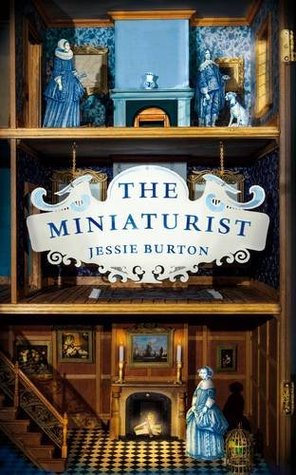
The Miniaturist by Jessie Burton. The book is being released by Ecco on August 26, 2014.

Amazon says this about the book: Set in seventeenth century Amsterdam—a city ruled by glittering wealth and oppressive religion—a masterful debut steeped in atmosphere and shimmering with mystery, in the tradition of Emma Donoghue, Sarah Waters, and Sarah Dunant.

”There is nothing hidden that will not be revealed . . .“

On a brisk autumn day in 1686, eighteen-year-old Nella Oortman arrives in Amsterdam to begin a new life as the wife of illustrious merchant trader Johannes Brandt. But her new home, while splendorous, is not welcoming. Johannes is kind yet distant, always locked in his study or at his warehouse office—leaving Nella alone with his sister, the sharp-tongued and forbidding Marin.

But Nella’s world changes when Johannes presents her with an extraordinary wedding gift: a cabinet-sized replica of their home. To furnish her gift, Nella engages the services of a miniaturist—an elusive and enigmatic artist whose tiny creations mirror their real-life counterparts in eerie and unexpected ways . . .

Johannes’ gift helps Nella to pierce the closed world of the Brandt household. But as she uncovers its unusual secrets, she begins to understand—and fear—the escalating dangers that await them all. In this repressively pious society where gold is worshipped second only to God, to be different is a threat to the moral fabric of society, and not even a man as rich as Johannes is safe. Only one person seems to see the fate that awaits them. Is the miniaturist the key to their salvation . . . or the architect of their destruction?

Enchanting, beautiful, and exquisitely suspenseful, The Miniaturist is a magnificent story of love and obsession, betrayal and retribution, appearance and truth.

Tuesday, August 12, 2014

Review: The Virtues of Oxygen by Susan Schoenberger

Breathing is natural, easy, unconscious. We say we need to catch our breath when we want to slow down. We tell someone to save their breath when we don't want to hear it. We say that a person has breathed life into something when we want to say that they improved or saved that thing. Someone can be a breath of fresh air. Someone else can wait with bated breath. And these are just a few of the idioms we use that center around this vitally important but mostly unnoticed act. It's only when we are struggling to breathe with a cold, croup, or asthma or focus on it specifically in certain exercises like yoga that we pay attention to our breathing because most of the time we take it for granted. But what if breathing was a struggle? Literally or metaphorically? In Susan Schoenberger's newest novel, The Virtues of Oxygen, there are two women, Holly and Vivian, who are both struggling to breathe.

Holly is a widow in her early forties. Her husband died very unexpectedly when their now teenaged sons were small and Holly has been doing her best to make ends meet ever since. She is the editor of a small local paper in her upstate New York town, living paycheck to paycheck as the fixer upper she bought with her husband gets ever more ramshackle and her financial reserves disappear. When her mother, who has been floating Holly money to meet her mortgage every month, suffers a debilitating stroke and the newspaper, no longer profitable enough thanks to the recession, threatens to lay off everyone and close, Holly finds herself floundering under the pressure and struggling to breath.

Vivian literally can't breath on her own. At 63, she lives in an iron lung that has kept her lungs going since she contracted polio at the age of 6. She is fiercely intelligent, having earned her college degree despite the physical confines within which she lives, and has invested shrewdly in the stock market. Now she's getting into business as a partner in one of the new cash for gold stores that have sprung up all over and which highlight the state of the economy in the otherwise almost vacant downtown. Vivian has an army of volunteers from the town who come and watch over her, make sure her lung is functional, and to help her manage the other banal business of life like eating, drinking, reading, and so on. Holly is one of Vivian's volunteers, having been on the rotation for years, enjoying her time with Vivian, questioning her, sharing with her, and gradually becoming a cherished friend. Since she cannot personally oversee this new business of hers, she hires Holly to be her eyes on the ground in her new venture.

Told in alternating chapters focused on Vivian and then Holly, the reader feels Holly's financial squeeze getting tighter and sees Vivian's mood cycle up and down. Looking at each woman in the presence of the other also lets the reader appreciate just how much they rely on each other emotionally, how they buoy each other, and the ways in which they worry about each other. It is easy to see the interrelationship between dependency and independence and the ways in which dependence is not always negative but instead forges important emotional connections between people. Both women learn much from each other, taking nothing for granted given the hands that life has dealt them so far. The novel is mostly told in the present day but there are also chapters of Vivian's unpublished podcasts, ultimately intended for Holly, that tell the story of Vivian's past, from the onset of her own illness and the death of her beloved older sister to the ways in which she carved out an intellectual life for herself while completely physically incapacitated. Schoenberger also uses Holly's mother's stroke and her remaining physical strength coupled with acute mental loss to contrast with Vivian's keen mental capacities trapped in a non-functional body. The end of the story is a little bit predictable and wrapped up quickly but over all this is an insightful look at the perseverance of the human spirit, the value of human connection, and the importance of keeping breathing no matter what.

For more information about Susan Schoenberger and the book, check out her website, Facebook page, Twitter feed or check out the GoodReads page for the book. Follow the rest of the blog tour or look at the amazon reviews for others' thoughts and opinions on the book.

Thanks to Lisa from TLC Book Tours and the publisher for sending me a copy of the book for review.

Monday, August 11, 2014

Review: The Curse of Van Gogh by Paul Hoppe


Thrillers are not my usual read. But I have to admit a strange fondness for books about art heists. Maybe it's the idea of people wanting to own (by stealing) the product of someone else's creativity. After all, I love owning books, which is a similar concept, although I don't have a first edition or manuscript craving. Or maybe it's the idea I have that art thieves are not only amazingly intelligent but also gentlemanly. Whatever the case, Paul Hoppe's novel, The Curse of Van Gogh does indeed have a gentlemanly art thief reluctantly planning to execute the heist of the century.

Tyler Sears is a master art thief who has just been released from prison early for good behavior. He's decided that he really needs to keep his nose clean and give up his life of crime until Mr. Imasu, a sinister and threatening Japanese businessman makes him an offer he can't refuse. And Tyler can't refuse because Mr. Imasu is threatening to hurt both Tyler's slightly flaky mother and his adored older brother, who has been destroyed by his experiences covering foreign wars for the New York Times and is now institutionalized. Initially Mr. Imasu wants Tyler to steal Van Gogh's Starry Night for him but Tyler, hoping to call Imasu's bluff suggests that he should lift 12 major Impressionist works from an upcoming special exhibition at the National Gallery of Art instead. Unfortunately for Tyler, Imasu agrees so he now has to pull off an impossible heist without getting caught and try to stay alive afterwards as well, a feat no one else in Imasu's orbit seems able to accomplish.

Tyler is a fascinating character. He cares deeply for his family and values his friends and connections. He's falling in love with Lucy, a woman he met just before he was caught and sent to jail three years ago, and he wants to protect her. And as much as he doesn't want to do this job for the ruthless Imasu, more importantly, he wants to stay alive, and to keep those he cares about alive. Tyler is meticulous in his planning and preparation and his connections to the underworld of art forgery and hit men are impressive. The sheer intelligence and the stunning amount of technology needed to circumvent security is impressive and detailed. But the heist isn't all cerebral.  It is action packed too.  There are car chases and grisly warnings about insubordination, Interpol operatives with a grudge and dealings with much intrigue. There's enough adrenaline and thrill here to easily make this a blockbuster movie. The book itself opens with a young Nazi trying to smuggle a Van Gogh out of Germany for Goering and dying in the process, setting the tone for the well-known curse that accompanies the tortured painter's works. Although the short piece works to establish the curse, it is a little disconnected from the rest of the book. But that's a small issue in an otherwise fast-paced and engrossing novel that kept even this non-thriller reader reading.

For more information about Paul Hoppe and the book, check out his website, his Facebook page, his Twitter feed or connect with him on GoodReads. Take a look at the amazon reviews for others' thoughts and opinions on the book.

Thanks to Janay from Book Sparks PR and the publisher for sending me a copy of the book for review.

It's Monday! What Are You Reading?

The scrubbed clean computer finally came home yesterday evening so now I can concentrate on the appalling number of review I have to catch up on! This meme is hosted by Sheila at Book Journey.

Books I completed this past week are:

Lighthouse Island by Paulette Jiles
Jane Austen's First Love by Syrie James
The Villa by Rosanna Ley
The Curse of Van Gogh by Paul Hoppe

Bookmarks are still living in the middle of:

The Geometry of Love by Jessica Levine
Gemini by Carol Cassella
Ruby by Cynthia Bond
Marching to Zion by Mary Glickman
The Virtues of Oxygen by Susan Schoenberger

Reviews posted this week:

Lighthouse Island by Paulette Jiles
The Villa by Rosanna Ley

Books still needing to have reviews written (as opposed to the ones that are simply awaiting posting):

Mimi Malloy, At Last by Julia MacDonnell
The Innocent Sleep by Karen Perry
Strings Attached by Joanne Lipman and Melanie Kupchynsky
Palmerino by Melissa Pritchard
If Not For This by Pete Fromm
The Lady From Tel Aviv by Raba'i al-Madhoun
Angels Make Their Hope Here by Breena Clarke
Ishmael's Oranges by Claire Hajaj
Neverhome by Laird Hunt
Burial Rights by Hannah Kent
Euphoria by Lily King
The Blessings by Elise Juska
The Traitor's Wife by Allison Pataki
Everything I Never Told You by Celeste Ng
Painted Horses by Malcolm Brooks
All Fall Down by Jennifer Weiner
Juliet's Nurse by Lois Leveen
We Are Called to Rise by Laura McBride
Bellman and Black by Diane Setterfield
The Orphans of Race Point by Patry Francis
Chasing Perfect by Susan Mallery
Jane Austen's First Love by Syrie James
The Curse of Van Gogh by Paul Hoppe

Monday Mailbox

This past week's mailbox arrivals:

Bergdorf Blondes by Plum Sykes came from Harper.

Sometimes you just want a fun read and this one about the young, rich, and beautiful in New York City looks like it will certainly fit that bill.

Accidents of Marriage by Randy Susan Meyers came from Atria and TLC Book Tours for a blog tour.

I read and enjoyed Meyers' last novel and this one about a woman whose husband is getting more abusive as the years go on, culminating in her being in the hospital fighting for her life looks completely riveting.

House of Wonder by Sarah Healy came from New American Library for a blog tour.

About a family gone down hill and the daughter who distanced herself from them who must go back and stand by them now as an adult, this looks like it will be wonderful. (Plus, don't you just love that cover?)

To See the Moon Again by Jamie Langston Turner came from Berkley for a blog tour.

I do like reading about people overcoming their past and finding hope in the future, especially when they have something large and traumatic in it like in this appealing looking novel.

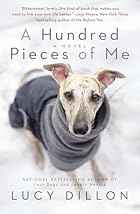
A Hundred Pieces of Me by Lucy Dillion came from Berkley for a blog tour.

Don't you just love dogs? I do. So this novel about a woman, her rescue greyhound, and the one hundred things she allows herself to keep after her divorce looks fantastic.

If you'd like to see the marvelous goodies in other people's mailboxes, make sure to visit Mailbox Monday and have fun seeing how we are all doing our part to keep the USPS and delivery services viable.

Saturday, August 9, 2014

Review: The Villa by Rosanna Ley

As parents we all want our children to be healthy and happy in their lives and most of us have a sneaking suspicion that we know the route, or at least part of the route, to get there. But their lives are not our lives and we have to allow them to make their own decisions, mistakes, and triumphs. This is surprisingly hard to do, tied as it is to our own expectations as well as societal and cultural expectations. In Rosanna Ley's novel, The Villa, this is a strong theme throughout the story.

Tess Angel is a single mother whose daughter, Ginny, is eighteen and about to fly the nest if she can ever figure out what she wants to do with her life. Tess works in an unfulfilling job where she is unappreciated and her lover is a married man but her life isn't all the stuff of cliche; she has the love and close support of her parents and a dear friend who lives next door. Her mother is Sicilian but Flavia never speaks of her past before coming to England so the only real connection Tess has to this half of her heritage is through food. When the novel opens, Tess has just received a letter informing her that she's inherited a villa in Sicily from a man she's met named Edward Westerman, the Englishman her mother's family worked for for so many years back home in Sicily. According to the terms of his will, she cannot dispose of the villa without first visiting it and when she tells her mother, Flavia is certain Tess should not go, certainly not to Cetaria to claim Villa Sirena, the place where Flavia grew up. But Tess cannot resist the pull and so she goes despite her mother's misgivings.

Ginny, meanwhile, is floundering in her life. She doesn't want to go to uni but she has no other direction either.  She is a sullen and deeply unhappy young woman.  She is battling something internal that she calls "The Ball," a manifestation of her anxiety or fear or angst or unhappiness. Ginny sort of drifts in her life, hurt that her best friend has chosen to spend all her time with a boyfriend, only marginally interested in her own lackluster relationship, and at odds with her mother, wanting to reclaim their earlier ease with each other but driven, in the manner of teenagers, to lash out and push against Tess.

As Tess spends first a week exploring her somewhat dilapidated home on a cliff overlooking the sea, and then a longer stretch of time trying to uncover her mother's past and the reason for her intentional reticence about Sicily, Flavia realizes that she must in fact tell Tess the story of why she left Sicily in the first place and why she refuses to go back or to discuss it at all, even if the remembering brings her pain. Choosing to write the story in small increments in a journal and to intersperse the narrative with the instructions for her beloved Sicilian cuisine, Flavia takes the reader back into the past to WWII Italy and into the long held family loyalties and feuds of Sicily.

The narratives of all three women wind together although those of Tess and Flavia take center stage. As Tess tries of uncover her mother's past, Flavia pours out her closely guarded secrets to the journal she intends to give to Tess. Flavia's tale explains things that Tess, hundreds of miles away in Sicily, is experiencing but cannot possibly understand. She is drawn to mosaicist Tonino and a little leery of slick businessman Giovanni but she doesn't understand how they are connected to her through their families and how the accusations and fall out of simmering anger from so long ago survive to this day and wrap to include her, a woman who has never before stepped foot in Cetaria.

The Sicilian setting is seductive and enticing. Ley captures the overwhelming beauty and intense passion of the place and also the undercurrents of darkness and danger running just below the surface of the sun drenched isle. Tess and Flavia are interesting and complete characters while Ginny is less so and their stories reflect that fact. There is never any doubt as to who the bad guy and who the good guy are in Tess' present day story and the other supporting characters and their relationships to the main characters are underdeveloped. Ley throws in a couple unearned convenient coincidences like Ginny's absentee father giving Tess money just when she most needs it, Lenny's last name being Angel after Peter called Flavia his angel, and a well-timed earthquake that allows Tess to finally put to rest all of the accusations and speculation of the past sixty or so years. Despite these easy plot choices, this was a nice summer read, chock full of issues of love, loyalty, and secrets. And in the end, both Flavia and Tess realized that while their daughters might make different life choices than they would, wanting the best for your child means allowing her to be the mistress of her own destiny. You just never know where that destiny might lead.

For more information about Rosanna Ley and the book, check out her website, Facebook page, her Twitter feed, or check out the GoodReads page for the book. Follow the rest of the blog tour or look at the amazon reviews for others' thoughts and opinions on the book.


Thanks to Steffi from Rock Star PR and Literary Consultants and the publisher for sending me a copy of the book for review.

Wednesday, August 6, 2014

Waiting on Wednesday

This meme is hosted by Breaking the Spine and is meant to highlight some great pre-publication books we all can't wait to get our grubby little mitts on.

Three Story House by Courtney Miller Santo. The book is being released by William Morrow Paperbacks on August 19, 2014.

Amazon says this about the book: Renovating an historic Memphis house together, three cousins discover that their spectacular failures in love, career, and family provide the foundation for their future happiness in this warm and poignant novel from the author of The Roots of the Olive Tree that is reminiscent of The Postmistress, The Secret Life of Bees, and Kristin Hannah’s novels.

Nearing thirty and trying to avoid the inescapable fact that they have failed to live up to everyone’s expectations and their own aspirations, cousins and childhood best friends Lizzie, Elyse, and Isobel seek respite in an oddly-shaped, three-story house that sits on a bluff sixty feet above the Mississippi.

As they work to restore the almost condemned house, each woman faces uncomfortable truths about their own failings. Lizzie seeks answers to a long-held family secret about her father in her grandmother’s jumble of mementos and the home’s hidden spaces. Elyse’s obsession with an old flame leads her to a harrowing mistake that threatens to destroy her sister’s wedding, and Isobel’s quest for celebrity tempts her to betray confidences in ways that would irreparably damage her two cousins.

Told in three parts from the perspective of each of the women, this sharply observed account of the restoration of a house built out of spite, but filled with memories of love is also an account of friendship and how relying on each other’s insights and strengths provides the women a way to get what they need instead of what they want.

Popular Posts