Sunday, January 6, 2013

Review: The Lighthouse Road by Peter Geye

A couple of years ago, I read the magnificent novel Safe From the Sea by Peter Geye.  Since that time, I've tried to push it on each and every person I know who reads, no matter how infrequently and even if the only thing they ever read willingly is the length of a text message.  Frankly, if you're reading this now without having read that book, go find it and come back here when you've finished!  It's that wonderful.  So when I heard that Geye's second novel, The Lighthouse Road, was being released, I couldn't wait to get my hands on it.

Set in the north woods outside of Duluth, MN both in the late 1890s and the early 1920s, this is the tale of immigrant Thea Eide, a young Norwegian woman who came over to the US to join her uncle and aunt on their farm but instead ends up as a cook at a logging camp, and her son Odd, a fisherman, boat builder, and rum runner in the still remote outpost.  Thea and Odd's tales, set some twenty years apart, alternate and intertwine with the story of Hosea Grimm, the local apothecary who delivers Odd, and his daughter Rebekah.

Thea speaks no English when she arrives in Gunflint and finds herself without resources.  She takes a job cooking at the lumber camp in order to make it through the winter but she is completely isolated there.  The camp's remoteness, her position there, her sex, and her inability to speak the language all serve to keep her alone and friendless in this harsh new environment.  There is a frozen brutalness and an uncaring, almost desperate force to the winter in the camp, a winter when even the wolves in the surrounding wilderness are starving and desperate enough to venture close to human habitation.  And in the cold, bleak, dark days of such a winter, Thea will find herself giving birth to Odd, the tiny baby boy around whom she wraps her very being.  Despite her fierce maternal clutching, Thea lives but a short time, leaving Odd an orphan to be raised by Hosea and Rebekah.

Odd's strange childhood in the apothecary's home, always just outside the unspoken and unacknowledged secrets permeating the house, served to make him quiet and generally solitary although he forges an unbreakable friendship with a native local boy, Danny, and falls in love with the only woman he should never crave.  However, it is only by escaping Gunflint that Odd will ever have a chance to move forward.  So he builds a magnificent boat forged from sweat and heat and love in order to carry him and his love to a new life.  But the ties that bind Odd to Gunflint and its damaged and eccentric inhabitants are tight and cannot be thrown off.  The past is always within him, pulling him backwards, and reminding him of the debt owed others.

Geye has written another affecting and atmospheric novel, an epic of secrecy, loneliness, isolation and the need for and power of love and connection.  The novel is very Scandinavian in feel and although not lengthy, it is best compared to stark Norse sagas.  The landscape itself and sense of place is dramatic and the winters described are lowering and oppressive and set the tone for the  book as a whole.  The characters are all flawed, trapped by their circumstances and their festering secrets, damaged and aching.  They are unable and unwilling to escape their pasts to create something better, instead bequeathing their own silence and easy deceit to the next generation.  This is a stunningly written novel with each element blending seamlessly together to form a well-crafted and potent, if desolate tale.

Thanks to the publisher for sending me a copy of the book for review.

Sunday Salon: Christmas travelogue and weekly book travels

Even though it's January and we've been home for a little over a week, I haven't managed to write my usual travelogue yet.  Part of this is because of the lack of interesting things to say about our trip and part of it is because I was flattened by a nasty virus when we got home and am still not 100%.  But since I still haven't taken down our Christmas decorations, I figure it's perfectly legitimate to go ahead and write this up now.  Besides, writing this gives me a valid exuse not to be taking everything down.  Sorta.  Kinda.  OK, not really but I'm going to write it anyway.

The morning that we left to visit my parents, I really had it together this year.  The car was packed the night before except for jammies and toothbrushes.  All presents were wrapped and tucked away under the luggage.  The kids got up and ready without too much complaining.  I sent the boys in the car with D. (he had a meeting he had to be at on the way home so we had to take two cars) because I was madder than a wet hen at W. who had found and eaten all of the candy I intended to put into  kids' stockings and lied to me about it just the day before.  I had less than zero desire to be cooped up in a car with him for 4 hours given the state of my temper.  I took R. and the dogs with me and we all headed out.  We were only about 30 miles from home when we stopped to get gas and lunch.  I shoved a pill down Gatsby's throat since she had started salivating horribly (a precursor to puking) and R. walked her around outside for the entire stop in hopes of calming her stomach.  No dice.  As soon as I pulled onto the highway, with the smell of Wendy's heavy in the car, she deposited the entire contents of her stomach (including anti-nausea drug) in my cup holder, down the side of my soda, into the crack between the console and the passenger seat, and all over the handles of my purse.  She only accidentally hit, and really only in a very small area, the queen sized sheet spread out in case of vomit.  Obviously I did a piddling poor job of spreading the sheet in the right places.

I called D. and told him we were getting back off to clean up the mess and he and the boys should go on, we'd see them there.  This turned out to be the most providential puke in the storied history of our traveling.  It took a very long time to get all the cracks and crevices as clean as possible.  I had to go into the truck stop and buy more napkins plus I found Febreeze auto.  Did you know they make a car/truck version of Febreeze?  I didn't either.  But they do.  Just in case you need it.  Like I definitely did.  Finally scraped free of all vomit and with another pill pushed past Gatsby's tonsils, we got back on the road.  We passed a traffic alert thingie that told us to expect congestion and D. called a couple of minutes later to tell me that they were sitting in stand-still traffic only 25 miles ahead of us.  Thinking fast, I got off the highway and R. and I found some small, back roads routes to get us to the next highway some 30 miles away.  Who knew what interesting sights await you if you get off the main roads through rural SC?!  Just as I was getting on the highway again, I got another call from D. to tell me that they were finally moving again.  But thanks to our off the map adventures, he and the boys were now a good 45 minutes behind us.  We made it to Savannah with one other short traffic snafu but the boys got trapped for an hour on the bridge into the city because of yet another accident.  Guess it wasn't so bad drawing the short straw and having to take the barfing dog in my car after all!

Once in Savannah, we spent time each day visiting my 92 year old grandmother, who is very, very frail now.  W. had to keep his distance from her a bit because he was still recovering from the nasty bug that had kept him out of school for the week before break.  When my sister and her crew arrived, they had to keep their distance too since they were carrying even better bugs.  Christmas itself was low key as we attempted to turn my parents' house into a bigger, better version of a pharmacy.  Tamiflu, Emergen-C, Mucinex, and a Z-pack.  We had it all.  My parents have dubbed the kids the biological terrorists thanks to the hacking, coughing, sniffling, and whimpering holiday.  Tinsel and snot: festive, yo.  And because we are caring kids, we all bugged out to go home rather soon after the holiday was over instead of staying for more infected quality family time.  T. had another soccer game to head back to so we sprayed our germs everywhere, I made mom and dad some turkey pot pies so they didn't have to face a mound of leftover turkey all on their own, and we headed home.

No vomiting on the way home so that was a highlight.  Dropped the dogs and the older kids at home (D. had stopped halfway home for his meeting), unpacked while T. got into his game gear, and immediately headed to the soccer game.  Then came back home and collapsed.  I'm basically still sitting where I collapsed a week ago but I am going to have to get up soon.  For starters, I need to redo my bookshelves to accomodate the 7 new books and 3 new cookbooks I scored for Christmas.  Oh, and I need to put my things into a new purse.  Apparently the acid from dog vomit will eat the faux finish right off of a cheap purse's handles.  Science 101.

While I've been sick and mopey, I have at least gotten to go on some wonderful reading adventures.  I helped a single mom write ad copy for a cooking star's new library-themed bakery and find happiness in her new life in the process.  I watched as a mom learned to let go of her exceptional, different son and let him live the life for which he so desperately yearned.  I saw something I shouldn't have and then spied on the goings on in a snake-handler church with a friend and will be forever marked by the fall-out from both events.  I listened to a riff on a terrible pet.  I helped uncover a new novel written by Jane Austen and lost lo these many years.  I rowed up the Thames with some hilariously incompetent and lazy men.  And finally, I traipsed all over the world enticing wealthy men while staying just one step ahead of a persistent Pinkerton detective.  I am still happily immersed in the Eocene Period and the fossil from then that set the scientific community on its ear as well as charting the progress of maps in our world.

What have you been reading this week?

Saturday, January 5, 2013

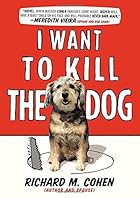
Review: I Want to Kill the Dog by Richard Cohen

Have you or one of your family members ever had a dog that was just rotten?  And yet you loved that furry beast anyway?  Richard Cohen has that dog but he doesn't actually love his dog, make that his family's dog.  He really wants the dog to disappear.  He tolerates current dog Jasper and tolerated past canine family members because his wife, Meredith Vieira, is a huge animal lover.  In order to get out his feelings about the mutts that inhabit his home and form a mutual admiration society with his wife, Cohen has written the pet memoir I Want to Kill the Dog.

Obviously tongue in cheek and meant to be humorous, this small book is the antithesis of the many dog (or other pet) adoration tales which abound on bookstore shelves right now.  The problem is not that Cohen doesn't love the dogs that Vieira brings home.  The problem is that he's actually fairly humorless about why he doesn't and his reasons are not varied and many but limited and repetitious.  Whether he actively dislikes the dogs in their life or not, he supports Vieira's great desire to acquire pets even when her desire is irresponsible towards another living creature (the dog itself) and its acquisition is certainly not a mutual decision.  Of course, he glories in the animals that have had to be returned or given away, feeling that this failure to integrate the dogs into their lives validates his dislike of the creatures and legitimately explains and excuses his lack of understanding for his wife's critter obsession.  Instead, this attitude makes him seem to be an uncaring jerk.

Now, I certainly think that even dog lovers (and yes, I am one myself) could have appreciated and laughed at a book that poked fun at crazy critter people and the dogs in their lives.  My own dogs are certainly not perfect and they might, just maybe, drive my husband absolutely batty but this book did not turn out to be the entertaining and funny at all.  The writing was pedestrian and simplistic.  Cohen comes off badly and his portrayal of Vieira is as a dingbat.  The biggest redeeming feature here was that the book was short, the margins are wide, and the spacing between lines is enormous.  On second thought, for the price of the book, that makes for another big negative.  Perhaps others will enjoy this far more than I did.  For me, it was a disappointment all the way around.

Friday, January 4, 2013

Review: Parlor Games by Maryka Biaggio

Is Baroness May de Vries really, as the Pinkerton Agency dubbed her, The Most Dangerous Woman in the World, a con-artist and swindler of the first degree or is she simply a successful gold-digger unjustly accused and hounded by the famous agency?  Based on an actual historical figure, Maryka Biaggio's novel Parlor Games brings this fascinating, opportunistic, and possibly criminal woman to life.  When the novel opens, she is standing trial for extortion in her hometown of Menominee, Michigan.  The charges are not being brought against her by one of her many inamoratos but instead by a female friend, Miss Frank Slater, who is accusing May of running through Frank's entire inheritance and then dropping her like a hot potato once the money was gone.  How will the jury rule when faced with this glamorous, titled, once native daughter and the facts of the case?
 
Born May Dugas, to a tavern keeper and a seamstress, she's spent her life striving for the good and easy life, reaching for wealth and expensive baubles, champagne and caviar, European travels and the men who would provide the niceties for her, always looking for the bigger, better, wealthier sugar daddy. As the novel opens, she confidently declares that she intends to tell her story to the reader, certain that we readers will exonerate her from any wrongdoing whatsoever. Alternating between the testimony of the two week long trial and the events of her entire 48 years, May tells her story her way in both parts of this double-stranded narrative.  As she tells her tale though, it becomes quickly and eminently clear that she is the epitome of an unreliable narrator.  She blows through men, drawn only to the wealthiest in any given milieu starting with the son ofone of Menominee's first families whom she tells she's pregnant to the son of the wealthy Chicago family which first exposes her unscrupulous behaviour to the Pinkerton Agency to her Dutch Baron husband and many other men besides. 
 
After her false pregnancy, she turns to high class prostitution to earn a living, thinking only of sex as a means to an end.  Because May is incredibly resourceful and crafty, she parlays the gifts from her clients into a facade of money and finagles her way into high society, where she uses her abundant charm and sexuality to entrap young men of money into gifts, promises, and engagements.  Trailed by Pinkerton detective Reed Dougherty across multiple continents and through many different countries, May continues her pattern of reeling in a wealthy paramour and extracting favors and money before being driven ever onward by Dougherty.  She is aided in her adventures and travels by a competent and thorough companion, Daisy Emmett.  But when she uses Miss Frank Shaver to fund her extravagances, she might have met her match.  May's contention to the reader is that she is truly driven by love or affection for these boys and men and that it is only the unearned haranguing and harrassing by the Pinkerton detective that causes her to move on.
 
May tells her story in a positively charming and chatty manner, always careful to suggest that while she was certainly interested in money and living a good life, that she was driven by the need to support her widowed mother, shiftless but handsome and engaging younger brother, and her stolid and unimaginative older brother.  She embellishes and paints herself completely sympathetically in her telling of her own exploits, playing up her family responsibilities and the inexplicable ways in which men shower her with things out of their own initiative.  Despite the fact that she comes across as quite conscienceless and self-centered, she is still eminently appealing to the reader.  As the end of the book and the trial draw near, it is almost impossible to escape racing through the final pages to find out the outcome.    If the end is completely riveting, the beginning is a bit slow going with the constant back and forth from the trial to May's early life making it difficult initially to settle into the story.  The scandals left in May's wake are not particularly unique as she perpetrated the same thing time after time after time but it is interesting to see how many people she took in over a twenty or so year span and how events conspired to keep her untouchable for so long.  Over all, this was a very enjoyable read, well-written and entertaining.  Fans of historical fiction certainly will thrill to a ride through May Dugas' busy and chic life.
 
Thanks to the publisher for sending me a copy of this book for review.

Thursday, January 3, 2013

Review: Three Men in a Boat by Jerome K. Jerome

I have long had this book sitting on my shelf.  Actually, it's been sitting on the "recommended for a laugh" shelf for years now.  And I scraped a price tag off of it that tells me I bought it way back in 2001.  So for an appallingly long time, I haven't touched a book that came highly recommended, about which I occasionally hear very positive things even from people not inclined to read a whole lot.  I don't know whether I was afraid it wouldn't live up to everything I'd heard or what exactly had slowed me down from reading it, but I have to say to anyone else out there with Jerome K. Jerome's Three Men in a Boat sitting neglected on a shelf: take it down and settle in to a very enjoyable read, one that will make you smile and chuckle and even break out into a full fledged laugh that will make others in public look at you strangely and move their seats as far from you as possible.

Written in 1889, this novel is an hilarious travel narrative peppered with small amounts of English history.  Jerome, two of his equally hypochondriac friends, and Montmorency, a fox terrier, decide to scull up the river Thames for a fortnight.  They are looking for a bit of a rest from their apparently strenuous lives, lives the reader soon discovers are mostly indolent and non-taxing in the extreme.  The fresh air will certainly cure them of their imagined ills.  And so they head off on their boating holiday.  As they row upriver, Jerome takes the opportunity to tell brief bits of important (and sometimes not so important) history that occurred in the towns on the banks of the river.  But in and amongst these serious pieces of information, he also chronicles the misadventures of their inept, bumbling, and lackadaisical trio using the sort of ascerbic and dry wit that is a hallmark of a certain kind of British humor.  From J., George, and Harris's slapstick occurrences on this present trip to flashbacks of previous trips and completely tangential but hysterically funny stories (I defy you to read about the stinky cheese without worrying you're going to wet your pants laughing), the tale is entertaining and, despite its age, completely accessible.  The three main characters are irritable and crotchety, averse to hard work, goofy, and yet incredibly adroit at telling appealing and laugh-inducing tall tales.  Their teasing and good natured interactions with each other, despite all the bollocksing up they do is delightful and the humor is ultimately self-effacing, gentle, and wonderful.  The book, designed to be a travelogue rather than a plot-driven read, is pleasant, funny, and marvelous and now that I know what a small gem I have on my shelf, I fully intend to take it down and enjoy it again and again.

Wednesday, January 2, 2013

Review: His Mistress by Christmas by Victoria Alexander

Widowed Lady Veronica Smithson and famous explorer and lady's man Sir Sebastian Hadley-Attwater are at cross-purposes.  Veronica has been widowed for several years and she misses physical companionship.  While she misses the sex, she is uninterested in getting married again, afraid of losing her independence and having to conform to a husband's rules, not that her first husband restricted her in any way.  Sebastian, despite his reputation as a rake, is eminently ready to give up his globe-trotting, marry, and settle down.  And he's certain that the enticing Veronica is the woman for him.  Veronica, meanwhile, is certain that the handsome, intelligent, and roguish Sebastian will be the perfect lover for her.  It's not often in a romance that the heroine wants an affair and the hero wants marriage but this latest Victorian set historical romance of Victoria Alexander's has just this very unusual situation.

Both Veronica and Sebastian are very determined to make the other see sense and fall in with the plans they each seperately espouse.  With a view to convincing the other than their own plan is the smartest, the two of them retire to Sebastian's newly purchased country home just before Christmas.  Veronica is determined to seduce Sebastian while there and he's intent on making her his wife.  If it was just a tale of these two, the story wouldn't be nearly as entertaining as it is though.  Before they leave town, Sebastian, certain that no woman will hold out against his proposal of marriage for long, tells his sisters of his plans to marry.  And so, citing the fact that it has been years since Sebastian has been home for the holidays, his entire family descends on his home where he and Veronica are now faced with utter chaos, the question of how to behave, and a charade.  This leads to some very humorous situations.  And things get even more complicated when Veronica's father, batty grandmother, and quite feminist aunt, who raised her after the early death of her mother, also arrive at Sebastian's home having heard the rumor of Veronica marrying again.

There is a lot of witty banter here but not as much "can't keep their hands off of each other" lust as might be expected, especially given that the heroine is no virginal miss.  The initial attraction is rather rushed but if it then developed into a believable enduring love, that would be fine.  As it is though, there's no real display of what makes Veronica and Sebastian love each other and that's too bad.  The novel is an entertaining and unusual romance and the by-play between the characters is enjoyable even if the chemistry is a little on the low side and the final misunderstanding that threatens to drive them apart is ridiculous.  Romance readers will, on the whole, find this a reasonably fun, quick read.

Waiting on Wednesday

This meme is hosted by Breaking the Spine and is meant to highlight some great pre-publication books we all can't wait to get our grubby little mitts on.

Jujitsu Rabbi and the Godless Blonde by Rebecca Dana. The book is being released by Amy Einhorn Books on Jan. 24, 2013.

Amazon says this about the book: The ultimate fish-out-of-water tale . . .

A child who never quite fit in, Rebecca Dana worshipped at the altar of Truman Capote and Nora Ephron, dreaming of one day ditching Pittsburgh and moving to New York, her Jerusalem. After graduating from college, she made her way to the city to begin her destiny. For a time, life turned out exactly as she’d planned: glamorous parties; beautiful people; the perfect job, apartment, and man. But when it all came crashing down, she found herself catapulted into another world. She moves into Brooklyn’s enormous Lubavitch community, and lives with Cosmo, a thirty-year-old Russian rabbi who practices jujitsu on the side.

While Cosmo, disenchanted with Orthodoxy, flirts with leaving the community, Rebecca faces the fact that her religion—the books, magazines, TV shows, and movies that made New York seem like salvation—has also failed her. As she shuttles between the world of religious extremism and the world of secular excess, Rebecca goes on a search for meaning.

Trenchantly observant, entertaining as hell, a mix of Shalom Auslander and The Odd Couple, Jujitsu Rabbi and the Godless Blonde is a thought-provoking coming-of-age story for the twenty-first century.

Popular Posts