Friday, November 2, 2012

Review: Valeria's Last Stand by Marc Fitten

Some people don't like change.  Some are so averse to it that it infects their characters, making them crochety, bitter, and unpleasant.  We use the names of these sorts of people as insults: troglodytes, Luddites, and more.  But even when we are resistant to change, it comes into all of our lives whether we invite it in and embrace it or not.  In Marc Fitten's novel Valeria's Last Stand, there is an entire Hungarian village being modernized at seemingly warp speed but there's also a grumpy, grouchy older woman, the eponymous Valeria, who, because life has not gone the way she wanted, refuses to concede anything to progress until she finds herself falling in love late in life and having to bend and adapt if she wants to have a chance of finally living the life she has long desired.

Set in a small town in Hungary post-Communism, this novel captures provincial life and the assorted characters who populate this place forgotten by progress and innovation.  Now that the people and the town have access to modern conveniences, the mayor is determined haul their little corner of the world into the twenty-first century.  No one is a bigger symbol of the insularity and aversion to change than curmudgeonly Valeria who has been taking her own bad mood out on the other villagers for 40 years.  She is a thoroughly grumpy woman, contemptuous of everyone around her.  But when she spies the village potter making a purchase at the market, she falls for him and has to revamp herself as appealing and desirable, especially since the potter is already involved with the rather buxom, Ibolya, the local bar keep.  The love triangle is comical, and made even more so by the arrival of the itinerant chimney sweep to make it a love square.  But there are very serious issues in play in the novel as well: progress simply for progress' sake, xenophobia, insularity, love, change and adaptation.  It's a unique and unusual comedy of manners really, although threaded with some appalling violence and mob mentality.

The novel is well written and deadpan.  The characters are not entirely likable but they are all the more human for their faults and weaknesses.  Positing a dumpy, cranky sexagenarian as a love-struck muse for the potter is pure genius and the convoluted relationships between the main characters are reminiscent of the theater.  This could definitely be successfully staged.  Valeria as a symbol of the closed and resistant village is well conceived and executed and her slow growth and change, a willingness to open herself up and expose herself to both the positive and the negative, renders this a readable and delightful allegory.

Thanks to LibraryThing Early Reviewers for sending me a copy of the book for review.

Wednesday, October 31, 2012

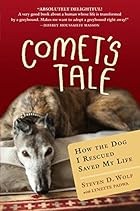
Review: Comet's Tale by Steven Wolf with Lynette Padma

Animal lovers know that animals can sometimes, inexplicably, instantly, sense a need in us that we may not even be aware of and can place themselves inside that hole in our lives, saving us, comforting us, and loving us.  Comet's Tale is the story of one such special dog, a greyhound rescue who offered love and trust and that undefinable everything that make our animals truly angels on earth and prove the cliche that they save us more than we ever save them.

Steven Wolf was a successful and driven attorney in a happy marriage who had a good relationship with his daughters when the debilitating and degenerative spinal condition that he had been diagnosed with decades prior finally drove him into early retirement, forced him to move from Nebraska to Arizona for the climate, strained his marriage almost to the breaking point, alienated his daughters, and crippled not only his body but his spirit.  The only thing that got him through the darkest days was the love of a dog who had herself almost been broken by cruelty and neglect.  Wolf was lucky enough to have been chosen by Comet, a rescued greyhound who maintained a steady presence and radiated love and care for him no matter how low he got.

The story opens with Wolf meeting Comet for the first time and the two of them choosing each other beyond a shadow of a doubt.  Then it goes back in time to tell the tale of how Wolf ended up at the ranch with the rescued greyhouds, proceeding through Wolf's gentle teaching and socialization of Comet, their relationship together, Comet learning to be a service dog for Wolf, and eventually to her happy, spoiled retirement.  Wolf educates the reader on the historical background of the greyhound breed, the terrible and inhumane reality of current day dog racing conditions, and the great need for rescues for these gentle dogs.  He also pulls no punches when discussing the reality of living in chronic pain and the emotional toll it takes not only on the person suffering but all those who love him as well.  He chronicles the cost of his move from Nebraska to Arizona in terms of his relationship with his wife and his almost grown daughters and he shares the depths of his own depression and anger at his body and the situation.

Wolf's love for Comet shines through their story and there are many memorable moments between man and dog that exemplify why so many of us in the world would think our families incomplete without a dog or two.  There are also some wonderfully humorous moments captured here.  And Comet's unique personality is shown beautifully.  The stress and uncertainty of living with a progressive disability and the ignorance and prejudice shown towards those with disabilities is also well handled.  There is a bit of repetition in the book, perhaps caused by the non-linearity and final construction of the text but in general, this is an inspiring and special tale that dog lovers will enjoy.

Thanks to the publisher for sending me a copy of this book for review.

Waiting on Wednesday

This meme is hosted by Breaking the Spine and is meant to highlight some great pre-publication books we all can't wait to get our grubby little mitts on.

Memoir of a Sunday Brunch by Julia Pandl. The book is being released by Algonquin on Nov. 13, 2012.

Amazon says this about the book: For Julia Pandl, the rite of passage into young-adulthood included mandatory service at her family’s restaurant, where she watched as her father—who was also the chef—ruled with the strictness of a drill sergeant.

At age twelve, Julie was initiated into the rite of the Sunday brunch, a weekly madhouse at her father’s Milwaukee-based restaurant, where she and her eight older siblings before her did service in a situation of controlled chaos, learning the ropes of the family business and, more important, learning life lessons that would shape them for all the years to come. In her wry memoir, she looks back on those formative years, a time not just of growing up but, ultimately, of becoming a source of strength and support as the world her father knew began to change into a tougher, less welcoming place.

Part coming-of-age story a` la The Tender Bar, part win- dow into the mysteries of the restaurant business a` la Kitchen Confidential, Julie Pandl provides tender wisdom about the bonds between fathers and daughters and about the simple pleasures that lie in the daily ritual of breaking bread. This honest and exuberant memoir marks the debut of a writer who discovers that humor exists in even the smallest details of our lives and that the biggest moments we ever experience can happen behind the pancake station at the Sunday brunch.

Tuesday, October 30, 2012

Review: My Scandalous Viscount by Gaelen Foley

What happens when a devilishly good-looking spy masquerading as a womanizing rakehell of very little conscience and a "lady of information" aka gossip find themselves attracted to each other, in a compromising situation, and obligated to marry?  You end up with a Regency-set historical romance about some seriously nosy people getting into difficulties, using intelligence, learning to trust each other, and realizing that their obligation to marry landed them each with the perfect mate like in My Scandalous Viscount, Gaelen Foley's fifth installment of her Inferno Club series.

Carissa Portland is attracted to Sebastian, Viscount Beauchamp against her better judgement.  She knows that he has few, if any, morals and yet she cannot stop the frisson of excitement she feels for him.  One night at the opera, she spies him exchanging notes to arrange an assignation but she also witnesses another man tamper with the Beau's reply to his paramour.  Thinking to warn him out of danger, she tries to intervene for his protection but she's injured in the process.  Beau wants to keep a distance between himself and the enticingly nosy lady of information for many reasons, not least of which is that he's a member of the notorious Inferno Club, which is the cover for a clandestine spy agency in the service of the crown.  But when Carissa is injured, he unthinkingly takes her to the club to tend to her wounds, leaving her alone long enough for her to snoop her way into possession of very classified information.  Both her newfound knowledge and her presence at the club make it imperative that Beau marry Carissa, protecting her good name and his secrets in one fell swoop.

Carissa's stumbling into the secret of the Inferno Club would be bad enough on its own but the club is also under investigation by the government, an investigation led by a hostile man with Jacobite ties.  Foley has done a very good job incorporating greater history into this romance through this situation.  The book, although mid-series, stands on its own quite well with just enough of the backstory mentioned to connect it to previous books but also to explain what led up to the events here without baffling newer readers or boring established readers.  Carissa and Beau and their growing relationship are interesting and fully described without resorting to stock characters or scenes.  There is an immediate sexual spark between them and they do not spend pages denying their attraction even once their marriage is inevitable.  The secrets they conceal from the other are substantial but their reluctance to trust and share these secrets is understandable and realistic.  All in all, a romance that sucks the reader in, presents them with an enticing mystery, and then makes the uncovering of the truth tense and unexpected as the main characters must learn to work in tandem on the way to their happily ever after.

For more information about Gaelen Foley and the book visit her web page or Facebook page. Follow the rest of the blog tour or look at the amazon reviews for others' thoughts and opinions on the book.

Thanks to Trish from TLC Book Tours and the publisher for sending me a copy of this book to review.

Monday, October 29, 2012

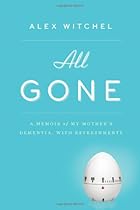
Review: All Gone by Alex Witchel

You count on your mom to always be there for you.  Even when you're an adult, you count on her remaining the person who once upon a time tucked you in at night, kissed away boo-boos, made your favorite dinner for your birthday, and celebrated all your accomplishments small or large.  But when that mom starts to disappear into the smothering fog of dementia, you have to mourn the loss of the bed-tucking, boo-boo-kissing, dinner-cooking, celebratory mom long before she is actually gone.  Alex Witchel's brief memoir All Gone: A Memoir of My Mother's Dementia, With Refreshments chronicles the painful way in which an adult child has to say goodbye to the mom of memory long before time and the way in which, even though that mom is trapped inside the malfunctioning synapses of her own brain, Witchel can still keep her close in her heart and in her kitchen.
 
Written non-linearly, this memoir deals with the present day tasks of taking care of an aging and ill parent, memories of Witchel's childhood, and a few recipes that she remembers her mother cooking.  While the three are connected, they are not necessarily integrated together well.  Witchel's initial denial, sorrowful acceptance, and frustration with the disease claiming her mother's past, present, and even her very personality is presented honestly and bare of embellishment.  The portion of the memoir dealing with the slow slide of her mother's disappearance into dementia is the most poignant, best written of the memoir.  The portions of Witchel's childhood are occasionally instructive of her relationship with her mother but often that connection is hard to make and so the bouncing between childhood and the present can feel disjointed. 
 
The third bit of the book, and one that I expected, given the subtitle, to take more precedence deals with Witchel cooking the recipes she remembers her mother making, finding comfort in the comfort food of their family.  While we all have a visceral connection to the food of our childhood, it seemed an odd way for her to conjure up the mother of her youth given that her mother seemingly didn't like to cook.  Her recipes feel as if they were all culled from newspaper columns or magazine aimed at the "new working woman" and the convenience that she would desire in facing dinnertime after putting in a full day at the office, not as if they were treasured family recipes.  And often the recipes are plunked at the end of the chapters with little or no tie to the content of the chapter.  As a concept, the connection of food with memories of childhood and the present reality of a mother shrouded in dementia is a natural one and there are moments when Witchel gets it right.  Unfortunately, there were more moments for me where she doesn't quite get there.

Thanks to LibraryThing Early Reviewers for sending me a copy of the book to review.

It's Monday! What Are You Reading?

Another dismal reviewing week (a mere trio of reviews) and an equally dismal reading week with one a pair of books completed.  At least I'm almost completely officially finished helping the 5th grader with the hideous Heritage Project that requires much more mom homework than I think is acceptable.  (OK, truth telling here: I think *any* mom homework is too much so this project goes beyond the pale.)  After all, I've been through 5th grade before and did very well at it thank-you very much.  I don't need to prove that I am smarter than a 5th grader.  I know I am.  This meme is hosted by Sheila at Book Journey.

Books I completed this past week are:

The Little Bookstore of Big Stone Gap by Wendy Welch
The Summer Before the Storm by Gabriele Wills

Bookmarks are still living in the middle of:

Let the Great World Spin by Colm McCann
The Blue Notebook by James Levine

Reviews posted this week:

Lola's Secret by Monica McInerney
The Dovekeepers by Alice Hoffman
In Need of a Good Wife by Kelly O'Connor McNees

Books still needing to have reviews written (as opposed to the ones that are simply awaiting posting):

All Gone by Alex Witchel
Abdication by Juliet Nicolson
Triangles by Ellen Hopkins
How to Capture a Countess by Karen Hawkins
Is Everyone Hanging Out Without Me? by Mindy Kaling
A Rural Affair by Catherine Alliott
Jane's Fame by Claire Harman
Comet's Tale by Steven Wolf with Lynette Padwa
What You Wish For by Kerry Reichs
The Casual Vacancy by J.K. Rowling
The Wilder Life by Wendy McClure
In the Sanctuary of Outcasts by Neil White
Losing My Sister by Judy Goldman
Jana Bibi's Excellent Fortunes by Betsy Woodman
My Scandalous Viscount by Gaelen Foley
Just Kids by Patti Smith
Forgotten by Catherine McKenzie
Heading Out to Wonderful by Robert Goolrick
The Little Bookstore of Big Stone Gap by Wendy Welch
The Summer Before the Storm by Gabriele Wills

Monday Mailbox

I can't even begin to tell you how giddy I am by the treasures that magically appeared at my house this past week.  Per usual, they run a very wide gamut of types of writing but they should all bring me hours of happy immersion between their covers.  This past week's mailbox arrivals:

Turning Pages by Tristi Pinkston came from the author.
A YA take on Pride and Prejudice set in a library, how could this not be appealing?
The Lighthouse Road by Peter Geye came from Unbridled Books.
I completely and totally adored Geye's first novel Safe From the Sea so much that I have not yet stopped trying to foist it on every reader I can find even two years later so I have been eagerly anticipating this newest novel set outside Duluth about both a single young immigrant woman in the 1890's and her son in the early 1920's.
Parlor Games by Maryka Biaggio came from Doubleday.
A novel loosely based on a real life con artist who insinuates her way into high society and who travels the globe closely trailed by a Pinkerton detective, this sounds like it will be a marvelous ride through impressive schemes and capers.

Moranthology by Caitlin Moran came from Harper Perennial.
A collection of columns from Moran, who is billed as an hilarious comic writer, I'm looking forward to some good laughs.

As always, if you'd like to see the marvelous goodies in other people's mailboxes, make sure to visit Monday Mailbox as she is hosting this month's Mailbox Monday and have fun seeing how we are all doing our part to keep the USPS and delivery services viable.

Popular Posts