Tuesday, February 11, 2014

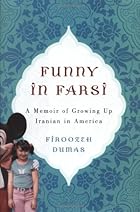
Review: Funny in Farsi by Firoozeh Dumas

My high school aged daughter had to read this book this year for her English class. When she first brought the class syllabus home, I noticed that I had read most of her required reading myself and generally enjoyed it. This title, though, was one of the few I hadn't already read although I certainly owned it. So I made a point of pulling it off my shelf and reading it before my daughter did. Dumas' memoir about being Iranian in America, growing up as not one thing or another but a sort of hybrid who feels out of place is funny and entertaining but thoughtful and insightful as well.

Dumas' family emigrated to the US for her father's engineering job in the early 1970s, when very few people in the US had heard of the Middle Eastern country. Told in short, funny, self-contained chapters, Dumas captures the slightly out of kilter life of an immigrant and the way that the US perception of Iranians changed after the Iranian hostage crisis and the Iranian Revolution. She focuses on life within her family, how her parents adapted (or didn't) to their new home, the cultural misunderstandings, and the ways in which they maintained ties to their familiar culture even half a world away. Covering many years, from her childhood to young adulthood and her eventual marriage to a Frenchman, Dumas' brief chapters showcase her lovable and quirky family, the kindness and the suspicion she encountered as an Iranian, and the entertaining, oftentimes self-deprecating, results of culture clash.

This slight memoir is light, filled with a sense of humor, and is, as the title promises, truly funny. Dumas recounts her relatives' quirky foibles and the ways in which they try to adjust to American culture. She recounts her memories with love and her stories highlight a universality amongst human beings no matter which part of the world they hail from and where the wind takes them. She is forgiving of the ignorance of people about her homeland and the clueless way that some people treat immigrants. Many of the chapters offer brief glimpses into life in pre-revolutionary Iran as compared to life in the US and Dumas has managed to strike a nice balance between the good and positive in each place even as she acknowledges imperfections and prejudices, offering only brief nods to the politics of the day then and now. A warm, endearing, and affectionately written memoir, this is a delightful look at difference, ethnicity, and culture.

Monday, February 10, 2014

It's Monday! What Are You Reading?

This meme is hosted by Sheila at Book Journey.

Books I completed this past week are:

When You Wish Upon a Duke by Isabella Bradford
Billy and Me by Giovanna Fletcher
This Dark Road to Mercy by Wiley Cash

Bookmarks are still living in the middle of:

Quiet by Susan Cain
The Taste of Apple Seeds by Katharina Hagena

Reviews posted this week:

Better Than Fiction edited by Don George
The Wedding Bees by Sarah-Kate Lynch
I Shall Be Near to You by Erin Lindsay McCabe
When You Wish Upon a Duke by Isabella Bradford
Billy and Me by Giovanna Fletcher

Books still needing to have reviews written (as opposed to the ones that are simply awaiting posting):

This Dark Road to Mercy by Wiley Cash

Sunday, February 9, 2014

Sunday Salon: Darn you, Algonquin Books!

I love getting the mail. I still squeal like a 5 year old on Christmas getting my first glimpse of presents whenever there's a book shaped package in my mailbox. That unopened package is just so full of potential pleasure. But there are many days when I don't get books in the mail. Most days there are just bills or junk mail, which dims the delight of a trip down the driveway. Sometimes there's something better than the bills and junk even if its not a book. Sometimes there's a real live letter from a friend or the drool-worthy goodness that slid quietly into my mailbox this past week: a catalog of a certain publisher's upcoming releases.

I have loved Algonquin Books' offerings since before I ever consciously thought about publishing as an industry. Way back when they were a fledgling independent press and I was still in high school, I looked for their unconventionally sized paperbacks on the shelves of my local bookstore whenever I scraped up enough money to go on a binge, certain that whatever they'd published would be to my liking. And it was. I still have many of those almost square books nestled on my shelves (some still unread, because, well, I've long been incapable of reading as fast I purchase--and I read rather quickly) and I still know that the Algonquin colophon on the spine (a large letter A atop a book) promises a good read. As I leafed through the latest catalog, I was heard to curse the good people at Algonquin because they have managed to put out another outrageously enticing line-up for spring and summer release and I want to request almost every book in the catalog but I don't want to seem greedy. Plus I'm afraid to overcommit and have them stop sending me my 21st century adult version of the Sears and Robuck catalog. I think I dog-eared every page, or if not, I only skipped some because I had already heard that those books were coming out and so they are already on my wish list.

I had already added the much-praised The Storied Life of A.J. Fikry to my list. And because I loved Michael Parker's The Watery Part of the World, his newest, All I Have in This World was also already on my must have list. The inimitable Lee Smith's Guests on Earth had already hit my radar and I have an old, original copy of Lewis Nordan's Music Of the Swamp (still unread) so I didn't need to turn those corners down either. But the ones I hadn't yet heard of? There are rather a lot. There are memoirs like My Accidental Jihad and The Late Starters Orchestra. There are novels like A Dangerous Age and The Third Son. There's even a collection of stories from Ellen Gilchrist called Acts of God. There's more, of course, but I wouldn't want you to miss the joy of turning the pages of your own catalog and discovering surprises for yourself. In the meantime, all I can say is, "Darn You, Algonquin Books people. There are too many good ones from which to choose. How could I only request one and not regret those I didn't get? I can't and so my bank account curses you too."

In addition to salivating over the Algonquin catalog, my reading this week took me into the new marriage of a conflicted Duke and his young Duchess; it took me along as an introverted woman fell in love with a actor on the fast track to fame; and I rode along with a father who kidnapped his daughters as they raced to stay ahead of a hit man and the girls' guardian ad litem. Where did your reading take you this past week?

Saturday, February 8, 2014

Review: Billy and Me by Giovanna Fletcher

Have you ever wanted to be famous? Or maybe you'd just like to be in the orbit of someone famous. It looks like a glamorous life with all those perks and parties and people wanting to be you, doesn't it? But there is a price to celebrity and it's not an easy price to pay, especially for someone not used to the spotlight, the manipulation, the egos, and the all-consuming drive for publicity and career advancement. How can you possibly build a normal, healthy relationship in the midst of all of this? In Giovanna Fletcher's sweetly romantic novel, Billy and Me, she examines just this very situation.

Sophie May lives in the small Kent village of Rosefont Hill and works at the local tea shop. Having lost her dad at eleven, her entire world changed and she became withdrawn, quiet, and reserved. She's been content to stay at home with her mum and work at Tea-on-the-Hill with the gossipy but lovable Molly, a sort of second mother and best friend to her. This settled, quiet life suits her and has allowed her to come out of her shell a little bit. When Rosefont Hill is chosen as the location for a new film of Pride and Prejudice, Sophie meets Billy Buskin, the teen heartthrob who has been cast as Mr. Darcy. She doesn't know who he is to start and he is charmed by her very normal outlook on life. She steps out of her comfort zone and the two of them fall into a relationship quite quickly. But dating Billy brings with it a life she's never expected, with people taking pictures of her and digging into the past she's buried so deeply.

Billy is a sweet, warm, and caring boyfriend although he has lapses where he forgets just how his industry and the piranhas surrounding it come across to outsiders. He is blind to the slights Sophie faces and never considers if she'd want a life beyond just as Billy Buskin's girlfriend. As his star continues to rise, Sophie sublimates herself to him and his career, growing steadily more miserable. Their relationship was a whirlwind affair with Billy sweeping Sophie off her feet and away from her comfortable life in Kent but neither of them gave enough thought to the long term implications of their very different worlds. And those implications grow from bumps in the relationship to mountains they might not be able to climb.

This is a simple and charming bit of chick lit with the added bonus of a thorough insider's view of life in the film industry and the pressures that fame and the public eye place on relationships. Told in the first person by Sophie, the reader is privy to her feelings of exclusion and growing realization that she's shelved her dream of one day buying Molly out of her tea shop in order to be the accommodating girlfriend of a star. Billy does come across as oblivious to Sophie's need for a quiet life once he's tucked her into his busy existence but Sophie's sensitivity to things that are just a part and parcel of his job can be a tad over the top.  Many of the descriptions were very much like a screenplay directing actors what to do and how to look so less necessary here in the written medium of a novel than in something designed to be translated to screen. In terms of one of the climactic moment of the novel, well Sophie's big secret, the one she didn't want anyone to know, wasn't really surprising or even of a magnitude to create such shame so many years on. But these are little hiccups in a generally pleasing novel that lovers of chick lit will find to be a quick and delightful read about being true to yourself and being open to love and the hard work of caring deeply for another person.

Thanks to the publisher for sending me a copy of this book for review.

Friday, February 7, 2014

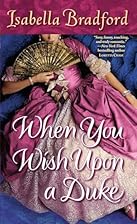
Review: When You Wish Upon a Duke by Isabella Bradford

Although the concept of the "angel in the house" refers to the Victorian ideal of a wife, the attributes recognized and lauded in such a paragon were espoused and looked for by men long before the label came into being. Isabella Bradford's Georgian set historical romance, When You Wish Upon a Duke, plays with both the idea of the proper angel in the house and the angel's counterpart in the bedroom.

Lady Charlotte Wylder is the eldest daughter of an Earl but she, her sisters, and her mother have lived in a remote house in Dorset since her father's early death. She has been able to grow up far from the strictures of proper society, running a bit wild and climbing trees. She vaguely remembers the deep and abiding love between her parents and on the rare occasions she thinks of her future, she hopes to find that too. When a solicitor arrives at Ransom Manor, Lady Charlotte discovers that her future has long been settled and now all she must do is to meet it. Her father and the late Duke of Marchbourne agreed to the marriage of their children when Charlotte was an infant and March, the current Duke, was all of eight. The impetuous, impulsive, but engaging Charlotte will be a Duchess, with all the propriety that entails.

The Duke of Marchebourne is a model of comportment. He is a bit of a stickler for appearance because he still suffers from the stain of his family's history. The first Duke of Marchbourne was the illegitimate son of the King and an actress. And March's father was an unrepentant and rapacious womanizer. So March does everything in his power to maintain decorum and bely not only his base origins but to not avoid behaving like his father. But even the proper March cannot wait until the officially set introduction to meet his prospective bride. Riding to intercept her carriage, he discovers his future wife high in the branches of a tree, rescuing her sister's cat, not exactly the place a future Duchess should be.  March, misunderstanding the situation, climbs into the tree himself to rescue Charlotte and finds himself captivated by and definitely attracted to his future bride. From this unconventional meeting, blossoms a lusty courtship and a quick marriage. It is only after their marriage that March and Charlotte face struggles about how to behave both publically and privately with each other. And when each of them seeks advice about their difficulties, what they are told is all wrong.

Charlotte wants to behave with the decorum expected of a Duchess and a lady but privately she is unsatisfied and unhappy. March is worried that he is treating his young, eager to please wife like a lowborn whore rather than the angel in the house. And neither of them can bear to discuss their worries or desires with the other, leading to most of their misunderstandings and low level misery. The conflict between them is slight and they slide fairly easily from arranged marriage into an honest love for each other, so Bradford adds in a baddie and a not entirely necessary plot twist to create more tension between Charlotte and March.

The historical context here is wonderful and knowledgeably detailed. The internal struggle March faces seems to go on a bit long and it is hard to believe that his mentor, Brecon, was once married given the advice he offers his uncertain friend. It also does seem a tad odd that Charlotte is not comfortable talking about sex and pleasure with her husband but will approach her strict and proper Aunt Sophronia, with whom she has not previously had any relationship, to find answers. Quibbles aside, it was interesting to read a romance where the main characters not only liked each other from the start, had a sexual spark (or conflagration), but were also determined to be happy together and love each other rather than constantly sparring.

Thursday, February 6, 2014

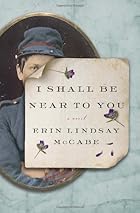
Review: I Shall Be Near to You by Erin Lindsay McCabe

Perhaps you're aware of the fact that during the Civil War, brother fought against brother. You probably also knew that boys falsified their age in order to go off and fight. But did you know that women also fought in the Civil War, disguising themselves as men in order to fight alongside fathers, brothers, husbands? Well, they did. And we know this because of the letters they sent home to loved ones. In Erin Lindsay McCabe's debut novel, I Shall Be Near to You, she has imagined what drove one woman to fight for the Union Army.

Rosetta Edwards has never felt terribly compelled to act the way a girl is expected to act. She's always preferred farm work with her father to parlor work with her mother. She'd rather be out of doors in nature than trapped inside with mending, and she's always trying to fill the gap her father feels as a result of having no sons. Although she may not meet the usual standards of young women in her small New York community, being mocked and shunned by the conventional girls, including her younger sister, for her less feminine pursuits, she is not willing to be forced into the constraints of her sex.

When the love of her life, Jeremiah, decides, with a group of friends, to join up with the Union Army, she is furious. He promises that he is simply joining to earn the $150 enlistment bonus so that when he gets back from the war, he and Rosetta will have the money to head west and buy their own farm. Insisting that Jeremiah marry her before he heads out, Rosetta comes up hard against the chafing expectations for women once more when Jeremiah leaves. As unwilling to knuckle under to convention as a wife and daughter-in-law as she had been as a daughter, Rosetta makes the drastic decision to cut off her abundant hair and disguise herself as a young man in order to follow Jeremiah and join up with the army herself.

Going by the name Ross Stone, Rosetta does find Jeremiah and the boys from her home town. But they are not pleased to see her, only grudgingly willing to keep her secret and allow her to stay with them through training. Both Rosetta and Jeremiah struggle with her decision, what that means for them as a couple, and how far either of them are willing to carry her charade. And when they start to see fighting, they are forced to confront their own mortality and the fact that no future is ever guaranteed.

McCabe has used the real life experiences of women brave enough to go to war to great effect in creating Rosetta, a woman who knows her heart and happiness depend on her being close to Jeremiah, not waiting at home for news of him and pretending to be the dutiful daughter-in-law. Her stubbornness, determination, and her doubts as well are very realistically drawn. Jeremiah's dismay at his new wife's arrival in the camp is also well done. And the way they have to come to terms with both of their needs and wants, both shared and in opposition to the others', during this horrific and monumental time intensifies their feelings. While they do love each other, they also hurt each other, have disagreements, and treat each other carelessly at times, which makes their relationship very realistic. McCabe doesn't minimize the appalling horrors of the war and she doesn't spare her characters either, forcing them to see the waste and destruction, the devastating loss of life, and the unnecessary and brutal suffering that war creates. There are a few small bits that seem anachronistic but in general this is a well researched and well written historical look at the women of the Civil War.

Thanks to the publisher for sending me a copy of this book for review.

Wednesday, February 5, 2014

Review: The Wedding Bees by Sarah-Kate Lynch

I first discovered Sarah-Kate Lynch when I read Blessed Are the Cheesemakers many years ago. That was a book that left me with a smile on my face and a good and contented feeling in my heart. So I was eager to pick up her latest novel, The Wedding Bees.  And I'm happy to say that Lynch has written another charming and whimsical novel of finding yourself, opening your heart, and loving.

Sugar Wallace is a good and cheerful soul who cares about everyone around her, striving to make their lives happier and better. She's not a saccharine Pollyanna, just the caring, giving kind of person who is a pleasure to be around. But Sugar can't seem to lighten her own heart as she moves hither, thither, and yon around the country every year, never putting down roots, forever fleeing her past. Each year, Sugar, who fled her native Charleston so many years ago, severing ties with everyone she loved, takes the queen from her bee colony, places her on a map, and moves wherever the queen stops. This year, Sugar and the bees have landed in Alphabet City in Manhattan in an apartment building filled with eccentric, quirky, and emotionally battered folks.

The very day that Sugar moves in, she meets George, an elderly man she initially assumes is homeless, and Theo, the cell phone absorbed, Hawaiian shirt wearing man George stumbles into. Immediately intervening to make sure that George is not injured, Sugar makes her first friend and, although she doesn't know it yet, meets her fate. Her highly attuned bees can tell that something has happened though as Sugar settles in, has George (who is not homeless but just feeling useless) instated as the building's honorary doorman, and meets the rest of her neighbors: fragile, anorexic Ruby; excruciatingly shy Nate, who is a talented chef; single mom Lola trying to make ends meet and to do the right thing for her small colicky boy; Mrs. Keschl, a cantankerous old woman; and her counterpart with whom she has an ongoing feud, the crotchety, complaining Mr. McNally. Sugar fits into this odd assortment of people and slowly and quietly helps them to see the goodness in each other and in humanity. And just as each of them finds sanctuary in the genuine caring warmth of Sugar's friendship, they each play a part in helping her to accept her own past and to move forward into a bright and honeyed future.

This is a gently romantic and magical novel about helping the lost, treating others with respect and love, and moving past hurts to embrace all of the wonderful possibilities out there. Sugar is a lovely character and her ability to find the goodness in everyone who comes into her life is truly a gift. She has her own demons and has to find the courage to face them but with a little assist from friends who care and bees who can feel her destiny in every quiver of their bodies, she'll find the happiness with which she has blessed so many others. The secondary characters are enjoyable in their own rights and their growing care for Sugar is splendid to read. Sweet, enchanting, and fanciful, for readers who want to read a novel with a smile on their faces, this ray of sunshine, drizzle of honey, confection of a novel will fit the bill perfectly.

For more information about Sarah-Kate Lynch and the book, check out her website or her Facebook page. Follow the rest of the blog tour or look at the amazon reviews for others' thoughts and opinions on the book.

Thanks to Trish from TLC Book Tours and the publisher for sending me a copy of the book for review.

Popular Posts