Wednesday, March 9, 2016

The Crooked Heart of Mercy by Billie Livingston

None of us is perfect. We all carry burdens. But Herodotus said "But this I know: if all mankind were to take their troubles to market with the idea of exchanging them, anyone seeing what his neighbor's troubles were like would be glad to go home with his own." For most of us, that is probably true but not for all, I suspect. And I'd guess that the main characters in Billie Livingston's compelling new novel, The Crooked Heart of Mercy, would definitely choose different troubles, ones that didn't weigh on their hearts forever and so heavily.

Ben is in a psych ward. He has a head wound that he has no memory of receiving and he's deep in a dissociative state. He's psychologically numb and wants to stay that way. Maggie is trying to come back to life, at least enough to get a job and pay her rent. She's a house cleaner and takes care of senior citizens but in her first interview in a long time, she breaks down and flees the kindly and strange children's author who wants to hire her. Ben and Maggie are married but separated and it is clear that both of them are deeply broken. Narrating the story in alternating chapters, each of them tells of their unhappy and difficult pasts, the wrong choices they made to cope, and the devastating tragedy that has all but annihilated them individually and together. Just as Maggie seems to be starting to find a way to survive her grief, accepting a job with the elderly Lucy, her brother Francis, a priest, is embroiled in a scandal. Francis is gay and alcoholic and he fights against his desire for sex and liquor every day, losing more days than not. But he continues searching for God's grace despite his inability to honor his religious vows. Taken in by Maggie, he thinks he might find atonement in saving his sister and brother-in-law and their marriage.

This is a tough read; let me be up front about that. Before he landed in the psych ward, Ben drove a limo full of drunk and high people around every night. Maggie accepted prescription drugs as gifts or payment from her elderly clients. And the two of them used these drugs to escape from those things in life that were hard for them. Maggie lost her parents when she was young, living with her older brother Francis who, while he loved his sister, was too young and immature to be a parent to her. Ben's mother walked out on his father and her children and his father was an abusive addict, leaving Ben to care for his younger brother Cola, something he still tries to do even it does nothing but frustrate and annoy him. Clearly these are two people who have struggled for a long time but they found a measure of happiness and hope with each other for a brief period before terrible catastrophe shattered them. As characters they are imperfect, as are we all. They prove that grieving isn't pretty; it is desperate and painful. The first person narration allows the reader to see just how empty and despairing that Ben is and how devastated and crippled Maggie is and it offers an uncomfortable chance to climb into their skins, make the same terrible decisions they do, feel the stress and frustration their families cause them, and to experience the paralyzing guilt and heavy responsibility that their actions caused. The book is both powerful and draining as it looks at these issues and those of faith, family, the magnitude of loss, and what hope means. There is no easy redemption here, no promise of happiness, but there is putting one foot in front of the other and the acknowledgment that holding a hand as you move forward into the unknown gives you something to trust and rely on even if it can't ever remove the past.

For more information about Billie Livingston, take a look at her website or follow her on Twitter. Check out the book's Good Reads page, follow the rest of the blog tour, or look at the amazon reviews for others' thoughts and opinions on the book.

Thanks to the publisher and Trish from TLC Book Tours for sending me a copy of the book to review.

Waiting on Wednesday

This meme is hosted by Breaking the Spine and is meant to highlight some great pre-publication books we all can't wait to get our grubby little mitts on.

The Summer Before the War by Helen Simonson. The book is being released by Random House on March 22, 2016.

Amazon says this about the book: East Sussex, 1914. It is the end of England’s brief Edwardian summer, and everyone agrees that the weather has never been so beautiful. Hugh Grange, down from his medical studies, is visiting his Aunt Agatha, who lives with her husband in the small, idyllic coastal town of Rye. Agatha’s husband works in the Foreign Office, and she is certain he will ensure that the recent saber rattling over the Balkans won’t come to anything. And Agatha has more immediate concerns; she has just risked her carefully built reputation by pushing for the appointment of a woman to replace the Latin master.

When Beatrice Nash arrives with one trunk and several large crates of books, it is clear she is significantly more freethinking—and attractive—than anyone believes a Latin teacher should be. For her part, mourning the death of her beloved father, who has left her penniless, Beatrice simply wants to be left alone to pursue her teaching and writing.

But just as Beatrice comes alive to the beauty of the Sussex landscape and the colorful characters who populate Rye, the perfect summer is about to end. For despite Agatha’s reassurances, the unimaginable is coming. Soon the limits of progress, and the old ways, will be tested as this small Sussex town and its inhabitants go to war.

Monday, March 7, 2016

It's Monday! What Are You Reading?

A college visit with my daughter, followed with being sick and a lot of sleep does not add up to a good reading and reviewing kind of week for me. This meme is hosted by Kathryn at Reading Date.

Books I completed this past week are:

The Husband's Secret by Liane Moriarty
Summer at Little Beach Street Bakery by Jenny Colgan
Margaret the First by Danielle Dutton

Bookmarks are still living in the middle of:

A Little Life by Hanya Yanagihara
Reader, I Married Him edited by Tracy Chevalier

Reviews posted this week:

The Sisters of Versailles by Sally Christie
Pardonable Lies by Jacqueline Winspear
The Beginner's Goodbye by Anne Tyler

Books still needing to have reviews written (as opposed to the ones that are simply awaiting posting):

My Fat Dad by Dawn Lerman
The Ice Cream Queen of Orchard Street by Susan Jane Gilman
My Confection by Lisa Kotin
Put a Ring on It by Beth Kendrick
One Perfect Summer by Paige Toon
The Things We Keep by Sally Hepworth
The Sisters of Versailles by Sally Christie The Private Papers of Eastern Jewel by Maureen Lindley
Be Frank With Me by Julia Claiborne Johnson
American Housewife by Helen Ellis
The Crooked Heart of Mercy by Billie Livingston
The Two-Family House by Lynda Cohen Loigman
Don't Let My Baby Do Rodeo by Boris Fishman
The Husband's Secret by Liane Moriarty
Summer at Little Beach Street Bakery by Jenny Colgan
Margaret the First by Danielle Dutton

Monday Mailbox

My mailbox got to take a bit of a break this week. Just one book. This past week's mailbox arrival:

The Chosen One by Carol Lynch Williams came from my postal book club.

About a young girl growing up in a polygamous cult who loves books and wants to choose her own husband, this sounds like it could be a tough read for sure.

If you want to see the marvelous goodies in other people's mailboxes, make sure to visit Mailbox Monday and have fun seeing how we are all doing our part to keep the USPS and delivery services viable.

Saturday, March 5, 2016

Review: The Beginner's Goodbye by Anne Tyler

I remember the first time I saw a "Dummies" book. The concept seemed genius. Take an area of learning that was likely to be difficult or completely foreign for the average Joe and make it accessible and basic enough to be graspable; make it easy to learn. If I recall correctly, the books started out as a way into the new and exciting word of computer related things but because of their popularity, the success of their concept, and their immediate brand recognition, they quickly became ubiquitous as the entry level way into a whole variety of specialized areas, both technical and non-technical. And while they may seem less necessary now in a world of You Tube videos and other online tutorials, they served a real and previously untapped purpose when they came out. With them, you could learn to program a computer or build a container garden. You could learn everything you ever wanted to know about NASCAR or about anger management. They run the gamut from A to Z. Their scope was, and is, both practical and personal. But above and beyond whatever they purported to teach, there was a wealth of story in their existence. Why would someone need to consult them? What result will they lead the reader to in their pages? How will this new skill change the reader's life? In Anne Tyler's elegant novel The Beginner's Goodbye, she uses not Dummies Guides but their fictional counterpart, Beginner's Guides, to illuminate a life, a marriage, and grief.

Aaron Woolcott is a new widower. He uses his grief to hold himself aloof from others around him, including his sister Nandina. When he was a child, he suffered an illness that left him mildly disabled and he has long used his disability and frustration with what he sees as people's solicitude towards him to justify his unpleasant, often anti-social behaviour. When the novel opens, Aaron is devastated by his wife's untimely and unexpected death but it changes his curmudgeonly and prickly personality not at all. He is as unable or unwilling to accept kindness or help after Dorothy's death as he was before it. He intentionally keeps everyone at arm's length, believing that only the deceased Dorothy, practical, unfussy, and frumpy understood him. When he starts seeing her ghost, he is unsurprised by her reappearance but it prompts him to reexamine the life they lived. And it turns out that what he remembers may not be the way she saw it.

As Aaron comes to terms with his crippling loss, his sister and his co-workers at the family owned vanity press where he works at (they publish the Beginner's Guides to all sorts of things) try to offer him kindness and caring when all he wants is the space to be surly and bitter. Early on in the novel, his character comes across as distant and determined to be a martyr but he has to learn that while the grief is real and forever, the living must indeed go on living. There is no guide to get him through this terrible time in his life and Aaron chooses to stay at an emotional remove from everyone thinking that no one else can understand or appreciate the magnitude of his wrenching loss. This sort of clinical distance does keep the reader from finding Aaron an altogether appealing character, especially as his actions prove him to be rather a jerk and he starts to remember and reveal more about his marriage and his and Dorothy's roles in it. But because this is Anne Tyler, and because she's a gorgeous writer, you can't help but keep reading, wanting to know how Aaron will, in the end, learn to say goodbye to someone he might never have seen clearly in the first place, how he will go on with his life, and how he will change. The writing is spare and slow but the slow pacing serves the plot well and given the book's short length, the reader appreciates the chance to savor her time in the story. Tyler beautifully captures the loneliness and paralyzing inactivity, that fog that envelops a person after such a big loss. That she does it so well with Aaron, wounded in so many ways and not always sympathetic, is a testament to her skill here. This is an examination of life and death, perspective and change. It is quirky and wonderful.

Thursday, March 3, 2016

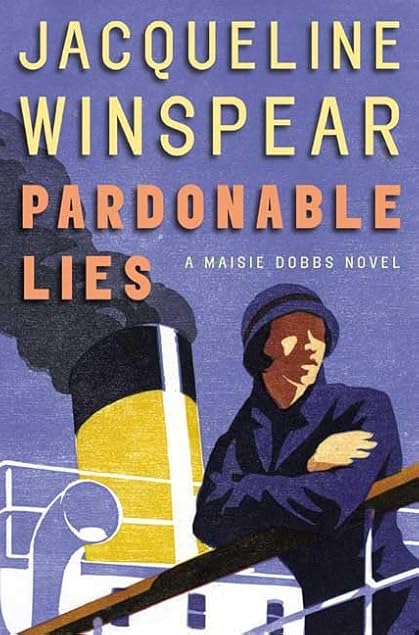
Review: Pardonable Lies by Jacqueline Winspear

War leaves no one untouched. There are the dead and their grieving families. There are the wounded, physically or emotionally, whose lives and the lives of those who love them, will never be the same again. Casualties of war are not limited to those who fought though; so many people are touched by the horrors of war. And sometimes the questions left behind are as terrible and crippling as any bullet or bomb. But some of those questions will never be answered, either because the answers just can't be known or because there's a reason why they should be kept secret forever. In Jacqueline Winspear's novel, Pardonable Lies, the third in her Maisie Dobbs series, Maisie will come head on against the grief and secrets that tear at those left behind.

In the years after World War I, when Maisie Dobbs was a field nurse, she has turned to investigations and psychology. She is a thoughtful, intuitively astute, and persistent investigator possessed of a keen intellect and despite the fact that many of the cases she takes on make her face her own painful war torn past, she is very good at what she does. In this third installment in the series, Maisie agrees to take on a case that requires her to confirm the wartime death of celebrated barrister Sir Cecil Lawton's only son Ralph. She has many misgivings about the case, especially as Sir Cecil is only pursuing this to fulfill his promise to his now deceased wife and not out of his own feelings for his son. But if Maisie takes on this case, she has the leverage to ask Sir Cecil to defend a 13 year old girl who stands accused of murdering her pimp. For young Avril's sake, she takes Lawton's case. She also agrees to look into the scant information available about her friend Priscilla's brother Peter's death to help Priscilla find some closure regarding his loss. Uncovering the truth of the loss of both young airmen will not only take Maisie back to France for the first time since the war, forcing her to face her own demons, but will put her life in danger from an enemy, and place her at cross purposes with someone she trusts and values deeply. These cases force Maisie to acknowledge her own traumas and the survivor's guilt she feels as she tentatively goes on with her life. And at least one of the cases threatens to expose people's work during the war, something that could prove dangerous as hints of another coming conflict start revealing themselves.

As in the previous two books in the series, Winspear has done a wonderful job evoking the time period and she is a master at delving into the psychological underpinnings of each character, including Maisie herself. The novel is a delicate untangling of secrets still hidden, an examination of loss and family, a look at respect and what inspires or earns it, and a sensitive portrayal of homosexuality. Each of the characters in this novel has suffered losses and it is up to Maisie to help them come through those losses wiser and more accepting, if no less sad. There is a pervading sense of sadness, an elegiac feel almost, and the aura of continued damage wrought by the war that marked an entire generation is at play throughout the course of the novel. But there's also an honorable feel to it, that decisions, even if they remained secret, made during and immediately following the war were made thoughtfully and were well considered for their inevitable effect on those left behind. This is not a traditional mystery in the sense of a body, a crime, and the need to find the murderer; instead, it is a mystery that requires diligence and deep psychological dives and I found it all the more satisfying for that. I may not generally read mysteries, but Maisie Dobbs continues to have a fan in me.

For more information about Jacqueline Winspear, take a look at her website or her Facebook author page. Check out the book's Good Reads page, follow the rest of the blog tour, or look at the amazon reviews for others' thoughts and opinions on the book. Also be certain to check out the latest book in the Maisie Dobbs series Journey to Munich.

Thanks to Trish from TLC Book Tours.

Wednesday, March 2, 2016

Waiting on Wednesday

This meme is hosted by Breaking the Spine and is meant to highlight some great pre-publication books we all can't wait to get our grubby little mitts on.

The Bad-Ass Librarians of Timbuktu by Joshua Hammer. The book is being released by Ecco on April 19, 2016.

Amazon says this about the book: To save precious centuries-old Arabic texts from Al Qaeda, a band of librarians in Timbuktu pulls off a brazen heist worthy of Ocean’s Eleven.

In the 1980s, a young adventurer and collector for a government library, Abdel Kader Haidara, journeyed across the Sahara Desert and along the Niger River, tracking down and salvaging tens of thousands of ancient Islamic and secular manuscripts that had fallen into obscurity. The Bad-Ass Librarians of Timbuktu tells the incredible story of how Haidara, a mild-mannered archivist and historian from the legendary city of Timbuktu, later became one of the world’s greatest and most brazen smugglers.

In 2012, thousands of Al Qaeda militants from northwest Africa seized control of most of Mali, including Timbuktu. They imposed Sharia law, chopped off the hands of accused thieves, stoned to death unmarried couples, and threatened to destroy the great manuscripts. As the militants tightened their control over Timbuktu, Haidara organized a dangerous operation to sneak all 350,000 volumes out of the city to the safety of southern Mali.

Over the past twenty years, journalist Joshua Hammer visited Timbuktu numerous times and is uniquely qualified to tell the story of Haidara’s heroic and ultimately successful effort to outwit Al Qaeda and preserve Mali’s—and the world’s—literary patrimony. Hammer explores the city’s manuscript heritage and offers never-before-reported details about the militants’ march into northwest Africa. But above all, The Bad-Ass Librarians of Timbuktu is an inspiring account of the victory of art and literature over extremism.

Popular Posts