Monday, March 23, 2020

Monday Mailbox

This past week's mailbox arrivals:
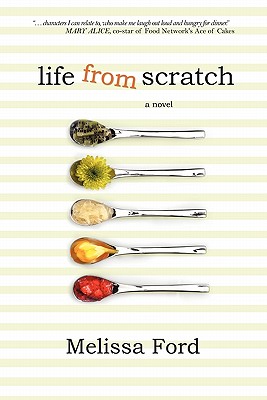
Life From Scratch by Melissa Ford came from me for myself.

Yes, I have a thing for food books. What of it? This story of a woman who starts a food blog to teach herself to cook, to vent her unhappiness, and to share her life sounds like yummy fun.
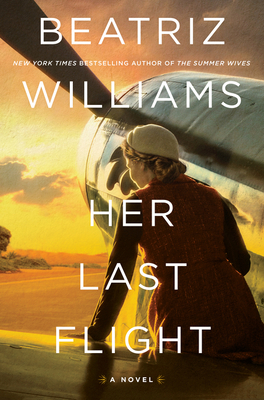
Her Last Flight by Beatriz Williams came from William Morrow and LibraryThing.

I have enjoyed Beatriz Williams' books before so I am looking forward to this one about a photographer and war correspondent researching a lost aviation pioneer and the woman she hires to help her, a woman who might have once been the disappeared aviator's student.
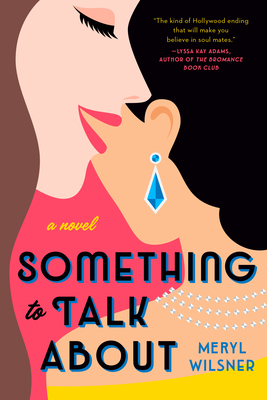
Something to Talk About by Meryl Wilsner came from Berkley.

Hollywood and rumors, what could be more delicious and escapist?

Stet by Diana Athill came from me for myself.

Athill is a beautiful writer and learning about her life as an editor should be amazing.

If you want to see the marvelous goodies in other people's mailboxes, make sure to visit Mailbox Monday and have fun seeing how we are all doing our part to keep the USPS and delivery services viable.

Wednesday, March 18, 2020

Waiting on Wednesday

This meme was hosted by Breaking the Spine and is meant to highlight some great pre-publication books we all can't wait to get our grubby little mitts on. I'm choosing to continue the tradition even though she has stopped.

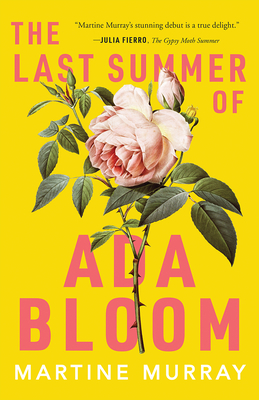
The Last Summer of Ada Bloom by Martine Murphy.

The book is being released by Tin House Books on April 7, 2020.

The book's jacket copy says: A big-hearted story of a family filled with secrets, and the ways they grow up—and apart—over the course of a single, life-altering summer.

In a small country town during one long, hot summer, the Bloom family is beginning to unravel. Martha is straining against the confines of her life, lost in regret for what might have been, when an old flame shows up. In turn, her husband Mike becomes frustrated with his increasingly distant wife. Marital secrets, new and long-hidden, start to surface—with devastating effect. And while teenagers Tilly and Ben are about to step out into the world, nine-year-old Ada is holding onto a childhood that might soon be lost to her.

When Ada discovers an abandoned well beneath a rusting windmill, she is drawn to its darkness and danger. And when she witnesses a shocking and confusing event, the well’s foreboding looms large in her mind—a driving force, pushing the family to the brink of tragedy. For each family member, it’s a summer of searching—in books and trees, at parties, in relationships new and old—for the answer to one of life’s most difficult questions: how to grow up?

The Last Summer of Ada Bloom is an honest and tender accounting of what it means to come of age as a teen, or as an adult. With a keen eye for summer’s languor and danger, and a sharp ear for the wonder, doubt, and longing in each of her characters’ voices, Martine Murray has written a beguiling story about the fragility of family relationships, about the secrets we keep, the power they hold to shape our lives, and about the power of love to somehow hold it all together.

Monday, March 16, 2020

Review: The Road to Delano by John DeSimone

Movements like Eat Local and Farm to Table have people very cognizant of where their food comes from these days. People want to know that the food is ethically sourced and the farm workers are well treated. There's more of a spotlight on migrant workers, many of whom are undocumented, and the ways they are exploited to harvest the crops we all want on our tables. Certainly we're not even close to perfect in our ethical treatments of people, livestock, and land, but over all, the improvements have been vast and the farming industry knows it is under more scrutiny than it once was. How did it get this way though? How many people know about César Chavez and his fight to unionize the vineyards in Central California, his determination to achieve his goals by non-violent methods, or his hunger strike? How many people know just how recent this movement was? John DeSimone's novel, The Road to Delano, is set firmly in the 1950s farming world, a world on the verge of change, undergoing a difficult and contentious revolution.

Jack Duncan was eight when his father, Sugar, a farmer, died in a car accident, having gone off the road on his way home from a grower's convention. Jack's always been told that his father had been drinking when he died. Now ten years after Sugar's untimely death, Jack and his mother are on the verge of losing the single acre their house sits on, the last acre they still own of the vast farm that Sugar had been building but had apparently gambled and lost in a card game, to back taxes. So Jack sets off on the old, but still functional farm combine, to sell it in town and get the money to save the Duncan home. Along the way he stops to help an older man in the road. Herm had been his father's best friend and he tells Jack that Sugar's death was not an accident and that he, Jack, deserves to know the truth. Jack, and his friend Adrian, son of a Mexican American farm worker, are set to leave Delano come August for college, hopefully with baseball scholarships in hand. But the knowledge that Herm has given to Jack eats at him and amidst the escalating tensions that Jack can't fully understand, he wades into the dangerous world of the ongoing strike, learns firsthand the reasons behind César Chavez's movement, and goes toe to toe with the powerful growers of the area.

Jack's desire to do right by the people he cares about, saving their family home for his mother, naively poking into the past and his father's death looking for justice, standing by Adrian and his family no matter the danger in that stance, drives the plot forward. As a not quite 18 year old boy, who is neither a grower's son nor a farm worker's son, there's much he doesn't understand about the way his world works and he makes mistakes and missteps that are much more catastrophic for others than for him. Always possessed of a good heart, he learns as the novel goes on, maturing and growing in compassion, wisdom, and skill.

DeSimone does a good job weaving the potentially championship baseball season for the team with both grower's sons and farm worker's sons on it and Jack and Adrian's struggle to block out everything except that small white ball and the diamond with the volatile and unpredictable atmosphere of the town. If the novel starts with simmering tension, it ratchets up exponentially and the focus narrows as the pages turn. Jack is well drawn and complex as a character, struggling to live up to his father's reputation, burning with an anger that wants to explode, but also trying as hard as he can to do the right thing, urges that sometimes are in complete opposition to one another. The growers he's up against are less well developed, portrayed as one dimensional, solely bad people, despite one's son saying that his father isn't a bad guy and the expository speech of another telling Jack about the pressures of being a grape farmer. Nothing in the grower's characters proves they are anything but greedy, nasty, brutish human beings who aren't averse to killing people, if not directly, then at least with full knowledge of the result of their actions. Jack's late father is portrayed as having had the courage to pursue what he knew was right for the people he employed, for the land, and for his own conscience, the diametric opposite of all the other growers. Only Jack shows any nuance whatsoever. The unrest and air of barely suppressed violence, along with the appearance of Chavez and his determination to keep the cause nonviolent, is quite well done and illuminates a piece of modern history that so many do not know about. The ending of the story, while releasing some of the pent up pressure, still captures the cost to so many, of this fight for their lives. This is a political, fast paced, and historically accurate thriller of a read.

For more information about John DeSimone and the book, check our his author site, follow him on Instagram, look at the book's Goodreads page, follow the rest of the blog tour, or look at the reviews for others' thoughts and opinions on the book.

Thanks to Trish from TLC Book Tours and publisher Rare Bird Books for sending me a copy of this book to review.

It's Monday! What Are You Reading?

Not a very good week at all! Here's hoping this coming week is better. This meme is hosted by Kathryn at Reading Date.

Books I completed over the past week are:

The Moonglow Sisters by Lori Wilde
The Other Americans by Laila Lalami

Bookmarks are still living in the middle of:

The Postmistress by Sarah Blake
Yellow Earth by John Sayles
The Book Keeper by Julia McKenzie Munemo
The Road to Delano by John DeSimone

Reviews posted this week:

The Moonglow Sisters by Lori Wilde

Books still needing to have reviews written (as opposed to the ones that are simply awaiting posting):

Midnight at the Blackbird Cafe by Heather Webber
Beginning with Cannonballs by Jill McCroskey Coupe
The Right Sort of Man by Allison Montclair
Faces: Profiles of Dogs by Vita Sackville-West
The Authenticity Project by Clare Pooley
The Secrets We Kept by Lara Prescott
Exciting Times by Naoise Dolan
Oona Out of Order by Margarita Montimore
Holding on to Nothing by Elizabeth Chiles Shelburne
Difficult Light by Tomas Gonzalez
Adults and Other Children by Miriam Cohen
Grief's Country by Gail Griffin
Moments of Glad Grace by Alison Wearing
Ghost Wall by Sarah Moss
The Library Book by Susan Orlean
Misconduct of the Heart by Cordelia Strube
Search Heartache by Carla Malden
What the Lady Wants by Renee Rosen
The Other Americans by Laila Lalami

Monday Mailbox

This past week's mailbox arrivals:

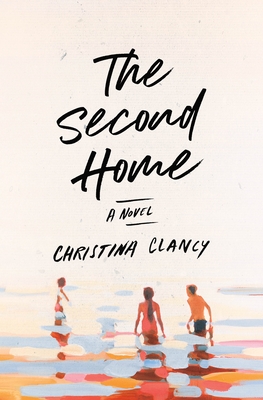
The Second Home by Christina Clancy came from St. Martin's Press.

I'm a total sucker for books that deal with summer homes and this one about a family deciding what to do about their Cape Cod home and the secrets and memories contained within it really calls to me.

The Gifts of Reading by Robert Macfarlane came from a lovely book friend on Litsy.

A short essay celebrating the joy and gifts of reading, this looks beautiful and amazing.

If you want to see the marvelous goodies in other people's mailboxes, make sure to visit Mailbox Monday and have fun seeing how we are all doing our part to keep the USPS and delivery services viable.
Wednesday, March 11, 2020

Waiting on Wednesday

This meme was hosted by Breaking the Spine and is meant to highlight some great pre-publication books we all can't wait to get our grubby little mitts on. I'm choosing to continue the tradition even though she has stopped.

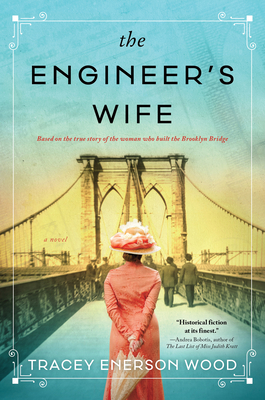
The Engineer's Wife by Tracey Enerson Wood.

The book is being released by Sourcebooks Landmark on April 7, 2020.

The book's jacket copy says: She built a monument for all time. Then she was lost in its shadow.

Emily Warren Roebling refuses to live conventionally--she knows who she is and what she wants, and she's determined to make change. But then her husband Wash asks the unthinkable: give up her dreams to make his possible.

Emily's fight for women's suffrage is put on hold, and her life transformed when Wash, the Chief Engineer of the Brooklyn Bridge, is injured on the job. Untrained for the task, but under his guidance, she assumes his role, despite stern resistance and overwhelming obstacles. Lines blur as Wash's vision becomes her own, and when he is unable to return to the job, Emily is consumed by it. But as the project takes shape under Emily's direction, she wonders whose legacy she is building--hers, or her husband's. As the monument rises, Emily's marriage, principles, and identity threaten to collapse. When the bridge finally stands finished, will she recognize the woman who built it?

Based on the true story of the Brooklyn Bridge, The Engineer's Wife delivers an emotional portrait of a woman transformed by a project of unfathomable scale, which takes her into the bowels of the East River, suffragette riots, the halls of Manhattan's elite, and the heady, freewheeling temptations of P.T. Barnum. It's the story of a husband and wife determined to build something that lasts--even at the risk of losing each other.

Monday, March 9, 2020

Review: The Moonglow Sisters by Lori Wilde

As an older sister myself, I have a soft spot for stories about sisters. My own relationship with my sister has changed in ways big and small over the years, evolving from the days I declared to my mother that she was my baby, not my mom's, to being irritated with her always wanting to tag along with me, to being friends. We are quite different as adults but we will always have a bond and despite occasional frustrations (probably on both our parts), there's no one I'd rather be stuck with as a sister. So when I saw the premise of Lori Wilde's new book, The Moonglow Sisters, I was quite excited to read it. Unfortunately it didn't quite live up to what I'd hoped.

The three Clark sisters were once as close as sisters could be.  Orphaned young and sent to live with the grandmother they had no idea existed in Moonglow Cove, Texas, the golden haired girls were nicknamed the Moonglow Sisters. Madison, the oldest, was always organized and in charge, carefully controlled, caring for her younger sisters as if she was another parent. Middle sister Shelley looked just like their late mother but was the impetuous, wild, and carefree rebel of the family. Little sister Gia was the peacemaker, bridging the gap between her two wildly different sisters, wanting only for everyone to get along and be happy, the consummate people pleaser. But after "The Incident with Raoul", the sisters' relationship was broken. Maddie fled to New York, launched a very successful lifestyle TV show and became famous. Shelley escaped to Costa Rica and hadn't been home since. Gia went to college and then to Japan to study under a famous kitemaker, before coming back to Moonglow Cove and the beach to try and make a go of it with her kite business. When their dear Grammy is diagnosed with a glioblastoma and must have brain surgery, she instructs her best friend, Darynda not to tell Gia until the surgery is underway. At the same time, Gia will read the letter that Grammy has written, asking her to finish the quilt they'd all left unfinished so long ago. But she must call her sisters home to help her finish it. The question is whether the three women, still nursing their hurts, can get past what happened 5 years ago with Raoul, can share their secrets, and unravel the misunderstandings that tore them apart even as each sister faces her own role in their rift, learns truths about herself, and changes in order to move on.

Opening with Grammy penning the letter to the sisters before her surgery, the sisters are described as very different but each a vital part of one complete kite. In one sense this makes sense in that the letter is written to Gia, the kitemaker, but since the rest of the story uses quilt imagery, this seems a bit of an incongruous analogy, especially as Grammy herself is a quilter. In the letter she exhorts Gia to "repair the riff" between the sisters. And while using the word riff instead of rift could be a dialect thing, there are no other instances of dialect terms. And it's hard for me to get past an obvious mistake like that right off the bat. The three sisters are drawn as very different in personality and they stay strictly true to those depictions throughout the novel. They each guard their secrets carefully even if sharing them could have made life far easier very quickly. As the sisters and the town come together to help save the Moonglow Inn (and just why the town is so invested in the sisters is unclear other than they were once close to each other), they will have to reveal themselves, laid open and honest. All three of the women learn their life lesson at almost exactly the same time, leading to three major climaxes all at once. Gia's pretend engagement to next door neighbor Mike, undertaken as the way to keep the sisters together to work on the quilt, is the romance thread of the plot and it can't decide if this is a romance or a women's fiction novel. Whatever it is, it has one of the strangest sex scenes I've ever read (unnecessary as well). The deus ex machina moment with Raoul returning, forcing the sisters to finally have it out over "The Incident with Raoul" comes completely out of the blue and the epilogue is awkward and too much, too tidy. The novel tries to tackle a lot of issues: perfectionism, family, cheating, miscarriage, cults, sex addiction, cancer, homosexuality, intolerance, being orphaned, healing, and communication with varying degrees of success. The biggest reveal of the novel was completely obvious from the beginning, so it just petered out. The novel felt muddled to me and I'm still not sure whether I want to be team quilts or team kites.  A quick, uncomplicated read, it needed tightening and focus.  Others really like this a lot though so if you're looking for a light, easy beach read, maybe this one will be for you.

For more information about Lori Wilde and the book, check our her author site, follow her on Facebook, Twitter, and Instagram, look at the book's Goodreads page, follow the rest of the blog tour, or look at the reviews for others' thoughts and opinions on the book.

Thanks to Trish from TLC Book Tours and publisher William Morrow for sending me a copy of this book to review.

Popular Posts