Monday, April 13, 2020

Monday Mailbox

This past week's mailbox arrival:
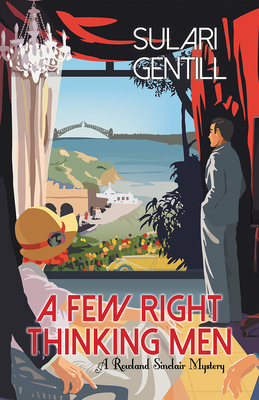
A Few Right Thinking Men by Sulari Gentill came from me for myself.

A mystery set during the Great Depression in Australia, I am intrigued to read about this time period and the politics at play in this whodunit.

If you want to see the marvelous goodies in other people's mailboxes, make sure to visit Mailbox Monday and have fun seeing how we are all doing our part to keep the USPS and delivery services viable.

Wednesday, April 8, 2020

Waiting on Wednesday

This meme was hosted by Breaking the Spine and is meant to highlight some great pre-publication books we all can't wait to get our grubby little mitts on. I'm choosing to continue the tradition even though she has stopped.

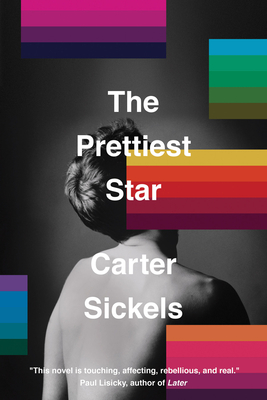
The Prettiest Star by Carter Sickels.

The book is being released by Hub City Press on May 19, 2020.

The book's jacket copy says: A stunning novel about the bounds of family and redemption, shines light on an overlooked part of the AIDs epidemic when men returned to their rural communities to die, by Lambda Literary Emerging Writer Award-winning author Carter Sickels.

Small-town Appalachia doesn't have a lot going for it, but it's where Brian is from, where his family is, and where he's chosen to return to die.

Set in 1986, a year after Rock Hudson's death brought the news of AIDS into living rooms and kitchens across America, Lambda Literary award-winning author Carter Sickels's second novel shines light on an overlooked part of the epidemic, those men who returned to the rural communities and families who'd rejected them.

Six short years after Brian Jackson moved to New York City in search of freedom and acceptance, AIDS has claimed his lover, his friends, and his future. With nothing left in New York but memories of death, Brian decides to write his mother a letter asking to come back to the place, and family, he was once so desperate to escape.

The Prettiest Star is told in a chorus of voices: Brian's mother Sharon; his fourteen-year-old sister, Jess, as she grapples with her brother's mysterious return; and the video diaries Brian makes to document his final summer.

This is an urgent story about the politics and fragility of the body, of sex and shame. Above all, Carter Sickels's stunning novel explores the bounds of family and redemption. It is written at the far reaches of love and understanding, centering on the moments where those two forces stretch toward each other and sometimes touch.

Tuesday, April 7, 2020

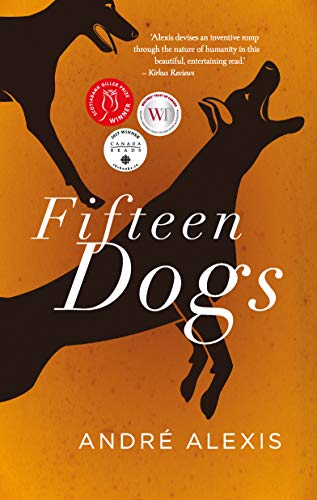
Review: Fifteen Dogs by Andre Alexis

If there are animals in your life, there's no doubt you've anthropomorphized them, assuming they feel things similar to how we humans feel. And maybe they do feel emotion like us; without a common language, we have no real way to know although science certainly does its best at researching and drawing conclusions. But what if animals, dogs in particular, were given the gift or curse of human consciousness and intelligence? We could know exactly what they were feeling and thinking. But would it make them a different creature altogether? Would it, in fact, be a blessing or a curse? Andre Alexis' novel Fifteen Dogs takes just that premise and question and spins it out to its final, perhaps surprising, answer.

While sitting in a bar one night Hermes and Apollo were arguing about humanity and as Greek gods are wont to do, they made a wager over what the granting of human intelligence would do to other creatures. Apollo argued that any other creature given human intelligence would end up miserable while Hermes maintained that at least one of the creatures would die happy despite this complicated gift of consciousness. Seeing a vet clinic on their walk home, they decided to play out the bet and chose to grant human intelligence on the 15 dogs spending the night in the clinic. And then they moved on, leaving the dogs to realize and accept or reject their confusing new reality on their own.

The changed dogs immediately start acting out of character (species?), escaping the vet, and creating a sort of proto-human society amongst themselves. The novel mostly follows one or two dogs at a time, from their awakening into an awareness that changes everything to their respective deaths. Their lives are not lengthened, remaining realistically short, and many face graphic and terrible deaths as the reader, along with Hermes and Apollo, wonder if even one can in fact die happy or if this intelligence has robbed them of the ability to maintain happiness and joy. While the gods make occasional appearances in the story, for the most part, the dog's lives are left to nature and chance and whatever each dog can create for him or herself using their newly awakened intelligence. There is literally a deus ex machina in black poodle Majnoun's life arc and Prince, a poetry loving mutt, also suffers the meddling of the gods. There is a bleak ferocity here, a relatedness to Lord of the Flies in this apologue, as it examines the nature of happiness, the importance of language and poetry, and the philosophical idea of the cost of awareness. The fifteen dogs represent so much that drags humanity down, their weaknesses and fears, their brutality and power structures, but in the end, the passing of the last dog and the answer to Hermes and Apollo's wager is a reflective and philosophical experience full of the power of possibility, of language, of love. This is a strange but intriguing story, a morality tale that tells a big story using well-rendered small, furry characters. It's surprisingly accessible but is probably not a book for everyone. In the end, I enjoyed the thought behind it and I will probably never look at the dog sitting in my lap quite the same way again.

Thanks to the publisher for sending me a copy of this book to review.

Monday, April 6, 2020

Review: The DNA of You and Me by Andrea Rothman

My sister is the scientist in our family. She's a vet with a Masters in Toxicology. I'm the English major who had to sit in the hallway for the duration of high school fetal pig dissection because I got hysterical thinking about cutting into Wilbur. But just because I am squeamish doesn't mean I'm not fascinated by science. Because I am. Just from a distance.  Especially if it requires dissection or euthanizing lab animals; I'm completely fine with sciences like geology though, one of my favorite subjects in college. And I do love to read about science and the amazing things that scientists are researching and discovering, what drives them to their field of study, the process of their work, and what it might say about us and our world. So Andrea Rothman's novel The DNA of You and Me was a completely engaging and wonderful read about the science world and one woman in it.

Emily Apell is a bioinformatician who has just received that call that she's won a very prestigious prize. As she processes the overwhelming news, she thinks back to what first set her on the path toward this major achievement. Growing up with her chemist father, she was steeped in scientific research quite young. And as an only child with a severe environmental allergy, her childhood was very much spent indoors not around other people so her social skills never quite developed the same way that others' did. Even in adulthood, she is incredibly socially awkward and she struggles to make connections with others. Moving to a prestigious new lab where she is looking for a gene or genes in the olfactory system that create a sort of smell map, she is both consumed by her research and intensely aware of fellow lab mate, Aeden, who, with his technician, is also looking for these genes. They might be in the same lab but they are definitely in competition with each other, at least until they are forced to work together and an antagonistic and bumbling relationship forms. But when tensions and hostility in the lab prove impossible, Emily must choose between the research she's dedicated her life to or the promise of a different life with Aeden.

The framing device of the impending award is well done as it leads Emily to look back a decade prior and wonder if her life could have been different, if it should have been different. Rothman has done a fantastic job creating in Emily a character who is afraid she doesn't have the emotional ability to connect with others that seems to come so easily to people around her. In fact, she is told by other characters, that she is distant and incapable of the depth of feeling that most people have, once as a compliment and once as a warning and insult. And yet this unemotional character feels deeply, absorbing hurt after hurt so that the reader has a lump in their stomach for her. She is so very alone, even in the midst of people. Told through Emily's eyes, Aeden is a far less sympathetic character, perhaps because she doesn't understand his motivations towards her as well as she understands her own position. Their relationship is not a give and take; it is as uncomfortable as the principals. They move from antagonism to emotionless sex, to something that is supposed to be more but that doesn't quite ever reach the richness to which it aspires. The atmosphere of the lab is well drawn, competitive to the point of being cutthroat, where even those driven by a desire to further science will resort to underhanded actions. The daily work, the diligence, the frequent failures, and the much rarer successes of a research lab weave through the narrative, driving the plot forward to its climax. The idea of isolating the genes that help us smell is completely fascinating and the sense of smell pervades much of the story thematically with Emily being acutely aware of smells and their role in her memories. There are many descriptions of the smell of her late father, Aeden's particular scent, a grad student's overwhelming perfume, the memory triggered by a peppermint, and more. Emily may be different but the reader feels for her deeply, for the little girl looking out at a world of people whose reactions are foreign and feel exclusionary and for the adult woman who still feels that way and tries to wrap herself in protective layers to avoid the hurt that she sometimes encounters as a loner. Emily is an atypical main character who really takes up residence in your heart. This is a poignant read about science and relationship, about whether some people are better suited to be alone, and the sacrifices that people make along their chosen paths framed within a story about a really smart woman in STEM.

For more information about Andrea Rothman and the book, check our her author site, follow her on Facebook, Instagram or Twitter, look at the book's Goodreads page, follow the rest of the blog tour, or look at the reviews for others' thoughts and opinions on the book.

Thanks to Trish from TLC Book Tours and publisher William Morrow for sending me a copy of this book to review.

It's Monday! What Are You Reading?

This meme is hosted by Kathryn at Reading Date.

Books I completed over the past week are:

Little Wonders by Kate Rorick
Temporary by Hilary Leichter
Blue Marlin by Lee Smith
The DNA of You and Me by Andrea Rothman

Bookmarks are still living in the middle of:

Yellow Earth by John Sayles
A Woman Is No Man by Etaf Rum
Girl Waits with Gun by Amy Stewart
Rules for Visiting by Jessica Francis Kane

Reviews posted this week:

Little Wonders by Kate Rorick
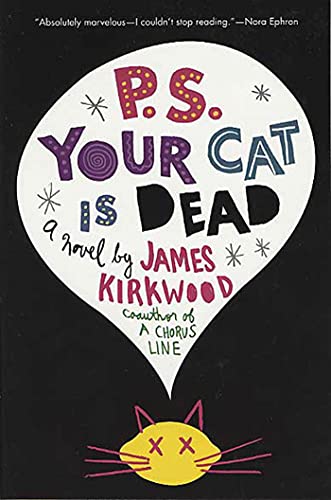
P.S. Your Cat Is Dead by James Kirkwood

Books still needing to have reviews written (as opposed to the ones that are simply awaiting posting):

Midnight at the Blackbird Cafe by Heather Webber
Beginning with Cannonballs by Jill McCroskey Coupe
The Right Sort of Man by Allison Montclair
Faces: Profiles of Dogs by Vita Sackville-West
The Authenticity Project by Clare Pooley
The Secrets We Kept by Lara Prescott
Exciting Times by Naoise Dolan
Oona Out of Order by Margarita Montimore
Holding on to Nothing by Elizabeth Chiles Shelburne
Difficult Light by Tomas Gonzalez
Adults and Other Children by Miriam Cohen
Grief's Country by Gail Griffin
Moments of Glad Grace by Alison Wearing
Ghost Wall by Sarah Moss
The Library Book by Susan Orlean
Misconduct of the Heart by Cordelia Strube
Search Heartache by Carla Malden
What the Lady Wants by Renee Rosen
The Other Americans by Laila Lalami
The Book Keeper by Julia McKenzie Munemo
The Postmistress by Sarah Blake
Fifteen Dogs by Andre Alexis
Temporary by Hilary Leichter
Blue Marlin by Lee Smith
The DNA of You and Me by Andrea Rothman

Monday Mailbox

This past week's mailbox arrivals:

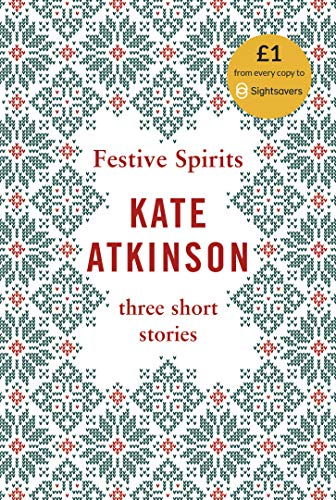
Festive Spirits by Kate Atkinson came from me for myself.

Christmas may be long over but I can't resist three short tales for the season from the indomitable Kate Atkinson.

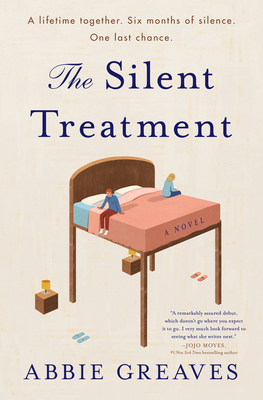
The Silent Treatment by Abbie Greaves came from William Morrow and TLC Book Tours for a blog tour.

Marriage is hard and this novel about a couple who literally haven't spoken in 6 months when the wife collapses and is placed into a medically induced coma looks both gut-wrenching and insightful.

You and Me and Us by Alison Hammer came from William Morrow and TLC Book Tours for a blog tour.

This looks like a heart-breaker of a novel but I do enjoy stories of mother daughter relationships.

Winter in Sokcho by Elisa Shua Dusapin came from me for myself.

A friend really liked this one and I was intrigued by the idea of a novel following a Korean guesthouse receptionist who accompanies a French cartoonist as he tries to discover an authentic Korea.

The Threat Level Remains Severe by Rowena MacDonald came from me for myself.

This is a workplace novel set in the Houses of Parliament that was shortlisted for the "Not the Booker Prize" in 2017 and I am curious as can be about it.

If you want to see the marvelous goodies in other people's mailboxes, make sure to visit Mailbox Monday and have fun seeing how we are all doing our part to keep the USPS and delivery services viable.
Friday, April 3, 2020

Review: P.S. Your Cat Is Dead by James Kirkwood

When it rains it pours. But it has probably never poured on you quite as much as it is pouring on Jimmy Zoole in James Kirkwood's novel P.S. Your Cat Is Dead. Jimmy's best friend died completely unexpectedly a couple of months prior to the opening of the book. Then in the space of a few hours, he loses the acting job he has lined up, his girlfriend dumps him for another guy, he gets another notice that he needs to move out of his rickety apartment building as it's being sold, he discovers a robber in his apartment for the third time in a few months, and, oh yeah, the vet called and his cat has died. If you think this couldn't get any more bizarre, you would be wrong. Jimmy beats the robber unconscious (well, the robber hits his head and gets knocked out while being beaten but basically the same thing) and ties him to the kitchen island sink. Once our thief Vito regains consciousness, he and Jimmy start to talk, covering things like the train wreck of Jimmy's life, his rich and possessive aunt, Jimmy's lost manuscript that Vito stole during the previous burglary, Vito's marriage and child and his affair with a well known actor Jimmy knew, Vito's tales of hustling, and more. It is the strangest New Year's Eve ever.

There isn't much action in the plot as it is dominated by Jimmy and Vito's discussions although there are a few interruptions to the talking and pot smoking pot when Jimmy's ex-girlfriend arrives with her new boyfriend to collect her things thinking Jimmy's out for the night and when the fellow actor Jimmy calls arrives with friends dressed up in all their campy glory primed for a very strange, BDSM kind of night indeed. These absurd interruptions to the main (non)action don't make the novel more appealing though. Jimmy swings from even tempered to angry to resigned in arcs that clearly belong on the stage. And the book as a whole feels more like a script than a novel.  It desperately needs the dynamism of actors to bring it to life in a way that it doesn't show on the page. It is therefore not surprising to learn that this was adapted from the original script rather than written first. It comes across as a dated and rather tedious, long therapy session, which is saying something when much of the action takes place with a half naked man tied up and sprawled across a sink. The homoeroticism is clearly on display but I somehow missed the eccentric and funny bits that others apparently find in it. I kept expecting to see "Exit stage left" in the text and while that never appeared overtly, it was there in the action often. I have to believe that this lost a lot in the translation from stage to page but it just wasn't a very enjoyable reading experience.

Popular Posts