Wednesday, April 1, 2020

Waiting on Wednesday

This meme was hosted by Breaking the Spine and is meant to highlight some great pre-publication books we all can't wait to get our grubby little mitts on. I'm choosing to continue the tradition even though she has stopped.
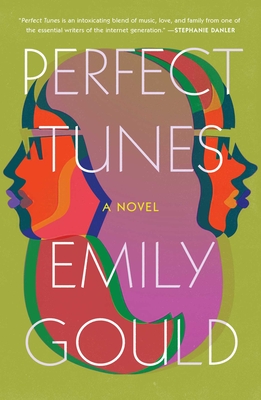
Perfect Tunes by Emily Gould.

The book is being released by Avid Reader Press on April 14, 2020.

The book's jacket copy says: Have you ever wondered what your mother was like before she became your mother, and what she gave up in order to have you?

It’s the early days of the new millennium, and Laura has arrived in New York City’s East Village in the hopes of recording her first album. A songwriter with a one-of-a-kind talent, she’s just beginning to book gigs with her beautiful best friend when she falls hard for a troubled but magnetic musician whose star is on the rise. Their time together is stormy and short-lived—but will reverberate for the rest of Laura’s life.

Fifteen years later, Laura’s teenage daughter, Marie, is asking questions about her father, questions that Laura does not want to answer. Laura has built a stable life in Brooklyn that bears little resemblance to the one she envisioned when she left Ohio all those years ago, and she’s taken pains to close the door on what was and what might have been. But neither her best friend, now a famous musician who relies on Laura’s songwriting skills, nor her depressed and searching daughter will let her give up on her dreams.

Funny, wise, and tenderhearted, Perfect Tunes explores the fault lines in our most important relationships, and asks whether dreams deferred can ever be reclaimed. It is a delightful and poignant tale of music and motherhood, ambition and com­promise—of life, in all its dissonance and harmony.

Tuesday, March 31, 2020

Review: Little Wonders by Kate Rorick

In my (now many) years of being a mom, there have certainly been times I'm not proud of how I behaved. I've yelled at my kids for so long the car windows steamed up. I've carried a tantruming child out of a store and then practically had to sit on him to get him buckled in his carseat because he was arching out of that seat as hard as he could (and nameless lady I didn't know who stopped to tell me that you "don't want to be the neighborhood bitch, but..." as you proceeded to tell me it was my own fault that he was in full on meltdown, I still hate you 21 years later and send malice your way for piling on to a clearly harried mom doing the best she could). And there are more, although different, instances like that that, probably even more than I remember. Thankfully none of them were recorded and posted to the internet. I know I've made mistakes but that humiliating kind of proof is forever. Kids are humbling and they can be infuriating, and parents can have meltdowns. But we sure aren't supposed to show that. If we do, we open ourselves up to accusations of being a bad mom. Just google the term mom-shaming on the internet and see what comes up. No mom is immune and there is perhaps a little feeling of schadenfreude when the person doing that thing you, as a "better" mother, would never do is a celebrity or even just that one mom at school or in your neighborhood who you've always resented a tiny bit. But of course, no matter which mother it is directed against, mom-shaming is ugly and hurtful and it doesn't take into consideration the very human feelings of the mom in question or the fallout that might happen in the rest of her life if she is so publicly pilloried. Kate Rorick's newest novel, Little Wonders, takes on just that topic. What happens when a "perfect" mom is caught having a meltdown, that meltdown goes viral, and her whole life is upended?

Quinn Barrett is the PTA President. She's a talented interior designer working on a major project that is set to be featured in Martha Stewart's magazine. She is organized and focused and she takes no prisoners. Her life is carefully curated and polished and she is determined that everything will be perfect, always. And it is. Until it isn't. The morning of the Happy Halloween Parade at her 3 year old son Ham's Little Wonders Preschool, the very best school (it's for potential prodigies after all) in the posh Boston suburb of Needleton, starts off badly but Quinn absorbs every misstep and keeps pushing through until the moment just before the parade that Ham refuses to wear the lovingly and meticulously crafted spaceship costume she has made for him. It is the final straw and Quinn completely loses it, stomping on the costume and yelling at Ham. If only no one had seen.  But Daisy Stone, a mom new to the area, homesick for her funky Los Angeles and feeling like the proverbial fish out of water with her electric blue hair and full tattoo sleeves in this wealthy, conservative town, videos the whole scene and then emails the video to her friends back in LA where one of them promptly shares it. Quinn's gone viral; suddenly she loses her position on the PTA, her job shoves her into the background to minimize the fallout, and her marriage is on shaky ground. Meanwhile, Daisy is overwhelmed by guilt but can't come clean because she's afraid of the consequences if she does and it doesn't help that her cousin by marriage, Shanna, has orchestrated the preschool's coup against Quinn and is now (over)using Daisy as her right hand woman. After further fallout, Daisy and Quinn strike up a tentative friendship and now Daisy really can't tell Quinn that the initial video is her fault.

Quinn is very much the stereotypical "perfect" mom, with her surgeon husband, cute kid, beautiful home, great job, and a housekeeper helping to hold it all together. She is clearly walking a razor's edge and yet she gives off an air of impenetrability and invincibility. Even though the reader can see that she's eventually going to slip, she still isn't a terribly appealing character for some reason. In the book, she has no friends until Daisy, and quite frankly, it's not hard to see why not, so focused on perfection and the superficial, allowing no room for error or humanness. Daisy is portrayed as Quinn's diametric opposite. Where Quinn is cold, Daisy is warm. Where Quinn is conventional, Daisy is funky. Daisy is stifled by the life that is Quinn's preferred milieu. Even so, it is no surprise to see these two women prove that underneath the visible trappings, they aren't in fact too different. All of the portrayals here are a little over the top and stereotypical though, even in the secondary characters. Shanna is conniving and scheming, the villain who gets a little too much glee out of Quinn's misfortune. Quinn's husband Stuart is suave and distant but almost always described as with a romance hero's sly smile. Daisy's husband Robbie is oblivious and hard working, happy to have his family back in the town where he grew up. The community itself is portrayed as uptight, judgmental, and insular, responsible for all of Daisy's unhappiness and the reason the repercussions for Quinn's meltdown are so long-lived. Rorick does do a good job showing the nasty underbelly of competitive momming, especially in the world of an elite preschool. The school-wide newsletters that start each chapter are a delight to read, with their snarky portions crossed out and rewritten in that strange, celebratory exuberance of school newsletters everywhere. Quinn learning to let go of her rigid ideas and learning to be a kinder, gentler, happier person is a nice long arc. Daisy embracing herself and who she is is a bit shorter but still given enough room in the narrative. Another character, though, is redeemed altogether too quickly and unconvincingly. The ending of the novel is too easy and too fast given everything that went before and has a lot of last minute revelations and their resolutions. Although I have known moms with varying degrees of these characters, I still had trouble entirely connecting to this book and these particular character. Then again, I may not be the target audience given that I looked the PTA President in the eyes, laughed, and said, "No. I don't really like people," when she asked me to head up a committee.  Clearly I'm neither a Quinn nor a Daisy.  But I'm sure there are moms and non-moms out there who would be interested in this tale of cutthroat parenting, finding balance the hard way, and the importance that the internet and ever present cameras play in our lives these days.

For more information about Kate Rorick and the book, check our her author site, follow her on Facebook, Instagram or Twitter, look at the book's Goodreads page, follow the rest of the blog tour, or look at the reviews for others' thoughts and opinions on the book.

Thanks to Trish from TLC Book Tours and publisher William Morrow for sending me a copy of this book to review.

Monday, March 30, 2020

It's Monday! What Are You Reading?

This meme is hosted by Kathryn at Reading Date.
Books I completed over the past week are:

P.S. Your Cat Is Dead by James Kirkwood
Fifteen Dogs by Andre Alexis

Bookmarks are still living in the middle of:

Yellow Earth by John Sayles
A Woman Is No Man by Etaf Rum
Girl Waits with Gun by Amy Stewart

Reviews posted this week:

The Shape of Family by Shilpi Somaya Gowda

Books still needing to have reviews written (as opposed to the ones that are simply awaiting posting):

Midnight at the Blackbird Cafe by Heather Webber
Beginning with Cannonballs by Jill McCroskey Coupe
The Right Sort of Man by Allison Montclair
Faces: Profiles of Dogs by Vita Sackville-West
The Authenticity Project by Clare Pooley
The Secrets We Kept by Lara Prescott
Exciting Times by Naoise Dolan
Oona Out of Order by Margarita Montimore
Holding on to Nothing by Elizabeth Chiles Shelburne
Difficult Light by Tomas Gonzalez
Adults and Other Children by Miriam Cohen
Grief's Country by Gail Griffin
Moments of Glad Grace by Alison Wearing
Ghost Wall by Sarah Moss
The Library Book by Susan Orlean
Misconduct of the Heart by Cordelia Strube
Search Heartache by Carla Malden
What the Lady Wants by Renee Rosen
The Other Americans by Laila Lalami
The Book Keeper by Julia McKenzie Munemo
The Postmistress by Sarah Blake
Slice Harvester by Colin Atrophy Hagendorf
P.S. Your Cat Is Dead by James Kirkwood
Fifteen Dogs by Andre Alexis

Friday, March 27, 2020

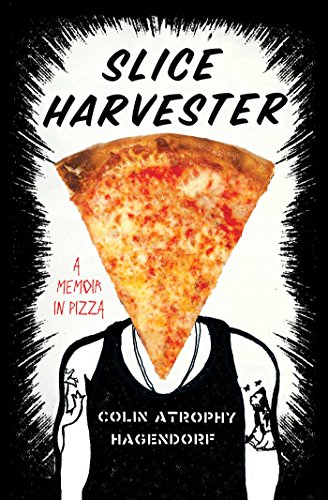
Review: Slice Harvester by Colin Atrophy Hagendorf

When I went off to college a hundred thousand years ago, there was a pizza chain near the school that sold two small pizzas for $5. It was a college student's dream, cheap, fast, filling, and delivered very late at night. Except the pizza was disgusting. It came as a surprise to no one that they closed the summer after my freshman year because of health code violations. Before coming across Speedy's, I never would have guessed that pizza could be gross. Mediocre, yes. Disappointing, yes. Sublime, rare but yes. Disgusting? Who knew? Apparently Colin Atrophy Hagendorf knew. Slice Harvester is his memoir of eating his way across Manhattan, one pizza slice at a time, what was going on in his life as he ate all of that pizza, and his nostalgia for the punk scene of an earlier time.

Hagendorf was a NYC bike messenger, occasional punk rocker, and full time partier when he came up with the drunken idea to try all of the pizza in Manhattan on a quest for the best. Somehow, despite his level of intoxication when the plan hatched, he managed to not only remember the plan, but to set about doing it and to chronicle his attempt via 'zine and blog. Taking more than two years to eat one plain slice from each and every one of the more than 400 pizza places in Manhattan, Hagendorf does more than taste pizza. He reminisces about growing up outside of the City, joining the punk community, and lets the reader into his life and his relationships. This is not really about all the pizza he eats, it is about Hagendorf and how he became who he is. He chronicles partying that is out of control, the way that his alcoholism almost derailed his budding relationship, and his quest to really figure out who he is and who he wants to be.

In addition to his tales of his own life, Hagendorf introduces the reader briefly to some of the people important in his life, to random (and occasionally famous) people who eat with him along his quest, and to at least one pizza parlor owner's family journey to making pizza in Manhattan. He includes the punk community he's long been a part of, not only in the person of his fellow diners but also in terms of their culture. And this is the first place this memoir breaks down for a reader who is not punk. If you miss the cultural references because you have different touchpoints, you won't understand (or frankly, care about) many of his comparisons, missing a lot.  Each chapter of this "memoir in pizza" starts with a drawing and review from his blog or 'zine.  This is the second place this failed for me.  If I had read the blog before getting the book, I doubt I would have bought this as his reviews sound like nothing so much as a high schooler who thinks he's being clever.  Instead the descriptions are overwrought and reaching.  Over all, his narrative style is meandering and hearing about his excesses and his morning puke got old pretty quickly. He clearly wanted to assert his bona fides as counter culture and punk here but I'm not sure that a stunt memoir was the way to go about it, unless the stunt was something less prosaic than eating pizza. Actually, a straight memoir about being punk, rather than interleaving living that life with his "slice harvesting," might have been more unusual and interesting than this half in, half out memoir ended up being. Perhaps I'm too old and too conventional to be the right audience for this one but I would have thought that pizza, good and bad, both actual and as a metaphor for life, should have been for everyone.  Well, except for Speedy's pizza.  Because that stuff was gross.

Wednesday, March 25, 2020

Waiting on Wednesday

This meme was hosted by Breaking the Spine and is meant to highlight some great pre-publication books we all can't wait to get our grubby little mitts on. I'm choosing to continue the tradition even though she has stopped.

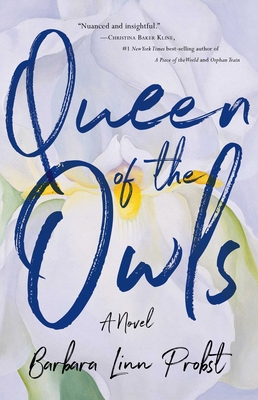
Queen of the Owls by Barbara Linn Probst.

The book is being released by She Writes Press on April 7, 2020.

The book's jacket copy says: A chance meeting with a charismatic photographer will forever change Elizabeth's life.

Until she met Richard, Elizabeth's relationship with Georgia O'Keeffe and her little-known Hawaii paintings was purely academic. Now it's personal. Richard tells Elizabeth that the only way she can truly understand O'Keeffe isn't with her mind--it's by getting into O'Keeffe's skin and reenacting her famous nude photos.

In the intimacy of Richard's studio, Elizabeth experiences a new, intoxicating abandon and fullness. It never occurs to her that the photographs might be made public, especially without her consent. Desperate to avoid exposure--she's a rising star in the academic world and the mother of young children--Elizabeth demands that Richard dismantle the exhibit. But he refuses. The pictures are his art. His property, not hers.

As word of the photos spreads, Elizabeth unwittingly becomes a feminist heroine to her students, who misunderstand her motives in posing. To the university, however, her actions are a public scandal. To her husband, they're a public humiliation. Yet Richard has reawakened an awareness that's haunted Elizabeth since she was a child--the truth that cerebral knowledge will never be enough.

Now she must face the question: How much is she willing to risk to be truly seen and known?

Monday, March 23, 2020

Review: The Shape of Family by Shilpi Somaya Gowda

Everyone handles grief differently. Some people want to bury it, some to shout it from the rooftops. Some people need to talk it through with others while some look for solace in a higher being. Holding onto grief and internalizing it without embracing or accepting it can tear apart the closest families, severing bonds once thought unbreakable. This is the case with the Olander family in Shilpi Somaya Gowda's newest novel, The Shape of Family, about a family disintegrating in the wake of a terrible tragedy, one that each member carries forward, shaping their futures in ways so unlike their pasts.

Keith, a successful investment banker from a financially insecure background, meets and marries Jaya, who works in international relations and grew up living all over the world as the cultured daughter of an Indian diplomat. The two of them settle in California and start to raise their family, daughter Karina, in eighth grade when the novel opens, fully cognizant that her mixed race heritage keeps her from feeling like she fits in anywhere, and mischievous, sweet eight year old son Prem. Their lives are not perfect but they are mostly happy with the balance they've struck. And then a terrible tragedy hits this small, self-contained family, and everything spirals out of control. They are cracked wide open in the wake of the devastation wrought by this sudden, unexpected, and unimaginable catastrophe, each character retreating away from the others, facing their guilt and the grief on their own, connections to each other stretching and tearing. In their individual, isolated spirals, they each try to move forward and forge a new life, without fully coming to terms with their loss and Prem, once an integral piece that held them together, is now helpless to stop the familial disintegration.

The novel's narration moves among the four Olander family members, with Karina being the biggest focus. The story is heartbreaking and the characters' grief is palpable as each withdraws into themselves and away from their once strong connections to each other. There are a lot of issues explored here beyond grief and what the shape of a family is: divorce, cutting, cults, the obsessive pursuit of money, complete immersion in religion, self-worth as defined by a job, love and relationship, and morality, as well as the suggestion of both rape and suicide. Perhaps there are a few too many topics. The first third of the book is quite grief heavy but it has a stronger focus than the last two thirds, mirroring the weaker bonds between the family members the further they get from the tragedy but also loaded with more and more issues. The ending here is hopeful, which is welcome after such an intensely sad story but it moves quite heavily into explanatory writing rather than allowing the hope to be revealed organically. There's so much pain in this novel but, in the end, what matters is that love remains and it will always be included in the forever changed shape of the family. Readers who enjoy novels of families facing adversity and sorrow and seeing the characters' subsequent responses to tragedy will enjoy immersing themselves in this novel.

For more information about Shilpi Somaya Gowda and the book, check our her author site, follow her on Facebook, Instagram or Twitter, look at the book's Goodreads page, follow the rest of the blog tour, or look at the reviews for others' thoughts and opinions on the book.

Thanks to Trish from TLC Book Tours and publisher William Morrow for sending me a copy of this book to review.

It's Monday! What Are You Reading?

Not a very good week at all! Here's hoping this coming week is better. This meme is hosted by Kathryn at Reading Date.
Books I completed over the past week are:

The Road to Delano by John DeSimone
The Book Keeper by Julia McKenzie Munemo
The Postmistress by Sarah Blake
Slice Harvester by Colin Atrophy Hagendorf
The Shape of Family by Shilpi Somaya Gowda

Bookmarks are still living in the middle of:

Yellow Earth by John Sayles

Reviews posted this week:

The Road to Delano by John DeSimone

Books still needing to have reviews written (as opposed to the ones that are simply awaiting posting):

Midnight at the Blackbird Cafe by Heather Webber
Beginning with Cannonballs by Jill McCroskey Coupe
The Right Sort of Man by Allison Montclair
Faces: Profiles of Dogs by Vita Sackville-West
The Authenticity Project by Clare Pooley
The Secrets We Kept by Lara Prescott
Exciting Times by Naoise Dolan
Oona Out of Order by Margarita Montimore
Holding on to Nothing by Elizabeth Chiles Shelburne
Difficult Light by Tomas Gonzalez
Adults and Other Children by Miriam Cohen
Grief's Country by Gail Griffin
Moments of Glad Grace by Alison Wearing
Ghost Wall by Sarah Moss
The Library Book by Susan Orlean
Misconduct of the Heart by Cordelia Strube
Search Heartache by Carla Malden
What the Lady Wants by Renee Rosen
The Other Americans by Laila Lalami
The Book Keeper by Julia McKenzie Munemo
The Postmistress by Sarah Blake
Slice Harvester by Colin Atrophy Hagendorf
The Shape of Family by Shilpi Somaya Gowda

Popular Posts