Wednesday, June 4, 2014

Waiting on Wednesday

This meme is hosted by Breaking the Spine and is meant to highlight some great pre-publication books we all can't wait to get our grubby little mitts on.
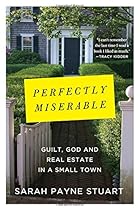
Perfectly Miserable by Sarah Payne Stuart. The book is being released by Riverhead Hardcover on June 12, 2014.

Amazon says this about the book: A wryly comic memoir that examines the pillars of New England WASP culture—class, history, family, money, envy, perfection, and, of course, real estate—through the lens of mothers and daughters.

At eighteen, Sarah Payne Stuart fled her mother and all the other disapproving mothers of her too perfect hometown of Concord, Massachusetts, only to return years later when she had children of her own. Whether to defy the previous generation or finally earn their approval and enter their ranks, she hurled herself into upper-crust domesticity full throttle. In the twenty years Stuart spent back in her hometown—in a series of ever more magnificent houses in ever grander neighborhoods—she was forced to connect with the cultural tradition of guilt and flawed parenting of a long legacy of local, literary women from Emerson’s wife, to Hawthorne’s, to the most famous and imposing of them all, Louisa May Alcott’s iconic, guilt-tripping Marmee.

When Stuart’s own mother dies, she realizes that there is no one left to approve or disapprove. And so, with her suddenly grown children fleeing as she herself once did, Stuart leaves her hometown for the final time, bidding good-bye to the cozy ideals invented for her by Louisa May Alcott so many years ago, which may or may not ever have been based in reality.

Tuesday, June 3, 2014

Review: The Year She Left Us by Kathryn Ma

I have several friends who have adopted their daughters from China. In fact adoptions from China to the US comprise the largest portion of international adoptions hands down, not surprising when you look at the combination of China's one child policy and their general willingness to allow foreign adoptions. And although I imagined that it could be difficult for adoptive parents to keep their daughters connected to their cultural heritage, I never imagined a huge sense of disconnect for the children as portrayed here in Kathryn Ma's debut novel, The Year She Left Us.

Ari Kong is 18 and she has just suffered a breakdown after spending time working for a friend's mother giving "heritage tours" to American families with daughters adopted from China. Ari herself was adopted as a baby by Charlie, a first generation Chinese-American woman, and had been on one of these tours herself to see the land of her birth and the orphanage where she lived so theoretically she would have been the perfect choice to lead these tours for others. But ever since her own initial visit back to China, Ari has been consumed with the thought that she was disposable, thrown away by her birth parents, unwanted.

The Kong family is one of all women. Gran, who fled China to escape Mao's rule, is twice widowed and even though her daughters are adults, she still holds sway over them. She's independent and opinionated and she was adamantly opposed to Charlie's plan to adopt as a single mother, fearing that the child would be of inferior stock to her own family. Charlie is a kind and gentle person, a public defender who finds herself getting personally wrapped up in the fate of her clients and is completely at a loss as to how to handle her suddenly prickly and combative daughter. Charlie's older sister Les is a judge who yearns to be appointed to the federal circuit. Like Charlie, she is also unmarried but where Charlie is softer and more of a pushover, Les is harder, a stickler and always conscious of her position as a role model. As different as these women are, each of them harbors a secret, one that burrows into her very core and helps to define who she is as a woman. And this is the family to which Ari belongs.

But Ari is broken and searching, without regard to the family standing behind her. She is unlike the other Whackadoodles (the nickname given to her playgroup full of adopted Chinese daughters) in that she isn't the Asian child of white parents, her family being ethnically Chinese, and she wasn't adopted by a couple but instead by a single woman so she still feels different and an outsider in a whole different way than the other girls. Ari's abandonment issues drive her away from her mother, aunt, and grandmother and into a mysterious past that nearly breaks her. She is a wanderer and seeker who cannot find the answer to her questions. She is lost without knowing why. She shuts her family out as she tries to make sense of who she is both personally and culturally. And as Ari questions her existence, even traveling to Alaska for answers about a never before acknowledged father figure, Charlie and Les too search for the meaning in their lives and who they really are.

The story is told in narrating chapters with Ari and Gran telling their own stories in first person and Charlie and Les' perspectives being narrated in third person. The different narrations allow the reader to look at events from multiple perspectives.  Ari, around whom the entire story centers as the dominant character, is angry and lost and selfish. She is unpleasant and it is hard to want to read more about her created angst. Certainly growing up and hearing constantly how lucky she was to be adopted must have been hard but she shows no empathy for others in her life, no consideration for the love and kindnesses she is shown by both family and strangers. She is so wrapped up in her own bitterness and sense of injustice over her beginnings that she cannot see that her actions affect or hurt others. And she overwhelms the other characters so that their stories feel very tangential to the main plot. There is a distance to the narrative, a keep out sign, despite the changing narration that makes it hard to get into the story and keeps the reader from becoming too involved with any of the characters. The haunted darkness, guilt, and insecurity make this a depressing tale but even so it offers interesting insights into the international adoption process, the psychology behind it, the social issues that it can bring to the fore, and the way it can reverberate throughout so many lives.

For more information about Kathryn Ma and the book, check out her website, her Facebook page, or follow her on Twitter. Follow the rest of the blog tour or look at the amazon reviews for others' thoughts and opinions on the book.

Thanks to Trish from TLC Book Tours and the publisher for sending me a copy of the book for review.

Monday, June 2, 2014

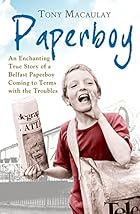
Review: Paperboy by Tony Macaulay

Newspapers nowadays seem to be delivered by adults driving cars, not neighborhood boys or girls tromping up and down streets on foot or riding on bikes and flinging the paper end over end to land on your doorstep early every morning. But in Tony Macaulay's memoir of almost two years of his life as a paperboy in the late 1970s, this cherished image of kids delivering the paper still stands.

Macaulay was an almost 12 year old boy living in Belfast, Ireland when he won the coveted position of paperboy. This job gave him his own money and he took pride in doing his job. It was thrilling to be such a responsible kid. Along with his reminiscing, Macaulay has captured the everyday appeal of a happy childhood. Narrating from his pre-teen self's perspective, he remembers the obsession with fashion, music (specifically the Bay City Rollers), and girls. His observations are witty and entertaining and they are very Irish, with many of the colloquialisms and much of the slang likely to be unfamiliar to American readers.

Macaulay grew up during the height of the Troubles in Northern Ireland. But by choosing to narrate his memoir from his childhood perspective, he manages to background much of the political atmosphere, religious divide, and violence. He was, of course, always aware of the danger and the fighting but he was equally aware of the thugs and bullies who would steal his paper route money from him if he wasn't ever vigilant. The book is told in self-contained chapters, which detail his loving family, the wants and desires of a kid in late 70s Ireland, his method of coping with the strife in his city, and his own pacifism. The tale is actually an ordinary one after all. There's not a whole lot driving the narrative; it's just snapshots of a young boy's everyday life. There are some hitches in the pacing and the occasional wrinkle in chronology but generally this was a funny and touching picture of the way people, and specifically kids, continue to live their lives even amidst a war.

Thanks to the publisher for sending me a copy of the book to review.

It's Monday! What Are You Reading?

This meme is hosted by Sheila at Book Journey.

Books I completed this past week are:

The Year She Left Us by Kathryn Ma
The Glass Kitchen by Linda Francis Lee
The Beautiful American by Jeanne Mackin

Bookmarks are still living in the middle of:

The Boy Who Harnessed the Wind by William Kamkwamba
The Impossible Lives of Greta Wells by Andrew Sean Greer

Reviews posted this week:

The Accidental Book Club by Jennifer Scott
A Summer Affair by Elin Hilderbrand
Cure for the Common Breakup by Beth Kendrick
Boleto by Alyson Hagy
The Beautiful American by Jeanne Mackin

Books still needing to have reviews written (as opposed to the ones that are simply awaiting posting):

Where Somebody Waits by Margaret Kaufman
Dinner With the Smileys by Sarah Smiley
Mimi Malloy, At Last by Julia MacDonnell
The Innocent Sleep by Karen Perry
Strings Attached by Joanne Lipman and Melanie Kupchynsky
Palmerino by Melissa Pritchard
If Not For This by Pete Fromm
The Lady From Tel Aviv by Raba'i al-Madhoun
Angels Make Their Hope Here by Breena Clarke
The Year She Left Us by Kathryn Ma
The Glass Kitchen by Linda Francis Lee

Monday Mailbox

A fantastic and completely different pairing arrived at my house this week. And they both look amazing! This week's mailbox arrivals:
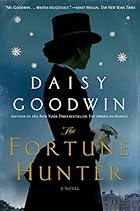

The Fortune Hunter by Daisy Goodwin came from St. Martin's Press.

Empress Elizabeth of Austria has fascinated me ever since my parents came home from a trip with a gorgeous coffee table book about "Sisi." A fictionalization of a particular time in her life should be captivating.

Sweet Salt Air by Barbara Delinsky came from St. Martin's Griffin.

A novel set on an island, dealing with food, about two estranged friends who are going to co-author a cookbook and the secrets they harbor, this just can't possibly go wrong!

If you'd like to see the marvelous goodies in other people's mailboxes, make sure to visit Mailbox Monday and have fun seeing how we are all doing our part to keep the USPS and delivery services viable.

Sunday, June 1, 2014

Review: The Beautiful American by Jeanne Mackin

I had heard of Lee Miller but only briefly and if you'd caught me on the street and asked me who she was, I probably couldn't have told you beyond the fact that her name was familiar. Now if you asked me who Man Ray or Pablo Picasso were, I could have told you pretty easily. That Miller was herself was the face of the surrealism movement, a model and an acclaimed photographer turned war correspondent who photographed the brutality of WWII, I did not know so it was fascinating to encounter Miller in Jeanne Mackin's new novel, The Beautiful American.

Nora Tours played with Li Li Miller in Poughkeepsie, NY where Miller was the daughter of a wealthy man and Nora the daughter of his gardener. But their childhood and long ago play times, which ended abruptly when they were still small, were long in the past when Nora runs into Lee again in Paris in the closing years of the 1920s. Lee has become a famous model and fashion photographer by then. She's also the mistress of surrealist Man Ray. Nora has run away to Paris with her boyfriend, Jamie, who is in pursuit of success in his own art, also photography. When they encounter each other again in Paris, Lee recognizes Nora, not as her former playmate, but as a girl she met in a bookstore and so rekindles their strange acquaintance even as both women hold back pieces of themselves from the other.

Jamie is thrilled by this entrée into the highest art circles as they come to know and rub shoulders with the famous and the well-connected. But knowing highly regarded artists does not translate to success for Jamie and the stresses of his continued failure, made more evident in the bright lights of those around him takes its toll on Nora and Jamie's relationship. Nora loves Jamie, having turned her back on her conventional mother and hometown to run away with him, but throughout the years in Paris she always hopes for him to marry her and make their relationship conform to societal standards. She still harbors those hopes when she finds herself pregnant, at least until a terrible betrayal forces her to see that she can rely on no one but herself.

As World War II comes ever closer, Nora raises her child in the south of France in the home of a kindly Russian émigré and works on the floor and then in the offices of perfume factories. She continues to miss Jamie but daughter Dahlia is the center of her world. And it is the disappearance of sixteen year old Dahlia after the end of the war that pushes Nora, now a devastated mother searching for her child, back into Lee's orbit after so many years. Somehow, despite her need to continue searching for Dahlia, she finds herself agreeing first to lunch with Lee and then to a weekend at the farm outside of London where Lee and her husband are living.

Because Nora has known Lee almost since the beginning, she knows secrets that almost no one else knows or suspects about this seductive and passionate woman. But Nora also knows how flip and callous Lee can be, how wrapped in her own selfishness. As Nora spends the weekend with this mercurial woman, she reflects on her own past, both when she knew Lee in Poughkeepsie and Paris and afterwards in Grasse when Nora did what she had to in order for she and her daughter to survive the war. And through it all, she aches for the loss of her daughter in this strangely cheerful, almost hedonistic place.

Mackin has written an engrossing novel about memory, art, and violence and their cost to women. Her use of the fictional Nora to round out the picture of Miller is well done and gives the character of Miller an even-handed balance. She has captured the reckless heedlessness of a world on the brink of war and the desperate and angry atmosphere after it, the reprisals and the rapes that no one cared enough about to stop. Nora is an appealing character, sometimes naïve but principled and resolute. Despite the fact that she makes mistakes and carries regret with her as a heavy baggage, she does not allow that to curtail her future. Lee is a character who inspires more ambivalent feelings, a victim who learned to overcome her past and to use herself and her talent as a commodity to get what she wanted no matter who she hurt. The contrast between the women, clear even since their childhood, drives much of the plot but so do the parallels in their lives. While the novel opens with Nora searching fruitlessly for Dahlia, this is not the main thread to the story, and it takes a while before the reader realizes this and stops waiting for the story to return to Nora's search. Although the story seems to be about Lee and those who surrounded her, it is also very much the story of Nora, a woman who is in so many ways the antithesis of Lee. Mackin has written a compulsively readable novel about these two different women, one real and one fictional, the world they lived in, and the power of the past.

For more information about Jeanne Mackin and the book, check out her website. Look at the amazon reviews for others' thoughts and opinions on the book.

Thanks to the publisher for sending my a copy of this book to review.

Sunday Salon: Just what are Beach Reads?

With the warmer days and higher temps, grills working and pools open, everyone and their grandmother starts to come up with summer reading lists. The Wall Street Journal posted one. The LA Times has one. CNN posted a compilation of a handful of author's choices. Schools and libraries around the country have put together their own lists as have authors and booksellers. I've put together my own summer reading list here as well. And while some of these lists are called "Summer" reading, many of them throw around the word "Beach" as in your "summer beach reading". But what exactly makes a book a beach read?

There are many definitions floating around. Bestsellers.about.com says that "A good beach read will be engaging and will allow you to read most of it before your sunscreen wears off. A beach book isn't necessarily literature, but a beach book will entertain." CNN says:

"They're books you've likely seen in the hands of readers at the pool or under the shade of a beach umbrella, often a dog-eared paperback folded in two and smeared with sunscreen.

While there are no hard and fast rules about what constitutes a "beach read," the idea is that they can be read quickly, or that they're light in tone. Always, they're captivating and preferably escapist."


And Good Housekeeping created their list based on the premise that beach reads are "relaxing books that are perfect for toting on vacation."

So consensus seems to be that beach reads are fast paced, generally light, sometimes trashy, and definitely completely engaging. But there's often little overlap amongst the lists. Some lists concentrate on only new releases. Some on bestsellers. Some list some pretty hefty tomes, both in size and in literary merit. Some only highlight books that wouldn't get a mention at other times of the year, like certain genre books. There's even at least one list that purports to be the 10 Best Beach Reads of All Time. So despite the seeming consensus on a definition, it seems what constitutes a "beach read" is all in the eye of the beholder. (And this entire argument leaves out all the people who like to tackle only big or complicated books while on vacation under the assumption that they have more time than usual to get through these heavyweights.  And yes, we all know one of these martyrs, I guarantee it.)

I don't tend to use the term beach read myself. I prefer to call it summer reading. I prefer it because it reminds me of those happy school-aged days when the teachers would hand us our list of required and suggested reading for the summer. (Yes, I was a nerd.) But I also prefer it because I don't really like the beach. I know this is splitting hairs but I am a lake or pool girl and beach to me always conjures the ocean and sand. And sand in places I don't want sand. In the books, you dirty readers, you! In the books. I prefer summer reading because for me, a good book to read in the summer is one I'd be perfectly happy to read in the winter, spring, or fall too. It's not just a book I save for the beach.  If it would put me to sleep as I sit in the hot sun listening to water splash or lap against the shore, then it will put me to sleep sitting on a couch under a blanket when it's cold too. But I do admit that if a book has a summer scene on the front cover, a beach or ice cream or anything that screams summer vacation, I do find myself thinking that it should go on my summer reading list (bravo arts and marketing departments, bravo). The power of suggestion and all that.  And if you look at the covers from my list this year, you'll see a handful of books that fit this bill for sure but you'll also see any number whose covers do not invoke hot, lazy summer days too.

So what about you all? Do you prefer to call it summer reading or beach reading?  Does it matter?  Do you make yourself a list? And does it vary any from your reading the rest of the year or are you just like me and adore list making for list making's sake?

Popular Posts