Monday, August 31, 2015

It's Monday! What Are You Reading?

This meme has been hosted by Sheila at Book Journey and I hope will be again one day.

Books I completed this past week are:

The Baker's Apprentice by Judith Ryan Hendricks
Baker's Blues by Judith Ryan Hendricks
White Dresses by Mary Pflum Peterson
A Window Opens by Elisabeth Egan
X Marks the Scot by Victoria Roberts

Bookmarks are still living in the middle of:

Welcome to Braggsville by T. Geronimo Johnson
Miss Dreamsville and the Lost Heiress of Collier County by Amy Hill Hearth
All the Light We Cannot See by Anthony Doerr

Reviews posted this week:

Baker's Blues by Judith Ryan Hendricks
White Dresses by Mary Pflum Peterson
The Surfacing by Cormac James
A Window Opens by Elisabeth Egan
Making Nice by Matt Sumell
Lost Canyon by Nina Revoyr

Books still needing to have reviews written (as opposed to the ones that are simply awaiting posting):

The Secret Wisdom of the Earth by Christopher Scotton
Miss Hazel and the Rosa Parks League by Jonathan Odell
Without You, There Is No Us by Suki Kim
All My Puny Sorrows by Miriam Toews
Spinster by Kate Bolick
Migratory Animals by Mary Helen Specht
Balm by Dolen Perkins-Valdez
Secrets of a Charmed Life by Susan Meissner
Girl in Glass by Deanna Fei
Orphan Number Eight by Kim van Alkemade
Make Your Home Among Strangers by Jennine Capo Crucet
The Seven Stages of Anger and Other Stories by Wendy J. Fox
The Door by Magda Szabo
Etta and Otto and Russell and James by Emma Hooper
Did You Ever Have a Family by Bill Clegg
Landfall by Ellen Urbani
This Must Be the Place by Kate Racculia
Henna House by Nomi Eve
Love Maps by Eliza Factor
Ferris Beach by Jill McCorkle
The Coincidence of Coconut Cake by Amy Reichert
Bread Alone by Judith Ryan Hendricks
Fishbowl by Bradley Somer
The Woman in the Photograph by Dana Gynther
Beneath the Bonfire by Nickolas Butler
The Baker's Apprentice by Judith Ryan Hendricks
X Marks the Scot by Victoria Roberts

Monday Mailbox

This past week's mailbox arrival:

The Determined Heart by Antoinette May came from Lake Union and TLC Book Tours for a blog tour.

Mary Shelley is a fascinating woman and her story is sensational (in all senses of the word, really) so this fictionalized story of her life promises to be completely engrossing.

If you want to see the marvelous goodies in other people's mailboxes, make sure to visit Mailbox Monday and have fun seeing how we are all doing our part to keep the USPS and delivery services viable.

Sunday, August 30, 2015

Review: Lost Canyon by Nina Revoyr

Nature has many faces. It can be peaceful and restorative. It can be forbidding and formidable. Or it can be anything in between these two extremes. In our mostly urban suburban society, we don't often find ourselves in untouched nature. We have to make the effort to leave our cities and towns and find the wilderness for ourselves. But being out in nature does not always go as planned, and it is not always as untouched and safe as we think, as the characters in Nina Revoyr's novel Lost Canyon discovered.

Intense LA fitness instructor Tracy plans to lead a challenging backpacking trip in the Sierra Nevada Mountains. Three of her most dedicated students choose to join her on the trek. Each of them has a different reason for wanting this short retreat into the wild where they anticipate pushing themselves and perhaps finding answers to some of the questions in their lives. Gwen is an African American woman who works with under-served kids in Watts. She is haunted by the recent death of one of her students, a likable young man who was incredibly promising. Of the three of Tracy's students, she is probably the least fit and she worries that the whole trip might be beyond her physically. Oscar is a single father, Latino real estate agent who rode the real estate wave to major success but didn't get out before the wave came crashing down.  Now he's likely to lose his shirt.  He helped to gentrify the area in which he lives, only now questioning the wisdom and community-wide impact of doing that. Todd is a successful lawyer, the privileged white male of the bunch. His wife comes from money and he struggles to find happiness in the lifestyle she demands, feeling alienated not only from her but from his own children as well. Tracy will push all three of these very different people to the edge physically but they will all be pushed to the edge mentally as well.

When the quartet first meet, they form snap first impressions, based on their own superficial and preconceived ideas of race and class, their discomfort with each others' differences very evident. Each person in this disparate group is uncertain about venturing into the wilderness for a weekend with people so unlike each of them. But each also decides that it is for the short term and on a well traveled trail so they tuck away their misgivings and head off together. An encounter at a small store just before the park only serves to highlight the differences amongst the group, with some catching the uncomfortable racist undertones of the conversation and others missing it entirely. Once inside the park they are dismayed to discover that the route Tracy had planned for them is closed because of fires. A bit daunted, they eventually agree to an un-maintained, un-patrolled, and remote route that is only found on an old handwritten map of the park. They are perhaps seduced by Tracy's reckless overconfidence and a blind faith that she will not lead them into danger and so they head out.

The first part of the book introduces each of the characters, establishing their unique and differing back stories. The character exposition is slow but necessary in forming full pictures of each person and what led them to this life-altering trip. The narration alternates its focus on Gwen, Oscar, and Todd, leaving only Tracy to remain an enigma. Starting as a tale of people looking for something inside themselves in nature, the story quickly changes course. The tension escalates; suspense, a rising sense of uneasiness, and, finally, terror pervade the tale as the characters stumble into a frightening situation where they are not wanted. It is when the novel becomes a desperate tale of survival that each of the characters becomes fully realized and well rounded. As they find the reserves of strength within themselves, they also acknowledge fortitude in their fellows. Revoyr's decision to place her characters in the wilderness where they are forced to rely on each other and work together to escape an adventure that is suddenly life or death is a surprisingly successful way in which to address issues of racism and classism in unusual visceral and immediate ways. The ending is a bit abrupt and the symbolism of the unsolved mystery remained unclear to me but overall, this is a thrilling read which offers a hopeful pocket of humanity that survives and triumphs over both arduous and challenging natural conditions and the worst that human beings can throw at each other.

Thanks to the publisher and LibraryThing Early readers for sending me a copy of the book for review.
Saturday, August 29, 2015

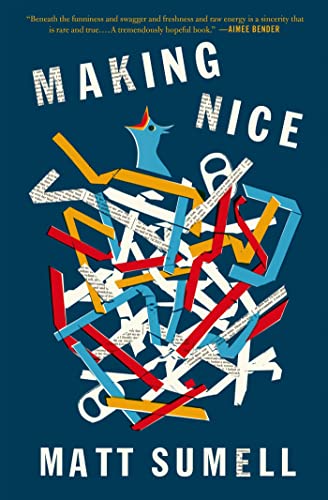
Review: Making Nice by Matt Sumell

Some of the most memorable characters in literature are unlikable. Humbert Humbert in Lolita is probably the best well known. He's loathsome and vile and yet the book is a masterpiece, stunning and well-written. But it's incredibly difficult to write a book with a deplorable main character and still keep readers engaged. Matt Sumell's novel, Making Nice, tries to accomplish this feat but unfortunately misses by a wide mark.

Alby is angry at everyone and everything. He is reeling from the death of his mother from cancer and he can't do anything but lash out at others and the unfairness of the world. He is a nasty, angry, abusive young man who is clearly lost but unwilling and unable to find himself. He works several dead end jobs. Somehow he finds women willing to endure his brutishness and borderline misogyny and to go home with him. His family doesn't like him. Even his mother didn't seem to like him much before her death. But the bigger problem is that the reader doesn't like him either. Alby may be flailing, struggling with his future, and projecting a persona crafted by extreme grief, but he's crass and antagonistic and those two traits seem to stem from well before his mother's death, not just coming as a result of it.

The novel is told as a series of vignettes about his struggle with life and grief and understanding. It's first person narration is disjointed and random, a sort of stream of consciousness, and even from his own self-pitying, self-congratulatory perspective, he comes across as horrible from childhood onward. There was an occasional flash of humor but those flashes were so insubstantial compared to the rest of the distasteful portrayal as to be almost meaningless. Other reviewers have seen much more redemption in these pages than I did. Certainly people react to grief in various ways and this might be a very valid, if unpleasant way. While I guess I am glad I persevered to the end for this one because I managed to find a shred of sympathy for Alby on the last page, ultimately he wasn't a character with whom I really wanted to spend any time.

Thanks to the publisher for sending me a copy of this book for review.

Friday, August 28, 2015

Review: A Window Opens by Elisabeth Egan


Just because numerous articles and books have been published debunking the myth of having it all, doesn't mean that people don't still try, sometimes out of necessity. But there is no doubt that this quest is stressful and hard, hectic and all-consuming. Elisabeth Egan's debut novel, A Window Opens, is the tale of one woman's need to try and make it work for herself and her family.

Alice Pearse is the happily married mother of three. She has a relaxed part time job reviewing books for a women's magazine that allows her to still be a part of the PTA crowd. Her beloved parents live quite close and she has a wonderful babysitter to help her on days she's working. Her husband Nicholas is a lawyer at a high powered firm and they all seem relatively content with their lives. That is, until Nicholas finds out he won't be making partner at his firm and decides that he's going to start his own small legal practice. Worried about what this means for them financially, Alice starts to look for full time work to keep the family afloat while Nicholas slowly builds a client base. She lucks into a job that seems like a book lover's dream: content manager at startup Scroll, a company intent on creating an entirely new bookstore experience. Alice will be on the ground floor of something truly innovative and she is one of the people who gets the opportunity to find and curate the collection of books that will be available in these amazing sounding literary lounges. The only downside seems to be the very real threat these e-book and first edition p-books (that's Scroll speak for paper book) reading rooms pose to traditional brick and mortar independent bookstores. But Alice can look past that; she has to, doesn't she?

Setting aside the troubling fact that the company's parent is a monolithic retail mall developer, Alice is initially excited about the vision of Scroll and its focus on the whole reading experience. Even if she is a good decade older than most of the employees and she smirks at the ridiculous jargon they all use, she is fully invested in her job. As a matter of fact, she's so invested that she feels she's missing out on the home front. And she is. She's so attached to her phone, tied to her emails, and consumed by her job that she barely sees what's going on with her kids, she misses a doctor's appointment where her father discovers that his throat cancer has reoccurred, and she misses the fact that her husband is suddenly drinking too much as a way to alleviate his own stress. Meanwhile, Scroll is not designed to accommodate a work life balance and its clearly stated intentions are changing from what they once were, morphing at the speed of light to something that isn't quite as aligned with Alice's beliefs as it once was. Alice is frazzled and unhappy, stuck in a juggling act that just serves to make her feel terrible. Things must come to a head and Alice has to decide just how far she can stray from her ideals before she no longer likes herself and how much her family's and her own happiness means to her.

Alice is an appealing character who just wants to do the best thing for her family and to be happy. She is pulled in a million different directions and her thoughts and feelings on the push and pull are incredibly realistic. Egan's depiction of the book world, the flux that it is in, and the threat of huge, impersonal corporations which hire enthusiastic people, only to dismiss their very valid suggestions and concerns about the industry, is spot on. There is much that is heartbreaking here, a struggle to adjust, terminal cancer, and the almost too late realization of what is most important in our lives. Egan doesn't condemn anyone for their choices but she clearly explains the compromises that we all have to make and the cost those compromises can bring. Nicholas is a frustrating character, unable to slide into the role in which Alice served him for years and resentful that she needed him to do that. I wanted to like him for the loving things he did but instead he made me angry for his lack of realization about how his decision to start his own firm and to burn his bridges at the old place would seismically shift his family and all the roles, his included, in it.  The narrative pacing is a little uneven in places, with definite slowdowns in the tale.  There are brief light moments but this is not really a funny book; it is far more serious than it initially seems. It's an examination of the lives we build, the trade-offs we make, and finding the balance we can live with, even if that balance will never be 50/50. It's sad but ultimately hopeful and incredibly relate-able.

For more information on Elisabeth Egan and the book, visit her webpage, like her on Facebook, or follow her on Twitter. Check out the book's GoodReads page. For others' opinions on the book, check it out on Amazon.

Thanks to the publisher and BookSparks PR for sending me a copy of the book for review.

Thursday, August 27, 2015

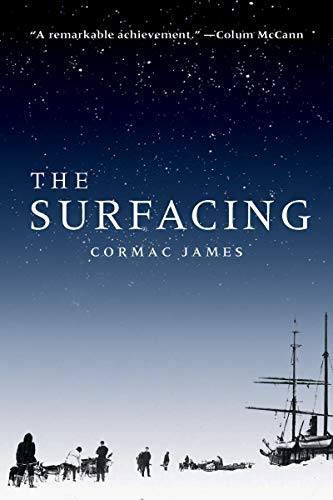
Review: The Surfacing by Cormac James

I have a fascination for snow and ice. I don't particularly want to live in them full time (or even beyond the first driveway shoveling, if truth be told) but there's something very appealing about them in the abstract. Antarctica is on my bucket list. So are those ice hotels in Finland or Sweden. I am captivated by books about polar expeditions and their fates. The frozen North (or South) land calls to me. So I was fully prepared for Cormac James' newest novel, The Surfacing, a tale about a ship and its crew searching for the lost Franklin expedition to enchant me. I wanted to love this book in all its frozen glory. Unfortunately, it made me feel beaten down, like I always felt after a long, grueling winter when spring should be imminent but is still out of sight, hidden by dirty, monotonous banks of snow.

In 1850, a fleet of ships headed for the Arctic in a bid to find and possibly even rescue the lost Franklin expedition. One of the ships searching, the Impetus, needed repairs after a short trip north and had to return to Greenland for a time. While the ship is in harbor, the first officer, Richard Morgan, thinks little of a dalliance with the governor's sister, Kitty. But when the ship's captain decides to go out searching again despite it being late in the season for safe travels, Kitty is discovered as a stowaway. And as the long months of the search drag on, it is clear that she is pregnant with Morgan's child. As Morgan comes to grips with what this means both in practical terms and for him emotionally, the Impetus is slowly and irrevocably encased in the ice pack, moving ever further north away from freedom and open water, frozen solid into a moving sheet of solid white.

The book is written as a series of ship's log or journal entries but from a third person perspective, which is a little disconcerting, and there is no punctuation setting off dialogue from exposition. It is separated into two different sections: before the birth of the baby and after with a gap of almost a year in between the two. Morgan as a main character is coming to grips with fatherhood at a time when the only other thing occupying the crew is the daily slog of survival in such a harsh and unforgiving landscape. He is hard to know but is better fleshed out than the other characters, who took a very long time to show any signs of individuality. Without distinguishing characteristics, it is hard for the reader to care about them. Much of the book is like this, with well-constructed passages that unfortunately leave the reader nothing but numb.  The interactions between the crew members are reduced to a line here or there, keeping them all distant despite the situation.  The lack of plot makes it a struggle to stay engaged with the story and even as a contemplative reflection on fatherhood, the book doesn't quite deliver. The story of Morgan coming to cherish his son might have been more engaging had the year's gap, which allowed the hard work of building this development organically to be avoided, not been present. The story feels minimal and spare and yet still too long what with the unemotional tone and the completely unresolved ending. Perhaps I expected something different from this than the author intended but despite my initial eagerness, rather than a harrowing tale of life in extremis, I found this to be a mostly tedious and disappointing read.

Thanks to the publisher for sending me a copy of this book for review.

Cha...cha...cha...changes

We dropped our oldest child W. off at college on Saturday. For weeks leading up to the drop off, people would ask me how I was handling it. I think I shocked them when I said I was fine with it. But I was. I couldn't stop smiling. Not because a child was leaving the nest and our grocery bills would become more reasonable but because I was so excited for him to experience college. Other friends were counting down each "last thing" they'd have with their college bound child. I flat ignored all of that. I mean why be sad before you have to be (not that I had any intention of being sad anyway)?  I didn't cry when he started school and I didn't cry when he graduated so I was pretty sure I wasn't going to cry when we dropped him off on his latest and greatest adventure.

Because of his dorm and floor, he was assigned a 7:30 am move in time. I am not a morning person. W. is not a morning person. D. (hubby and dad) is the only one who is a morning person so he was completely perplexed when I insisted that we needed to get a hotel room for the night before move in. His argument was that the school is a mere hour and a half from us. My argument was that no one wants to wake me up to drive somewhere at 5 am if they value their life. We got a hotel room. The plan was to drive up sometime late afternoon and be well rested for the next morning. But in the time honored tradition of clueless teenagers everywhere, W. not only wasn't ready to leave at a reasonable hour, he didn't help me pack up all of the stuff that had taken up residence on the dining room table or help me pack the car, but he invited those friends who hadn't yet left for college themselves to come over and hang out and play video games for hours. He did pack up the clothes he wanted to take before they arrived though (more on this later), so there's that. After we fed the additional teenagers one last dinner and finally shooed them out the door, I finished packing up the car, we hopped in, and headed out. It was almost 11 pm when we got to the hotel. W. rolled himself out of the car, directly into a bed, and off to sleep. Apparently it's weird that I wanted him to be all jazzed up, chatty, and excited about the next day.

The next morning we rallied early in hopes that we wouldn't have to wait in line to unload his stuff. And we didn't. Even better, we had to carry nothing at all up to his fourth floor room. A welcome home team of students, faculty, and staff greeted us at the curb, unloaded the car, and whisked it all up to his room, where his roommate was already unpacking. Seeing the mound of stuff that the roommate brought made me worry that we didn't have enough. But in the weeks prior, whenever I asked him about some article listed on every college necessity list ever, he'd say he didn't need it. And I figured he was in charge. If he came to regret it later, I could always say "I told you so" because that is something I do really, really well. (Well, at least on the rare occasions that my children forget what I've taught them about the fact that I'm always right.) But seriously, the mountain of stuff his roommate had compared to what he had was comical. And they are in the smallest possible room that two people can inhabit together without sharing a bed. (It looks bigger in the picture than it actually is.) But W. still seemed completely unperturbed by his lack of stuff. He unpacked his clothes, jamming them into his drawers, and declared himself done.  Perhaps he's got a future calling writing the minimalist list version of what to take to college.

Meanwhile, anal retentive mom (that would be me, for anyone in doubt), unpacked and organized everything else. (I did refrain from alphabetizing anything but only with the greatest difficulty.) I asked nicely if I could hang up the shirts he'd squashed into the drawer but was summarily told no. I asked why we'd bought hangers then and he said he didn't know. Yes, you've guessed it, there was no way I was going to cry about leaving him when he was being an ornery little twit. He was grumpy. I was grumpy. D. left the room "to stay out of the way," wisely fleeing to check out the rest of the hall and dorm. Instead of continuing to argue (the roommate was arguing with his mom too so either it was contagious or this is one of those unpleasant things they don't warn you about dropping your kid off at college, kind of like no one tells you about the gross body after affects of giving birth), we found D. and went off to get breakfast. Food helped the hangry a lot.

Since W.'s side of the room was mostly handled by then, we made a run to buy the very few things we'd forgotten (or never knew he'd need/want). One extra pillow, an HDMI cord, an over the door hook, an ethernet cable, and a plethora of snacks and soda later and we were back in the room. Realizing that there was nowhere to store the snacks (it really is a tiny room), I made the sneaky suggestion that if he let me hang up his shirts, that would free up one of his three dresser drawers to become a snack drawer. He thought that was a genius idea. I'm not only always right, I pretty much always get my way. ;-) And since he was letting me muck about in the dresser, I opened both other drawers as well and folded his shorts and pants. Remember when I said he packed his own clothes? The child packed three pairs of athletic shorts, one pair of cargo shorts, two pairs of jeans, and two pairs of dress pants. He had a tiny stack of underwear and about 5 pairs of socks. I'm fairly certain my home laundry lessons fell on deaf ears so this could be interesting. He's either going to be filthy, become a nudist, or he's going to learn how to do laundry pretty quickly since this will have to last him at least six weeks until Family Weekend. I've been practicing though and I can confidently say: not my problem.

W. is a bit of an introvert so he wasn't interested in wandering down his hall to meet people.  Instead he plopped his cheesehead on and spun around in his desk chair.  When asked what he was doing, he said that if he wore the cheesehead, it might inspire other people to initiate a conversation with him so he didn't have to.  Bless his dorky little Packer backer heart!  We sat in his room for a while and no one who walked by mentioned the large wedge of cheese he was wearing so I suggested we get out and explore a bit. W. and D. found the pool table in the main lounge area and D. proceeded to school W. in a game. Almost as soon as the game ended, W. looked at me and said, "You know, I think you're the only parents who are finished unpacking their kid who are still here." I took that as a rather unsubtle hint (what a poor loser!) so we hugged him and left after checking to see if he wanted us to come back for dinner (no) or for convocation the next morning (yes).

Convocation was billed as business casual. Pretty much everyone we saw was dressed nicely. I even wore a dress. When W. came downstairs to meet us for breakfast before the ceremony, he was wearing a button down shirt and dress pants so you'd think he got the memo, right?  But remember when he crumpled up all of his things in his drawer and then snapped at me for wanting to hang them? Yeah, he looked like he'd slept in his clothes. Not one other kid we passed looked as schlumpy as my kid. The wrinkles in his shirt had wrinkles. And he didn't have it tucked in. This was apparently to hide the fact that he managed to break his belt while getting dressed. As we walked along, D. noticed that W. was also wearing white athletic socks with his khakis and dress shoes. Seems he forgot to pack dress socks too. And he hadn't shaved. Classy. It's no wonder that when I looked at the photos of convocation later, my kid is not in a single one.

At the ceremony, the school gave each freshman (even the ones who looked like they were rag pickers like my kid) an HPU blanket and the president told them that they were not to keep it but to give it to that person who had been the most influential in getting them to college, the person who had always wrapped them up with love and encouragement. I figured I was a shoe-in for the blanket. Brat grinned and told me to give it to the dog. (We all know it's mine now anyway.) I gave him the cheese he had inadvertently left at home (yes, we're a weird family but we love our cheese and he has a thing for smoked gouda with bacon which is ridiculously hard to find around here), we hugged him, and headed home.  We didn't want to be the last parents standing when the school had specifically said that parents should leave as soon as convocation was over.  That was the last we heard from the boy until this morning when he texted me a selfie of himself on his first day of classes. (As sweet as this sounds, know that the university suggested it to the kids. At least he went along with it, unlike the suggestion the president made to all of them to call their mothers every day to tell them that their kid loved them--and to call their fathers once a week to ask for money.) For now I'll assume that no news is good news and D. assures me that W. will most definitely call when he needs money.  I have no doubt.

I found it hard to sleep those first nights with him gone. In the past when he's been out at night, I have had the reassurance of the door chime waking me up to let me know he's home safe and sound. Saturday night and every night since then, that chime has never sounded and I think that's why I've tossed and turned. It's a huge change for him and for me.  Maybe bigger for me.  And I will admit to having clicked through every last picture the school took of each event during welcome weekend looking for my child. But he's either still sporting hopelessly wrinkled clothing (I wouldn't take a picture of that either) or he's decided to taunt me by staying as far as possible from any cameras because he doesn't appear in a single one. Seriously, is it too much to ask for him to just be on the outskirts of even one picture?!

So how am I doing with all if this? Well, I didn't cry at any point but I have to say it is a bit disorienting for me to have such a huge piece of my heart building a life away from me after 18 and a half years of building it with me.  But I think I'm doing okay.  Ask me again next year when another big chunk of my heart goes off to build her life elsewhere too.  For 18 years W. has been my baby.  Now he's his own person.  I hope we've done a good job with him and I hope he's having the time of his life.  I also hope he remembers to call home sometime soon!

Popular Posts